Our work on improving perovskite #photovoltaics⚡️ manufacturing through #XAI is finally out in Advanced Materials: https://t.co/8rejtELMqv 🎉
We also presented this work last week at the #NeurIPS2023 XAIA workshop as one of 4 selected orals out of 59 📊
🧵⬇️
🌐 Join us for a Special Talk on AI and Infectious Disease Outbreak Prediction with Prof. Joacim Rocklöv, leading Germany's first AI lab in this field. Discover how AI can revolutionize disease surveillance and prediction!
🔗 Details & Registration: https://t.co/Soz29LK0XJ
2/4 To tackle this problem we collected a video dataset of the perovskite thin-film formation process from scalable blade-coating production, on which we train different deep learning models.
4/4 At last, material scientists interpreted the XAI results and translated them to actionable insights which are used to improve the manufacturing process.
1/4 While hybride perovskite solar cells can achieve far higher power conversion efficiencies compared to traditional silicon solar cells, the technology is still not market ready.
Our work on improving perovskite #photovoltaics⚡️ manufacturing through #XAI is finally out in Advanced Materials: https://t.co/8rejtELMqv 🎉
We also presented this work last week at the #NeurIPS2023 XAIA workshop as one of 4 selected orals out of 59 📊
🧵⬇️
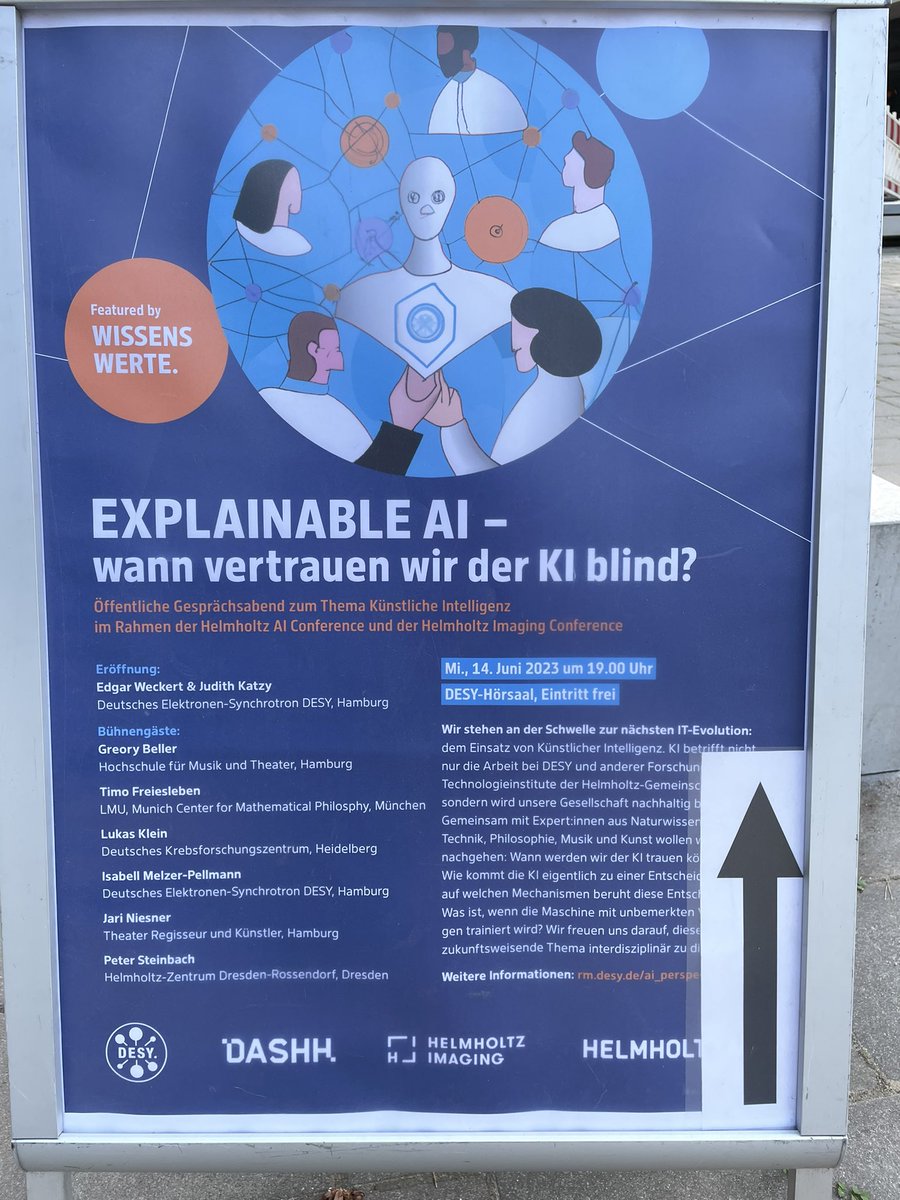
And off I go to the next stop of this great day, #AI outreach to the general public hosted by @desynews. Glad to wave the @helmholtz_ai and @HZDR_Dresden flag with @lukas_kln and others!
Update: We integrated @MetaAI's Segment Anything Model into Napari for both 2D and 3D images and extended #SAM to semantic and instance segmentation! Works out-of-the-box for natural, medical and most other types of images.
https://t.co/TUgh6IggQy
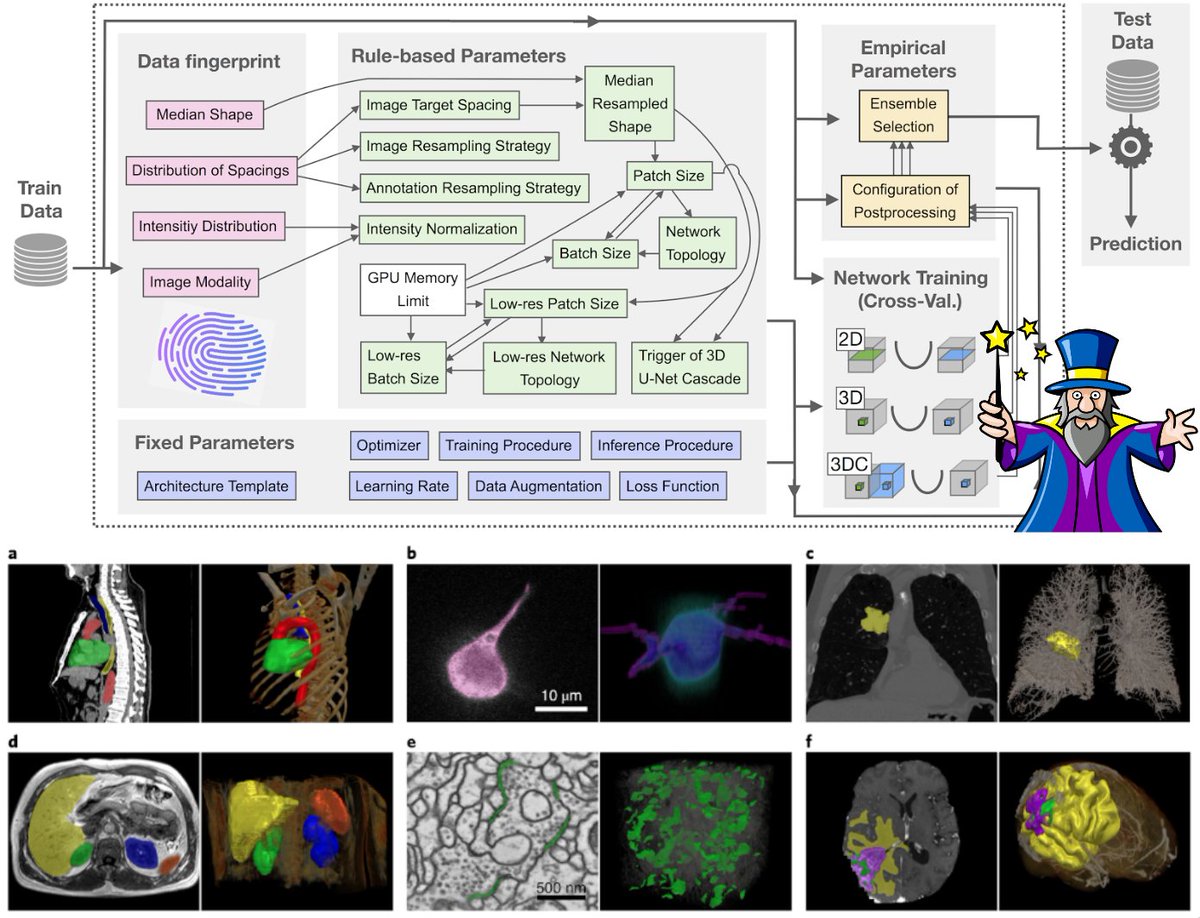
nnU-Net has stood the test of time, continues to deliver excellent results and inspires the community as a framework for building new segmentation methods!
It is with great excitement that we announce the release of nnU-Net V2 🎉😍
➡ https://t.co/hNj6vnhmEP
🧵(1/8)
Robin Rombach, one of the first authors of the groundbreaking Stable Diffusion, will give a talk on Thursday, 9th of February at 4 pm at the DKFZ about his work:
Stable Diffusion and Friends - Generative Modeling in Latent Space
For more info:
https://t.co/RynAZsnUGq
Excited to announce the members of AI for Global Goals’ international Advisory Committee! The committee is made up of talented #OxML alumni, each bringing their unique perspective & experience to the organisation, as we continue to expand globally 🙌🌎
#machinelearning#ai#SDG
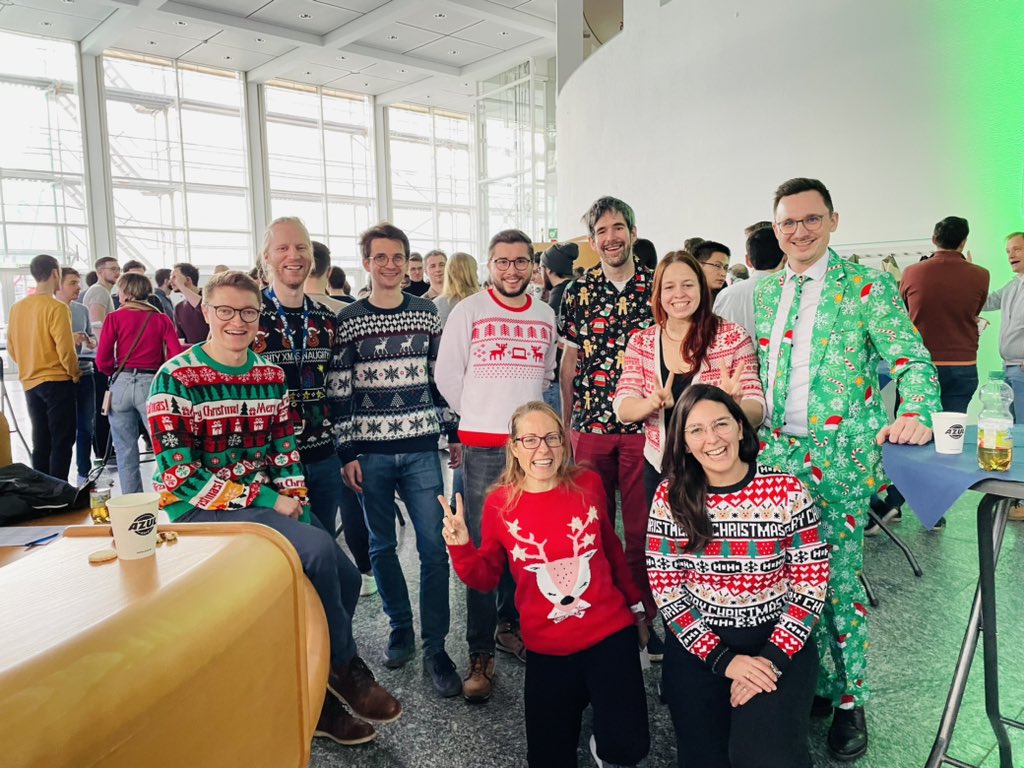
Sooooo cool to have an actual in-person #SYMIC (@DKFZ_IMSY_lab + @mic_dkfz ) Christmas symposium again 🎄🤶great outfits, great cookie contest, great team💪🏻💪🏻💪🏻!
Lukas Klein provokes us to think about formalising inference explanation as a statistical process to help people extract causal information from models. A challenge is getting insights about our population, not just the model or sample data #XAI2022#IJCAI2022Workshop
I had a fantastic time at @midl_conference and the doctoral symposium! Thank you to everyone who helped organize the conference and student activities (and @lukas_kln for acting as tour guide) 😄
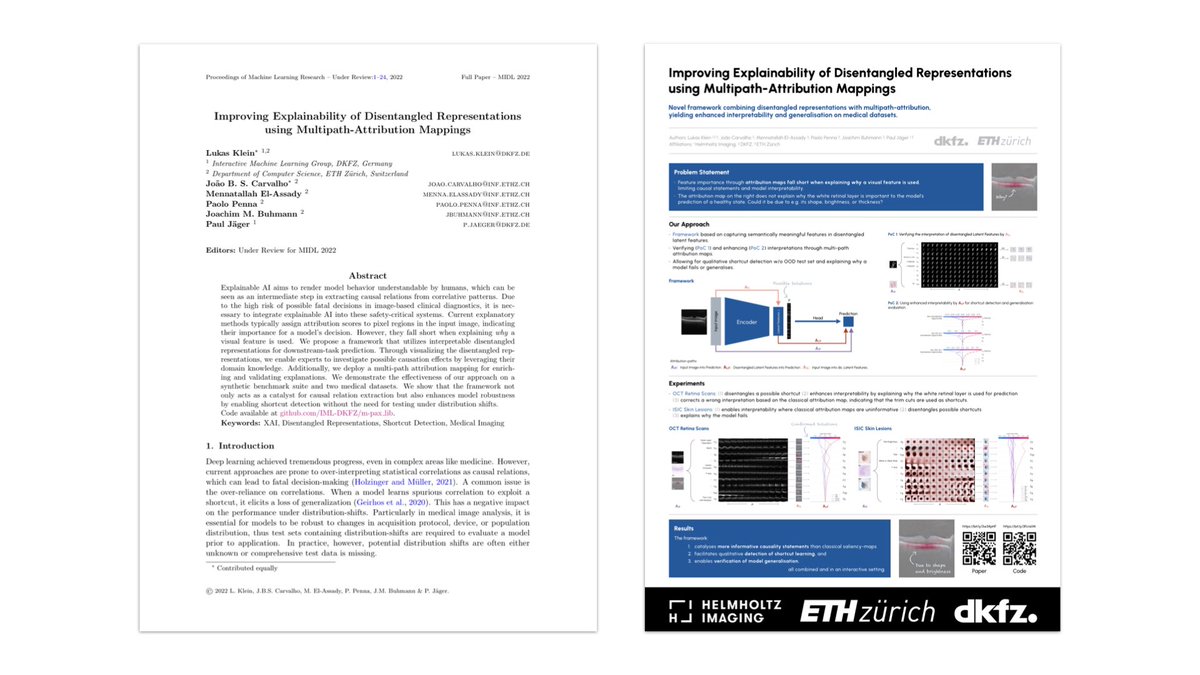
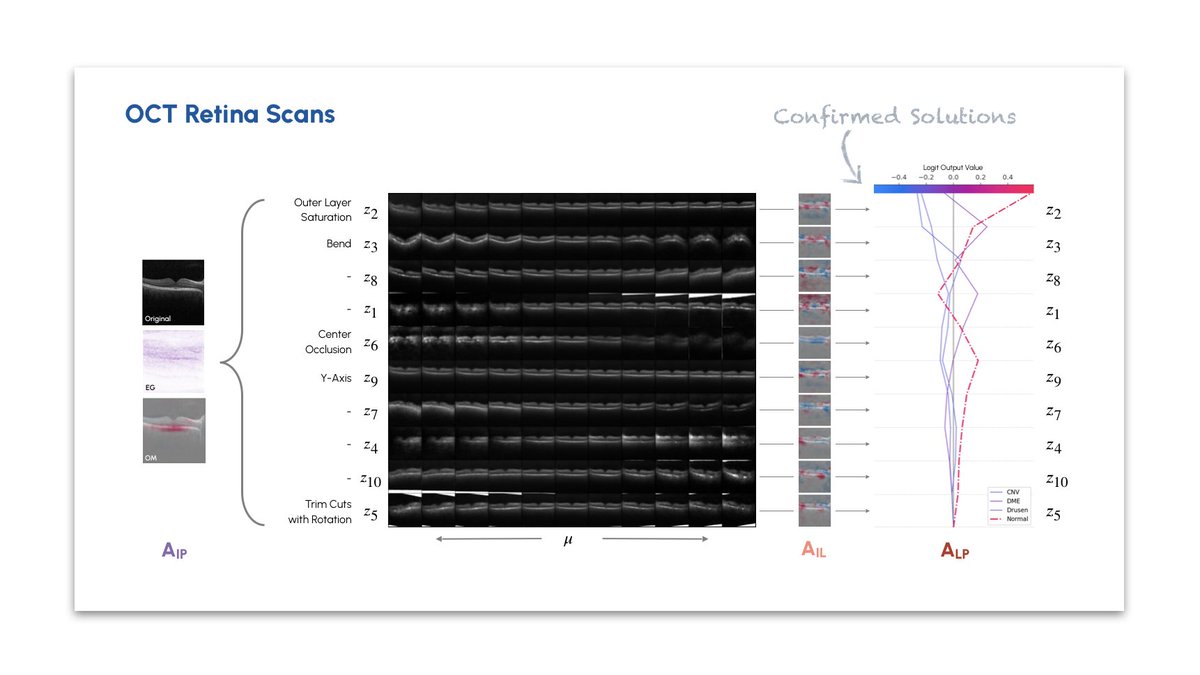
Can attribution maps be enhanced to explain why a visual feature is used?
We will present our work in #xai at #midl2022, leveraging disentangled representations and multi-path attribution mappings.
📄 https://t.co/t16MlH3ZVA
💻 https://t.co/2aQk9UCMfp
1/5
This work was a team effort involving @pfjaeger from @DKFZ, @imaging_science and João Carvalho, @manunna_91 , Paolo Penna, Joachim Buhmann from @ETH, @ETH_AI_Center 5/5
Can attribution maps be enhanced to explain why a visual feature is used?
We will present our work in #xai at #midl2022, leveraging disentangled representations and multi-path attribution mappings.
📄 https://t.co/t16MlH3ZVA
💻 https://t.co/2aQk9UCMfp
1/5
Based on experiments with synthetic and medical datasets, we demonstrate that the proposed framework (1) catalyzes more informative causality statements, (2) facilitates qualitative detection of shortcut learning, and (3) enables verification of model generalization. 4/5