The World Cup was shaping up to be a spectacular success for the United States. The hospitality the country provided to the teams and fans was exemplary. The interest from American fans dwarfed the interest seen when the USA last hosted the World Cup in 1994. The matches throughout the US, Canada and Mexico were energizing, showing why this is the beautiful game. And the US team played exciting, dynamic soccer (football), demonstrating that they are up to the task of taking on even the best in the game.
Then, it all got ruined.
Not by the fact that the USA lost Belgium 4-1. That can happen to the best teams in the world. No, it was ruined, perhaps predictably, by President Trump, interfering and trying to reverse the one-match automatic suspension for the American player Folarin Balogun after he received a red card in the round of 32 game against Bosnia and Herzegovina.
We will never know for sure whether it was pressure from Trump that reversed the decision, but this is what Trump has claimed. In any case, the decision to postpone Balogun’s one-match automatic ban by one year is completely unprecedented. Something looks fishy. The track record of FIFA and its president Gianni Infantino does not give anybody much confidence that this was a decision made on objective grounds, without interference.
What is sad and dangerous is that President Trump’s repeated disregard for rules and institutions is having an effect in every domain. It has further polarized US politics, damaged US democratic institutions, significantly hampered global cooperation, and made security and peace more tenuous around the world.
Now, it is poisoning the beautiful game.
As in democracy, once you damage the institutions of world soccer (football), and the trust that people have in the effectiveness and impartiality of these institutions, the consequences will be long-lasting.
Say what you will about Trump. He is consistent – consistently corrosive to the institutions our future depends on.
Die 🇺🇸 sind bereit, selbst engen Verbündeten den Zugang zu modernster KI zu verwehren. Europa muss Konsequenzen ziehen, schreibt Katharina Erhardt. Wer nur Anwendungen baut, bleibt abhängig. Digitale Souveränität muss industriepolitische Priorität haben 👉 https://t.co/tVSt1m9U3A
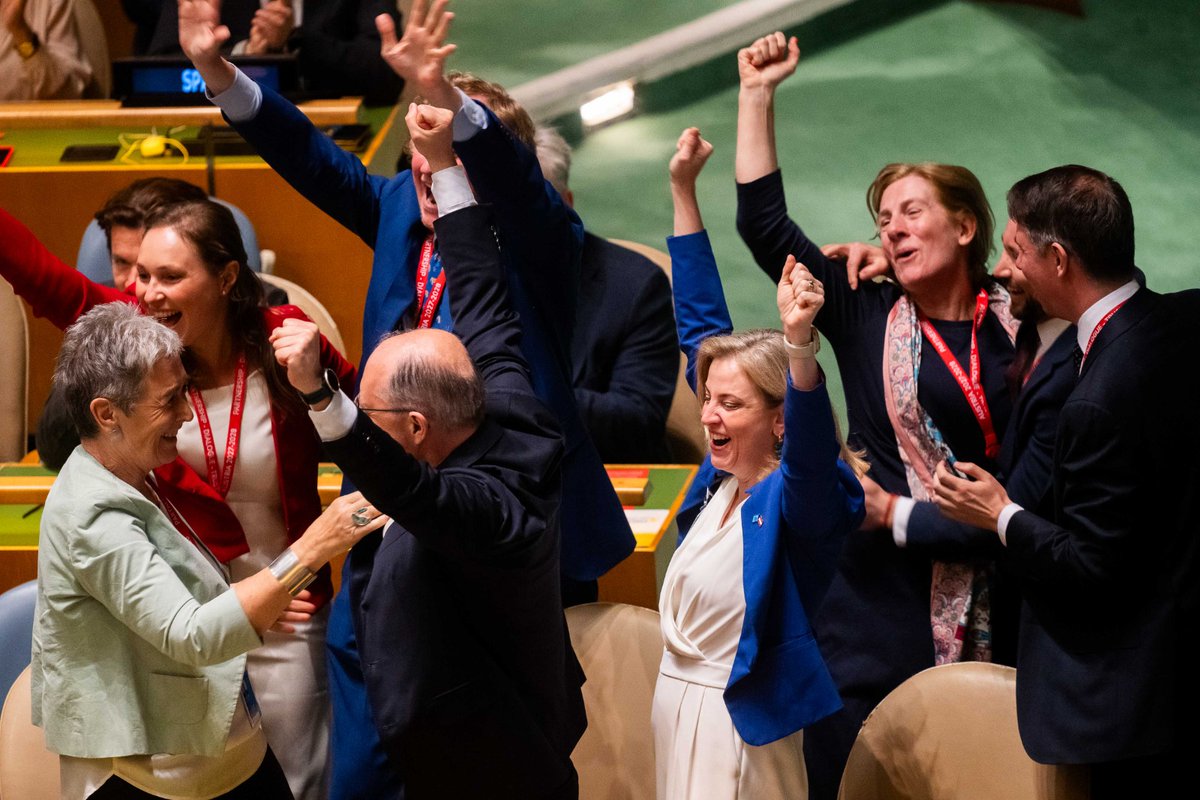
Danke für das große Vertrauen! Österreich sitzt im #UNSC wieder mit am Tisch, wo über Frieden, Sicherheit und Stabilität entschieden wird.🇺🇳🇦🇹
Unser Leitmotiv bleibt: Partnerschaft, Dialog und Vertrauen.
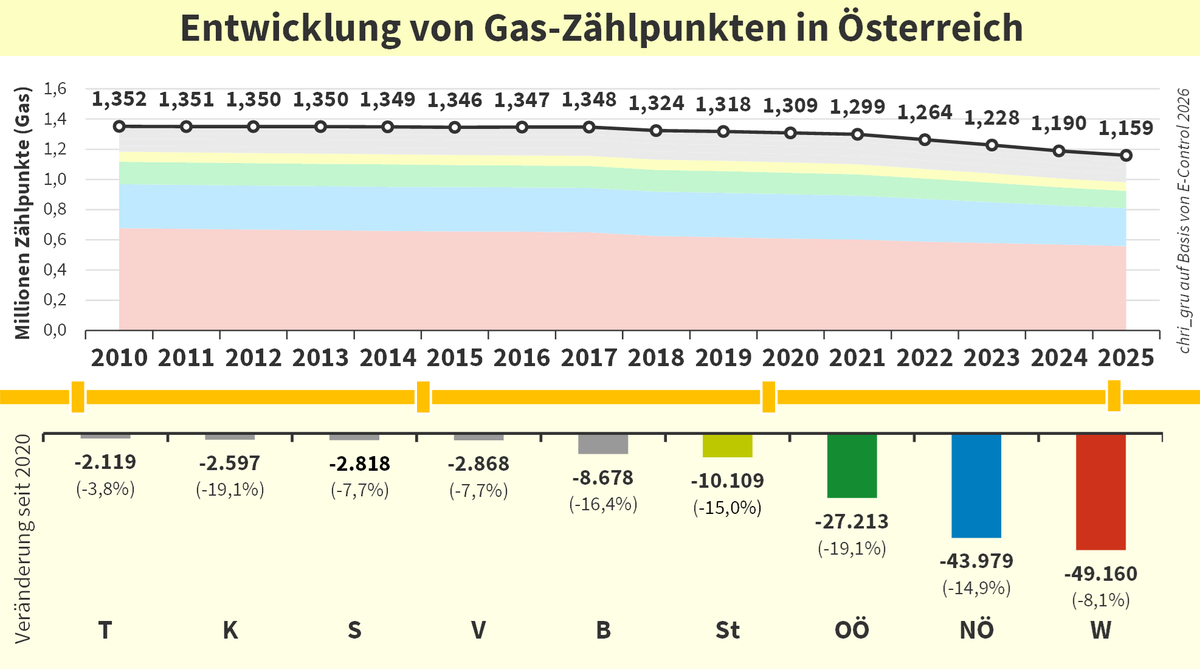
Zwischen 2021 und 2021 ist der 🇦🇹 Gasmarkt im Durchschnitt um 4.800 Zählpunkte p.a. geschrumpft.
Beschleunigung: Seit 2022 waren es im Mittel um 35.000 Zählpunkte p.a. weniger. Der Rückgang war in absoluten Zahlen in Wien und NÖ am größten, relativ betrachtet in OÖ und Kärnten.
Europe 2050 project: A piece to feel better and hope for more: Things are happening to make Europe stronger. An important contribution by @Enricoletta, which goes against the "Europe is paralyzed" dominant line. Read it and feel (a bit) better. https://t.co/s5ZTOxnunJ
RIP Ned Phelps
Ned Phelps followed his own intellectual journey.
When Keynesians relied on a long-run tradeoff between unemployment and inflation, he showed why this was a weak reed to stand on. Thus was born the natural rate hypothesis (although the coining of the word goes to Friedman, a year after Ned’s paper).
When, later, New Keynesians were focusing on nominal rigidities, he built models of fluctuations where nominal rigidities played no role. When New Classicals were exploring the cyclical implications of competitive markets, he focused on the role of distortions in goods and labor markets, be it efficiency wages, or variable markups.
It would be fair to say that, today, the frontier macro models embody the natural rate hypothesis, and many of the distortions Ned focus on---and, what he did not like, i.e. nominal rigidities.
His style was highly idiosyncratic. He was often a poor expositor of his fundamental insights. He did not listen much to others, pursuing his agenda with focus and passion. But, to use an overused but appropriate expression, he was certainly one of the giants in the field. We often met and sometimes fought, be it on hysteresis or nominal rigidities, but I had infinite respect for him.
I have embarked, with Beatrice Weder di Mauro, Pascal Lamy, and Enrico Letta on a major project, called Europe 2050. The idea is to think about what we want Europe to be in 2050, look at where it is today, and how we can go from here to there. (Thanks to Mr Putin and Trump for forcing us to think about the role of Europe, and hopefully, for Europe to do what needs to be done).
To achieve this, we have invited a number of experts, be it on trade, on defense, on regulation, on European institutions, on populism, etc, to write short notes, which we shall put on the web as they come during the spring and the summer. Some contributions are likely to be more vision-like, others to be more narrowly focused and technical. (We shall write a stock taking paper at the end). I do not expect the project to come out with a generally agreed plan, but more to serve as a toolbox for what needs to be done. https://t.co/ED8mpelDf5
I intend to tweet about each contribution, starting with the first two. Comments welcome.
„In the UK today, the great danger is rather tyranny of the minority, in which a small plurality secures overwhelming power. First-past-the-post has become suicidal. The time to reform the old system is now.“ #Politics#Democracy
https://t.co/erMlIC1kfz via @ft
Die EU muss schneller, stärker und entschlossener werden. Österreich darf dabei nicht auf der Bremse stehen, sondern muss Reformmotor in Europa sein. Außenministerin @BMeinl hat heute ihren 9-Punkte-Plan für die EU vorgestellt.
https://t.co/6qJFptCBZl
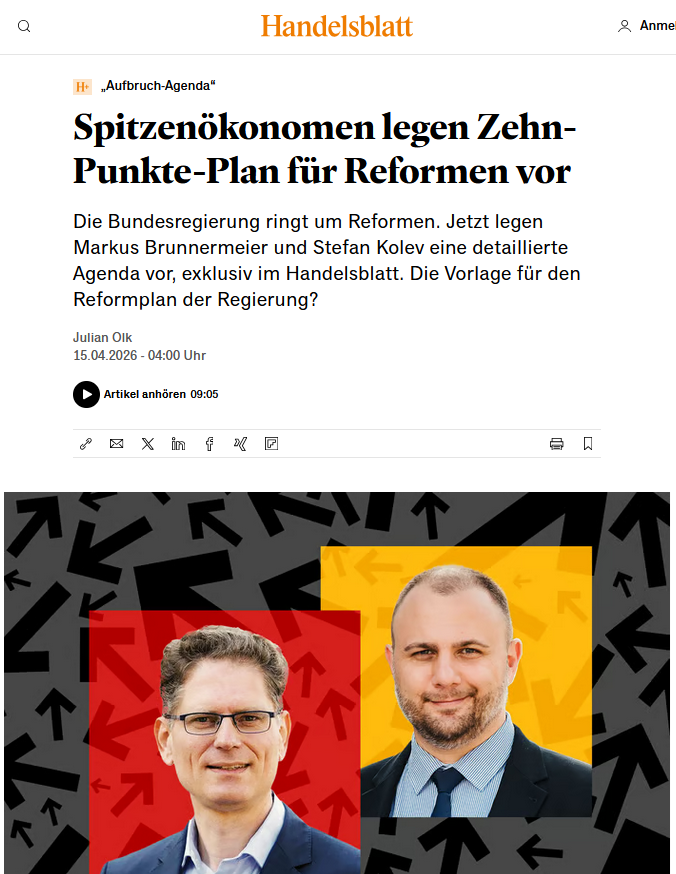
10-Punkte-Agenda für Deutschland mit einen lagerübergreifenden Kompass "Die Resilienz".
Heute im Handelsblatt:
Überblick und 30-seitige Dokument finden Sie hier: https://t.co/ig0a7B4uMK
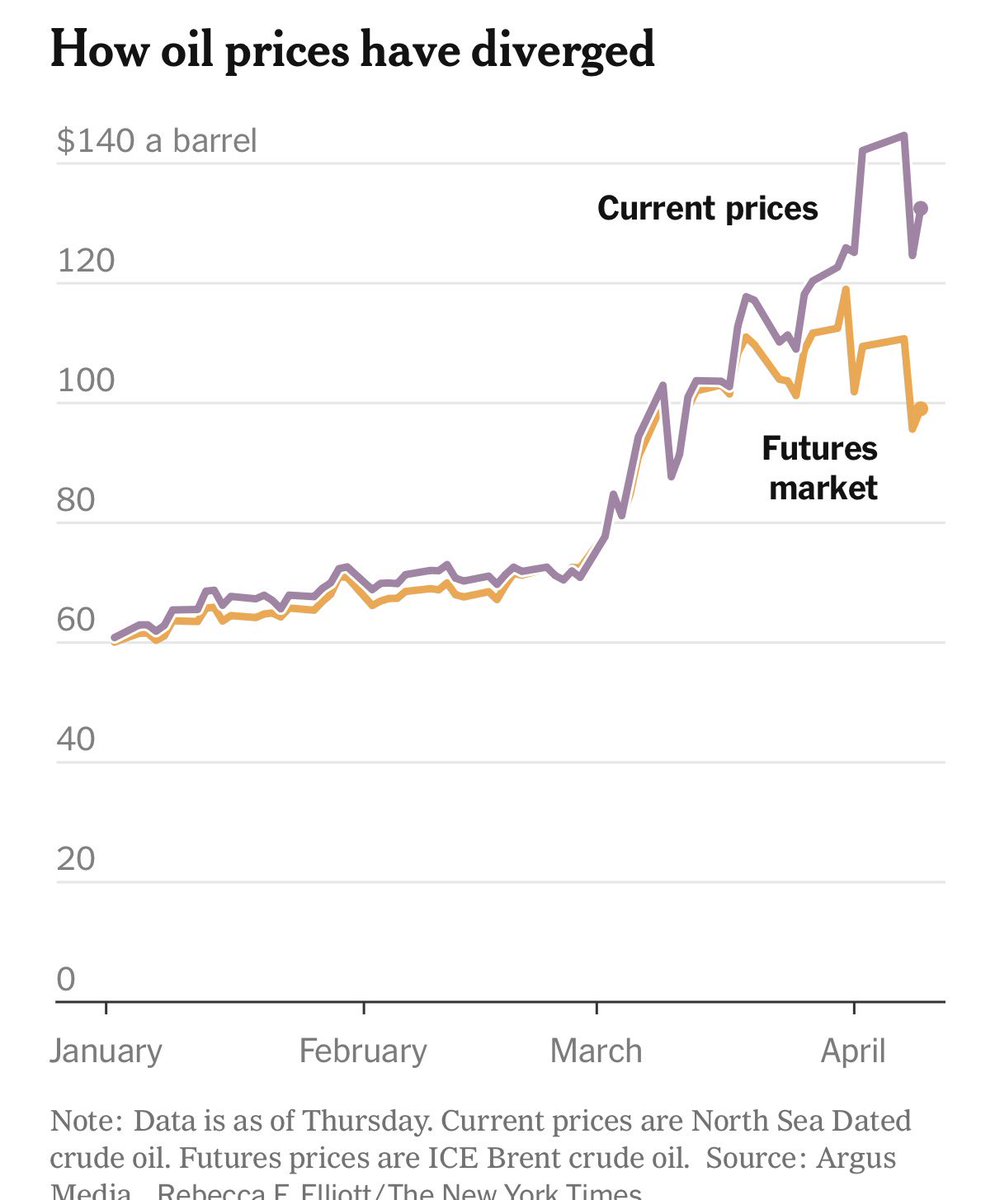
From the @nytimes:
“The futures and spot prices are rarely exactly the same, but the gap between them has grown unusually big in the past few weeks, so much so that oil executives and analysts say futures prices no longer accurately reflect the extent of the supply shock that the world is experiencing.”
#economy #oil #energy #markets
As with its nuclear program, Iran can not unlearnt new knowledge. And Tehran has learnt lots in the last 4 weeks.
Iran assumed the Strait of Hormuz gave it a lever. But its effectiveness was unproven, and it didn’t know the response of the US and oil markets. Now, it knows.
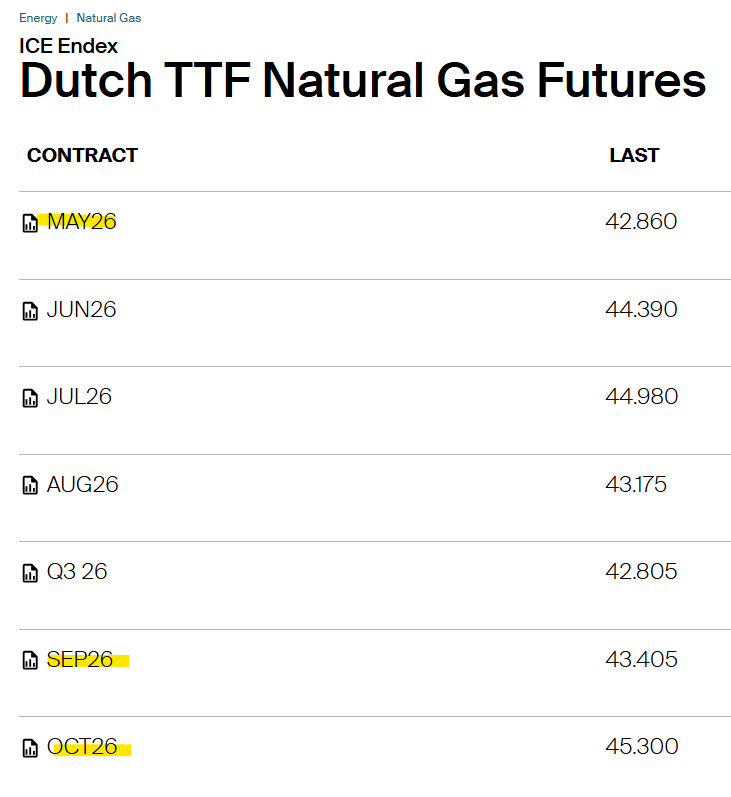
Die ersten Handelsergebnisse an der europäischen Gasbörse #DutchTTF sind da. Minus 20% für das Mai-Produkt gegenüber gestern, von 53 auf 43 €/MWh. Die Wintermonate sind klar teurer. Mal schauen, ob das so bleibt, aber der Anreiz wäre klar: Einspeichern, jetzt!
Man darf froh sein über die Deeskalation heute Nacht. Aber dass ein US-Präsident diese Forderungen als Ausgangsbasis für Verhandlungen akzeptiert, wäre von Vertretern dieser Administration heftigst kritisiert worden. #IranWar#Trump