Excited to share how @jacobborrajo Anna Le and I are enabling the future of profiling dynamic cellular processes! We built a synthetic RNA export pathway for cells to "self-report" their transcriptional states in real-time. Big thanks to the entire team!
https://t.co/KWHzp8fRtt
Is there something like genome browser for protein structures? I would like an easy way to make custom annotations on specific amino acids and then see where those are in the 3D structure.
I'm really excited to present work from @ophirshalem’s group with my outstanding co-first author Yevgeniy Serebrenik @YSereb to tag and manipulate proteins at scale, which we use to study the #proteome and #proteostasis https://t.co/USXPgZR5Ju
How can machine learning help you to analyze your microscopy images?
Find out at the "Deep Learning for Microscopy Image Analysis" course at the @MBLScience in Woods Hole from Aug 21-Sep 5!
Applications are due 🚨 May 18 🚨
Read on for more! 👇
https://t.co/zuPyW4LbOh
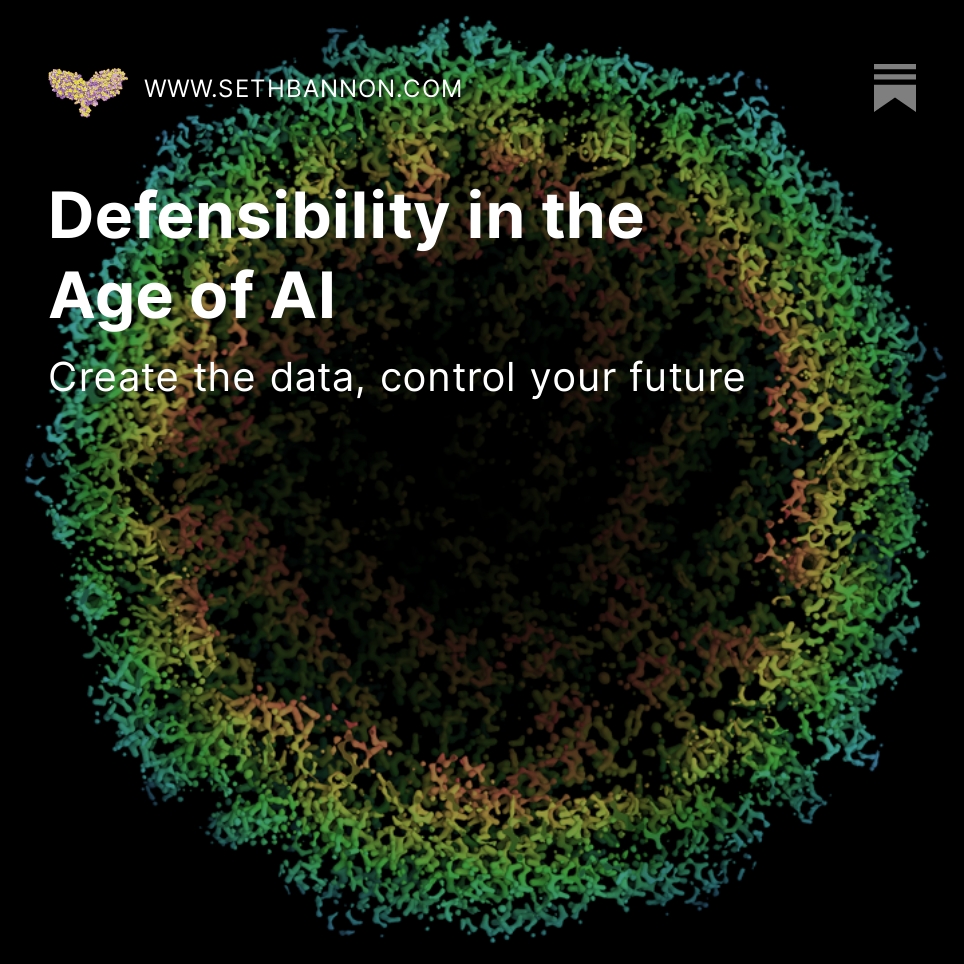
Entrepreneur AI anxiety is real. Everything is moving so fast that many feel the ground is shifting under their feet. A 10x product of last month may be obsolete today. Many are asking the same question:
Where is defensibility in the age of AI?
👇
Sci Twitter help - why does differentiation of cells entail both cell fate determination AND arrest of division? Is continued division somehow incompatible with locking in a specific cell fate? Like by erasing chromatin state or something? Sorry if this is a dumb question
@nika_shakiba Also, in the experiments in Fig. 4c & d, did you compare to a control without the miR casette? Wondering if the v4 miR-Oct4e with many mismatches is actually producing any repression? Or if the high & tight Oct4 distribution is driven primarily by the high MOI?
@nika_shakiba In the final trajectory controller designs in Fig. 4a, it looks like the miR-Oct4e variants will target both the endogenous and exogenous OCT4 mRNA? Did you have a way to separately control and “overwrite” Oct4 levels in these experiments like earlier in the paper?
Big day for open-science at Recursion! Releasing a 2.2M image, 100TB genome-spanning CRISPR KO dataset* in primary human cells alongside a demo of one of our internal apps. Kudos to the team for getting this ready! Can’t wait to see what the community finds/builds on top of it!