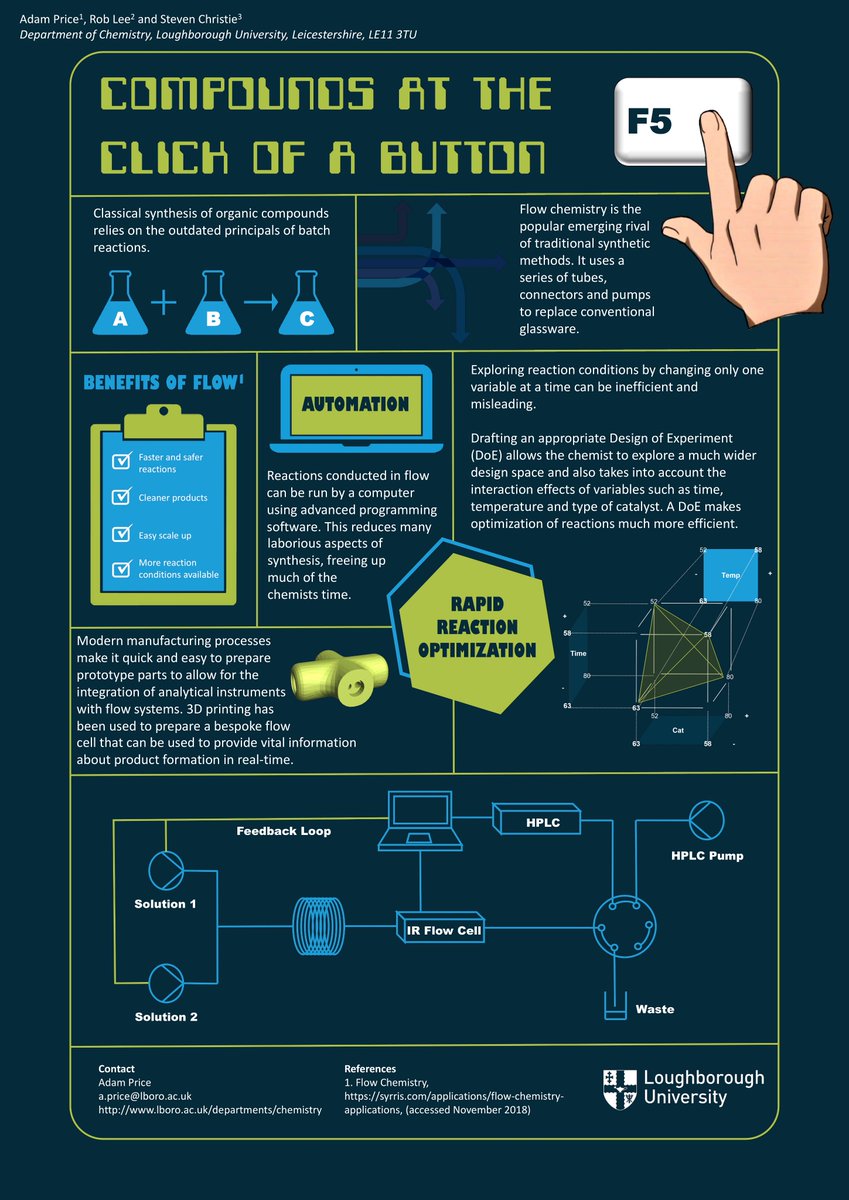
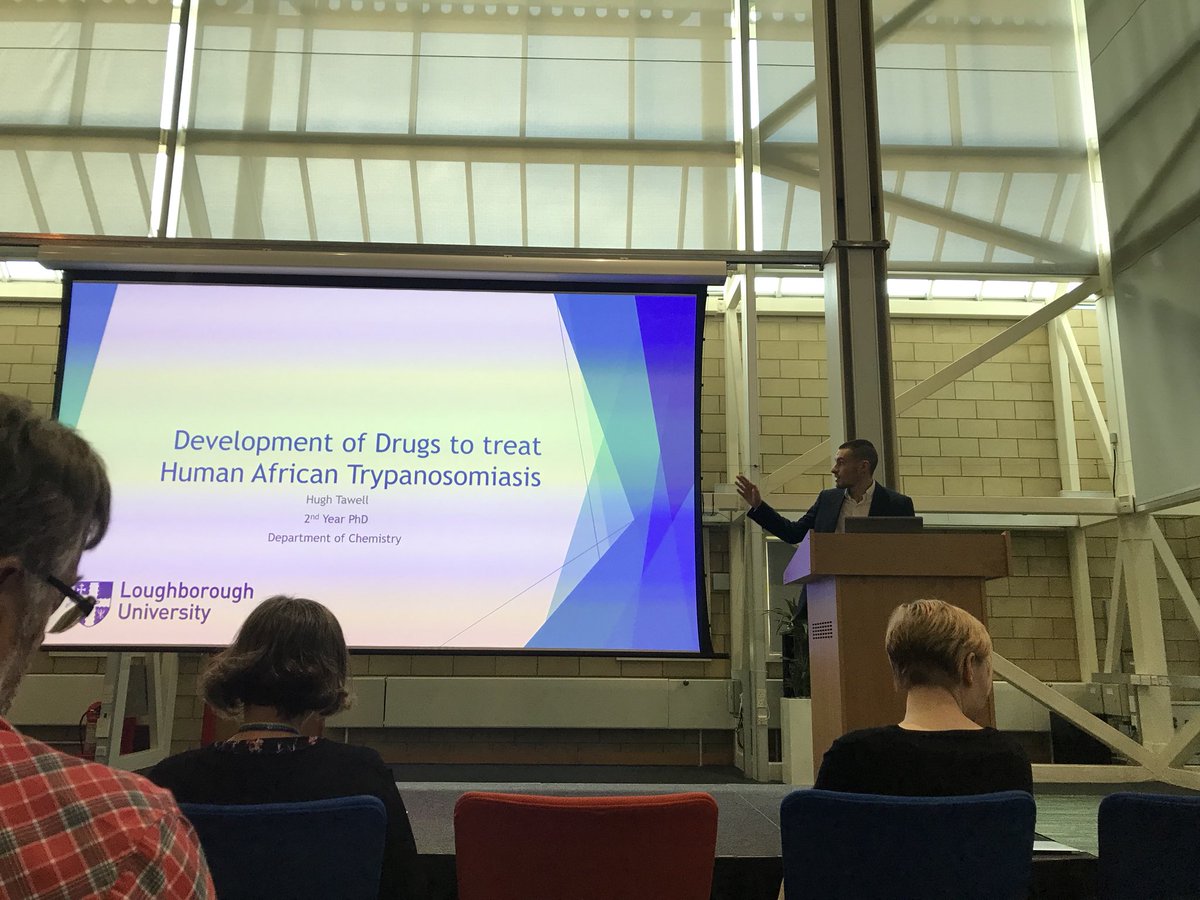
Designing new enzyme assays
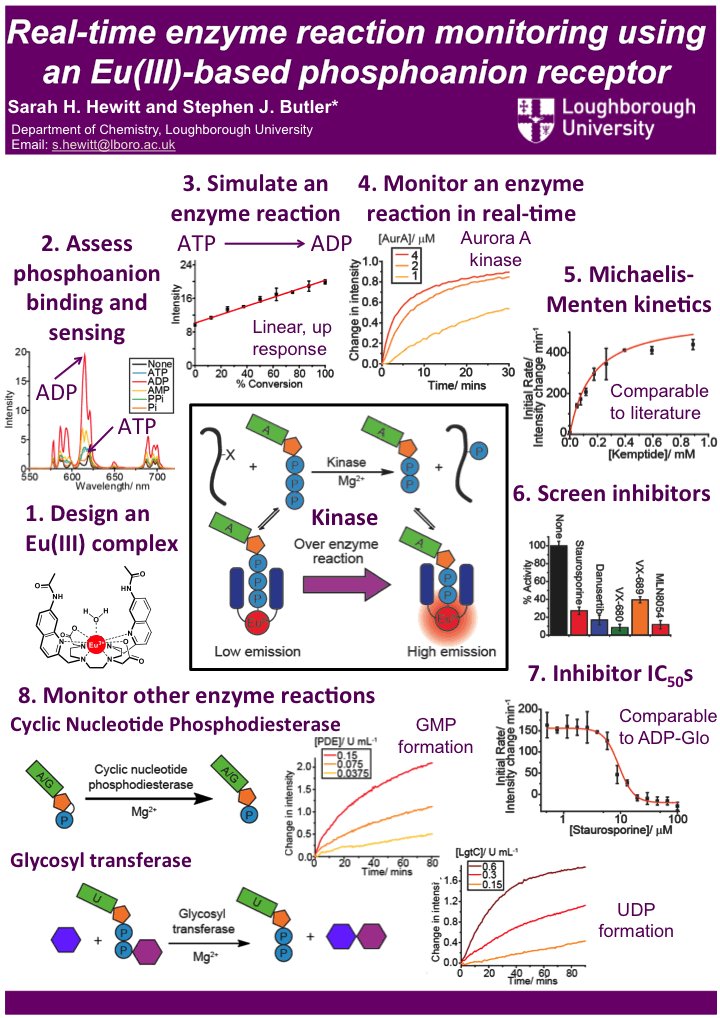
Real-time kinase monitoring, using a luminescent Eu phosphoanion receptor, developed from initial complex to HTS-compatible assay.
#RSCPoster#RSCChemBio@LboroChemistry@Steve_JButler@LboroScience
https://t.co/T1rlxFoajw
https://t.co/T1rlxFoajw
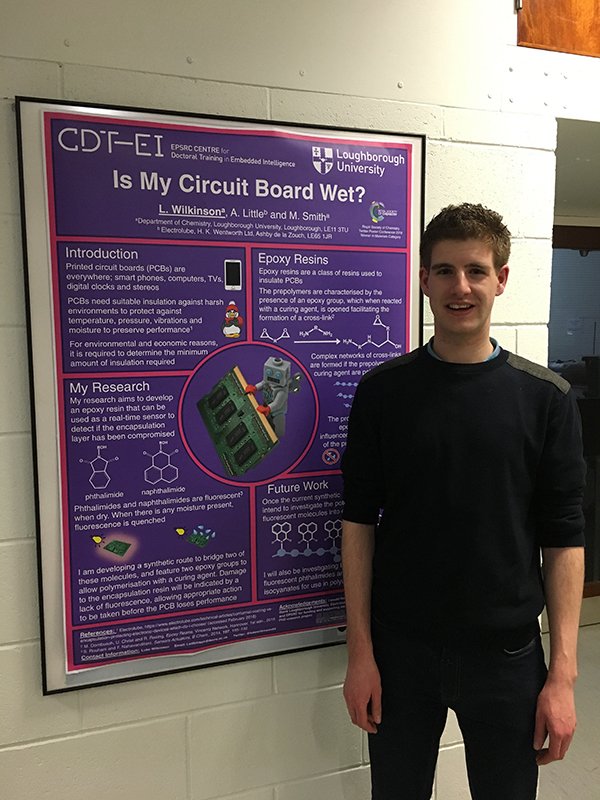
@marc8tom@lborouniversity@LboroScience@LboroChemistry @CDT_EI @LboroDocCollege@electrolube Thank you. Thus far, I’ve only worked with multiple phthalimide and naphthalimide derivatives however my project gives me scope to expand beyond these fluorophores if there is reasonable expectation other compounds could offer equivalent or improved performance
@PhilHippo99 @lborouniversity@LboroScience@LboroChemistry @CDT_EI @LboroDocCollege@electrolube The only reason a component would need to be replaced is if the full layer of the encapsulation resin was to fail. Even a small amount of the resin was to fail, fluorescence would be ‘turned off’, so it is possible to spot the failure before it propagates through the entire layer
@RealTimeChem@lborouniversity@LboroScience@LboroChemistry @CDT_EI @LboroDocCollege@electrolube As I have not polymerised into a resin as yet, I’ve not been able to measure the wavelength. It is more a method of checking damage to the encapsulation resin. Eg during aircraft or car maintenance, engineers shine UV at the resin to check for damage
@MCeeP@lborouniversity@LboroScience@LboroChemistry @CDT_EI @LboroDocCollege@electrolube This is not something I’ve been able to measure yet. To date, I’ve been optimising the synthetic route to form precursor oligomers which contain known fluorescent molecules. Once I’ve been able to polymerise them into a resin, I will measure this
@nolan_micky @lborouniversity@LboroScience@LboroChemistry @CDT_EI @LboroDocCollege@electrolube Due to the cross-linked structures of a cured epoxy resin, they are effective at protecting against water whether there are hydrophilic or hydrophobic groups present in the precursor oligomers. It may be something to consider looking into in the future though