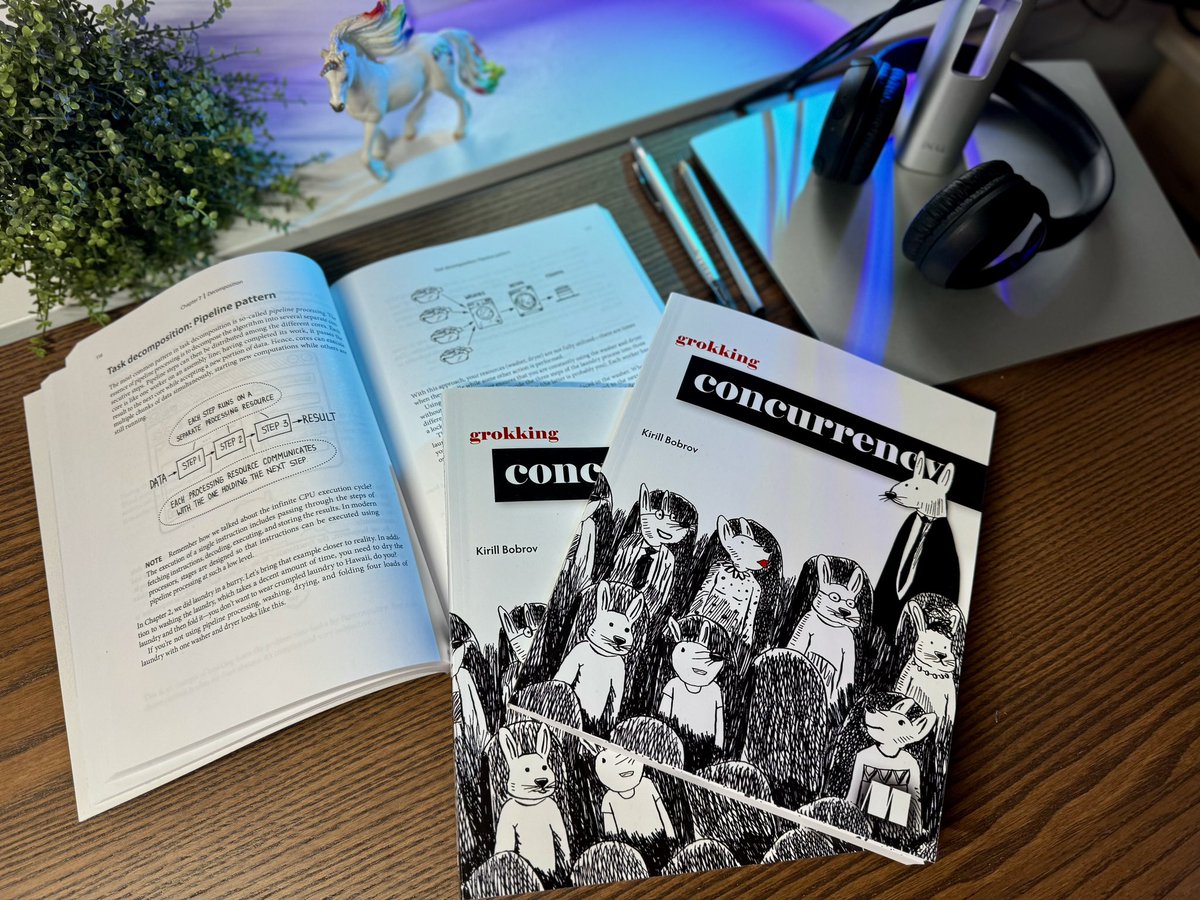
Hello wonderful people!
I’m thrilled to announce that my new book, “Grokking Concurrency,” has officially hit the shelves!
You can find it here: https://t.co/TwSqRbNfJF
I could really use your support in spreading the word!
That’s still partly true, but it’s a much smaller reason. When you think about a plan, it feels finished in your mind. But once you write it down, you notice the gaps immediately.
https://t.co/45uN48ZYdP
If I keep choosing the "recommended" option over and over, I pause and think about what I would pick if there were no label.
It depends on the area though
That’s a warning sign for me when I use an agent. Maybe the task should be bigger so I only check the final result and not every step? Or maybe it’s not really my task at all
He doesn’t even open the tests, and sometimes he has to guess which Python framework his team uses. None of these three signals require reading a single line of code.
What’s the quickest sign for you that a pull request might be off?
Third, he pays attention to file names, especially those related to security. For example, if there’s a user ID in an API folder or a middleware file, he asks for an explanation.
Each agent means she has to reload the map in her head, and none of them actually shortens the task she cares about. Same for me. How many agents can you use before it stops being helpful?
She gives a one-day task to an agent, moves on to something else, and when the agent returns with a question, she has to get back into it. Now she juggles several tasks at once, but the main one still takes three days to a week.
Manning emailed me that Grokking Concurrency is their Deal of the Day - half off today only. I'm bad at this promo stuff and honestly had to dig up the link, but it's a genuinely good deal so I'd feel dumb not telling you.
https://t.co/CX7l3Gin5S - ends midnight ET.