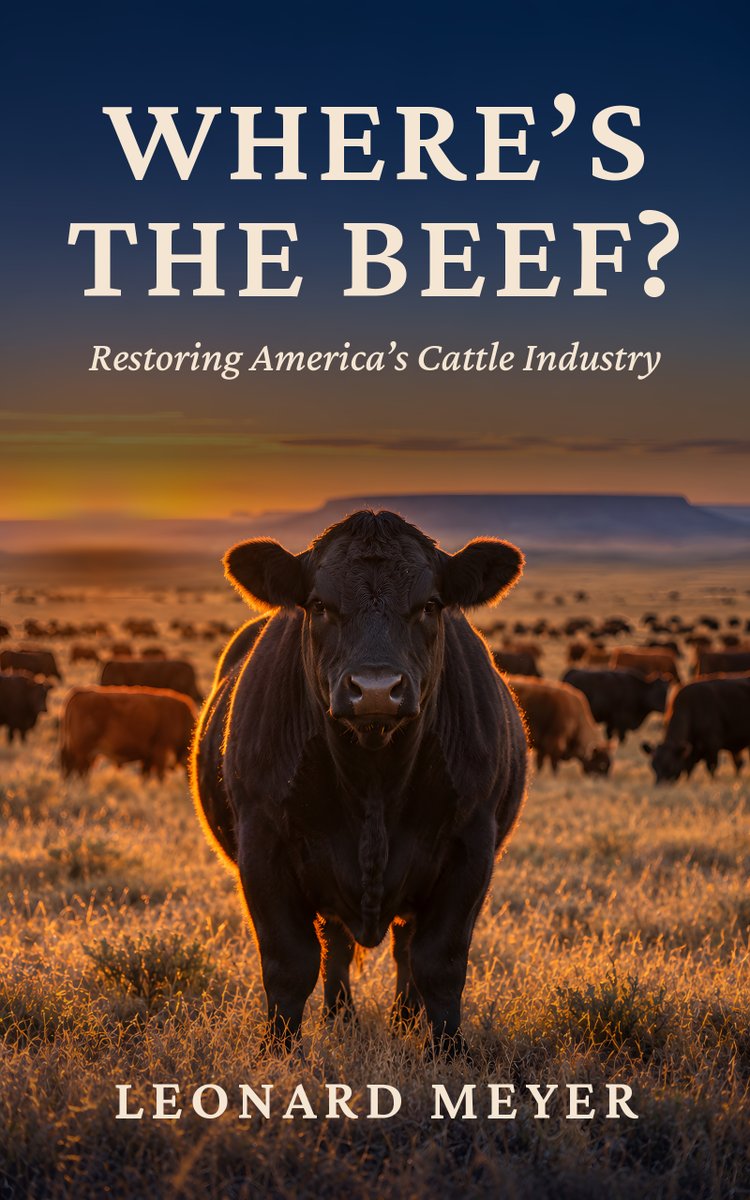
The U.S. cattle herd is the smallest since 1951, and four packers kill about 85 percent of the fed cattle. The beef is still here. What's broken is the chain between pasture and plate. Where's the Beef? lays out how to rebuild it.
https://t.co/D9pLkIdjHo
@trentloos@ZachLahn Every retirement auction is a land question, not just a cattle question. USDA's 2014 tenure survey already counted 283 million acres held by landlords who don't operate them. The herd sells in an afternoon. Who gets the ground decides whether anyone runs cattle on it again.
@modernTman@mrwagmibtc@HodlTarantula Agreed. And the cow that survives a reset is the one that does more than one job. Beef, milk, a calf a year, and she'll work on grass without a grain bill. That's why I run Dexters.
@daily_cowboy September 1873, New York Mills. The 10th Duchess of Geneva sold for $40,600. Eleven Duchess Shorthorns averaged $21,700. Within five years that market collapsed. The pedigree had taken precedence over the cow.
@SecRollins@POTUS@USDA One-time money helps this harvest. It doesn't touch next year's diesel bill. The 1890 sugar bounty paid producers for fourteen years on a permanent appropriation. Only an act of Congress could end it. Farmers need commitments that last past one check.
@FarmrHuntr@trentloos 91 bare, 69 under cover, same day, same thermometer. Twenty-two degrees is the difference between soil biology working and soil biology cooking. Good photos.
@7SwanSwimming Internal improvements is the third pillar, and the one people forget. The Pacific Railway Act of 1862 built the line on federal bonds and land grants, and required the rails and iron to be of American manufacture. The Interstate was the same idea a century later.
I am not writing this from a library. I am writing it from forty acres on the shortgrass prairie of Colorado, where the wind comes hard out of the west and the grass goes brown in August and the cattle know when a storm is coming before the radar does. https://t.co/Qrnmk6cgKN
@SecRollins@USDA Do the same for beef. Imports now run about 17 percent of U.S. beef supply, an all-time high, while the herd sits at a 75-year low. The ranchers can rebuild it. They need a market at home worth rebuilding for.
@RCamposDuffy@yearlins@LonesomeLands Shad's put the long number on the record too: about 665,000 beef cattle operations gone since 1980, roughly half. High beef prices are the symptom. The people leaving the land are the disease. The herd can come back in a decade if the people stay.
@GGunthorp When you were young the cattleman got about 60 cents of every dollar the consumer spent on beef. Today he gets about 39. The cows didn't get worse at their job. The money moved.
@buyacow@idahobeef And the tax assessor makes it worse. Most counties assess farmland at its highest and best use, meaning what a developer would pay. The cattleman pays tax as if his land were already houses. The heir runs that arithmetic and sells.
@sjkokinda Hamilton's point in 1791: a nation that can't produce what it requires can't stay independent of the nations that can. He meant military supply. The list now includes beef. Four packers kill about 85 percent of our fed cattle, and two of them answer to parents in Brazil.
@zerohedge From the cattle side it's already here. The 2025 calf crop was the smallest since 1941. A heifer kept back today won't put beef on the rail for three and a half years. So we're filling the gap from abroad: imports now run about 17 percent of U.S. beef supply.
Market access is the whole fight. Four in five cow-calf outfits in this country run under fifty head. They don't lack buyers. They lack a kill floor within hauling distance. Fourteen years into the state-to-interstate plant program, 163 plants are in it. Bundles like this live or die on the local plant.
Four in five American cow-calf operations run under fifty head. Together they hold about a quarter of the nation's beef cows. That's the USDA's own 2022 Census of Agriculture. The industry counts the cattle. This book counts the cattlemen.
https://t.co/XgP7sANgyp
In 1878 John Wesley Powell told Washington a family could not make a living on 160 acres west of the 100th meridian. Stock country needed 2,560. The report was set aside. Not because the arithmetic was wrong. Because it was inconvenient. Every drought since has checked his math. https://t.co/rOLQ8ZBDSC
How fed cattle get priced. About 72 percent are bought on formula contracts set weeks ahead and tied to the cash price. The cash trade is the other 28 percent. So 28 percent of the cattle set the price for all of them, and the packer already has most of his kill bought.
https://t.co/U81iDnD0b4