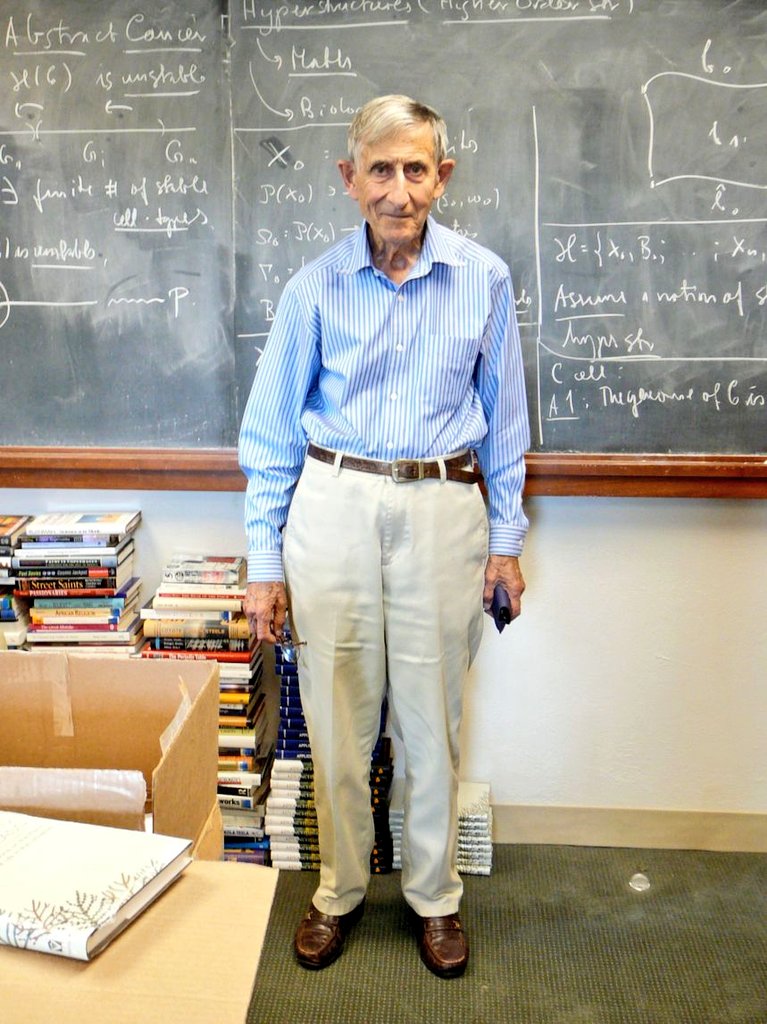
FREEMAN DYSON Emeritus Professor, Princeton Institute for Advanced Studies:
THERE IS NO GLOBAL WARMING, THERE IS ONLY REGIONAL WARMING (AND IT'S A GOOD THING!)
"The change that’s now going on is very strongly concentrated in the Arctic. In fact in three respects, it’s not global, which I think is very important. First of all, it is mainly in the Arctic. Secondly, it’s mainly in the winter rather than summer. And thirdly, it’s mainly in the night rather than at the daytime. In all three respects, the warming is happening where it is cold, not where it is hot.
The people in Greenland love it. They tell you it’s made their lives a lot easier. They hope it continues. I am not saying none of these consequences are happening. I am just questioning whether they are harmful.
There’s a lot made out of the people who died in heat waves. And there is no doubt that we have heat waves and people die. What they don’t say is actually five times as many people die of cold in winters as die of heat in summer. And it is also true that more of the warming happens in winter than in summer. So, if anything, it’s heavily favorable as far as that goes. It certainly saves more lives in winter than it costs in summer.
So that kind of argument is never made. And I see a systematic bias in the way things are reported. Anything that looks bad is reported, and anything that looks good is not reported.
A lot of these things are not anything to do with human activities. Take the shrinking of glaciers, which certainly has been going on for 300 years and has been well documented. So it certainly wasn’t due to human activities, most of the time. There’s been a very strong warming, in fact, ever since the Little Ice Age, which was most intense in the 17th century. That certainly was not due to human activity.
And the most serious of almost all the problems is the rising sea level. But there again, we have no evidence that this is due to climate change. A good deal of evidence says it’s not. I mean, we know that that’s been going on for 12,000 years, and there’s very doubtful arguments as to what’s been happening in the last 50 years and (whether) human activities have been important. It’s not clear whether it’s been accelerating or not. But certainly, most of it is not due to human activities. So it would be a shame if we’ve made huge efforts to stop global warming and the sea continued to rise. That would be a tragedy. Sea level is a real problem, but we should be attacking it directly and not attacking the wrong problem."
文明の崩壊は、庶民にとってはむしろ生活が改善する「暗黒時代」の始まりだったかもしれない。そう言われたら、あなたは眉をひそめるだろうか。ローマ帝国の撤退後、ブリテンの一般市民の栄養状態はむしろ向上したという考古学的証拠がある。中央集権的な搾取システムが消え、重税と徴兵から解放されたからだ。歴史を記録する識字層のエリートたちが「闇」と呼んだ時代は、実は多くの人にとっての夜明けだったのである。
この視点は、現代社会の危機を考える上で極めて重要だ。私たちの文明は膨大な化石燃料エネルギーに支えられ、世界人口の大部分が農業的に脆弱な都市に集中している。夜の地球を横切れば、その無数の光がエネルギーの過剰消費を物語っているだろう。
しかしこの構造は、すでに崩壊へ向かって加速している。毎年のように化石燃料の使用量が過去最高を更新し、再生可能エネルギーへの「移行」が叫ばれながらも、実態はエネルギー消費の総量をまったく減らせていない。バイキングが交易と略奪と奴隷制で築いた拡張主義の世界は、姿を変えて現代のグローバル経済として続いているにすぎない。
問題は、過去の暗黒時代と現代の状況には決定的な違いがある点だ。かつての社会は、大半が自給的な小農であり、エネルギーも食料も基本的に地産地消だった。ところが今、私たちは桁違いの人口を都市に抱え、食料生産を石油由来の化学肥料と長距離輸送に依存している。
この仕組みが音を立ててほころび始めた時、単純に「自給自足へ戻ろう」と呼びかけるだけでは、暴力や略奪といったバイキング的解決策が台頭する余地をむしろ広げかねない。必要なのは、土地と労働の関係を根本から再編し、手遅れになる前に実践可能な共同体の形を模索することである。
その手がかりとなるのが、20世紀初頭に提唱された「分散主義」の思想だ。これは国家や大資本に生産手段を集中させるのではなく、個人や家族が小さな土地や仕事場を持ち、広く所有を分散させようという考え方である。
所有はつねに排他的な柵を意味するわけではない。地域の共有資源管理や職人組合、親族や近隣とのゆるやかな協働と組み合わさって初めて、権力の集中を防ぎつつ持続可能な生活を築ける。
今こそ私たちは、中央集権的なシステムが当たり前だという信仰を疑い、土地を耕し、木を植え、隣人と道具を共有するといった小さな実践の中に、来たるべき社会の設計図を探さなければならない。
文明が光を失うとき、その闇の質を決めるのは結局、そこに暮らす人々の創造性と協調なのだと、私は自らの畑で学びつつある。
—
Chris Smaje(元社会学者、小規模農家)、Asher Miller、Jason Bradford、Rob Dietz(Crazy Town ホスト)
対談 『Crazy Town: Episode 125. The Lighter Side of Dark Ages with Chris Smaje』(暗黒時代の明るい側面:クリス・スマジェと語る)より
Salvador Dalí le encantaba cenar bien.
Grupos grandes.
Mesas largas.
Vinos caros.
Los mejores restaurantes de París y Nueva York.
Y siempre insistía en pagar la cuenta.
Nadie sospechaba nada.
Cuando llegaba el momento de pagar, rellenaba el cheque con el importe total, con calma y elegancia.
Firmaba.
Y entonces, antes de entregárselo al camarero, giraba el papel y hacía un dibujo en el reverso.
Un boceto rápido.
Elefantes.
Caballos.
Figuras surrealistas.
Firmaba debajo.
Y entregaba el cheque al restaurante.
Dalí sabía perfectamente lo que iba a pasar después.
El dueño del restaurante no cobraría el cheque.
Lo enmarcaría.
Lo colgaría en la mejor pared del local.
Un Dalí original, enmarcado, dentro del restaurante.
Valía infinitamente más que cualquier cena.
Todos esos cheques con dibujos fueron guardados.
Y hoy valen una fortuna.
Hay relatos de que hizo esto muchas veces a lo largo de los años, tanto en París como en Nueva York.
En una de las noches documentadas, en el Café de la Rotonde de París, Dalí le pidió una hoja de papel al camarero, dibujó rápidamente un elefante con la trompa levantada, firmó debajo y lo entregó con total naturalidad.
La cuenta estaba pagada.
Y el restaurante había salido ganando.
Lo que hacía Dalí no era solo excentricidad.
Era entender perfectamente que el valor de su presencia y de su firma ya había superado el precio de cualquier menú.
No necesitaba dinero para pagar.
Solo necesitaba un trozo de papel y saber cuánto valía.
Over the last 250 million years, at least five completely unrelated lineages of crustaceans have independently evolved into crab-like forms, a phenomenon so common that biologists gave it its own name: carcinization.
And despite decades of study, scientists still don’t fully understand why it keeps happening.
Detailed evolutionary research shows that “crabbiness”, the distinctive wide, flattened body, tucked tail, and armored shell, has appeared, disappeared, and sometimes reappeared across different branches of the crustacean family tree. In one of the strangest cases, king crabs actually re-evolved crab-like traits after their ancestors had already lost them (a process called decarcinization).
This repeated convergence suggests the crab body plan offers powerful survival advantages. Crabs are incredibly successful and adaptable, thriving in virtually every marine and coastal environment on Earth — from coral reefs and rainforests to deep-sea vents and underground caves.
Their sideways scuttling allows quick directional changes while keeping an eye on predators, and their hard exoskeleton provides excellent protection. Yet the mystery remains: some crab-like species walk forward, others have ditched the shell entirely, and plenty of non-crab crustaceans do just fine without ever evolving into crabs.
The real fascination for biologists lies in what this tells us about evolution itself: under certain environmental pressures, nature seems to repeatedly converge on the same highly effective solutions — almost as if the crab shape is one of evolution’s favorite “optimal” designs.
[“One hundred years of carcinization – the evolution of the crab-like habitus in Anomura (Arthropoda: Crustacea).” Biological Journal of the Linnean Society]


![vt1113's tweet photo. ❤️🔥新たなスタート❤️🔥
歌マクロスYouTube動画1001本目
[歌マクロス] [マキナ] おにゃの子☆girl ~ヒュブシュ・シュルツェ~ https://t.co/BetPtxzwPg @YouTubeより
#歌マクロス #歌マクロスありがとう #マクロス #マクロスΔ #ワルキューレ #マキナ・中島 https://t.co/AUI8llzdFr](https://pbs.twimg.com/media/HJ5IbuYaoAEy21y.jpg)
![vt1113's tweet photo. ❤️🔥新たなスタート❤️🔥
歌マクロスYouTube動画1001本目
[歌マクロス] [マキナ] おにゃの子☆girl ~ヒュブシュ・シュルツェ~ https://t.co/BetPtxzwPg @YouTubeより
#歌マクロス #歌マクロスありがとう #マクロス #マクロスΔ #ワルキューレ #マキナ・中島 https://t.co/AUI8llzdFr](https://pbs.twimg.com/media/HJ5IZWpbMAAoWt_.jpg)
![vt1113's tweet photo. ❤️🔥新たなスタート❤️🔥
歌マクロスYouTube動画1001本目
[歌マクロス] [マキナ] おにゃの子☆girl ~ヒュブシュ・シュルツェ~ https://t.co/BetPtxzwPg @YouTubeより
#歌マクロス #歌マクロスありがとう #マクロス #マクロスΔ #ワルキューレ #マキナ・中島 https://t.co/AUI8llzdFr](https://pbs.twimg.com/media/HJ5IX6EaMAAokPC.jpg)
![vt1113's tweet photo. ❤️🔥新たなスタート❤️🔥
歌マクロスYouTube動画1001本目
[歌マクロス] [マキナ] おにゃの子☆girl ~ヒュブシュ・シュルツェ~ https://t.co/BetPtxzwPg @YouTubeより
#歌マクロス #歌マクロスありがとう #マクロス #マクロスΔ #ワルキューレ #マキナ・中島 https://t.co/AUI8llzdFr](https://pbs.twimg.com/media/HJ5ISu8asAAVgpy.jpg)


![neowing_anime's tweet photo. 【新着】【予約開始】
「ARIA The NATURAL」&「ARIA The ORIGINATION」ORIGINAL SOUNDTRACK [アナログ盤 (LP)]
ARIAシリーズ アナログ化第2弾🎉
→ https://t.co/Jb04jtcJ5R
#ARIAカンパニー #ARIA #レコード #neowing
ネオウィング https://t.co/3WzmSwTOuL](https://pbs.twimg.com/media/HI52IP7aoAAhi3R.jpg)
![neowing_anime's tweet photo. 【新着】【予約開始】
「ARIA The NATURAL」&「ARIA The ORIGINATION」ORIGINAL SOUNDTRACK [アナログ盤 (LP)]
ARIAシリーズ アナログ化第2弾🎉
→ https://t.co/Jb04jtcJ5R
#ARIAカンパニー #ARIA #レコード #neowing
ネオウィング https://t.co/3WzmSwTOuL](https://pbs.twimg.com/media/HI52H3gaQAA-jiT.jpg)


![vt1113's tweet photo. [歌マクロス] [ランカ] そうだよ。 ~ジョリーローズ~ https://t.co/Its1UH3SOW @YouTubeより
#歌マクロス #歌マクロスありがとう #マクロス #マクロスF #ランカ・リー
歌マクロス「そうだよ。」
公開しましたヾ(≧▽≦)ノ
ランカさんで衣装は
ジョリーローズ(Jolie Rose)です https://t.co/60QfnH74UG](https://pbs.twimg.com/media/HI13T7waYAAUQvp.jpg)
![vt1113's tweet photo. [歌マクロス] [ランカ] そうだよ。 ~ジョリーローズ~ https://t.co/Its1UH3SOW @YouTubeより
#歌マクロス #歌マクロスありがとう #マクロス #マクロスF #ランカ・リー
歌マクロス「そうだよ。」
公開しましたヾ(≧▽≦)ノ
ランカさんで衣装は
ジョリーローズ(Jolie Rose)です https://t.co/60QfnH74UG](https://pbs.twimg.com/media/HI13T7waMAAa46_.jpg)
![vt1113's tweet photo. [歌マクロス] [ランカ] そうだよ。 ~ジョリーローズ~ https://t.co/Its1UH3SOW @YouTubeより
#歌マクロス #歌マクロスありがとう #マクロス #マクロスF #ランカ・リー
歌マクロス「そうだよ。」
公開しましたヾ(≧▽≦)ノ
ランカさんで衣装は
ジョリーローズ(Jolie Rose)です https://t.co/60QfnH74UG](https://pbs.twimg.com/media/HI13T7vbsAA_znc.jpg)
![vt1113's tweet photo. [歌マクロス] [ランカ] そうだよ。 ~ジョリーローズ~ https://t.co/Its1UH3SOW @YouTubeより
#歌マクロス #歌マクロスありがとう #マクロス #マクロスF #ランカ・リー
歌マクロス「そうだよ。」
公開しましたヾ(≧▽≦)ノ
ランカさんで衣装は
ジョリーローズ(Jolie Rose)です https://t.co/60QfnH74UG](https://pbs.twimg.com/media/HI13T7saMAAvAyI.jpg)









![neowing_anime's tweet photo. 【新着】【予約開始】
「ARIA The NATURAL」&「ARIA The ORIGINATION」ORIGINAL SOUNDTRACK [アナログ盤 (LP)]
ARIAシリーズ アナログ化第2弾🎉
→ https://t.co/Jb04jtcJ5R
#ARIAカンパニー #ARIA #レコード #neowing
ネオウィング https://t.co/3WzmSwTOuL](https://pbs.twimg.com/media/HI52I3NbQAAyrUU.jpg)

![Rainmaker1973's tweet photo. The complexity of the human brain and its functions in a neat infographic map
[zoomable version: https://t.co/ADEhDeTkmx] https://t.co/DI0gQaywHu](https://pbs.twimg.com/media/HIl494OXgAAZoPj.jpg)

![Rainmaker1973's tweet photo. Over the last 250 million years, at least five completely unrelated lineages of crustaceans have independently evolved into crab-like forms, a phenomenon so common that biologists gave it its own name: carcinization.
And despite decades of study, scientists still don’t fully understand why it keeps happening.
Detailed evolutionary research shows that “crabbiness”, the distinctive wide, flattened body, tucked tail, and armored shell, has appeared, disappeared, and sometimes reappeared across different branches of the crustacean family tree. In one of the strangest cases, king crabs actually re-evolved crab-like traits after their ancestors had already lost them (a process called decarcinization).
This repeated convergence suggests the crab body plan offers powerful survival advantages. Crabs are incredibly successful and adaptable, thriving in virtually every marine and coastal environment on Earth — from coral reefs and rainforests to deep-sea vents and underground caves.
Their sideways scuttling allows quick directional changes while keeping an eye on predators, and their hard exoskeleton provides excellent protection. Yet the mystery remains: some crab-like species walk forward, others have ditched the shell entirely, and plenty of non-crab crustaceans do just fine without ever evolving into crabs.
The real fascination for biologists lies in what this tells us about evolution itself: under certain environmental pressures, nature seems to repeatedly converge on the same highly effective solutions — almost as if the crab shape is one of evolution’s favorite “optimal” designs.
[“One hundred years of carcinization – the evolution of the crab-like habitus in Anomura (Arthropoda: Crustacea).” Biological Journal of the Linnean Society]](https://pbs.twimg.com/media/HIMamyQXsAAw17K.jpg)


