Sleep enthusiast. Neuroscientist & junior group leader @ETH_en developing/optimizing methods to modulate sleep oscillations. On a mission to establish Sleep2.0.
Was passiert, wenn wir Frühgeborenen auf der Intensivstation nachts das Licht ausmachen?
Sie dürfen früher nach Hause.
Und das ist nur eine von vielen erstaunlichen Schlafgeschichten.
🎥 Zum Vortrag: https://t.co/0wr26JdlAb
Such a cool study! participants sleeping with open eyue to enable pupil tracking 👀congrats @Manu_C_D, @lustenca@anita_luthi and team: https://t.co/FPkjKyRNiA
🙌Yesterday, our lab had the pleasure of hosting Prof. Laura Lewis @lauradata for a fascinating guest talk on the neural regulation of #brain#fluid flow across #sleep and wakefulness 🧠💤. Her insights are pushing the boundaries of our understanding of brain function!
Check out SleepEEGpy: our newly developed open-source python-based all-in-one package for preprocessing, analysis, and visualization of sleep EEG data, building upon MNE-Python, YASA, and SpecParam (FOOOF). Please RT & share 🙏
https://t.co/W8DF9EVA6P
👉Please register before you head off for the Holiday Season 👉👉@UNIL#Sleep Research Day 👉👉👉 Hear about the diversity of projects on sleep @FBM_UNIL@CHUVLausanne 👉👉👉👉Human, Rodent,Drosophila, Keynotes @lustenca Mehdi Tafti
🚨 Last Call! Tomorrow marks the closing of applications for the Gender Equality Forum. @lustenca Apply before 30 November, 23:59 CET: 🔗 https://t.co/7uQxslWRB5
Phenomenal, important, & timely piece of literature! Kudos to the many superstars involved (can't tag everyone, sadly): @michaelgrandner@docjockzzz@doctorpoe @RoxannePrichard
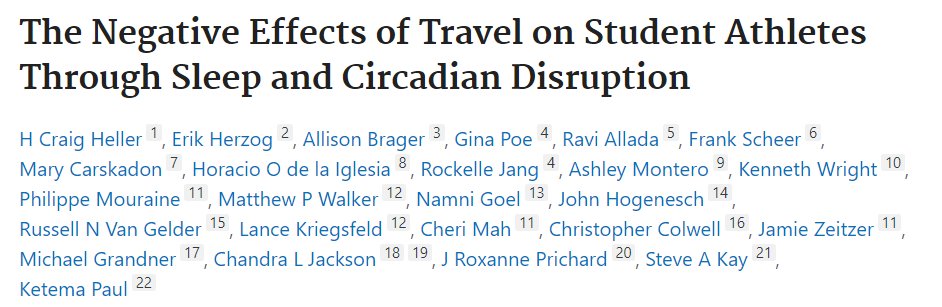
The Negative Effects of Travel on Student Athletes Through Sleep and Circadian Disruption https://t.co/bkawakGFJ0
#Sleep #SleepPeeps #Circadian #NCAA #sports #Health #performance
Our new study reports the activity of Hypocretin/Orexin neurons during sleep and how their absence deregulates the noradrenergic system: “Hypothalamic control of noradrenergic neurons stabilizes sleep”
https://t.co/zopgi8bi3V
🌟Aspiring advocates for Gender Equality, this one's for you! Join the Gender Equality Forum's call for applications by Nov 30.
Help promote equity in #sleepresearch and advocate for unbiased treatment of all #ESRS members. Be a part of change!
https://t.co/Ej2LnXqay3
@lustenca
Did you know? On average, we spend one-third of our life sleeping, and our brain rhythms reveal more than rest! Join us on Oct 26 for an inspiring lecture by @lustenca on sleep, brain health, and early disease indicators #SleepScience#BrainHealth@c4dhi https://t.co/Oc7hw05GIO
Who knew bedtime stories could be about #hearthealth? Researching #sleep and #hearthealth is like weaving a lullaby for the heart. 🛌❤️ Cheers for the spotlight, @sleepdiplomat!
Brief tones during deep #sleep can enhance #cardiac function, with the left #ventricle contracting and relaxing more powerfully💗, enhancing blood circulation for #heart health. Amazing! https://t.co/hgi6ELZ1TJ
Wird das Gehirn während des Tiefschlafs mit leisen Tönen stimuliert, verbessert sich die Herzfunktion deutlich. Das könnte unter anderem bei Herzkreislauferkrankungen und für Leistungssportler:innen interessant sein, wie eine neue Studie aufzeigt.
https://t.co/z1XQRvDOLV
Increased deep sleep benefits your heart. Stimulating the brain with gentle sounds during deep sleep significantly enhances cardiac function, according to a new study of UZH and @ETH_en. 😴🫀
➡️ https://t.co/vDZf4vafyG
@lustenca@Chrigi_Schmied@NCMLabETH@Unispital_USZ
Researchers at ETH and the @Unispital_USZ play ultra-brief tones to stimulate the brain during deep sleep. The positive impact on the heart could be relevant both in disease treatment & competitive sports.
https://t.co/zJZtYFmXJD
#Cardiovascular#echocardiography#Cardiology
🎉 Exciting update!🎉 Our team's latest research found a link between sleep slow waves and enhanced heart function. 🧠❤️
Discover more from our study published in the European Heart Journal https://t.co/YZFKaeE9h5