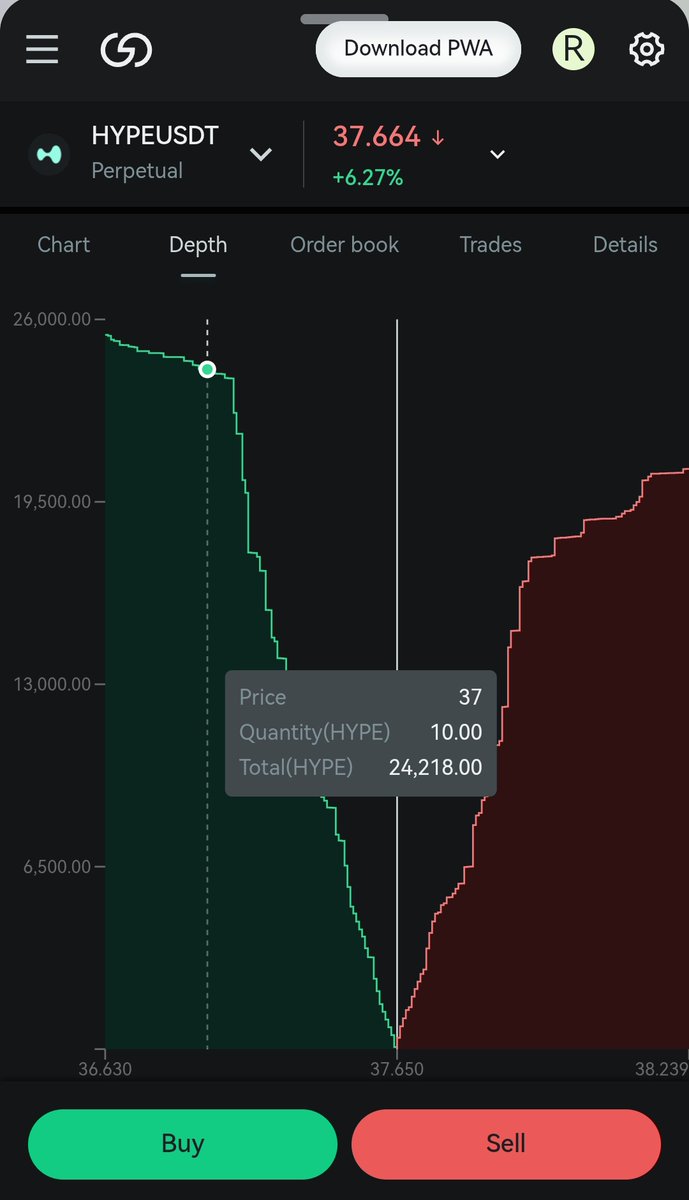
@OgarRuth3 Waiting between trades is where most capital becomes inefficient. You’re watching charts for hours sometimes. Knowing the balance can still earn while you wait actually changes how you think about idle collateral.
Every trader I know has experienced this. Your capital is sitting in your account while you wait for the right setup. It feels safe, but it’s also completely idle. In my head it always looks like this: charts open, waiting for the setup, funds just sitting there doing nothing.
Yoga taught me something lifting never did.
Control matters more than force.
You don’t rush a pose. You hold it. You breathe. You trust the structure supporting you.
That’s how @dgrid_ai thinks about AI.
It’s not chasing flash or hype. It’s building something steady enough to support real weight. Instead of renting intelligence from a single provider, DGrid spreads inference across a network that anyone can participate in.
No quiet rule changes.
No sudden pullbacks.
No permission slips.
Developers get a neutral layer they can rely on. Node operators earn by contributing real value. The system holds itself accountable.
That’s not a product mindset.
That’s a practice.
Like training, real infrastructure isn’t exciting every day. But it’s what lets you show up tomorrow without fear of collapse.
AI doesn’t need more intensity.
It needs balance.
And that’s what DGridAI is building toward.
The end of InfoFi came with mixed reactions. Some people are relieved because spammy content is gone. Others are frustrated because real effort, consistency, and time were wiped out overnight. That is how crypto metas work. They come fast, peak faster, and disappear just as quickly. InfoFi is not the first and it will not be the last.
What actually matters is how projects respond when the meta dies.
@Verse_Eight handled it the right way. Instead of panicking or going silent, they acknowledged the work creators already put in. They took a snapshot, locked in recognition, and rolled out a new path forward. That alone says a lot.
What comes next is where things get interesting. Verse8 is pushing beyond the InfoFi bubble. More game jams. Better creator support. Stronger distribution to real players, not just CT. A real path for creators to scale and monetize quality work.
Verse8 is building for creators who want longevity, not just short-term metrics. If you are serious about creating playable content that lasts, this is still an opportunity worth paying attention to.
Dropee is making moves, and the focus is shifting from “when will the token launch?” to what’s actually happening in the ecosystem right now.
They just launched a $150,000 Buzzdrop campaign to reward creators and boost engagement. This isn’t just an airdrop, it’s about supporting real content and activity in the community.
The Daily Combo feature inside their Telegram game is also live, giving users an easy way to stay active and earn rewards every day.
Yes, the $DROPEE token launch has been delayed, but the project is still moving forward with careful planning, not disappearing.
If you’re following @dropee_app, stick to official updates, ignore unofficial claims, and pay attention to the ecosystem actually being built. The project is evolving, and real activity is happening now.
Most projects in this space spend their energy telling you what they will build.
@dropee_app spent its time building instead.
While timelines and announcements stayed quiet, real apps were being launched, tested, and used by millions of people. That disconnect is what confused a lot of observers. In crypto, silence often gets mistaken for failure.
But Dropee’s model isn’t about hype cycles or one big launch moment. It’s about constant output. Ideas go live fast, real users decide what survives, and weak products are dropped without ceremony.
That approach doesn’t look flashy on a timeline, but it creates something more durable. A system that keeps producing, not a roadmap that keeps changing.
Most AI today lives behind big companies. That means slow changes, surprise price hikes, and systems you can’t really control. If you’re building anything that depends on AI, that can be a nightmare.
@dgrid_ai solves this by turning AI into something more like infrastructure, reliable, open, and community-powered. Instead of one central server, it runs across a network of independent nodes. Anyone can participate, which means there’s no single point of failure and no one controlling everything.
For builders, this changes everything. You can access AI without huge bills or complicated setups. You don’t have to worry about a provider pulling the plug or changing rules overnight. Everything works like a dependable utility you can rely on.
For the Web3 world, this is huge. Projects can build AI-powered apps that are truly decentralized, transparent, and fair. DGridAI isn’t just another AI tool, it’s a foundation for creating systems people can trust.
If we want AI that’s always available, accountable, and in the hands of the community, DGridAI is the direction that actually makes that possible.
Someone building with AI told me this recently,
“The hardest part isn’t getting AI to work. It’s getting different AIs to work together.”
That sums up the problem perfectly.
Today, AI tools feel scattered. One tool works one way. Another works completely differently. If you want to switch, you often have to rebuild things from scratch. Not because you did anything wrong, but because everything speaks a different language.
That kind of friction slows people down.
@dgrid_ai RPC is trying to remove that friction.
Instead of forcing builders to deal with dozens of different systems, it creates one simple way to access many AI tools through a single connection. You ask for what you need, and the network figures out where it comes from.
You do not need to know where the AI is running.
You do not need to change your setup every time you switch tools.
You just get results.
That might not sound flashy, but it is the kind of thing that actually makes AI usable at scale.
Less time fixing connections.
More time building real products.
Sometimes the biggest improvement is not more power.
It is making things easier to use.