During the reign of Chieftain Yao, severe floods caused great distress to the people. Yao appointed Gun to manage the floods, but after nine years with no results, Yao replaced him with Shun. Shun discovered Gun's failure, exiled him, and appointed Gun's son, Yu, to continue the flood control efforts.
How did Chinese Noah deal with flood and created the first dynasty of Ch... https://t.co/WX2AZV16B1 来自 @YouTube
During the reign of a tribal chieftain named Yao, floods flooded the sky and surrounded the mountains, flooding the hills and
causing great distress to the people. Yao visited someone who
could manage floods, and the ministers all said that Gun was
capable. So Yao adopted the advice of his courtiers and
appointed Gun to manage the flood. After nine years, the flood did not recede, and Gun did not achieve any results. So Yao
searched for another talent and found another person named
Shun. Shun was appointed to perform the duties of the emperor and patrol nationwide. During his patrol, Shun discovered that
Gun had achieved nothing in controlling the water, so he exiled him to a barren mountain and let him die there. People all over the world believe that Shun's punishment of Gun was correct. At this time, Shun recommended Yu, the son of Gun, and let him inherit Gun's career.After Yao's death, Shun asked the ministers who could better
fulfill Yao's career and hold official positions, and everyone recommended Yu as the Minister of Works. So Shun appointed Yu and said, "If you go and manage the floods well, you must work hard."
Yu is a quick and diligent person; He is morally upright,
benevolent and peaceful, and speaks with integrity. The virtues he displays are regarded as normative norms by people. He is diligent and solemn, and formulates rules and regulations for people.
Yu, along with two ministers named Boyi and Houji, followed
Shun's orders and sent lords and officials to recruit laborers to
separate the land and water of the country. They cut down trees according to the direction of the mountains to make road signs
and determine the mountains and rivers. Yu was saddened by
the punishment for his father Gun's ineffective water
management, so he worked hard and thought hard. After thirteen years outside, even if he passed by his house, he dared not
enter. Yu's food and clothing were very simple, but the sacrifices he offered to his ancestors and gods were very generous; Yu's residence was very rudimentary, but he was generous with the
financial resources spent on repairing canals and digging ditches. He drives by car when walking on flat ground, by boat when
walking on waterways, uses a wooden sled when walking on
muddy ground, and puts on toothed shoes when climbing in the mountains. Yu carried with him a leveling instrument and rope
ink, as well as a drawing style compass and ruler, which were
used to measure the seasons. They were used to open up land
in Kyushu, open up roads in Kyushu, build embankments in Kyushu, and measure the mountains. Yu provided rice seeds to the people and taught them to plant in low-lying and humid areas. He also ordered Hou Ji to provide emergency food for the
people to satisfy their hunger. In areas lacking food, Yu brought food from affluent areas to supplement the insufficient areas,
ensuring a balanced food reserve in various regions. Yu also set the standards for offering tribute according to different situations in different regions, as well as the transportation conditions of mountains and rivers.
After controlling floods, Yu divided ancient China into nine
provinces, which is also the origin of the term "nine provinces" referring to China. The mountains throughout the country have
been rectified, the rivers have been cleared, and embankments
have been built near the lakes and lakes. The surrounding feudal lords have all come to pay tribute. Proper material management, accurate surveying of land in various locations, and cautious
taxation based on local conditions, all levied according to
different levels of soil. The central government granted land and surnames to feudal lords. The territory extends eastward to the
sea, westward to the desert, and from the north to the south, the monarch's prestige and teachings can orders throughout
nationwide. So Shun announced the success of water management to the whole world. From then on, the world became peaceful and stable. As a result, China began to transform from a tribal
and clan society to a state.
Gao Tao served as a judicial officer to govern the people. Shun went to court, and Yu, Bo Yi, and Gao Tao together went
forward to speak to Shun. Gao Tao shared his views on
emphasizing moral cultivation, long-term planning, and jointly
assisting the monarch. Be cautious in restraining oneself, making the people generous and obedient, and letting the wise men work hard to assist, starting from oneself, making good use of talents, and stabilizing the people. Gao Tao believes that there are
usually nine types of virtues in a person: magnanimity and
majesty, gentleness and firmness, honesty and respect, good
governance and prudence, obedience and perseverance, integrity
and gentleness, simplicity and integrity, decisiveness and
steadfastness, firmness and morality. Those who can demonstrate these virtues can do things well. If one can demonstrate three
virtues every day and diligently follow them from morning till
night, one can be appointed as a noble and noble official. If one displays six types of moral character rigorously and respectfully every day to assist the emperor, they can be conferred the title of marquis. By accepting and universally implementing all of
them, one can arrange positions for individuals with nine moral qualities, allowing talented individuals to obtain official positions and officials to be respectful and cautious. Do not promote
extravagance, debauchery, and cunning. Those who are
incompetent in their official positions will disturb God and will be punished by God.
Shun asked Yu about his way of governing the world. Yu
believed that rulers must be cautious and have a positive
mindset. By governing with benevolence and virtue, everyone in the world will support you. Shun believed that ministers should be the hands, feet, ears, and eyes of monarchs. If a monarch
wants to help the people of the world, ministers must assist. If
the monarch has made mistakes, ministers should correct and
assist the monarch. Ministers should not flatter in front of others and slander the monarch after leaving court. The monarch
respects all ministers. Those treacherous officials who enjoy
flattery and flattery will be completely eliminated as long as they can promote good governance.
Yu left home four days after he got married. After his wife
gave birth to a son, Yu passed through the house three times,
but due to being busy managing the flood, he did not go in to visit his mother and son, so he was able to successfully manage the flood. Yu also opened up territory and educated the people with benevolence, allowing them to live and work in peace and contentment. Shun recommended Yu as his successor. Seventeen years later, Shun passed away. At the end of the three-year
mourning period, Yu fled to somewhere else and gave up the
throne to Shun's son Shang Jun. All the feudal lords of the world left Shangjun and went to stand with Yu. Yu then ascended to the throne of the emperor and established the Xia Dynasty.
After Yu ascended the throne, he recommended Gao Tao and
entrusted political affairs to him, but Gao Tao died. Afterwards, Yu appointed Bo Yi and allowed him to handle political affairs. In his tenth year of reign, Yu went on an inspection tour to the east and passed away in Kuaiji, handing over the country to Bo Yi. After three years of mourning, Bo Yi handed over the
throne to the son of Yu called Qi, and fled to somewhere else like Yu. Yu's son Qi is very talented, and people nationwide
hope that he can become the monarch. When Yu passed away,
although the nation was given to Bo Yi, the time for Bo Yi to assist Yu was still short, and the people of the world were not convinced. So all the feudal lords left Bo Yi and went to stand with Qi, and Qi ascended to the throne of the monarch, which was the second ruler of the Xia Dynasty, Qi. As a result, the
abdication system that continued from the Yao era was replaced by the family inheritance system.
The ancestral Turks and the ancient Chinese have a history of conflict and diplomacy.
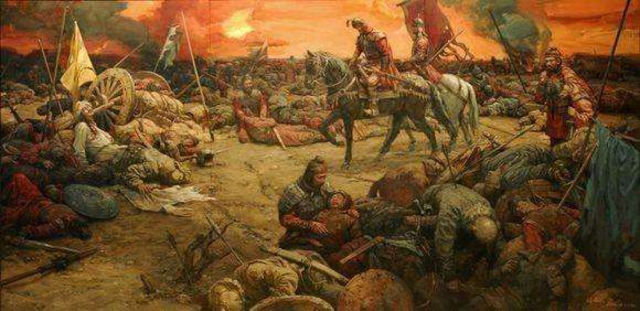
After forty years of intense pursuit and attack, the Eastern and Western Turks were defeated successively. It took another 60 years to completely conquer the resurgent post-Turkic Empire, and the Tang Empire achieved an epic victory.
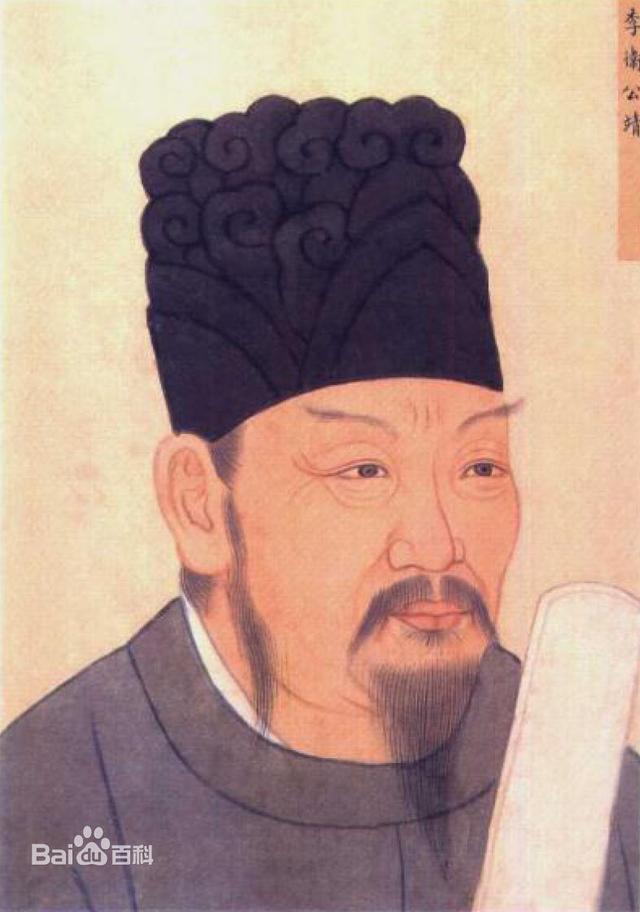
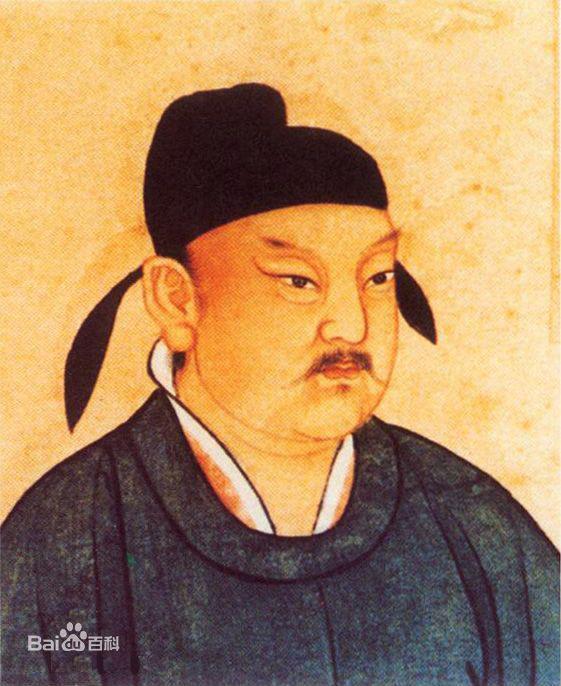
In 626, Emperor Taizong Li Shimin had just assumed the throne, and the Eastern Turjue thought it had an opportunity to take advantage of it, and led an army of 200,000 straight outside Chang 'an and stationed on the north bank of the Wei River, which shook the capital. Emperor Taizong, who had great talent and great strategy, did not disarrange himself, led Fang Xuanling and other six horses to reach the south bank of the Wei River, dialogued with Jie Li across the Wei River, and accused Jie Li of invading in violation of the covenant. Taizong's powerful aura intimidated Jie Li Han. Soon the Tang army arrived and covered the field. Jie Li Khan saw the Tang army, promised to alliance after leading troops and retreat. They say if you don't do it, you don't die. The Weishui Alliance, the Tang Empire leadership was very angry, the consequences of course very serious. Only four years later, Li Jing attacked Yinshan, the Eastern Turkic Khanate that had spanned Central and East Asia for seventy years, and was instantly destroyed.
In the first month of 630, 100,000 Tang troops divided into six routes and attacked Eastern Turjue, and the Yinshan Battle broke out. This war, the Tang Empire elite out: the commander is a generation of military god Li Jing, each branch command has Li Shiche che (that is, Xu Maogong), Li Daozong, Xue Wanche, etc., the deputy will have Wei Chi Jingde, Su Dingfang, Qin Shubao, Cheng Zhijie (that is, Cheng Niao Jin) and other famous names, no problem a super luxury All-Star
One dark and snowy night, Li Jing himself led 3,000 valiant men to raid Dingxiang (present-day Inner Mongolia and Linger North), the Turkic army was defeated, and Jie Li Khan fled north to the edge of the desert. Li Shixu came out of the clouds and destroyed the Turkic army at Bai Dao (now the west of Hohhot City in Inner Mongolia) Jie Li Han again fled to Tie Mountain (present-day Bayan Obo in Inner Mongolia) and sent an envoy to the Tang Dynasty to offer surrender.
Li Jing and Li Shiche after meeting in Bai Dao, think Jie Li Khan's surrender is delaying tactics, must be all Then the selected ten thousand horsemen will give chase. Su Dingfang led two hundred crossbow cavalry as the vanguard, by the fog filled the rush march, only one mile away from the enemy when the fog cleared, break Khan's tooth tent, Jie Li Khan fled alone. Over ten thousand enemies were killed and over one hundred thousand prisoners captured. On his way west to Ningxia, Jie Li Han was captured alive by the Tang, and the Eastern Turjue was destroyed. This is another epic victory of the Chinese nation against foreign enemies since the Han Dynasty Huo Qubing, Dou Xian Yanran Lershi. This extended the Tang Dynasty's territory to 600 li north of Yinshan, reaching Baikal. Li Jing's famous name has been passed down through the ages, and he was portrayed as the Heavenly King of Tota Li in Journey to the West.
At that time, the Tang Empire was an era of passion and martial arts. At that time, the sky was basically blue, the water was basically clear, the meat was basically safe to eat, and there was basically no market for small fresh meat." It is better to be a centurion than a scholar." Men are galloping on the battlefield, famous frontier for glory, the girl is absolutely not to take.
After the destruction of the Eastern Turks, Tang's attention turned to the Western Turks, who still controlled the Western regions. In 628, the Western Turkic Empire was divided into two parts: the Northern Court and the Southern Court. The desert is dusty and the sun is dark, and the red flag is half rolled out of the chariot gate. In 637, Li Jingtong defeated Tuyuhun (which included present-day Qinghai and Gannan) and cut off the southern flank of the Western Turks. In 640, Hou Junji led the army to destroy the Gaochang State in the Western regions (today's Turpan, Xinjiang), and in 648, the former Eastern Turkic Army conquered the Ashnasel and pacized the Kuzi State (today's Kuqa, Xinjiang), and the Western Turkic power gradually declined. In 649, after the death of Emperor Taizong, the former Western Turkic general Ashnahoru rebelled and declared himself Khan of Shabaluo. In 655, Tang Gao sect Cheng Bite Jin led the army to crusade, but returned in vain. Cheng bite gold for fear of the enemy timid battle was dismissed, the Su Dingfang of the brave army was promoted to march general manager.
"The moon brants fly high and flee alone in the night. When he tried to drive away his horse, the snow covered his bow and sword." In December 657, Su Dingfang, then 65 years old, once again led an army against the Western Turks. When the two armies met on the 咥 River (present Ertysh River in Xinjiang), the Su Ding side destroyed 100,000 enemy troops with 10,000 men and decapitated tens of thousands of soldiers. It was snowing heavily, up to two feet deep. The Suding side marched through the wind and snow, pursued more than 200 miles, and again defeated the Turks at Jinya Mountain, beheading tens of thousands. Khan Ashnahoru fled with only a dozen horses to Shiguo (today's Tashkent city in Uzbekistan), where he was captured by the king of Shiguo and handed over to the Tang army, and the Western Turkic Empire was destroyed. At this point, the Tang Empire reached the height of its military and cultural achievements, becoming the most extensive Han dynasty in Chinese history (see figure below), with a territory of 12.37 million square kilometers. The western part of the empire covered the eastern part of present-day Kazakhstan and most of Afghanistan, the eastern part of the present-day Korean Peninsula, the northern part to present-day Siberia, and the southern part to the north of present-day Hanoi, Vietnam. The Aral Sea, Lake Balkhash and Lake Baikal all became internal lakes of the Tang Empire.
A good teacher makes a good student. Su Dingfang's disciple Pei Xingjian was also a famous general with both civil and military talents. In 680, Pei Xingjian defeated the rebellious Turkic army in Montenegro (northwest of Baotou City in present-day Inner Mongolia), and captured the chief Fengzheng alive. In 681, Khan Vonin surrendered to Pei Xingjian, who promised to keep Vonin alive. However, after returning to the capital, Shi Zhong became jealous of Pei Xingjian's great achievements and encouraged Emperor Gaozong to kill Fu Nian Khan. This laid the groundwork for the rebellion of the Turkic nobles.
In 682, Ashna Guduolu gathered 700 people to rebel against the Tang Dynasty and established the later Turkic Khanate (682-745). After the establishment of the Muuran Khan, in the early 8th century, invaded the western regions, the east and west to expand more than ten thousand miles, control the string of four hundred thousand, once restored the former strong situation. During the reign of Biga Khan, peace was generally maintained with the Tang Dynasty. In 745, under the combined attack of the Tang Dynasty and the Ouigour people, the later Turks were destroyed. The Huihe people occupied the former lands of the Eastern Turks.
In the middle and late Tang Dynasty, the Shatuo people, a branch of the Western Turks, had been acting as mercenaries for a long time and played an important role in the troubled times of the late Tang Dynasty. During the five dynasties, Li Cunxu, the first emperor of the Later Tang Dynasty, and Liu Zhiyuan, the first king of the Later Han Dynasty, were both Shatuo people. After that, the Turks gradually faded from Chinese history until they disappeared.
Stavrianos, a famous American historian (author of A General History of the World), believes that the Chinese civilization is the oldest in the world and has never been interrupted. In the 2000 years of confrontation between the Chinese civilization and the nomadic civilization, the nomadic people had only two outcomes: either they were driven away or they were assimilated. The Turks of the Tang Dynasty were no exception. After the destruction of the Eastern Turkic state, most of the Eastern Turkic people moved south to integrate into the Tang Dynasty, and one of them joined the Huihe people. After the subjugation of the Western Turkic state, most of the Western Turkic people moved westward with their families and gradually entered Central and Western Asia.
Historical enigma - What led to the disappearance of Loulan?
Loulan became a vassal state during the Han Dynasty (early Roman Empire), when China controlled all of Xinjiang and set up a Western regional capital, and its inexplicable disappearance over the next few hundred years became a historical mystery
No matter when, the appearance of the two words Loulan, I do not know how many people will disturb the heartbeat.
It used to be bustling with traffic,
It was rich in goods, a land of wealth,
It was once known as the happy land of the Western regions, the desert paradise, and an important transit trading post on the Silk Road...
However, it suddenly disappeared mysteriously in the annals of Chinese history as if it had evaporated from the earth, becoming an unsolved mystery of the world. Mysterious sun cemetery, after 4000 years of eyelashes still root river princess, it is still hiding how many secrets?
Today, Loulan has become a synonym for mystery, but in the real history, this small country has explained how to be a good wall grass clearly.
The name Loulan first appeared in Records of the Grand Historian.
In 176 B.C., Xiongnu Dun Singyu mentioned in a letter to Liu Heng, Emperor Wen of Han that Loulan belonged to Xiongnu at that time. However, it really entered people's vision, or in 138 BC, when Emperor Wudi's envoys walked out of the Yumen Pass and opened the door of the Western regions, Loulan, the closest country to the Han Dynasty, slowly became inextricable with the Central Plains.
Loulan's background is very simple, basically the process of submission to various powers.
Since about the 3rd century BC, the Loulan people established their own country, and made the capital of Loulan city (the site is on the northwest bank of present-day Lop Nur in Xinjiang). First under the rule of the Yue Clan (zh), from 177 BC to 176 BC, the Xiongnu defeated the Yue clan, and it recognized the Xiongnu as the boss. Although he has been a younger brother and the territory is not large, Loulan, who is good at management, quickly developed into a famous "country of the city" on the Western Region Road.
According to the Book of Han · Biography of the Western Regions, Loulan had more than 14,000 residents and nearly 3,000 soldiers at that time, whose strength and influence could not be underestimated.
However, Loulan's initial contact with the Han Dynasty was definitely fraught with discord.
In the early Western Han Dynasty, the Xiongnu soldiers had plenty of food, and they did not pay any attention to the Han Dynasty. Liu Bang was humiliated in the siege of Bai Deng, and they also wrote letters to molest Queen Lu. The early Han Dynasty was in urgent need of rest and rest, and had to implement a humiliating policy of reconciliation and sending beautiful women to the Xiongnu.
These past, when the Xiongnu years of younger brother Loulan, how can not understand?
Therefore, in the early days of Emperor Wudi of Han Dynasty, he sent messengers to lobby the Western regions, and when he passed through Loulan, Loulan repeatedly acted as the eyes and ears of the Xiongnu, attacked and robbed the messengers of the Western Han Dynasty, and everywhere hindered the foreign policy of Emperor Wudi of Han Dynasty in alliance with the Yue Dynasty to attack the Xiongnu.
But they probably never dreamed that Emperor Wudi was not the previous Western Han emperor, but a tiger with no problems, and it was as easy to destroy a small state as to crush an ant. In 104 BC, the angry Emperor Wudi sent troops to invade Loulan and directly captured the king, and Loulan had to submit to the Han Dynasty. But as a result, the Xiongnu quit again and sent troops to attack Loulan. Loulan which side dare not offend, had to send envoys on both sides to recognize the big brother.
You're gonna be safe if you stay on the fence? It's not that simple!
When the old king of Loulan died, the Huns were the first to send Loulan proton an to return to the throne, the Ann to rely on the support of the Huns, and did the old business of attacking and killing the Han ambassador. There is no wall in the world that is not leaky, and Tu Ji, the younger brother of Loulan King who soon surrendered to the Han Dynasty, reported these conditions to the Han Court.
At that time, although the young Emperor Zhaodi was on the throne, General Huo Guang was not a person who could just muddle through!
Huo Guang immediately sent Fu Jiezi to Loulan to assassine An GUI, made Wei Tu Ji king, and even changed the name of Loulan directly to Shanshan and moved the capital to 扜 Licheng (near present-day Ruoqiang in Xinjiang).
From then on, Loulan thoroughly learned. Not only with the Han Court sent troops to camp in Loulan, along the Yumen Pass to Loulan, set the beacon tower pavilion barrier, Wei Jin and the former Liang period, and even became the Western Regions long history of the government.
If only to survive in the gap between the Xiongnu and the Han Dynasty, Loulan is not destined to become a legend. However, in the accidental joke of history, Loulan suddenly disappeared, making it a permanent mystery like the Mona Lisa Smile.
It clearly existed brilliantly in history, why did it disappear without any documentation? Where have all the people who once lived in Loulan gone?
In 644 AD, Master Xuanzang of the Tang Dynasty passed through the ancient town of Nabobo in Loulan and left such a record: "From now on, I traveled more than six hundred li east to the old country of Semordona, that is, the land of Niemu, and the city was left uninhabited. Then I traveled more than one thousand li northeast to the old country of Nabobo, that is, the land of Loulan."
When Fa Xian, a senior monk of the Eastern Jin Dynasty, passed through this place in 400 AD, he said in the book of the Kingdom of Buddhism: "There are no birds above and no beasts below, and the eyes are everywhere, only the dead bones are the mark of the ears."
How easy is it to speculate on the mystery of Loulan's disappearance today when Xuanzang and Faxian, who are closer to the time of Loulan's existence, saw a scene that was still desolate and inhospitable? Based on the limited literature and some unearthed cultural relics, experts have had five assumptions:
Theory one: war
At that time, a powerful army invaded Loulan, and then killed and looted the city, killing all the people in the city, so Loulan naturally became an empty city, and over time, it was buried underground. According to the "Three Kingdoms · Wei Shu · Wen Di Ji", the Northern Wei had sent the general Wan Du to the west expedition, and Wang Changling in the "Seven military lines" in the line "Yellow sand in a hundred battles wearing gold armor, until the destruction of Loulan will not return."
Theory two: Climate
When Loulan was prosperous, the rainfall there was sufficient to ensure the normal life of the people. But over time, the climate gradually became dry, crops died, and people had to flee Loulan. Soon after, the empty city of Loulan was buried by wind and sand.
This speculation is mainly based on Loulan's promulgation of the world's earliest environmental protection laws found so far, as well as the record in the Water Classics. In the book mentioned after the Eastern Han Dynasty, due to the middle reaches of the Tarim River Zhuobin river diversion, resulting in Loulan serious water shortage. Soler of Dunhuang led 1,000 soldiers to Loulan City, and summoned 3,000 soldiers from Shanshan, Yanqi and Qiuci to cross the riverfront day and night to divert water into Loulan City, but it was still to no avail.
Hypothesis 3: Loss of commercial status
Loulan was the gateway to the Silk Road, and the people of ancient Loulan depended on prosperous trade for their livelihood, but later, the Silk Road opened up another northern route, which led to the gradual abandonment of the original trade route. Loulan people lost their survival, had to flee.
Another similar speculation is that the last time Loulan existed, according to the ancient books, was during the Sixteen States of the Eastern Jin Dynasty, when the political situation was most chaotic, and many ethnic groups in the north set themselves up as vassals and fought with each other. And Loulan is a battlefield, frequent wars, predatory looting so that its vegetation and traffic and trade status has been destroyed. The ancient country on the edge of the desert, without these two basic elements, could not survive.
Theory four: The plague
A plague from the field, the legend called "hot wozi disease", took the lives of most residents in Loulan city, lucky survivors have fled Loulan, far away from home.
Theory five: Biological invasion
A kind of mole mantis insect introduced from the Lianghe Valley, has no natural enemies in Loulan, lives in the soil, and lives on the white paste soil in the Loulan area. Swarms into the houses, people can not destroy them, they have to abandon the city...
The inscription on the Chinese ding.
As an ancient Chinese saying goes:
"Filial piety comes first."
"Disciple discipline, sage instruction. The first filial brother, the second sincere faith."
Since ancient times, Chinese people have been paying attention to "filial piety" first, honoring parents is born and human should do the moral, how to show your filial son's heart?
Aisin Juelo Hongli is a famous filial son in history. In order to celebrate his old mother's birthday, Qianlong gathered rare treasures: Xuan Palace crystal ball, tourmaline beads, and hand-painted "Beads Longyao birthday star Axis".
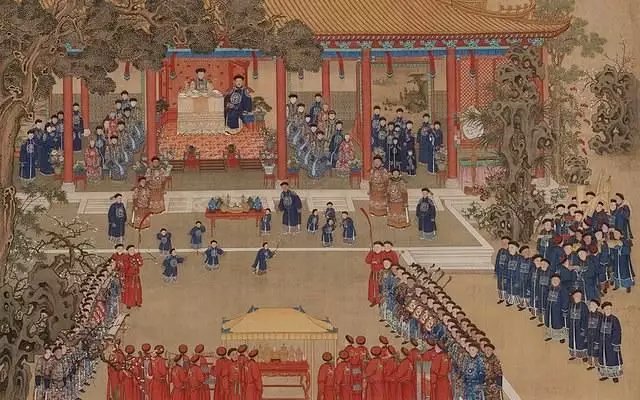
Since Empress Dowager Chongqing's 60th birthday, Qianlong held a big banquet on her 10th birthday. Ministers gathered for a feast, gongs and drums, firecrackers, the scene is magnificent, the sea of people (the picture seems a little familiar)...
Liu Bang's fourth son, Emperor Wen of Han, Liu Heng, was also a famous filial son. After the old mother was seriously ill for several years, Liu Heng often served around, tasted the soup, asked for warmth, and lay on her mother's bed at night to coax her to sleep. Warm and considerate, meticulous, really is the emperor's best, filial son model, later he was included in China's "24 Filial piety" best filial son list.
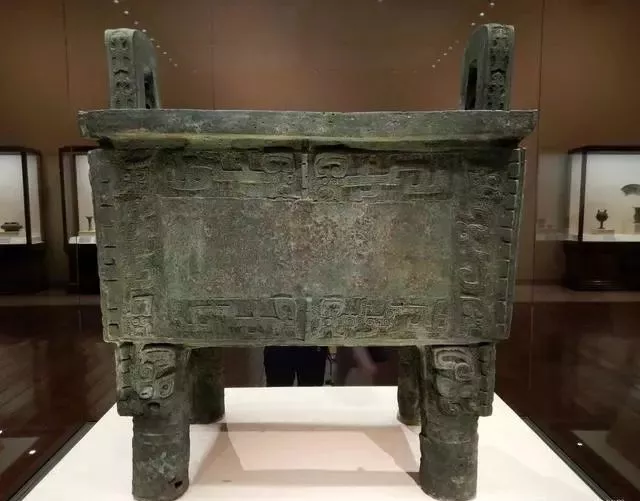
The Shang king Zugeng, who was born in more than 1,000 BC, did not have time to own a portrait of himself. In order to remember his old mother, Zugeng set about having two bronze tripods cast.
The huge Fang Ding let people see can not help but sigh - "Good guy! This big VAT must hold a lot of rice." It is also reasonable to say that Ding is the main food in the ritual, can store food, can also be used for "Ming Dynasty, the upper and lower, different", after all, bronze is an important tool of the ruling class in feudal society.
In the Shang Dynasty, there were round tripod, Li tripod, flat foot tripod, square tripod and so on. The CCTV documentary If a National Treasure Could Talk speculated on the use of the round and square tripod in ancient times:
The shape of the tripod coincides with the round place, the round tripod offers meat to the sky, and the square tripod offers grain to the ground.
When it was just unearthed, some scholars believe that the three-character inscription on the inner wall of this bronze tripod is "Simu Wu", yes, it is not "Si" at a glance?
More than 20 days after the discovery of the Houmu Wu Ding, ancient writers published in the daily newspaper "Commentary on the inscription of the Square Ding unearthed in Wuguan Village in Anyang", which identified the inscription as "Simu Wu", and later when the ding was collected into the national Treasury, the country adopted "Simu Wu Ding" as the official name.
A few years later, scholars said that the characters used in oracle bone inscriptions and golden inscriptions were both positive and negative, and the "Si" here might be the opposite of "Hou". In ancient times, "queen" can refer to "monarch" and "leader", and also has the extension of "queen". In the Zhushu Jinian, "Queen" is used to refer to the Xia Dynasty monarch, while in the later oracle bone inscriptions, "Queen Xia" refers to the wife of Wuding.
But there are doubts about this argument. According to Qiu Xigui, a professor at the Research Center of Unearthed Documents and Ancient Characters of Fudan University, the female "Si" in Yin ruins inscriptions should not be considered as "empress", but the female title here should be "si", which can be used to speak of strangers or dead people. People think that "Simuwu" and "Simuxin" in the "mother" may be next to the word "female", should still be read as "Siwu" and "Simxin".
At present, the National Museum is still using the name "stepmother Wuding", and the controversy still exists. In view of Jia tear Wen has doubts about this, here no longer continue to discuss, this article is still subject to the national bo name.
Unearthed in Wuguan Village, Anyang, Henan Province, the stepmother Wuding was born during the Shang Dynasty from the 14th century BC to the 11th century BC. At that time, the monarch Zu Geng (there are rumors that his brother Zu Shen) in order to commemorate his mother, let craftsmen cast this large sacrifice utensils (probably in case the late mother was hungry).
Zugeng was the 24th monarch of the Shang Dynasty and his father, predecessor Wuding, had three "legal" queens, namely, its parent (Father��, its parent (Mother), and its parent (Kui). In the inscriptions of Yin Ruins, it is recorded that Fu Hao and Fu hao were in charge of military affairs and farming respectively.
In 1976, the stepmother Xin Fang Ding was found in the tomb of Fu Hao, and the inscriptions inside the Fang Ding were engraved with the three characters of "stepmother Xin".
As early as 1939, the stepmother Wu Ding found in Wuguan village of Anyang, Henan Province, was used to worship another queen's Fuhao. After the villagers found this ancient behemoth, they feared that the Japanese army would steal it, and covered it with loess and buried it for several years. In 1946, the later mother Wuding was dug up again, transported to Nanjing as a birthday gift to Chiang Kai-shek, and finally settled in the Guobo (Museum of Chinese History) after several twists and turns.
Houmu Wuding is the heaviest and largest bronze vessel known in ancient times. It is 133 cm high, 112 cm long, with a wall thickness of about 6 cm, a diameter of at least 15 cm and a weight of 832.84 kg. The body of the ding is wide and the shape is square and straight, the body is so large, and the workmanship is exquisite, which shows the prosperity of the bronze civilization of Shang and Zhou dynasties.
The outer wall of the Houmuwu ding is based on cloud and thunder patterns, and around the body there are coiled dragon patterns, and the round pillars on the abdomen and bottom are decorated with Taotie patterns. The four sides of the ding are decorated with leaf edges, and the leaf edges under the feet have Taotie patterns.
Note: Taotie pattern is actually called animal face pattern, after the rise of Jinshi in the Song Dynasty, someone specially took this strange name. The Taotie in the bronze ware is usually based on the prototype of tigers, cattle and sheep, and abstract created patterns. The big tripod with Taotie pattern is often used in sacrifice, probably the ancients are silently vowing - may God bless this year "eat full hungry."
"Lu's Spring and Autumn · Xianzhi Overview" records:
"Zhou Ding had a gluttonous meal, a head without body, cannibalism without swallowing, harm to his body, and repay him with words."
The Taotie are legendary voracious gods. "Sheep with human face, eyes under arms and tiger toothed hands", the ancient Taotie were described in words with a strange appearance, even if it is a little difficult to imagine.
It is generally believed that pao Xipa (Roe Deer Owl) and Taotie depicted in the Classic of Mountains and Seas are of the same species.
The tripod ear is decorated with relief fish pattern, for two fish-shaped pattern (fish pattern and crow's feet, please don't confuse), and the relief on the outside of the ear is double tiger man-eating head pattern. One of the two tripod ears was lost when it was unearthed, and it is said that it may have been sawed off by local villagers. Now the two tripod ears are repaired by experts, you may wish to pay attention to the shape of the ears when viewing in the National Museum.
Note: Leaf edge is a characteristic of the mold casting, professionals can judge from the number and shape of the leaf edge casting is separate mold or whole casting.
The body and legs of the second mother Wu Ding were cast together, and the ears were cast in the mold after the body was cast.
"The major event of the country, in the sacrificial and military", sacrifice is the most important event, the ritual used in the ceremony can reflect the national power of the current dynasty, but also the symbol of people's ideology. The Shang and Zhou dynasties were the glorious period of the Bronze Age in China, with the huge output and grand scale of bronze ware, and there was bound to be a set of processes similar to today's industrial system. Making a stepmother Wuding, from metal raw materials collection, alloy smelting, casting, casting to decoration, which step is not easy.
How did an ancient Chinese fox practice cultivation to achieve immortality?(A legendary tale from ancient China.)
When a fox is fifty years old, it changes into a woman. A hundred years for beauty, for the sorcerer, can know thousands of miles of foreign affairs, good charm, make people confused. Thousand years old is with the sky, for the sky fox. -- Genaka
Evil charm, coquettish, seductive, biting people, Chinese fox Ling has left such a traditional impression to people today. However, since ancient times, Chinese fox spirits have not always been born with a demon appearance.
Reviewing ancient books, from ancient times to Qing Dynasty, from the beast fairy fox to the world demon, the Chinese fox spirit has experienced a black evolution.
In ancient times, "The Book of Mountains and Seas" in Qingqiu country, the nine-tailed fox has already come into existence.
In the north of the Sun Valley, the south of the country of Black teeth, there is a country called Green Hill, on the mountain of Green Hill, living a kind of nine-tailed creatures. It has the shape of a fox, but with nine tails, it can make a sound like a baby's crying, and humans are confused by the crying, and may become its stomach food. But if you eat the nine tails of the green Hill, from now on all the charms will be useless to you.
As a nine-tailed sky fox, the magic power of the Green Hill Fox clan is far superior to that of ordinary fox spirits. In the legend of later generations, we are familiar with the wife of Da Yu's Tu Shan family, Daji's Su family, all bearing a pulse of Qingqiu. In the anthropological system, Qingqiu Fox is regarded as the totem god of Tushan, Yousu and Chunhu clans.
In Xia Yu's time, the appearance of a white fox with nine tails in Tushan protected the king of Xia Dynasty and its descendants.
"Huainan Zi" records that when Yu was controlling the water, he became a bear in order to cut through Xuanyuan Mountain. In the records of Wuyue Spring and Autumn, Dayu's wife, Xia Qi's mother and daughter Jiao and Tushan nine-tailed white Fox have a close connection.
At the age of 30, single Yu Da worried that he was against the law of appropriate age marriage, so he went to Tushan and said to heaven, "I marry, there will be a answer." (If God had asked me to marry, he would have responded.) At the end of the speech, a white fox with nine huge tails swaying behind it, walking gracefully, appeared in front of him.
Da Yu saw this, the heart understood: my family is still white, I dressed in white, white fox color and corresponding; Nine is the number of the supreme, the white fox nine tails, indicating the king of my tribe. In addition, according to the Chinese Yin and Yang five elements, nine is the largest Yang number, and the end is one of the stars, symbolizing many children. Nine tails are the embodiment of fecundity and a good omen for having many children.)
"Sui Sui White Fox, nine tails. Get a family and I will make him Chang." Therefore, Da Yu obeyed God's arrangement and married Tu Shan female Jiao as his wife. It is said that Tu Shan female Jiao is the embodiment of the nine-tailed white fox.
Looking at all the countries in the Central Plains at that time, the power of Tu Shan cannot be underestimated. "Records of the Grand Historian" said: "The summer of prosperity is also to the mountain." The marriage of Tushan family and Xia Hou family played an important role in the key nodes of advancing the Xia Dynasty's foundation, such as the flood control of Yu the Great and the joint work in the decisive battle. Because of the origin between the white fox of Tushan and the monarch of the Xia Dynasty, in the later novels such as Tales of Liaozhai and so on, Tushan Yilai also became a particularly noble fox family of Qingqiu.
Inevitably, due to the existence of cannibalism, the body of the fox spirit contains a certain demon, just as "Shuowen Jiezi" explains "fox" as "beast" (demon beast). However, from the pre-Qin period to the Han and Wei periods, the fox Spirit was still a positive image of auspicience and protection in the hearts of the people.
In the Records of the Grand Historian, Chen Sheng incited the garrison to revolt against the Qin Dynasty with the fox chirping, "Great Chu Xing, King Chen Sheng!" In stone portraits and brick paintings of the Han Dynasty, nine-tailed foxes, white rabbits, toads, and three-foot black flowers are often listed next to the West Queen Mother seat to show the Zhen.
In "Wei Shu" and "Northern History", there are frequent records of local states and counties offering treasure white fox and nine-tailed fox to praise the king's political achievements. "If you respond, you will show your virtue. If we can make the five quality order, the state and the sea peaceful, and the family understand filial piety and kindness, we can achieve this." The fairy fox is here, the world is at peace.
Extended to the Tang and Song dynasties, the belief in fox spirit was popular among the people, and the phenomenon of setting up temples to worship fox fairy was not uncommon. Zhang Zhuo "Chaoye Zhen" recorded since the early Tang Dynasty, the people popular belief fox fairy, even spread out the proverb "no fox enchantance, no village". Lu Xizhe "Lu Shi Miscellaneous records" records that the Song Bindi (now Binxian, Shaanxi Province) appeared Fox King Temple, can give good fortune and fall disaster, deeply feared by the people. To this day, there is still a place for fox fairy in the belief of "Fox yellow white willow gray" (fox, weasel, hedgehog, snake, mouse) in the Northeast.
However, in the literati circle, perhaps influenced by the concept of "old things become fine", after the Han Dynasty, the fox spirit demon gradually appeared, and its image began to be negative. The nine-tailed fox, which is particularly powerful in the fox spirit, bore the brunt and became the object of criticism.
The fox spirit's magic of transforming human form was associated with the misogyny of the kingdom.
When Li Siam of the Northern Dynasty wrote a sentence of "Zhou's invasion of Yin Tang", he first proposed that Daji was a nine-tailed fox. Bai Juyi in the Tang Dynasty in the "ancient mound fox", wrote "women for fox beauty harm that deep, day long month drown the heart. What's more, Baoda's color is good and seduced, and can lose people and overland "verses compare Daji and Baosi, who are beautiful and misbehaving the country, to the old fox demon. The fox spirit has changed from a good beast that assisted the descendants of the king to a beautiful beauty that endangers the people of the country, and the greater the supernatural power of the fox, the greater the harm after demonization, and the tone of the evil country was written down.
Those ordinary fox spirits also frequently appeared in the novels of Jin and Tang Dynasties. Although they did not harm the country, they also repeatedly affected the people.
In the Northern Song Dynasty, "nine-tailed fox" became a slang term for swearing. The accused is good at seducing, not limited to men and women. Such as Tian State "the Public discussion of the Confucian forest" to ridicule the treacherous minister Chen Pengnian is good at seducing Song Zhenzong, was regarded as the nine-tailed fox. In Zhao Lingchao's Hou Jin Lu, a Qiantang official courtesan who is "kind and charming and confused" also has the title of nine-tailed nogitoku.
Until the Yuan Dynasty story "King Wu Zhou book" and the Ming Dynasty long chapter back novel "The Legend of the Gods" came out, incarnated Da Ji's millennium nine tail gold fox confused Shang Zhou to lose the true nature, the original outside the loyal minister, there are virtuous after Shu Fei stable Jiangshan was pushed to change the cliff, the concept of fox evil country was pushed to the extreme, the fox spirit image was completely black in popular cognition. The phrase "fox spirit" is the most vicious rebuke that curses the earthly woman as a prostitute.
The blackening of the fox spirit continued until the Qing Dynasty, and the fox spirit in the novels of "The Fox Edge" and "the nine-tailed Fox" was either subjugated and had its tail cut off, or was compared to a bad prostitute. The appearance of the novel Tales of Liaozhai in Qing Dynasty outlined the rich world in which fox spirits were both positive and evil.
Since the fox spirit was beaten down by the literati circle, if they want to get rid of the bad luck of dying in the woods, or even being captured to skin and make fox fur, they can only work hard to cultivate the truth.
There are two kinds of results of successful cultivation, those who take the right path become immortal, and those who take the wrong path become demons. The fox spirit in the novel is often the latter. They turn into beauty skin, sucking human blood to replenish vital qi. But because of the evil of the human world, a little mistake, will be the wise man surrendered, most of the end is not good.
When the danger factor of the demon is so high, why do aspiring foxes flock to it? That's because there's a long way to go, and it's not as effective as doing things on the side.
How hard is it to cultivate an immortal?
Turning the fox into a human being is a key to the cultivation of truth, and the enhancement of the fox spirit magic power is inseparable from the cultivation of essence. Since we can't suck human blood, we can only suck the essence of heaven, earth, moon and stars:
You can worship Beidou.Such as "You Yang Zizu" in the purple fox, want to change the human form, must wear a skeleton worship director of life and death of the Big Dipper. If the skeleton does not fall, it can use the power to change into human form;
You can worship the moon and practice the inner Dan. As recorded in "Liaozhai Zhiyi", the fox spirit stood up under the moon and looked at the sky, and repeatedly operated the inner Dan in the mouth with the Taoist technique of spitting, absorbing the essence of the moon to enhance the inner Dan.
But the disadvantages of both methods are obvious: the success or failure of transforming human form is directly restricted by the success or failure of worshiping Beidou; Once the inner Dan obtained by the painstaking worship of the moon is lost, it will lose all its strength and fight back to its original form.
And excluding these two methods, the immortal method remains:
Cultivate according to the book of Heaven.
Accumulated work to become immortal.
The art of thinking and thinking.
These methods do not harm heaven and reason, will not provoke the encircle and suppression of virtuous people, but all need strong moral and wisdom cultivation, easy to give up on their own. If a fox spirit wants to follow the right path and rank in the fairy class, it must meet the following conditions:
Step 1: If you want to sign up for immortal cultivation, you will have to pass the exam
First of all, it should be made clear that not all fox spirits are qualified to cultivate fairies. Those private cultivation of the fox spirit, known as the wild fox, will never be recognized by the fairy class.
The cultivation of the Fox spirit is incorporated into the management system of the earth, and those who want to cultivate the immortal must pass the qualification examination held every year by the Taishan Goddess.
Step 2: Learn foreign languages and cultivate human form
"Zi Yu" mentioned that through the learning process of "learning bird language → learning voice → becoming a human form", the fox can be vividly transformed into a human. From the appearance alone, it is not easy to transform into the perfect human form, and it is often not enough to become half of the situation. For example, if the human form does not know how to hide the tail, it will reveal the fox tail, and some fox spirits who have always been unable to master the skill of hiding the tail and have to go to their hands, will not hesitate to cut off the tail in order to become a human form. For example, some fox spirit has become a fox head body, so they have to wear a fox skin on weekdays, take it off when cultivating, and continue to work hard.
Therefore, in the "Ziyu", a fox spirit who took the right path to cultivate directly expressed the envy of human beings born with human form, and there appeared the entry of "Fox Sheng Sheng advised people to cultivate fairies".
The third step: moral, intellectual and physical development
"Yuewei Caotang Notes" recorded the story of a scholar who met the fox Spirit in the wild and taught a group of foxes to read the original "Four books and five Classics". In the book, there are even old foxes who teach young foxes to read and write, and scold young foxes who do not love learning with a whip. "Read the book of Sages, Ming the principles of the three principles and five principles", first from the soul to understand the way of human sages and ethical principles, and then from the heart and form, to achieve "the heart is also shaped."
In addition to learning Confucian classics, diligent cultivation and moral practice can also help the road to becoming an immortal. There are two fox women in the book, moved by a filial wife's good deeds, secretly to help her mill for twenty years, so they got the God's commendation, ranked fairy class.
Therefore, through the above tests successfully promoted fairy class fox spirit, its difficulty and glory is no less than the poor children of the world for many years to study hard, struggle in the official field, and eventually to the high level of pay and transformation, as the Confucian master Yu Yue "right Tai fairy hall notes" said: "By the fox and fairy, such as the White House out of the Gongqing, proud of what there is!"
From ancient times to Qing Dynasty, the fox spirit in China was gradually divided into two groups of demon spirits. Under the influence of the fox spirits novel spread by Daji, demon spirits became the mainstream image of fox spirits in people's hearts. But in the legend of Tang Dynasty and the novel of Qing Dynasty, there are many kind-hearted and faithful fox women, such as Ren who manages the family, Jiao Na who cures and saves people, Hongyu who is brave and righteous, Xin Shiniang who helps others and Infant Ning who is naive.
Famous ancient Chinese painting -- Fu Chun Mountain Residence
In the history of Chinese painting, the Yuan Dynasty is a radical breaking point. The technique is excellent, and Chen Xiangyin's "courtyard painting" completely lost its power, and replaced it as the mainstream creation style, which has emerged in the Tang Dynasty "literati painting".
Compared with the professional painters who serve the academy, the works of intellectuals do not seek to be neat and similar in form, but simply express the feelings they have. For a long time before the Yuan Dynasty, painting was only "a spare time for the Gaister officials, suitable for the temporary interest." The school style painting reached its peak in the Five dynasties and Song Dynasty.
Later generations often explain the change from professional painters to intellectuals by "literati generally have a low status and have no family", but this argument is not very convincing.
The first reason is that it cannot explain the sudden change of social aesthetic taste and the sharp decline of courtyard painting. Second, for the literati painting "open the door", leading the Yuan painting "heavy spirit rhyme, light style" of the wind, it is the southern Zhao Mengfu «¯ (character Zi ang, song snow road people), Uighur Gao Kegong (word Yanjing, no Fangshan lay) as the representative of the senior literati
In the Xianhuan, Ke Jiusi in the middle and late Yuan Dynasty also made a great contribution to the theory of literati painting. They advocate the use of calligraphy strokes into the painting, subjective lyrical, such as Ming Dynasty Dong Qichang summed up the cloud:
"When scholars paint, they should use the method of grass Li and strange characters. Trees bend like iron, mountains like painted sand. It's for the sake of morale."
-- "Painting Meditation Room Essay" Volume 2 · Painting Formula
It is Huang Gongwang, the "big crazy" who collects the giants' skills and principles in the early Yuan dynasty, and brings them into the mature realm and opens the next era.
Huang Gongwang, character Zijiu, about his birth place, contemporary notes records are very confused, Zhong Sicheng "Record of ghosts" says that he was from Songjiang, Xia Wenyan "Tuhui Baojian" says that he was from Quzhou, in the title of Zijiu's old age Wang Feng, also says that he was from Hangzhou (Wuxi Collection, Vol. 4, "Qizhuang Da Chi Landscape")......
However, according to the painter's signature, he thinks that Pingyang people in eastern Zhejiang (today belongs to Wenzhou), since the Ming Wanli, descendants have found four real paintings and paintings that identify the signature "Pingyang Huang Gongwang".
In addition, at the end of the Yuan and the beginning of the Ming Dynasty Tao Zongyi "South village stop farming record" began, with the public hope this surname Lu, raised in the Huang family said, the Qing Dynasty Cao Ming Ting published "record ghost book" and more details have nose and eyes, increased its name and the origin of the character: "father in 90 years, see son is long cloud: Huang Gong Wangzi long." The truth can no longer be tested.
Son long's life experience, Yuan Ren notes description is more unified, he was the west Zhejiang Lian visit department, the imperial Institute of the scribe (" yellow big Chi landscape ":" Centaishan institute "). Due to the small number of tributes, officials were the starting point for most officials in the Yuan Dynasty.
In the first year of Yanyou (1314), the 45-year-old Huang Gongwang followed Zhang Lu (also written as Zhang Lu, Zhang Donkey, Zhang Lu, etc.), and participated in the "Yanyou Manager", which aimed to combat the encroachment of private lands by temples and powerful powers in Jiangsu, Zhejiang, Henan, Jiangxi, etc. According to the History of Yuan, in the second year of Yanyou, Qing Kuo called off the uprising and Zhang Lu "forced nine people to death", and the staff including Huang Gongwang were held accountable.
As a party, he has a different view of the truth. Wang Feng records that Huang Gongwang's resignation is "Zhang Lu Pingzhang was accused and tired", which should come from his self-statement in his old age. "Record ghost book" "for the powerful" is more direct, that is, in the clean-up of the interests of the damage to the powerful against them to slander revenge.
On whether Zhang Lu, Huang Gongwang and others were indeed framed, and the historical evaluation of "Yanyou manager", the author has no intention to discuss here. Can be sure that this is a huge blow to the spirit of Huang Gongwang, all together in prison, the son for a long time only "die".
After being released from prison, he lived a half-crazy life of "abandoning human affairs", officially becoming a Taoist priest, telling the divinatory words for people, traveling around the world (" Then entering the road cloud to change its name to a peak, and living idle with fortune-telling "), and calling himself "big crazy", which seemed to pour out his mockery of the dark and unpredictable fate.
"The constitutional official of western Zhejiang is honest, and the manager of money and grain is punished." No. One peak potometry will be abandoned in the world, easy name for the net Jian No. Crazy"
-- Jia Zhongming, "Double Tone · Lingbo Xian · Hanging Huang Zijiu"
Since then, the government of the Yuan Dynasty has lost an honest scribe, and there is a dazzling star in the Tianhe of painting history.
Huang Gongwang's painting style, is standing on the shoulders of giants, widely adopted and used. However, the influence of all the old people in the painting circle is nothing more than Zhao Mengð«, the "pine snow Road man"
In the past, there was once a son long after the age of 50 to learn the view of painting, also wrong.
Dai Biao Yuan, who died to the third year (1310), had a portrait of Huang Gongwang as praise: "There are hundreds of generations of worries, home without stone music, Gaixi like Yanzhao swordsman, its reach like Jin Song drinkers, as for the wind and rain, moaning disc magnificent, want to aid the pen and write a book, and will be the study of Qilu, this ordinary painting history also?" It can be seen that Zijiu has been quite famous at the latest around the age of 40, and can leave a name in the "painting history".
The bond between Daji and his teacher Zhao Mengfu «¯ began in the Qing dynasty "Record ghost book" said Huang Gongwang "knowledge is not under people, the world knows everything, and small skills do not abandon." Good Danqing, long words and short songs, the pen is ready, everyone is the teacher."
He was extremely talented, learned and able, and showed his talent very early, which was deeply appreciated by many writers in the early Yuan Dynasty. "Yan Zijing, Xu Zifang, Zhao Songxue, all the famous men, all love them." Zi Jing, Zi Fang and Song Xue are the characters of Yan Fu, Xu Yan and Zhao Mengxu «¯
According to the biography of Huang Gongwang in Tomorrow Shun's "The Unified Annals of the Ming Dynasty · Hangzhou Prefecture", he was recruited by Xu Yan in the Yuan Shizu to the Yuan Dynasty, and began to be a scribe of the West Zhejiang Investigation Department and served in Hangzhou. Some scholars have researched his time in the 29th year of the Yuan Dynasty (1292), shortly after the visit of Zifang to the west of Zhejiang Province, when Huang Gongwang was 23 years old (Xie Chenglin, An Examination of Huang Gongwang's Life Story, Fine Arts Research, 1986,03).
Seven years later (1299), the master Zhao Mengzhi «¯ came out of Hangzhou as an official in Jiangsu and Zhejiang to study Confucianism Big crazy painting and calligraphy in Songxue should be at this time.
Huang Gongwang learned from the master, the first is the creation principle of "eliminating complexity and preserving simplicity" in landscape painting. Looking at Zhao's works such as "Overlapping rivers" and "Double Pines Pingyuan", it is easy to find that this overall style is also the basic style of Zijiu's works.
Wang Shizhen said, landscape painting to crazy, yellow crane has changed. The most important inheritance and development of Huang Gongwang is Zhao Mengfu comprehensive fusion of the painting techniques of Dong, Ju, Su and Mi Dong and Ju refer to the famous Dong Yuan and his apprentices Juran in the Five Dynasties. Su and Mi refer to Su Shi and Mi Youren of the Northern Song Dynasty.
The PI Ma Cun created by Dong Ju is very suitable for expressing the mountain scenery of Jiangnan area, but it basically disappeared in the Song Dynasty. Huang Gongwang's works revived PI Ma Cun, but he did not imitate Dong's court style of wet brush, but introduced Su Shi's "dry brush Rub Cun" to describe dead wood and bamboo stone.
Mi Youren's "millet point Cun" has also been harmoniously absorbed into the shaping of various "Huang's mountains and rivers". Huang Gongwang can integrate Mi's painting, perhaps with "Mi's cloud Mountain" orthodox successor, his teacher's friend Gao Kegong is not unrelated.
This all-embracing spirituality obviously comes from the inspiration of Songxue, but its realm and achievements have matured far beyond those of its master.
Liu Guan, who had also learned calligraphy from Zhao Mengfu mentioned in Huang Gongwang's "Axis of Tianchi Stone Bi Map" that "Wu Xing indoor disciple, a few people round without blood fingers", respected him as a descendant of the same familyThe big fool himself is rather modest. He just says, "When I met Gong Yisha, I was a primary and middle school student in Song Xuezhai" (title: Zhao Meng book Kiloword Script).
Yun Shouping of the Qing Dynasty said: "Yuan Yun Xiu pen, like Yan dance flying flowers, can not faze. It is also like the beauty waves looking forward, shining, and the viewer is shocked and lost, and does not know why." Since the development of literati painting, its expression methods have been as complete as lyric poetry.
Lyricism is the first tenet of painting by scholars. Without this principle, no matter how clever the technique of creation, but also lost soul of the walking dead. The elements of learning and further development from Songxue's place, as well as the ups and downs of social experience, and the mental state of being confused, together create those distinct qualities in Huang Gongwang's works.
It was not until his old age that he opened the heyday of art, but his thirty or forty years old was not empty with a painting name, but the creation of this period did not originally exist in the world, and only the inscriptions recorded in several calligraphy and painting records of the Ming and Qing Dynasties could know his existence. Xu Bangda, an authority on the identification of Chinese calligraphy and painting in the 20th century, believes that the earliest surviving Huang Gongwang painting is the "Axis of Tianchi Stone Bi Map" painted when he was 72 years old.
Son for a long time as a scribe, conscientious, busy with work, afraid of time to focus on Tanqing. In his middle age, he was imprisoned because of the attack of interest groups. For him, it was not such a superficial catastrophe as "half a lifetime of civil servants unemployed overnight". What he was facing was probably the total collapse of the obsession and ideal of the first half of his life, and the so-called "pain and suffering" was the same.
In a sense, he's crazy.
"Huang Zijiu only sat in the desolate mountains all day long, the meaning was sudden, people did not know why." And every time I looked into the sea in the mamao and saw the rapids and waves, though the wind and rain came suddenly, the water monster was amazed and ignored it."
-- Li Rihua's Notes on Six Inkstones
Zihisa's mental state is reflected in the work, which is a "strange indifference". At the same time, who is called indifferent, there is another great painter Ni Zan. But the son long indifferent is "wilderness indifferent", sometimes bold and unrestrained, sometimes melancholy and resentful, this as a scholar, life rich Ni Zan can never understand.
Dong Qichang's words of "vertical and horizontal style", and Ni Zan's mouth of "no group" are such. Correspondingly, Ni Yunlin's extremely quiet and simple "little true happiness" taste is also impossible and impossible for Huang Gongwang.
In his old age, he used to live in the Fuchun River, where "the strange mountains and the strange waters are unique in the world" in the Book with Zhu Yuan Si. He painted a long scroll of the landscape of his residence for his younger brother Zheng Chu, the useless Taoist priest, which is the masterpiece "Fu Chun Mountain Residence Map" that represents the highest achievement of his life.
"In the seventh year, the servants went to live in the Fuchun Mountain, but there was no need for the teachers to accompany them.Days in the south tower signing pen written in this volume, strikes, unknowingly Men Men decorate so much, by screw filling , read three or four years, we can not complete, because in the mountain, and had therefore. I want to get my luggage back today, so I'll write when I have time. There is a usurper, so that we may know the end of the book, so that we may know the difficulty of its achievement......"
The year of the question, I was eighty-two years old, and I did not know when to finish it. This roll is only 33 cm in length, but the transverse reaches 636.9 cm, showing the openness and distance of the river landscape, which is incisively and vividly.
Due to the absence of the inscriptions and postscripts, the fate of the House in Fuchun Mountain in the late Yuan and early Ming Dynasties is not clear. The author guesses that the useless monk probably gave this scroll to someone around the time of his death. His wandering path is as full of ups and downs as the creator's life.
In the Ming Dynasty, this volume was successively held in the hands of Shen Zhou, Fan Shunju, Dong Qichang and Wu Zhengzhi. Zhengzhi's son Wu Hongyu loved him as much as life, and wanted to burn himself to death before he died. Or two nephews eye disease and quick hand, will be rescued from the balrog.
"Fuchun Mountain Residence Map" has since split into two long and short, there are author inscriptions, known as "useless teacher volume", short only mountain scenery, so the name "left mountain volume". Nearly one-sixth of the section between the two was burned permanently, and there are so many copies that one can still imagine the whole picture.
After entering the Qing Dynasty, the useless division rolls were successively stored by Ji Yu Yong, Gao Shiqi, Wang Hongxu and An Qi. The family of An fell, the family tried to sell the collection of paintings and the queen's younger brother Fu Heng, but the latter did not love the painting, so it was sold to the house for the intermediary.
Useless teacher volume fell into the mad, ruined as tireless "plaster crazy devil" Qianlong Emperor's hands, at first glance seems to have been doomed. But a "hero" stepped forward.
It turned out that Hongli had been broken, and the copy of "Zi Mingben" obtained earlier was the original of "Fuchun Mountain Residence", and made more than forty inscriptions and postscripts. As for the useless teacher, only a ridiculous "appraisal" was published, and Liang Shi was ordered to write the title on the volume.
Gaozong's great treatise on ignorance and lack of knowledge is certainly an eyesore, but compared with the bruised and mutilated Ziming book, the useless teacher volume was only mentioned in one place is a blessing in misfortune. After that, the two copies were hidden together in the Forbidden City and taken to Taiwan in 1948. "Leftover Mountain" was published in Shanghai in the 1930s and is now in the Zhejiang Provincial Museum.
On June 1, 2011, the special exhibition "Landscape Blending - Huang Gongwang and Fu Chun Mountain Residence" was officially opened at the National Palace Museum in Taipei. This should be the only time in 360 years since the self-immolation split into two, the "Leftover Mountain Map" and the "useless Division Volume" meet again.
The Dali state represents a unique Buddhist state in Chinese history.
Dali was an ethnic minority local government that existed in Yunnan from 937 to 1253 AD. Its ruling family, the Duan family, originally named Nanzhao, but by the late period of Nanzhao, the family had fallen.
After the state of Nanzhao was replaced by the "Dchanghe State" of Zheng Maisi, Zhao Shanzheng's "Great Heaven Xingguo" and Yang Ganzhen's "Dayi Ningguo" also replaced the original regime and established their rule successively.
Later Duan Siping succeeded in obtaining the support of the thirty-seventh Department of Eastern Yunnan, replacing Yang Ganzhen's Dayi Ningguo and establishing the government. With Yangjuba City as its capital, Dali ruled Yunnan for 316 years, almost entirely with the Song Dynasty, before falling to the Mongols.
Although the Dali State had always been subject to the Song Dynasty in diplomacy, it still maintained its independence in politics and economy, forming the Dali political culture with Bai nationality characteristics.
In the Yuan Dynasty, the Mongols set up Yunnan Province on the basis of the original Dali State, and the Duan family still played the role of local power in Yunnan until the Ming Dynasty occupied Yunnan.
Although there are many documents that the Duan family in Dali was originally from Wuwei County, contemporary scholars have researched that the Duan family was a local Bai nationality in Yunnan.
In the later period of Dali State, Duan's rule was basically nominal, and all the power of the government was in the hands of the Gao family, and Gao Shengtai of the Gao family once replaced Duan as the ruler of Dali State.
Since the emperors of the late Dali Kingdom did not enjoy real power, most of the later emperors were obsessed with Buddhism. The Gao family's internal strife was so severe that even without the Mongol invasion, it would not have been long gone.
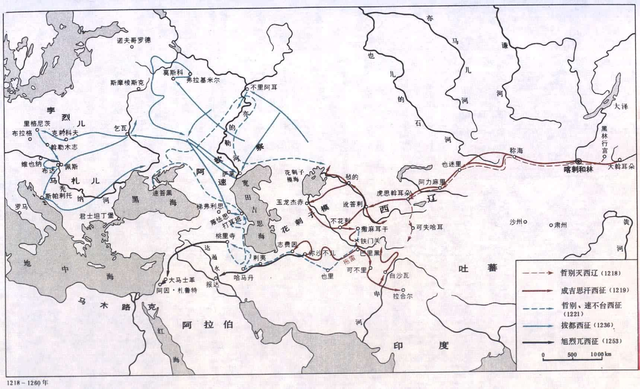
Since the founding of the Mongol Khanate in 1207, its national power has almost reached its peak through successive decades of southern and western campaigns.
In 1234, after the Meng-Song combined forces to destroy the Jin, the two countries directly confronted each other. After the failure of Duanping into Luo, the Mongols launched a full-scale military attack against the Southern Song, but encountered fierce resistance in Chuan Shu and Xiangyang.
Suffering from this setback, the Mongols decided to adopt an unprecedented detour strategy, through Tubo, Dali to attack the Southern Song, in order to achieve the purpose of destroying the Southern Song, which is the so-called "Wofu plan".
For the Southern Song, any action taken by the Mongols on the Southern Song border would be noticed in the direction of the Southern Song, let alone an expedition such as the "Woori".
As early as around 1236, in his book on Hubei Shu Xishu, Wu Changzhi of the Southern Song Dynasty bluntly stated the possibility that the Mongols would use Dali to invade the Song Dynasty, and he also said that he had heard that the Mongols had planned to do so as early as ten years ago.
However, what Oh Chang-chi said at that time should be mostly hearsay.
After the Wuchang people came to the court, people from time to time came to the court of the Mongols in the Southern Song Dynasty. In 1246, the Southern Song people's worry about the "Moo" reached the most serious year, and many people have put forward suggestions to the court to prevent the Mongolian "Moo".
In 1251, Mengge, the eldest son of Genghis Khan's fourth son Tuolei, became the Great Khan of Mongolia. After Mengge Khan ascended the throne, he launched a large-scale military campaign against Song.
In 1252, Mengge Khan, with his brother Kublai Khan as his commander, launched an expedition to Khalakhra (the Mongolian name for Yunnan).
Kublai Khan's expedition set out in September that autumn and crossed the Yellow River in December.
In the spring of the following year (1253), he passed Ningxia, left Xiaoguan in April, and settled in Liupan Mountain.
August, to Lintao.
In September, they reached Tra (today's Dalagou), and then the Mongol army divided into three ways to the Dali State, and sent an envoy to the Dali state to surrender, but the envoy returned because the road was blocked.
In October, Mongolian soldiers crossed the Dadu River.
In November, Mongolian soldiers passed Lushui.
For many years, historians have debated the route of the Mongol army. Scholar Shi Jianjun believes that the route of the Mongol army is as follows:
Route of the Western Route Army:
Tra, Dibu, Aba, Northwest Malkang, Rangtang, Luhuo, Garze, Dege, Baiyu, Tibet Gongjue, Qamdo, Mangkang, Yanjing, Deqin, Xiaozhongdian, and then into Dali territory.
Route of China Route Army:
Thra, Dibu, Sichuan Ruoergai, Hongyuan, Malkang, Mantuo, Seruirong, Jiulong, Muli, Yunnan Yongning, Fengke, Datu, Lijiang, Heqing, Dengchuan, Shangguan, and then to Dali City.
Eastern Route Army:
The Gansu province passed through Songpan, northern MAO County, Heishui, Li County, Qionglai Mountain Range, Xiaojin, Jintang, Luding County, LAN 'an, Shencundu and Detuo in Sichuan, and then went south to Baishui Village of Lizhou, where the Dadu River crossed the boundary of Qingqiang, and then passed through Jianchang Prefecture of Dali, and then through Xichang, Huili County of Sichuan, Yongsheng County of Yunnan, Shunzhou County of Yongsheng County, and then crossed the Jinsha River to Heqing. Through Dengchuan, Shangguan to Dali city.
According to legend, the Mongolian army went to the Jinsha River, and when they were suffering from no plan to cross the river, they found that the local people made pocket skins with sheepskin processing, and then blew air inside it could be used as a floating tool to cross the river.
This kind of leather bag made by the local people is called "leather bag", and the Mongolian army also made extensive use of this leather bag and raft to successfully cross the Jinsha River, known as "Yuan trans-leather bag".
On December 12 (January 2, 1254), the Mongol army arrived at Dali. Duan Xingzhi, the ruler of Dali, and Gao Taixiang, a powerful minister, were not in a good position and immediately abandoned the city and fled.
After Kublai Khan led the Mongol army to capture Dali City, he followed the advice of Yao Shu and Liu Bingzhong and did not slaughter the city, but mainly pacify it. Gao Taixiang fled to Yaozhou and was preparing to gather reinforcements when the Mongol army reached the city, was defeated and captured, and was killed under the Wuhua Tower of Dali City.
In a short time, the Mongols surrendered wherever they went.
In the autumn of 1254, the Mongolian General Jia Liang Hetai again destroyed Shanshanfucheng (present-day Kunming) and captured Duan Xingzhi, the ruler of Dali.
After that, he continued to invade the small countries around Yunnan, and by 1257, all of Yunnan had been conquered by the Mongols.
"According to the story of the Han Dynasty, the Southwest Yi was regarded as the county and county" (The History of Yuan Dynasty · The Biography of Yang Jiatai)
And Xilianghetai invited Mengge Khan from it, still appointed Xilianghetai town guard Dali.
After Duan Xingzhi was captured by the Mongols, he was treated with courtesy, and he and his uncle Duan Fu were sent to the north to pay homage to Mengge Khan and received a reward. Mengge Khan allowed them to return to Yunnan and reclaim the old part of Dali.
After the death of Duan Xingzhi, Kublai Khan ordered Duan Xingzhi's brother Duan Shi (Duan Xin Tho Day) Prime Minister of Yunnan,
"Every household below ten thousand is subject to its control." (Yuan Shi · Xin Ju Day Biography)
In the fourth year of the Yuan Dynasty (1267), Kublai Khan took his son Hu Gechi as the king of Yunnan, and set up the Propaganda Department to take charge of the administration and the military command.
In the 11th year of the Yuan Dynasty (1274), the Yuan Dynasty established the province of Yunnan on the basis of the original Dali State, with Saidianchi as the administrative chief, and at the same time transferred the province of Yunnan from Dali to Zhongqing Road (present Kunming).
Yunnan in the Yuan Dynasty can be divided into three systems, namely, the province, the king and the local chieftain and official forces represented by Dali Duan.
In the period when Sai Dian-chi was in charge of Yunnan Province, the ten thousand households, thousand households and hundred households in the original period of military administration were transformed into roads, governments, states and counties respectively. The road shall have a governor, the government shall have a governor, the state shall have a governor, and the county shall have a magistrate or a county Yin.
Yunnan province a total of thirty-seven roads, Dali Road for the military and civil administration of one of the road, Yang Juba City (namely Dali City), two government, five state, county one.
In the thirteenth year of the Yuan Dynasty (1276), Kublai Khan appointed Duan Shi as the propaganda minister of Dali and other departments, and later promoted him to the pacatory minister and marshal of Dali, Weichu, Jinling and other departments, and inherited the post of military and civilian general of Dali.
In the whole Yuan Dynasty, there were twelve Dali chiefs: Duan Ri, Duan Zhong, Duan Qing, Duan Zheng, Duan Long, Duan Jun, Duan Yi, Duan Guang, Duan Gong, Duan Bao, Duan Ming, and Duan Shi.
Although Duan's family still held the position of hereditary Dali governor in the Yuan Dynasty, its jurisdiction and power were greatly reduced compared with the previous Dali Kingdom. Not only that, the civil and military ministers under the Duan family are still basically, most of them are descendants of the Gao family, the Yang family, and the Zhao family.
In order to consolidate its rule in Yunnan, the Yuan Dynasty also adopted a two-sided policy towards Duan. On the one hand, Duan's power and prestige were weakened, and on the other hand, Duan was constantly co-owned and exploited. The Yunnan king also sat directly in Dali to supervise the movements of Duan's family.
All in all, the Yuan government's control of Duan was effective.
In the whole Yuan Dynasty, the Duan family took a loyal attitude of deference to the Yuan government, not only went to the capital for many pilgrimings, but also actively sent troops to follow the Yuan army.
In the late Yuan Dynasty, both central and local, there were all kinds of internal strife and split problems, and the peasant uprising was serious, so was the local Yunnan Province.
In 1363, Ming Yuzhen sent an army to attack Yunnan, and the Yuan emperor Liang, who was guarding Yunnan, was defeated, and Duan Gong, director of Dali, sent an army to defeat the enemy. Therefore, the king of Liang played Duan Gong for the province of Yunnan Pingzhang government.
But soon the conflict between Duan and Liang suddenly became irreconcilable, so that Duan Gong was killed by the king of Liang.
Duan Gong son Duan Bao was supported by his subordinates to succeed the Dali general, and the king of Liang attacked each other endlessly. Finally, the Liang king had to recognize the status of the Duan family's autonomy, and rule it by dividing the land, while giving him the post of governor of Yunnan Province.
In 1368, the Ming Dynasty was established, the same year the Ming army attacked Dadu, Yuan Shun emperor fled to the desert. After the Ming Dynasty basically pacified the whole country, the Duan family also showed a positive intention to surrender, and also sent envoys to Nanjing, but they failed to arrive because of obstacles.
In the seventh year of Hongwu (1374), Zhu Yuanzhang sent men to persuade the king of Liang in Yunnan to surrender, but the king refused.
In September of the fifteenth year of Hongwu (1382), Zhu Yuanzhang appointed Fu Youde as the general of the expedition to the South, LAN Yu as the deputy general on the left, and Mu Ying as the deputy general on the right, and led the army to attack Yunnan.
At the end of the year, the Ming army destroyed the Yuan army of the king of Liang and entered Shanzhan. At this time, Duan Shi, who was representing Dali's chief steward (Duan Ming's uncle, Duan Ming's agent after his death), sent a letter asking for the story of the Tang and Song dynasties.
Fu Youde refused to listen and urged Dali Duan to surrender. After the first letter was rejected, Duan sent two more letters to Fu Youde, which this time angered Fu Youde and was violently attacked by him.
In March of the fifteenth year of Hongwu, the Ming army captured Dali City, and Duan Shi and Duan Ming's sons were captured. Later, the Ming dynasty did not follow the appeasement policy of the Yuan Dynasty in Dali, on the contrary, it adopted a cruel suppression policy against the Dali Duan family.
On the one hand, the Ming Dynasty destroyed and burned local ethnic literature and ancient books, on the other hand, it also severely dealt with local strongmen such as Duan family. Third, it did not continue to retain similar administrative divisions like the Dali Governor in the Dali area, and did not appoint the Duan family to rule the local.
Soon, Duan's influence in the Dali area gradually disappeared. Duan's rule in Dali lasted for 450 years and finally came to an end in the early Ming Dynasty.
A renowned female government official in ancient China——Shangguan Wan
In the first year of Linde, during the reign of Tang Gaozong, the ninth son of Tang Taizong, Wu Zetian was overbearing and planning to extend her evil claws to the government. Shangguan Yi, the prime minister at that time, remonstrated with the emperor to abolish Wu Zetian's throne. In fact, Gaozong Li Zhi also had this intention, and ordered Shangguan Yi to draft an edict.
Unexpectedly, the news reached Wu Zetian's ears through the palace, and she cried and complained to Gaozong, Gaozong's ears were soft, and the matter was interrupted after the waste. It is a pity that the official instrument was so jealous after Wu, Wu Zetian told the right minister Xu Jingzong to the emperor into slander, accusing the prime minister and the removal of Prince Liang collusion.
The government was high, and then the family was broken. Shangguanyi was killed by the emperor for "alienating the two saints, no minister ceremony", and his son Shangguan Tingzhi was also implicated, together with the death, and Zheng's wife learned that the matter was a few years old overnight, the family of women were incorporated into the harem as slaves. She carried her infant daughter through the gates of the court and became a court slave.
"Taiping Guang Ji" volume 271 quoted "Jinglong Wenguan Ji" had written an anecdote. Shangguan Wan is still in the mother's belly, it has been like most harem women, with a protagonist aura.
At that time, her mother Zheng had a dream that God and man would give her a large scale, saying that Wan Er would have the ability to "weigh the world" in the future. After she was born, Zheng asked her, "Can't you weigh the world?" Wan 'er also answered very decisively: "Yes."
Must be inherited from the grandfather's proud literati blood, under the careful teaching of her mother, Wan 'er has been familiar with poetry and books since childhood. Mother and daughter live carefully in the palace of Yeting, and did not forget the study of poetry and etiquette, coupled with the palace of Yeting still have the master to teach classics, Shangguan Wan did not waste these internal resources, more attentively focused, and eventually became a generation of talented women.
The court department, order two people, from seven... Calculate history palm material work process. Palace doctor two people, from the nine under. Master teaching palace people books, calculations, arts. At the beginning, the literature museum in the province of the book, to Confucian scholars for a bachelor, palm teaching palace people.
Shangguan Wan full fourteen, smart and astute, brilliant literary talent, in the face of Wu Zetian's test she was not afraid of the scene, without adding to make an article. Wu Zetian looked at it and thought: Hey! This little girl film has something in the belly, quite some of my young signs, to be reused, will become a great tool. So she was relieved of her status as a court slave.
Here we have to mention the old story again - Wu Zetian and Shangguanwan's grandfather do not agree with each other, and her grandfather and father are all "provoking" Wu Zetian to death. It is said that Shangguan Wan should no longer be involved in this government, but although she was young and had a lot of experience, she naturally complied with the "will of heaven" and became a civil official under Wu Zetian, and finally became her right hand man.
Since the day, catch Jinglong before, Heng palm Chen Han. Its military plans, kill the big handle, many of its decisions.
Originally a family feud, but became a close relationship between superiors and subordinates. These two people dare to want, one dare to do, strong character is also quite similar. At the age of fourteen, Wu Zetian was chosen by Emperor Taizong and served as a martial scholar for twelve years. Shangguan Wan, who takes her as an example, also started at the same age, with the same identity, and then achieved Zhao Rong and Yu, which can be described as unlimited grace.
But accompanying the king is like accompanying the tiger, do not think that being a red man around the emperor can be smooth sailing from now on and have a worry-free future. In fact, since Shangguan Wan became an official and entered the political career, the life is still not so good.
The Tang Dynasty notebook novel Youyang Zahuan mentions that Shangguanwan was made to tsingy (tattoo the guilty person's face and forehead with ink) for offending Wu Zetian. To "mask ugliness", she tattooed a plum blossom on her forehead, unexpectedly triggering the Tang Dynasty female beauty trend of "Red plum makeup".
This incident is also mentioned in the "Hotoku", and the plot is described in more detail. Wu Zetian made Wan son hide under the skirt, record minister sonata, one day was found by Gaozong, Gaozong in anger picked up the short knife thrown out, precisely in Wan Son's face.
This may sound a bit melodramatic, but considering that the authors of the two books, Duan Chengshi, Duan Lu and Shangguanwan, all lived in the same era, it adds some credibility to the story.
Tang Long coup d 'etat, has been forty-seven years old Shangguan should be far away from the government, no longer ask about current affairs, but because with the Taiping princess, Li Longji was eyeing. Li Longji unhappy for a long time, long ago want to remove after fast, going to find a reason to kill Shangguan.
Li Longji killed Shangguan Wanqian, cursed her as a demon, disorderly palace chambers, had to kill. How did Shangguanwan succeed in disrupting the court system by himself?
In 705, when Wu Zetian was forced to abdicate and Emperor Zhongzong was restored, Wan 'er gained the trust of Emperor Zhongzong and was promoted from the fifth class to the second class Zhaorong, becoming Emperor Zhongzong's "proper concubine".
The so-called "serious", because of the identity of "talented people", although nominally belongs to the Emperor Gaozong harem concubines, but there is no historical record, until 2013, Xianyang, Shaanxi unearthed Shangguan Wan tomb, epitaph engraved on the Tang Dynasty So Yu Shangguan epitaph and preface, it was the first time that she was a woman of the Emperor Gaozong. The researchers speculate that Wu Zetian may have given her a title so that she could easily run things.
Before Zhongzong promoted him to Zhaorong, Shangguan Wan and Wu Sansi were already on good terms, which most of the court saw in the eyes, but because one was Wu Zetian's nephew and the other was a popular figure in the court, it was difficult to ask for death. Then she sent Wu think twice to Wei after the bed, successful chaos harem.
Shangguan praises Wu's family and suppresses the royal family's "improper behavior", which makes Crown Prince Li Chongjun suffer persecution from Wei Hou and Wu Sanji. Li Chongjun in anger raised troops and planned to take Shangguan Wanwei after.
But never expected, the legendary scheming woman once again on the line, she shouted at the crowd: I see the prince is trying to take my life, followed by the murder of the queen and your Majesty. Later Li Chongjun because of his soldiers will switch sides, was cut off the head, the east palace position from now on.
Soaking through the royal family and friends Wu think twice, Shangguan Wan turned and hooked up with the beautiful man Cui Shi. Cui Shi really looks a little beautiful, holding Wu think twice and Shangguan Wan's thigh to climb up. It is said that he was good at serving people with color, and Princess Taiping and Princess Anle had sex, and later relied on Princess Taiping to defect, fled everywhere, and committed suicide in Jingzhou.
Shangguan Wan had bought some houses outside the palace, special to and people "not clear not chu" "not clear", Cui Shi several "like flowers like jade" brothers to take this and Shangguan had contact. People who intend to rise from here to get started, through the "love" kung fu to find important officials, can also be accomplished.
Tang Dynasty history lovers like to make fun of the fact that she made Wu Zetian angry and tsingtsingy tsingy was tattooed. In the book, she made eye contact with Wu Zetian's pet Zhang Changzong, prompting punishment. In short, in the eyes of officials in the Tang Dynasty, taking the Shangguan Wan is equal to climbing the high branch, you can open the door of prosperity and wealth.
Books written by later generations are always a headache for the camp that Shangguan Wan once stood. Because Shangguan Wan had asked Yi Wu to think twice, hooking up with Empress Wei, so some people think that she hugged Wei after the thigh.
Jinglong four years, after Wei and Princess Anle poison Zhongzong, she immediately "jump" to the Taiping princess team, with her to draft the will, plan to make King Wen Li Chongmao as prince. But did not prevent Linzi king Li Longji's unexpected "anti-killing", Wei's partisans were defeated, Shangguan's life was also declared to end.
Princess Taiping held a funeral ceremony for Shangguan Wan after her death, and the epitaph recorded the gift of the princess - "赙赠 five hundred silk pieces, sending envoys to pay sacrifices, and writing for the sake of preparation", she was so concerned about the deceased Shangguan Wan, which is very likely that they were the same front. In addition, Shangguan had strongly opposed the establishment of an Le princess for the emperor too, at the death of the force, it can be seen that Shangguan Wan and Wei after the relationship is not harmonious.
Limited by historical data, we do not know much about Shangguanwan himself. A weak woman born in a prosperous era, influenced by the current situation and seduced by power, became a popular female civil official with heavy power, her short and wonderful life is worth recording and following the wise.
Three millennia ago, the renowned Chinese historical figure Yi Yin was a late bloomer.
The most legendary figure of the Shang Dynasty is Yi Yin. Later generations often compare him with famous officials such as Zhou Gong, Lu Shang and Huo Guang. This is due to the Shi Ji Yin Benji's writing of Yi Yin. However, there are many inadequacies, contradictions and even errors in the descriptions of Yi Yin's stories in the historical documents.
We'll start with the birth of Eyin. According to "Lu's Spring and Autumn Annals · Benwei", a Xian woman gathered mulberry and got a baby in a hollow mulberry tree, and presented it to the prince of you Xian. The king asked the cook to bring him up, and asked the cook to understand why the baby appeared in the empty mulberry.
The cook replied that the baby's mother lived next to the water, and after pregnancy, a god in her dream told her: Run east when water comes out of the mortar, and don't look back. The next day, the woman told her neighbor that she was out of the water, and then ran ten miles east. At this time, she could not help looking back and saw that the place was flooded and her body had become empty. The baby was born in Kongsang.
This historical record is, of course, just a legend, nothing more than to deify the baby as extraordinary. Similar legends of "abandoning children by the water" are common in Chinese and foreign myths, such as the Jewish prophet Moses was fished out of the water, and the ancestor of the Zhou people, Hou Ji, was abandoned by his mother on the ice. At the same time, "stone mortar out of water" is also a classic motif of the flood myth.
In these mist-shrouded myths, we can still peek out a glimmer of history. The baby was, of course, Yi Yin, whose maternal line was probably from you Xian and paternal line from Yi, who were married clans.
There are Xian and writing there Xin, Xin, Xian, Shen, is the Xia dynasty with the same surname. Although You Xin family is not famous, but it has held up half of the sky for three generations. According to Da Dai Li, Xia Yu's mother's female Zhi was a Youxin woman. According to the Book of Songs, King Wu's mother, Taisi, also had a woman of the Xin family. Shang Tang also took a wife from You Xin.
Yi as a clan also exists, the Western Zhou Dynasty bronzes have "Yi Sheng", "Yi Bo", "Yi Xin" and so on, according to the rules of the pre-Qin men's name, Yi Yin should be born in Yi. Yi Shi because of Yi water name, Yi water source from today Henan Luanchuan, Song county, Yichuan, out of Luoyang Longmen, into Yanshi.
As for "Yin", holding a rod in oracle bone inscriptions, it means that he enjoys power. In the oracle bone inscriptions, there is also "Huang Yin" in addition to "Yi Yin", "Yin" should be the official position of the Shang Dynasty. Mozi said that Yi Yin's name was Yi Zhi, and Tai Shi Gong thought that Yi Yin was Ah Heng and Bao Heng, the important ministers of Taijia Dynasty mentioned in the Book of Songs and Shangshu.
However, in Tsinghua Jane's "Good Minister", it is said that Bao Heng is also a worthy minister in the period of Wuding. It seems that Yi Yin and Bao Heng should be two people, or there may be another bao besides Yi Yin.
The king who reigned in the last years of the Xia Dynasty was Xia Jie, who abused and exploited the Xia people, so that the people of the country uttered the angry voice of "Time is lost, I die with you". At the same time, the mercantile states of the East rose. The king of the Shang State was called Tang, also known as Shang Tang.
Shang Tang moved the capital to Bo and decided to fight to the death with Jie. Shangdu is probably in today's Henan Shangqiu area, Xiadu is probably in today's Henan Yanshi area, the war between the two sides can be said to be imminent. At this time, Yi Yin's Yi Shi joined the anti-Xia alliance led by Shang Tang and became a key figure in Shang Tang's fight against Xia.
The two statements mentioned above in the Records of the Grand Historian are traced to Mozi and Mencius respectively. According to Mozi, Yi Yin was a lowly minister of the Xin family, engaged in the work of cooking, and was promoted to become prime minister by Shang Tang, but it is not said how the two met;
Tang in Tang Qiu, written by Qinghua Jian, said Shang Tang was married to Youxin family and Yi Yin was married as a cook, so he got to know Shang Tang. "Lu's Spring and Autumn Annals" said that in order to get Yi Yin, Shang Tang asked for Youxin's refusal, and then proposed marriage, so that Yi Yin was present as a dossier. According to the Records of the Grand Historian, Yi Yin took the initiative to serve as a dowry yan minister in order to join the Shang Tang.
The above statements have one thing in common, that is, Yi Yin was born as a "person" and also a "yan minister".
After Yi Yin met Shang Tang, he used the method of cooking to tell Shang Tang how to run the country. According to "Lu's Spring and Autumn Period · Basic Taste", Yi Yin said that cooking should use the "five tastes" of sweet, sour, bitter, spicy and salty, and the "three ingredients" of water, fire and wood, adding the order and dosage are required, and need to master the heat, so as to cook a good taste.
It can be seen that governing large countries such as cooking small fresh, but also pay attention to dealing with various relations, can be impartial. Yi Yin is also known as the ancestor of cooking.
Different from the "yan minister theory", Mencius puts forward the "philosophy of the agent". He said that Yi Yin was a farmer who cultivated with the Xin family and was happy with the way of Yao and Shun, and Shang Tang invited messengers to hire him three times. Only then did Yi Yin realize that it was better to implement the way of Yao and Shun in Shang Tang than to hide himself in the mountains and forests.
This is a little "three visits to the cottage" meaning, the Records of the Grand Historian said Shang Tang invited Yi Yin five times. The so-called way of Yao and Shun should be the core proposition of Yi Yin. In response to the totalitarian dictatorship of Jie Xia, Shang Tang was asked to promote democracy and equality, so as to win more Allies to join. This is the key to Shang can destroy summer.
In addition, there is the Hao Guanzi that Yi Yin was a bartender. These different opinions easily remind us of another person, that is, Lu Shang in the early Western Zhou Dynasty, also known as Jiang Ziya among the people. Lu Shang and Yi Yin are very similar, and there are many records of humble origins, such as fisherman, hermit, butcher, and son-in-law. But in fact, these records are unreliable.
The Xia, Shang and Western Zhou dynasties were typical clan societies. It is hard for us to imagine that Yi Yin and Lu Shang, as untouchables, could hold the country's power.
The statements of the Warring States princes reflected more their own political opinions; They are generally not high, so I hope the king can be virtuous, give their own high officials and pay.
Mozi obviously, because of his own low birth, he also portrayed Yi Yin as a poor and cheap person; Mencius was born a scholar, so he wrote Yi Yin as a noble man. These two statements after the later generations continue to add vinegar, became the "Records of the Grand Historian" two different.
The Spring and Autumn bronze "Shuyi Bell" called Yi Yin "Yi Xiaochen", which may be the origin of Yi Yin's low birth; "Small minister" in the Spring and Autumn period, has been the title of slaves. However, in the Shang Dynasty and the Western Zhou Dynasty, the junior ministers were not lowly ministers, but on the contrary, they were confidants of the king. Oracle bone inscriptions record the small minister for the Shang king driving, giving orders on behalf of the king, accepting gifts and offering sacrifices to ancestors.
As for the "person", of course, is not a simple cook, but more like an administrative manager; Western Zhou Jinwen has a similar "kitchen husband", also able to cashier the king's order, and have their own fiefdom family property, visible status is not low.
Therefore, Yi Yin's origin should not be low, it is very likely that he is the patriarch of Yi clan; Tsinghua Jian "Yin Zhi" said Shang Tang and Yi Yin alliance, it is not a simple relationship between Kings and ministers. Only in this capacity could he enter the Shang Dynasty and serve as a senior official. His joining not only on behalf of himself, but also on behalf of Yi's, You Xin's join. His status does not come from "superior", but rather from "inferior".
In addition, Mawangdui silk book "Nine masters" says that Yi Yin also told Shang Tang the way of the king and the minister, so that the king and the minister can perform their duties; Yin Que Shan Han Jian's "Questions and Answers of the Emperor and the Minister" mentioned that Yi Yin told Shang Tang that the way of employing people should be put an end to personal love; Tsinghua Jane "Tang in less than the door" and said Yi Yin to Shang Tang about adults, into a state, into the ground, the truth of the day.
These records are basically from the Warring States, Qin and Han dynasties, and can not be treated as the true story of Yi Yin.
After Yi Yin offered advice to Shang Tang, he engaged in alienating activities. Because Yi Yin's mother line has Xin clan is Xia Wang's clan, and Yi's Yishui is also in the hinterland of Xia. Therefore, it is very possible that Yi Yin also held an official position in the Xia Dynasty, which can be corroborated by the "Han Shi Zhuan" that Yi Yin had remonstrated Jie and refused to listen. So his return to the merchant must have been a covert operation, which would have allowed him to continue into the summer capital.
"Art of War" Sun Tzu said, "Yin xing also, Yi Zhi in the summer"; "Mencius" pointed out that Yi Yin "five kinds of decoction and five kinds of jie"; The ancient "Bamboo book Ji Nian" even says that "the end of Xi and Yi Yin, then the summer." Yi Yin actually also and Xia Jie pet concubine xi on the line.
Tsinghua Jian "Red Hu collection soup house" tells an interesting story. Shang Tang shot down a red Hu, let Yi Yin cook for soup. But Shang Tang's wife Ren and strengthened by pressuring Yi Yin to give herself a taste and gave her a little. After Shang Tang found that someone had stolen food, Yi Yin fled to the Xiadu, and was cursed by Shang Tang and fell to the ground.
The ravens wanted to eat Yi Yin, and one of the red Wu told everyone to eat the sacrifices of Jie. He also said that God had sent two yellow snakes and two white rabbits to hide in Jie's bedchamber, and ordered his concubine to make two bamboo shoots and put them under Jie's bed. Upon hearing this, Yi Yin hurried to Xiadu and saved Xia Jie. Perhaps it is the reason for gaining Xia Jie's trust.
According to Tsinghua Jane "Yin Zhi", the information provided by Yi Yin is mainly that Xia Jie favours female music and does not sympathize with officials, so that Shang Tang can act on occasion. In addition, according to Guanzi, Yi Yin also organized the women of the Shang State to produce splendid embroidery in exchange for the grain of the Xia Kingdom to achieve the purpose of weak Xia and strong Shang.
According to "Rong Cheng's", Yi Yin also misled Shang Tang to think that he had won the trust of the people and accelerated his self-destruction. Under the activities of Yi Yin, Shang Tang finally defeated Jie in the Battle of Mingtiao and destroyed the Xia Dynasty. According to the "Xia, Shang and Zhou Dynasty Project", the year is 1600 BC.
According to "Yin Gao" of Tsinghua University, Shang Tang adopted Yi Yin's suggestion to persuade Xia people to surrender with gold and jade, and unite to build a new dynasty. Yi Yin shun Li Chengzhang as chancellor.
According to the Records of the Grand Historian, after the death of Shang Tang, the crown prince Taiding died first, so Taiding's younger brother Wai Bing and Zhongren successively assumed the throne, and Zhongren then passed to Taijia, Taiding's son. Taijia disobeyed the law of her ancestors and was banished to the Tong Palace by Yi Yin. After three years of regency by Yi Yin, Taijia reformed, Yi Yin welcomed his restoration. Taijia therefore became a generation of wise king, the temple name "Taizong". Then he died in the time of Wodin, the son of Taiga.
Here lies one of the greatest mysteries about Yi Yun. It turns out that the ancient "Bamboo Book Ji Nian" says that Yi Yin is not a regent at all, but a naked usurper!
Instead of welcoming the return of Taijia, Taijia staged a coup to kill Yi Yin. However, in order to appease and weaken Yi Shi, Taijia also allowed his two sons, Yi Zhi and Yi Phon, to inherit the title and land of Yi Yun. In this way, Yi Yin's image was completely subverted, and it turned out that he was not a minister of the state, but a usurper thief!
The ancient "Bamboo book Ji Nian" is the only one, but the historical value of this book is very high, so the point of view also needs attention. Fortunately, Oracle came along and put an end to this controversy.
In oracle bone inscriptions, the names Yi Yin and Yi are common. On the one hand, Yi Yin still enjoyed grand sacrifices until the end of the Shang Dynasty, and often offered sacrifices to the former king. On the other hand, Yi Yin was even prayed for as a god, so it can be seen that he was a minister of the country with both virtue and ability, and definitely not a thief who conspired against the state.
Finally, there is an interesting story, "Yan Zi Spring and Autumn Annals" recorded that Duke Jing of Qi was in Song Dynasty. He dreamed that two men were angry with him. One of them was handsome, while the other was not handsome: dark and short, with a long upper body and a short lower body, and a little hunchback. Duke Jing of Qi did not know who they were; Yan Zi said that they were none other than Shang Tang, the ancestor of the State of Song, and Yi Yin, the minister.
It seems that although later generations think that Yi Yin is not handsome, it does not affect him as a model of good ministers.
The demise of medieval weaponry - the impact of Chinese gunpowder.
As one of the four great inventions of China, gunpowder greatly promoted the development of human history. Engels once pointed out: "Gunpowder was transmitted from China to the Arabs through India, and from the Arabs to Europe along with gunpowder weapons through Spain." The use of gunpowder ended the military mode of cold weapons conquest, especially its influence on Europe. Gunpowder shook the feudal rule of Europe, gradually declined the knights, promoted social development, and was one of the important conditions for the European Renaissance and religious reform.
According to the records of "War State Policy", as early as the Warring States period, there was the practice of refining "immortal medicine", and then Emperor Qin Shihuang and Emperor Wu of Han had recruited all the world's practitioners to refine Dan medicine. At that time, there was an important method in alchemy called "fire alchemy", according to Ge Hong's "Bao Puzi" recorded, this method of alchemy is roughly through the method of anhydrous heating, in an attempt to separate relatively stable compounds. Through repeated experiments and experiments by alchemists, before the invention of gunpowder, there were some man-made chemicals, such as mercury sulfide. This is one of the earliest chemical synthetic products in China. This method of alchemy and fire inspired people to recognize and invent gunpowder later. Through the continuous experiments of the alchemist, they gradually found that in the process of fire refining, there is often an explosion and a flame with color, and if the saltpeter, sulfur and coke are processed according to the correct proportion and the correct reaction method, there will be an explosion and fire. According to the "Taiping Guangji" records, in the Sui Dynasty, there was a Taoist who had set his house on fire because of alchemy, emitting purple flames. Later alchemists would mix saltpeter, sulfur and coke of this formula, called "fire medicine", that is, later gunpowder.
There are records of using gunpowder to attack cities in the Tang Dynasty. According to the Song Dynasty Lu Zhen wrote "Nine kingdoms records" records, Emperor Ai of Tang Dynasty, Zheng King Pan led the army to attack Yuzhang, used "fire" to attack the city gate. This may be the earliest recorded military use of gunpowder in China. However, there was no clear formula for gunpowder at this time, and it was only used to replace combustible materials used in traditional military.
In the Song Dynasty, gunpowder was formally used in military affairs.
At the beginning of the Song Dynasty, a large number of gunpowder weapons were produced. According to the records in the Song History of Soldiers, the military department at that time ordered the Shi to bind the powder cartridge at the front end of the shaft of the arrow and use the reaction force of the gas emitted from the burning gunpowder to shoot the arrow cluster, which may be the earliest ejector firearm in the world. The emergence of gunpowder weapons led to a change in the way of war in the Song Dynasty. From the use of cold weapons stage to the use of firearms stage. Also, there were already formulations of gunpowder for military use. According to the book, different proportions of raw materials were used in the manufacture of different firearms, mainly including lead white, yellow wax, turpentine and arsenic. These formulas are strange, and according to different proportions of formulas, the firearms produced have different functions, and have different purposes of flammable, explosive, toxic and smokescreen production.
During the Yuan Dynasty, Mongol military firearms swept through Eastern Europe.
After the Mongol destruction of gold in 1234 AD, gunpowder craftsmen and firemen from the Gold army were integrated into the Mongol army. The following year, the Mongol army launched a second expedition to the West, and the newly organized firearms units of the Mongol army also accompanied the expedition. In the years that followed, armies of Mongols armed with firearms swept across the plains of Eastern Europe. Although gunpowder was introduced to the Arab countries by merchants via India in the 13th century, it was the Mongol conquest that introduced gunpowder weapons to Europe, and later, Western Europeans learned about gunpowder and gunpowder weapons through the translation of Arab books.
In the Ming Dynasty, there were many kinds of firearms, which were fully used in the military.
Since Zhu Yuanzhang, firearms have been widely used in the army, and the most representative one is the efficient fire blaster. In 1380, the Ming army made it clear that 10% of its soldiers had to be armed with a fire blunderbuss. The Ming army at that time was estimated to be between 1.3 million and 1.8 million. Moreover, Zhu Yuanzhang also set up a special department for the manufacture of firearms, the Bureau of Military Equipment, to provide a large number of soldiers with guns, bullets and gunpowder. According to statistics, every three years, the military Bureau produced 3,000 cup-mouth brass rifles, 3,000 hand-held brass rifles, 3,000 message guns, and a large number of bullets and accessories. In addition, the variety of firearms began to be abundant. According to records, at that time, Yan King Zhu Di and Emperor Jianwen's army fought in the Baigou River, and used a firearm called "Yibu bee", which was the earliest multiple salvo rocket in the world, and can be called the ancestor of modern multiple rocket launcher. There is also a firearm called the "dragon out of the water" used in water battles. According to records in the Annals of Wubei, this firearm can fly at a height of three or four feet from the water, as far as two or three li.
By 1771, the British Wolfe synthesized picric acid, also known as yellow gunpowder, which was used to fill artillery shells in the 19th century. By 1862, Nobel, a Swede, had developed a safe production method for the manufacture of nitroglycerin using the "warm method", so that it could be relatively safe in batch production, so that the liquid explosive nitroglycerin replaced picric acid, and the traditional "black gunpowder" was completely replaced in the military. With the basic phase-out of black powder used as a propellant in the 19th century, and the emergence of smokeless powder, double-base powder, detonators, TNT, etc., it was only in the true sense of the military revolution, and only in our modern sense of guns, rockets, bombs, missiles.
The invention and spread of gunpowder in China promoted the development of world history. Gunpowder was introduced to the Arab countries by merchants via India in the 13th century. The Mongols also spread gunpowder weapons to the Arab countries through wars. Then the Arabs and Europe carried out a long war, so that later Europeans gradually mastered the technology of making gunpowder and gunpowder weapons. From the invention of gunpowder, to the conquest of Europe and Asia by the Mongols with firearms, to the introduction of gunpowder and gunpowder weapons into Europe. The military application of gunpowder not only changed the traditional methods of warfare, but also played a transformative role in the political relationship between domination and slavery. The stone walls of the nobles' castles, which had been impenetrable until now, could not stand against the cannon of the citizens, and the bullets of the citizens pierced the armor of the knights. The rule of the nobles and their armored cavalry perished.
With the development of capitalism, newer and better guns were made in European factories, equipped with powerful fleets, and set sail to conquer new colonies. Then to the later national wars in various countries and regions, as well as the two world Wars, the military application of gunpowder is indispensable behind the military confrontation. From this point of view, the invention of gunpowder and its military use had a far-reaching impact on the formation of today's world pattern.
The fundamental component of the Renaissance - Oriental papermaking.
In the first year of Yuan Xing (105), the eunuch CAI Lun improved the folk method of papermaking, using bark, hemp head, open cloth, fishing net to make paper, known as "CAI Hou paper", and presented it to Emperor Han. CAI Lun's papermaking technique is listed as one of the "Four great inventions" of ancient China and has made immeasurable contributions to the spread of human culture and the progress of world civilization. The improvement and dissemination of paper technology changed people's writing and reading habits, so that ordinary people can obtain information and knowledge; In addition, the combination with the development of printing has facilitated the preservation of characters, improved the efficiency of cultural transmission, and expanded the scope of civilization's influence to a certain extent. This has not only promoted the inheritance and development of Chinese culture, but also played a significant role in the development of world culture. It is a great gift from the Chinese people to all mankind. At the end of the 8th century, paper making began in Baghdad, then flourished in Damascus, and gradually spread to Europe. The famous Arab writer Taaribai of the 11th century wrote according to the writings of his predecessors: "The spread of paper making from China to Samarkand (present-day Uzbekistan) was due to the fact that some of the captured Chinese soldiers and captives could make paper." By setting up factories to make paper, famous. After the paper industry developed, paper became an important export of Samarkand's foreign trade." As a result, Chinese papermaking technology entered the territory of Arabia. Between the 12th and 13th centuries, paper mills were established in Spain, France, Italy, and Germany, and eventually, in the 16th century, paper mills spread throughout Europe. What is the background of CAI Lun's improvement in paper making? First of all, when the writing material of paper did not appear, the transmission of text was very inconvenient. The materials used in ancient China for writing records include tortoise shells, stone and bamboo slips. In addition to the use of stone, foreign ancient also used sedge pieces, shell leaves, bark and sheepskin and other materials. India and other South Asian and Southeast Asian countries dried and flattened coconut leaves as writing materials, so the Indian Buddhist classics introduced to China were written on the leaves and tied up, also known as the "shell leaf Sutra". However, whether they were carved on tortoise shells or animal bones, cast on bronze vessels, carved on stone, or written on bamboo or wood chips in the late Spring and Autumn Period, such writing materials were very cumbersome - long writing was not only time-consuming and laborious for the writer, but also not conducive to the spread and communication of writing. In Europe, before there was no paper, 300 sheepskins were used to copy a Bible. At that time, there were silk writing materials, silk will be lighter than other materials, but the price is also very expensive, the average person can not afford to use. Secondly, CAI Lun loves making and inventing. CAI Lun was born to a family of blacksmiths engaged in smelting in the early Eastern Han Dynasty, and he was very interested in production activities, such as smelting, casting, hemp planting, silkworm rearing, etc. About the 18th year of Yongping (AD 75), CAI Lun joined the palace as a eunuch. By the time Emperor He ascended the throne (AD 89), he had been promoted to the imperial court, serving the son of the emperor, and became a eunuch who conveyed edicts, handled documents, and participated in the imperial administration. According to Baigan Annals of the Later Han Dynasty, in the ninth year of Yongyuan (AD 97), CAI Lun "concurrently made secret swords and other instruments" and was in charge of supervising the manufacture of various artifacts used in the palace. At that time, the Imperial Palace workshop concentrated the world's skilled craftsmen and had the highest level of manufacturing at that time, which provided CAI Lun with a platform to show his ability to control production and manufacturing. Finally, the reason why CAI Lun's improved papermaking technique has been applied and spread is closely related to the support of the royal family. After the death of Emperor He, the young and ill prince was appointed Emperor Shang, and Empress Dowager Empress Deng came to reign. Empress Deng attached great importance to culture and education, and was fond of Chinese books, paper and ink. Therefore, after the administration, Empress Deng ordered Shang Fang, weaving room and other palace workshops not to produce objects for entertainment. Empress Deng's love for writing paper and ink contributed to the success, application and promotion of CAI Lun Paper making to a large extent: the official promotion made the improved papermaking technique of the royal workshop "Shangfang" spread to the people, and the improved papermaking technology was widely used in real life, benefiting the people. So, how did writing materials develop to the era of CAI Lun's improved papermaking? First of all, it needs to be clear that the concept of paper needs to contain four elements. First, the raw material must be plant fiber rather than any other material fiber, otherwise it can not be counted as paper in the traditional sense; Second, the raw material must be purified, mechanical dispersion, pulping, manufacturing and drying molding and other processes to become paper, without these processes, using another way is not the traditional sense of paper; Third, the surface of the paper must be smooth, the constitution is flexible, by dispersed fibers in an irregular direction, fiber distribution is more uniform, the whole is thin; Fourth, it is practical and used for writing, printing, packaging and so on. Only when the above elements are met can it be called paper in the traditional sense. So, before CAI Hou paper, is there really no paper? At first, in the Warring States Period, the main writing materials were bamboo slips , which was a step further than the oracle bones and stone used in the Shang and Zhou dynasties. Later, in the Qin and Han Dynasties, the silk slips used in the Warring States period were still used as writing materials. According to historical records, during the reign of the First Emperor of Qin, the daily grading of the paper was often measured in stones (120 jin per stone), which took a lot of time. If the First Emperor of Qin used stone to read the bamboo slips, then the Western Han emperors had to read even more: for example, Emperor Wudi of Han took two months to read the letters written by Dongfang Shuo on 3,000 bamboo slips. Therefore, both society and the imperial family urgently needed a lighter and more readable writing material to replace heavy materials such as bamboo slips. Zhang Huai, a connoisseur of calligraphy and painting in the Tang Dynasty , and some writers in the Song Dynasty (about the 2nd century BC) believed that there had already been paper that could replace bamboo sheets. However, due to the lack of physical proof, this argument was not widely supported, and CAI Lun was still generally regarded as the "inventor" of paper making. It was not until 1957 that one of the relics that was bulldozed out on the construction site of the brick factory in Xi 'an, China - the Ba Bridge paper was unearthed, which further confirmed the statement that "there was paper in the Western Han Dynasty". When the Ba Bridge paper was unearthed, it was initially glued on the copper mirror, with seven or eight layers. After magnifying the physical structure of fiber, fiber crushing and dispersion of the Ba Bridge paper, it is considered that the paper is indeed paper. In addition, it is said that at that time, a paper worker got a small fragment of Ba Bridge paper, which could even be written on the brush. After the identification of the unearthed artifacts, cultural relics and archaeologists will be located in the Ba bridge tomb of this batch of cultural relics in the era of the western Han Dynasty. In addition, in 1986, Gansu Fangmatan archaeological also found the Western Han Emperor Wen period paper, is the earliest known paper material. The paper unearthed in Fangma Tan is still a map, with mountains, rivers, roads and so on drawn by fine hair pen. The pre-Cai Lun ancient paper made in different periods of the Western Han Dynasty found in these sites all have the elements of paper and are paper in the true sense. These discoveries not only advance the origin of Chinese paper making by 200 years, but also show that paper making has a long history. So, in what way did CAI Lun improve paper making? According to the inspection of unearthed ancient paper and documents, the paper made in the early Han Dynasty was hemp paper. According to Chinese historian of science and technology Pan Jixing, hemp paper in the Han Dynasty generally needs to go through the following 11 processes to be made: raw rags, hemp ropes, etc., are soaked, chopped, then soaked in lime water, steamed, washed, rammed into mud, and mixed with water into slurry, which is made by mold into paper. CAI Lun expanded the source of paper materials and advocated making paper with "tree skin", that is, making paper with bark, so that woody plants became the choice of papermaking materials. In this way, the expansion of papermaking materials solves the problem of diversification of papermaking materials, and makes the development and popularization of papermaking technology possible. It can be said that CAI Lun is not only the innovator of paper technology, but also the promoter and organizer of paper technology. The continuous development and promotion of papermaking technology eventually promoted the emergence of printing during Emperor Yang's reign.
The Spring and Autumn Period of China is a period famous like Greek philosophy
From 770 BC to 221 BC, during the Spring and Autumn Period and the Warring States Period, many thinkers traveled around the world and expressed their political ideas, thus forming a situation of various schools of thought, which was called "a hundred schools of thought contending".
"A hundred schools of thought contend" is the source of Chinese thought and culture. For example, the teachings of Confucius have been adopted by Kings of all dynasties and have far-reaching influence. So far, people have had the experience of learning Confucian classics as the moral standard of conduct. For another example, since the Han and Wei Dynasties, the doctrine of Lao Tzu has been used as a good way to improve people's livelihood, so many Taoist temples built across China have become places for people to express their inner feelings. The contention of "various schools of thought" has also shaped the academic environment in China. For example, the discussion on the Confucian classics has produced the "change of modern and ancient literature" for two thousand years, which not only affected the official school and political ideas, but also gave birth to rich academic research results.
In addition, "a hundred schools of thought contending" has made a breakthrough in Chinese thought and culture from scratch, which was added to the sequence of "Axis Era" by German thinker Karl Jaspers, belonging to an important period of great liberation of human spirit in world history, and reflecting each other's thought and culture in the West, India and the Middle East. Confucius's achievements also put him on a par with thinkers such as Socrates, the prophet of Israel, and Sakyamuni. Why did the Spring and Autumn War become an era of "all schools of thought contending"?
The Zhou Dynasty officially entered the Spring and Autumn Period after the invasion of the Quanrong and the relocation of King Ping to the east, the status of the Son of Zhou fell sharply, and the princes of various countries competed one after another, hoping to become the real overlords of the Central Plains, and began to recruit talents everywhere. At the same time, because of the collapse of etiquette, people at that time no longer had absolute class differentiation, and they could achieve personal achievements by giving advice. Therefore, this era produced many advisors, wrote books, and accepted students, each into a school.
The so-called hundred schools of thought, according to the statistics of Ban Gu, there are 189 in total, of which ten are the most far-reaching, commonly known as "nine schools of ten". That is legalists, Taoism, Mohism, Confucianism, Yin-yang, famous, miscellaneous, farmers, novelists, experts. Because novelists write mostly for the street, the history of the weeds, so do not enter the stream. So, what kind of stage has "all schools of thought contending" gone through?
The formation of hundreds of schools, because of a long history, can not be examined. Therefore, the Spring and Autumn period and the Warring States Period are regarded as two stages, respectively listing the most representative figures of each family at that time.
During the Spring and Autumn Period, the most representative were Confucius of Confucianism and Laozi of Taoism.
Confucius, the founder of Confucianism, centered his political philosophy on benevolence, believing that everyone from the king down to the people should have empathy, and that Kings and subjects should each perform their duties. The Analects of Confucius, a record of his dialogues with his disciples, and the Five Classics compiled by him are the most important ideological classics of Confucianism. However, after traveling through Wei, Chen, CAI, Chu, Song and other states, he was not appreciated by the king, so he was unable to realize his political ideas throughout his life. Laozi was the founder of Taoism, and his political philosophy emphasized "ruling without doing anything", and he did not seek fame and fortune. His Tao Te Ching used dialectics to explore metaphysical cosmology, which had a great influence on religious philosophy. The Tao Te Ching reflected superb writing techniques, and also made Laozi famous in literature. In addition, it is said that Confucius once asked for the courtesy of Lao Zi, so the thought of Lao Zi also had a certain influence on Confucius. During the Spring and Autumn Period, under the slogan of "respecting the king and resisting the barbarians" of Duke Huan of Qi, the Son of Zhou was generally respected and the rites of Zhou were taken as the guide of the cultural system. However, after the end of the Spring and Autumn Period, the rites of the Zhou Dynasty were officially corrupted, so the idea of rule of law to seize power was introduced from the beginning, which changed the Zhou cultural atmosphere that remained in the Spring and Autumn Period.
During the Warring States period, in addition to Confucianism and Taoism, the emergence of Mohism made the two schools of Confucianism and ink known as "prominent learning". The legalists, who had been agreed upon as early as the summer, also met the mature period of development and became the leader of the princes of various countries. In addition, there are many representatives of the school, also from the Warring States period, such as the scholar Su Qin, Zhang Yi, the Yin and Yang scholar Zou Yan, and the farmer Xu Xing, all put forward their unique theories and opinions.
Confucianism in the Warring States period, from the elaboration of the characteristics of "benevolence" and internalization to the discussion of human nature, the most representative figures are Mencius who advocates the good nature and Xunzi who advocates the evil nature. Mencius believed that human nature is inherently good, and the reason why it is evil is caused by the influence of the environment, so we should avoid encountering bad environment and affecting a person's humanity. Xunzi believes that human nature is inherently evil, and it needs saints with good hearts to transform people from evil to good through education. Therefore, although both men agree on the importance of "good", the starting point and method are very different. The representative figure of Taoism in the Warring States period was Zhuang Zi, who advocated spiritual freedom. People should not pay attention to the interests of reality, but should obey the way of heaven, focus on spiritual detachment, so as to become a virtuous person. Lu Xun had a high opinion of Zhuangzi. He believed that Zhuangzi's doctrine of "vast seas and great manners" was unsurpassed by other scholars in the Warring States period. During the Warring States period, a talented thinker Mozi appeared and founded the Mohist School. Mozi put forward the idea of "universal love and non-aggression", and also established many military, logic, ethics, science and other theories, which became the mastermind of ideology and culture in the Warring States period. Unfortunately, after Mozi, Mohist gatekeepers almost no one inherited his wisdom, so Mohist gradually declined.
The Warring States period also ushered in the mature period of legalism, especially the descendants of the Confucian Xunzi, became legalists one after another, because Xunzi put forward the way of education of evil, but did not mention how to restrain evil people. Therefore, his disciples, Han Fei and Li Si, put forward a severe law, formulated a legalist theory, and adopted the ideas of Li Kui of Wei, Shen Bufei of Korea, and Zhao, becoming a famous legalist. In addition, there was a very important figure Shang Yang, who was not only the only successful reform in Chinese history, but also the founder of the Qin Law. The school of famous masters, the main character is Gongsunlong, the starting point of this school of thought and theory, is to maintain the results of the feudal reform of the princes, to justify the name of the new feudal system, so the theory of "contract difference" and "away from the solid white", committed to the value of various things refute and discuss.
At this time, there were Yin-yang scholars who carried forward the theory of Yin-yang and five elements, and the representative figure Zou Yan, who represented the "Five virtues ending and beginning theory", had a great influence on the Chinese view of Yin-yang and five elements.
The theorists mainly put forward their theories on the diplomatic means of states. Among them, Suqin put forward "harmony" and Zhang Yi put forward "Lianyuan", which played a decisive role in the Qin Dynasty's campaign to unify the six countries. Su Qin wanted to combine the strength of the six states against the strongest state of Qin, which in turn occupied the position of the strongest state and conquered the weaker states one after another. In the end, Qin won the victory by "Lianyuan". Farmers advocate "the king and the people with farming", standing at the bottom of the people's position, requiring the king and the common people should be engaged in production together, compassion for the people's hard work, the representative is Xu Hang.
Miscellaneous writers and novelists, there is no core idea, one takes the strengths of the family, compiled into an encyclopedia. One collects the words of the street and makes a family of its own. The reason why the miscellaneous scholars enter the stream is that their theories still have a certain ideological connotation, but novelists are almost none, so they are not regarded as first-class among them.
The influence of "various schools of thought contending" on history is the content of a Chinese history, so although there are many unsuccessful scholars, they have made an indispensable contribution to the development of Chinese history.
“Oriental Socrates”——Confucius is considered one of the preeminent Chinese philosophers.
From 551 to 479 BC, Confucius was alive, during which he founded private schools, gained many disciples, and established the Confucian school.
After the establishment of Confucianism, its theories and theories were regarded as the main political ideology in the Han Dynasty, and the Chinese culture with Confucianism as the core was constructed. The upsurge of studying Confucianism in Han Dynasty and Song Dynasty also formed the two peaks of "Sinology" and "Song study" in ancient Chinese academic history. In addition, Confucius, the founder of Confucianism, was also honored by later generations as the "most holy teacher" and "eternal teacher", that is, the originator of Chinese education. Not only that, Confucianism has also had a profound influence in other countries.
Among them, Japan sent Tang envoys to China many times during the Sui and Tang dynasties to study the system of classics, and Russia also established a Sinology research center in Beijing during the Qing Dynasty and had some experience in Confucianism. Eurasia is influenced by Marco Polo in the Yuan Dynasty, that China is a mysterious eastern country, in the Ming and Qing dynasties sent missionaries to understand Chinese Confucian culture, such as the French missionary Joseph MaJoseph has studied the Confucian classics, it is said that after the introduction of Sinology into France, the great writer Voltaire is also quite obsessed with the Book of Changes, through the study of the Book of Changes, to find out the rules and sequences of the internal language. At the same time, Confucius, the founder of Confucianism, also gained international fame. For the international community, Confucius was born at the same time as Shakyamuni and Socrates, and Confucius also single-handedly created the millennium civilization of China, such as the influence of Jesus on Europe and Muhammad on the Islamic world, so Confucianism is not only the most representative Oriental thought in the "Axis era", Confucius is also considered to be the representative figure of Chinese culture. Kim Ik-soo, a Korean scholar, believes that Confucius is an ancient sage and the originator of Oriental learning and philosophy. Joseph Needham, a British historian of science, regarded Confucius as "the emperor without a crown". Ralph Waldo Emerson, an American thinker, said, Confucius is the Washington of philosophy. Why did Confucius establish Confucianism?
Confucius was a native of Lu during the Spring and Autumn Period of China. The State of Lu was once the fiefdom of Boji, the son of Duke of Zhou, who inherited the rites and laws of Duke of Zhou, and many Shang people gathered here to inherit the culture of Yin Shang, so Lu became the important town of ideology and culture at that time, retaining a complete system of rules and regulations. After the Spring and Autumn Period, the Son of Heaven lost his original status, so Confucius hoped to restore the ritual system and solve the situation of "Zhou Wen weakness" at that time, so he established his own theoretical views, became a political strategist, and lobbied various countries. In addition, it is said that Confucius also asked the rites of Laozi in the Eastern Zhou Dynasty, and the thought of Laozi also had a certain influence on Confucius. During Confucius's travels, his teachings were not adopted by the princes of various countries, and Confucius was depressed. However, through the opportunity of traveling, he received many apprentices, lectured along the way, spread ideas, and gained the trust of many gatekeepers. Therefore, in his later years, Confucius established the "Confucian School" and returned to Lu to give lectures and collect classics. Confucius disciples are said to be as many as 3,000 people, of which 72 are the most famous, known as the 72 Confucian sages, of which the ten Confucian sages are the most outstanding, namely Ziyuan, Zi Qian, Bo Niu, Zhong Gong, Zi You, Zi Gong, Zi Lu, Zi I, Zi You, Zi Xia and so on. In addition, the "Poems", "books", "Rites", "Music", "Changes" and "Spring and Autumn" organized by Confucius have become classics of the Confucian school, which are the "six classics".
After the establishment of Confucianism, what stages did it go through?
First, the Spring and Autumn period and the Warring States period "a hundred schools of thought contend" is the period of the founding and development of Confucianism. In the Spring and Autumn Period, Confucius founded the Confucian School, put forward "benevolent government" and set up private schools, hoping to solve the situation of "Zhou Wen weakness". During the Warring States period, Confucianism and Mohism were called "Xianxue", and there were many children under them. Confucianism is represented by Mencius and Xunzi, the former advocating "good nature" and the latter advocating "evil nature". Later, when Xunzi joined the legalism, Mencius became the successor of the orthodox Confucius theory recognized by later generations.
Second, the "exclusive respect for Confucianism" in the Han Dynasty was the peak of Confucianism. Confucianism became the mainstream of Chinese thought, and Confucian classics became official textbooks.
In the early years of the Han Dynasty, the original ruler used the Taoist "Huanglao rule" to recuperate, and when the Han society was stable and the economy grew, the ruler needed to further stabilize the regime. Therefore, Dong Zhongshu, a scholar in the Han Dynasty, proposed the idea of "eliminating all schools of thought and giving exclusive respect to Confucianism", which was adopted by Emperor Wudi. In addition to setting up "Five Classics Doctor" and "Imperial School", he also set up schools in various places. Since then, the status of Confucianism has been improved, and there are many researchers, resulting in the "modern and ancient literature contention", "Sinology" has since become the peak of Chinese academic history, and Confucianism has also become the core idea of Chinese culture, and its influence has been up to now. Third, the rise of "metaphysics" and "Buddhism" in Wei and Jin dynasties, the parallel development of "Confucianism, Buddhism and Taoism" in Tang Dynasty, and the decline of Confucianism, became the low tide period of Confucianism.
After the Han Dynasty, scholars experienced the war for a long time, the rise of the wind of talk, with the "three metaphysics" as the standard (" Laozi ", "Zhuangzi" and "Zhouyi"), is for the metaphysics, coupled with the introduction of Buddhism at that time, so Sui and Tang produced "Confucianism, Buddhism and Taoism" three thoughts parallel scene. The emperors of the Tang Dynasty often practiced Buddhism, and the thoughts of Buddhism and Taoism were similar, so the status of Buddhism and Taoism was superior to Confucianism, and Confucianism declined since then. The Middle Tang literati Han Yu and Liu Zongyuan, unwilling to accept the decline of Confucianism, advocated the ancient literary movement of "writing to carry Taoism", but failed. Fourth, with the rise of Neo-Confucianism in the Song and Ming dynasties, Confucianism once again entered its peak.
The Song Dynasty ended the chaos of the five dynasties and ten States, so it was necessary to renew the old ideas, so the Northern Song scholars such as Mr. Song Chu SAN, the Northern Song Wuzi and others, based on Confucianism, combined Buddhism and Taoism "destiny", and put forward "Taoism". Since then, the literati of the Northern Song Dynasty began to "doubt the classics" and "change the classics", forming another peak in the academic history of China, which is called "Song study". In the Southern Song Dynasty, "Daoism" was promoted again and was called "Neo-Confucianism", with Zhu Xi as the main representative. In addition, Zhu Xi's "Notes on the Four Books of Chapters and Sentences" also became the model for later imperial examinations. Lu Jiuyuan, who was at the same time as Zhu Xi, started another school of neo-Confucianism, the "mind school", which was carried forward by Wang Yangming in the Ming Dynasty, and competed with Cheng Yi and Zhu Xi's "Cheng Zhu School", which was the "Lu Wang School". Neo-confucianism influenced the politics, education, society and culture of the whole Song and Ming dynasties, so it was called "Song and Ming Theory". Fifth, the Ming and Qing dynasties "textual studies" rise, neo-Confucianism decline, Confucianism into a period of change.
In the Ming and Qing Dynasties, due to the gradual rigidity of neo-Confucianism and the rise of "literary inquisition" in the early Qing Dynasty, scholars no longer devoted themselves to the discussion of "the study of righteousness" and turned to the examination of the exegitations of classics, so there was the emergence of "textual studies".
However, the original Confucianism was further improved due to the challenge of The Times. For example, Li Zhi advocated "deviating from the norm" and opposed the Confucian idea of giving priority to morality in everything, believing that the satisfaction of material living conditions should precede benevolence, justice and morality. Huang Zongxi attacked the feudal system of monarchy and put forward the idea of democracy. Gu Yanwu put forward "the study of the economy and the application of the world", emphasized the rule of the country for the benefit of the people, and wrote "The Book of the County and the country to benefit the disease", which became the representative of the ideological history of the Qing Dynasty.
A book of nearly 3000 years of military theory, authored by an individual who came close to decimating a formidable nation.
Sun Bin served as the military commander of the State of Qi during the Warring States Period in China. He successfully led the army of Qi to defeat the dominant state of Wei, which subsequently collapsed and was ultimately conquered by the state of Qin.
King Hui of Wei moved his capital from Anyi (now Xia County, Shanxi) to Daliang (now Kaifeng, Henan) in 362 B.C., intending to expand territory in the Central Plains. After a series of measures, such as digging a chasm, selecting soldiers and building the Great Wall, Wei has reached an unprecedented strength and power, enough to laugh at the heroes.
In 356 BC, in the first year of King Wei of Qi, King Wei appointed Zou Ji as his minister to carry out legalist reform. On the one hand, it advocates obedience to the king and revision of laws; On the other hand, it advocates the selection of the competent and the elimination of evil.
Under the efforts of King Wei and Zou Ji, Qi prospered politically and economically.
At this time, another military genius arrived in the State of Qi, this man was Sun Bin.
Sun Bin, who was born in Juzhi of Qi State and descended from Sun Wu, the "sage of war" in the Spring and Autumn Period, had learned the art of war with Pang Juan. It should be noted that the later legend that Sun Bin and Pang Juan were Guiguzi disciples was recorded after the Tang and Song Dynasties, and was not mentioned in the Records of the Grand Historian.
Later, Pang Juan came to the state of Wei as a general, thinking that he was not as capable as Sun Bin, so he secretly sent someone to invite Sun Bin there. When Sun Bin arrived in the state of Wei, Pang Juan made up accusations, cut off Sun Bin's feet and tattooed on his face. In this way, everyone knew that Sun Bin was a criminal, and Sun Bin naturally did not dare to show his face.
Sun Bin's "bin" is not his real name, but that he suffered "bin" punishment.
After the emissaries of the State of Qi arrived in Daliang, Sun Bin did not want to miss the opportunity, so he secretly met with the emissaries and lobbied. The emissary was moved by it and secretly brought it back to the state of Qi. Tian Ji, the general of the State of Qi, appreciated him so much that he kept him as a guest in his palace.
Once Tian Ji and the king of Qi, the royal race, Sun Bin observed the side, secretly divided the horses into three classes, let Tian Ji despite the big bet. When the race came, Sun Bin told Tian Ji to use inferior horses against noble superior horses, superior horses against medium horses, and medium horses against inferior horses.
In this way, Tian Ji won two out of three games and won the bet. King Wei of Qi was so surprised by Sun Bin that he appointed him as his military adviser.
According to the Biography of Wu Qi, Sun Bin had the art of war spread to the world. To the "Han Shu Yi Wen Zhi", also recorded the "Qi Sun" eighty-nine.
However, this Art of War by Sun Bin was not passed down, so that Mr. Qian Mu once suspected that Sun Bin's works were actually the Art of War by Sun Sun, and Sun Wu was actually Sun Bin.
Fortunately, in 1972, Sun Bin and Sun Bin were both unearthed in a Han tomb in Yinqi Mountain, Linyi, which shows that Sun Bin did have his own works.
Of course, this "Sun Bin Art of War" is not entirely out of Sun Bin's own hands, more out of later study and record, but also can glimpse Sun Bin's life and thought.
This Han Jian "Sun Bin's Art of War", the sorting group was initially sorted into 30, and later it was considered to be 16.
Although it can not be compared with the classic Sun Tzu's Art of War in terms of logic and theory, it also puts forward a lot of concrete operational ideas.
Mr. Yang Kuan summed up five points:
The first is to regard "Tao" as the objective law of war;
The second is to put forward the outnumbered, the weak to defeat the strong method of war;
The third is to emphasize the creation of favorable operational situation;
The fourth is to advocate the strategy of "attacking but not defending";
The fifth is to pay attention to the enterprising cities and the use of the military method.
The Art of War of Sun Bin recorded that Sun Bin discussed his views on the war with King Wei and Tian Ji many times.
Battle of Guiling: The first use of besieging Wei to save Zhao
After Wei moved east, the situation in the Central Plains could be said to be "one superpower and three powers". Lu, Wei, Song and other weak states and the stronger Han all paid tribute to King Hui of Wei, while the stronger Zhao and Qi were unwilling to submit to Wei.
In 354 BC, the State of Zhao (present Handan, Hebei Province) sent troops to attack the State of Wei (present Puyang, Henan Province), captured Qi and Fuqiu, and opened the prelude to "besieging Wei and saving Zhao".
As an ally of the state of Wei, King Hui of Wei certainly did not allow it to be invaded.
After failing to persuade the lobbyist Ji Liang, King Hui of Wei sent troops to relieve the crisis of Wei, and then drew Wei and Song together to attack Zhao. Handan, the capital of the state of Zhao, was soon besieged by the Wei army, so Marquis Zhao began to ask for help.
Of course Wei hated Zhao deeply, but Song did not want to offend Zhao.
So the Duke of Song played a sly trick and sent an envoy to Zhao Chenghou: 'King Hui of Wei is strong and powerful, and our country will be in danger if it does not obey.' However, if I obey the order, I cannot bear to do so, so I specially hope that your country will instruct me.
Jo Seong-ho could not think of any way, and asked the emissary what should be done.
Of course, the emissary had a plan of speech in mind, so he told the State of Song to attack the cities on the border of the state of Zhao, and the attack would take many days. Then let the Wei army attack the capital itself. Cho Seong-ho thought this would be a solution, so he agreed. In this way, both King Hui of Wei and Zhao Chenghou felt that Song Gong had made a contribution.
In 353 BC, the state of Zhao asked the State of Qi for help.
In response to Zhao's request, King Wei summoned his ministers to discuss it, but different opinions emerged in the temple. Zou Ji, the prime minister, was conservative and believed that it was better not to save him. But Duan Ganpeng but think must save cannot, if not save injustice also disadvantageous.
Why is that? If Wei annexes Zhao, the neighboring state of Qi will be in danger.
But can not directly save Handan, so with the Wei army hard losses are too great.
It is better to have an army stationed on the outskirts of Zhao, so that the Wei army can be intimidated into delaying the attack; And let another army move south to attack Wei Xiang Mausoleum; In this way, even if Handan is taken, Qi can still defeat the Wei army while it is tired.
At this time, Tian Ji also wanted to save Zhao, while Sun Bin was close to Duan Ganpeng, but he thought that while Wei and Zhao were fighting each other, he should attack the main beam. In this way, it can play the role of "besieging Wei and saving Zhao".
At the same time, the State of Zhao also sent his minister 麛 PI to the State of Chu for help.
Chu Minister Zhao Xixi also suggested not to save them, let them both lose; However, Jing She believed that Zhao had already shown signs of destruction, so it was better to send fewer troops as reinforcements, so that Zhao could have confidence in the real fight to defeat both sides.
King Xuan of Chu approved the plan of Jingshe, so Zhao Xixu promised to 麛 PI to help. 麛 PI returned to the state of Zhao to resume his command, but he was still hesitant about Chu, but Marquis Zhao was convinced that Chu would rescue him.
At the same time, King Wei secretly instigated Song and Wei. When Song and Wei saw that the state of Wei was the target of public criticism, they also hastened to take the helm.
It can be seen that "one super" is not liked by everyone. Jing 敾 of the Song and GongSuncang of the Wei evacuated Handan and counterattacked Xiangling of the Wei. However, King Hui of Wei had been prepared, and it turned out that he had sent Pang Juan with 80,000 troops to be stationed at Stubble Hill (today's Changyuan in Henan Province).
Song and Wei counterattacked Xiangling, Pang Juan only needed to send part of the army to rescue.
However, no matter the Qi army saved the defense or Zhao, it was inevitable to contend with the main force of Wei. At this time, the State of Qi did indeed send troops, with Tian Ji as the general and eighty thousand Qi troops. Sun Bin tortured the rest of the people, sitting in the car to do behind the scenes.
To everyone's surprise, Sun Bin suggested attacking the Pingling Mausoleum, a strategic point in Dongyang between Song and Wei, to the south. Pingling, a place with a large population and strong troops, is easy to defend but difficult to attack.
If the Qi army fought the Wei army head-on, it might still be able to win; If you go to the Pingling Mausoleum, there is no doubt that you will fall into a trap.
When the Qi army reached the vicinity of Pingling, Tian Ji sent two soldiers, Qi City and Gaotang Doctor, who did not know much about military, to attack the city. As a result, the army was defeated by the garrison of Pingling of the State of Wei and the reinforcements of Hengzhu and Zhu.
All these wars are naturally in the control of Pangjuan, so Pangjuan laughed, that Tian Ji does not understand the military. Unexpectedly, Sun Bin's adventures had only just begun.
As soon as Heng and Scroll were dispatched, the capital beam became weak.
Sure enough, Sun Bin suggested that Tian Ji send a light car and quickly reach the city of Daliang. But the goal was not to attack Daliang, but to force Pang Juan to return to the army to rescue him. Pang Trickle was angered and left the food truck overnight.
At the same time, the Qi army also sent a small force to lure Pang Juan, and let the real main force ambush near Pingling Mausoleum GUI Mausoleum (today's Henan Fengqiu).
Pang Juan saw the small Chi army and thought that the Qi army was really vulnerable, so he took a quick march to chase the attack. Did not expect to enter the trap Sun Bin laid earlier, as a result of the Qi and Wei armies met at Guiling, Pang Juan was outnumbered and captured by Tian Ji.
The Battle of Maling: The re-use of besieging Wei to save Zhao
News of the defeat of the Wei army at the Battle of Guiling soon reached King Hui, and the Chu general Jingshe was also attacking the southern border of Wei.
King Hui of Wei took no notice and finally captured Handan in 352 BC, and at the same time allied with the Han forces to defeat Qi, Song and Wei at Xiangling.
It can be seen that the disastrous battle of Guiling did not hurt the vitality of the state of Wei. Instead, the state of Qi asked Jing she to make peace and release Pang Juan; Wei also forced Zhao to form an alliance, and only then withdrew from Handan.
In this way, King Hui of Wei still maintained his status as the strongest, and then plotted against Qin. However, Duke Xiao of Qin accepted Shang Yang's suggestion and persuaded King Hui of Wei to hold a meeting of Fengze and declare himself king publicly.
Previously, although we have been called "King Wei Hui", but in fact, he was officially crowned king in 344 BC, but the history books are called "king". King Hui's claim to the throne further exposed the ambition sweeping the world, and as a result, even his ally Han Zhaohou was centrifugal.
In 342 BC, King Hui of Wei sent Joci to attack Han, and Han Zhaohou asked King Wei for help.
At this time, controversy arose in the temple of the state of Qi again. Zhang Beggars suggested that it would be better to save the state of Qi as soon as possible if it was too late, and Han would take refuge in the state of Wei. Tian Chensi believed that if he tried to save the army now, it would take the place of the Korean army to withstand the Wei attack; It is better to make a secret alliance with South Korea to stabilize morale, and then to save the tired army against Wei later. Tian Chensi is generally regarded as Tian Ji.
This idea should also be planned by Sun Bin. The king of Qi approved it again and made Tian Ji and Tian 朌 generals and Sun Bin military advisors to launch an army against Wei to save Han.
In 341 B.C., King Hui of Wei sent his princes Shen and Pang Juan as generals with 100,000 troops. As soon as the Qi and Wei armies came into contact, the Qi army immediately withdrew. Sun Bin adopted the strategy of "reducing cookstoves to lure the enemy", reducing the number of military cookstoves in the camp day by day, from 100,000 to 50,000 in three days, and then to 20,000.
Pang Juan was happy, and the Qi army ran away before they hit him. Then they pursued the Qi army to Maling (now Fan County, Henan Province) on light horseback. At that time, the sky was dark and the road was narrow, the Wei Army entered the encircled Qi army, and Pang Juan saw a tree without skin and vaguely had words.
So Pang Juan stepped forward, took a torch to shine, saw "Pang Juan died under this tree" eight characters, great surprise. At this time, ten thousand archers of the Qi army appeared and fired ten thousand arrows. The Wei army was in chaos and did not respond to each other.
Pang Juan did not want to be captured by Sun Bin again, and sighed: "It became the name of a vertical person!" (The Biography of Wu Qi, Sun Tzu) So he committed suicide. The Qi army took advantage of the victory, destroyed the Wei army, and captured Prince Shen.
After this battle, Wei was finally weakened and unable to maintain its superpower status, and the seven Warring States entered a state of relative balance. Qi, Qin, Yan, Han and Zhao also became Kings. Sun Bin also gained great fame from this, but later Tian Ji was sidelined in politics, so Sun Bin gradually withdrew from the stage of history.
It can be seen that if the battle of Guiling is called "besieging Wei to save Zhao", then the battle of Maling might as well be called "besieging Wei to save Han".
The two strategies and tactics are quite similar: both were caused by Wei's attack on a certain state, and Qi was rescued by Tian Ji after a similar debate, while Sun Bin defeated Pang Juan twice with the same method of slighting the enemy.
Considering the drama of Pang Juan's death in Sun Tzu's Biography of Wuqi, and the record of Sun Bin's Art of War in Yinquishan Han Dynasty is that Pang Juan was "captured" in the Battle of Guiling, "captured" can also mean captured alive or dead.
In halting the conquest of Europe,Ancient China played a crucial role when the Mongol Khan died in battle on Chinese soil.(END)
The death of Mengge Khan shook every corner of the vast Mongol Empire. The Battle of Fishing City not only saved the Southern Song Dynasty, but also had an important impact on the West Asian and European wars at that time.
Kublai Khan had already led his army across the Yangtze River, besiege Ezhou (Wuchang, Hubei), and the Mongolian General Jia Liang Hetai led his army from Guangxi to Yueyang, Hunan. Once the two armies met, Jingxiang was not restored to the Southern Song Dynasty. However, after the death of Mengge, Ariq, who remained in Mobei, intended to inherit the throne in Harahorin, and Kublai Khan was forced to return to Mobei to participate in the battle for the throne.
At this point, the second phase of the Mongol all-out War against the Song Dynasty (1251-1259) came to an end, and the Southern Song Dynasty lasted for more than 20 years.
From a global perspective, Hulagu, who had been ordered to invade Africa, had already occupied Persia, Mesopotamia, and even Syria, with the intention of crossing the Golan Heights, drinking the Mediterranean, and even entering Egypt, and destroying the Mamluk regime in North Africa. However, when the news of Mengge's death came, Hulagu was forced to return to Mobei, leaving only his deputy Timid to continue the westward campaign.
The defeat of this division at the hands of the Mamluk cavalry of Egypt saved Africa from the fate of conquest.
In addition, in the subsequent war between Ariq and Kublai Khan, Kipchak Khan, Ogotai Khan and Chagatai were involved in the activities of establishing Ariq, thus setting off a lasting war throughout the Mongol Empire, and the Kipchak Khanate had no time to invade Europe because of its participation in the division of Eastern interests, which also allowed European civilization to breathe.
Finally, Ariq's war with Kublai Khan marked a direct clash between the western Kings and the eastern Kublai. From this perspective, the Battle of Fishing City indirectly led to the final division of the Mongol Empire and saved the world.
After the war, the Fishing city still stood firm on the Song and Mongolian front, and the defenders of the city remained loyal to the country after the fall of the Southern Song capital Lin 'an. Until the first month of 1279 AD, the guard Wang Li surrendered to the Mongolian army under the condition of not killing one person in the city, and the fishing city, known as the "city of never falling", finally came to an end.
In the same year, the exile court of the Southern Song Dynasty collapsed in Yashan, and Lu Xiufu threw himself into the sea with the last young emperor of the Song Dynasty. The heroic story of the Southern Song Dynasty and the fishing city came to an end.
In halting the conquest of Europe,Ancient China played a crucial role when the Mongol Khan died in battle on Chinese soil.(chapter 2)
In the last chapter, I said that the Mongol conquest of Europe stopped because of the death of the Mongol Khan on the Chinese battlefield. In this chapter, we will talk about the battle that killed the Great Khan of Mongolia - the Battle of Fishing City
In 1250 AD, Yu Jade completed the entire construction of the Sichuan defense system with the help of the Mongol internal power struggle, and even once launched an army in Xingyuan (now Hanzhong, Shaanxi), with the intention of recovering the lost territory to achieve the purpose of completely defending the Shu Road. Although he did not win, it showed that the Sichuan and Shu areas had been initially restored after several years of cultivation.
However, at this time, the power struggle within Mongolia also came to an end, after a brutal struggle, Tuolei's eldest son Mengge inherited the Mongol Khan in the summer of 1251 AD, becoming the fourth great Khan of the Mongol Empire - Mengge Khan.
After taking the throne, Mengge immediately adjusted his strategy to the Song Dynasty, preparing to repeat the "Wofu plan" that destroyed the Jin State at that time, intending to make a deep breakthrough to the Southern Song hinterland from the southwest.
In 1252, Mongke sent Kublai Khan and Xilianghetai to lead the Mongolian army south from Liupan Mountain, along the Songpan grassland and Hengduan Mountain valley, and occupied the entire territory of Dali two years later, completing the strategic double-team of the Southern Song Dynasty.
Gu Zuyu of the Qing Dynasty commented on the Mongolian strategy and Kublai Khan's expedition to Dali in his book "Reading the History of Fang Yuji" : "I see from the ancient war, haunted by trance, can not tell, nothing like the Mongolian Kublai Khan's destruction of Dali also."
In 1258 AD, Mengge Khan, who had been preparing for years, launched a large-scale attack on Shu. Mengge divided his army into three routes into Shu: Mengge led one army from Longzhou (now Longxian County in Shaanxi Province) into Dasan Pass, and went down to Bashu via the old route of Chencang; The king Moge (also known as Moge capital) entered Micang Pass from Yangzhou (Xixiang County, Shaanxi Province); Ten thousand households of Bori fork from the fishing pass into Mianyang (Luyang County, Shaanxi Province).
The Mongolian iron horse fighting force is high, Mengge led the main force across the Jialing River, broke the Jianmen Pass and the bitter bamboo Pass, and broke the first line of defense of the mountain city defense system. Subsequently, the Mongolian army moved south along the Jialing River and successively conquered Yunshan City (Pengan County), Qingju Mountain City (Nanchong City) and Daliang Mountain City (Guang 'an County) along the river.
Finally, on December 19 of that year, Mengge came to the Southern Song along the Jialing River to the location of Hezhou City - fishing city, one step further, the Mongolian army can capture Chongqing City, and then down the river, the Southern Song for the autumn wind sweeping leaves of the last blow.
Fishing City in today's Chongqing Hechuan District across the river about five kilometers on the fishing mountain. According to the literature: "Its mountains are thousands of meters high... Southwest north three sides according to the river (Qu Jiang, Jialing River, Fujiang), all cliffs, suddenly blocked." Fishing Mountain week back to more than 40 miles, the southwest of the slightly lower, the Southern Song army and people will build a city here, high 20.
Fishing city has a total of eight gates: Huguo, Qinghua, Zhengxi, Dongxin, surprise, Qisheng, small East, Shiguan. There is "Tianchi" in the west gate, more than a hundred steps around, "the spring water is vast, and the drought is not dry, and the fish and turtles in the pool can check the boat and lift the net." Three out of ten small pools were opened, and ninety-two Wells were emptied of spring, summer, autumn and winter."
In addition to sufficient water for domestic use, the city has a large number of fields for cultivation. Fishing mountain city has both mountains and rivers, and sufficient food and grass water, coupled with the Southern Song army and people concentric construction of a solid mountain city, the Mongolian iron horse across the world finally hit a hard bone.
On December 29, in the snow before the end of the year, Mengge Khan sent the Song people to surrender the Jin national treasure to the fishing city. Guard Wang Jian rebuffed, and the traitors threw down the river to feed the fish.
Failing to surrender, the war was on the verge of breaking out in the Year of Kaiqing Yuan (1259).
In February, the Mongolian army crossed the Qujiang River from Jizhu Beach in the east to set up camp on Shizi Mountain in the east of the Fishing Mountain, and looked across the hills from Dongxinmen in the east of the Fishing City. Seven days, the Mongolian army began to attack the city wall (also known as the transverse wall), the fishing city in the south of the city, the north of the city each built a city wall, from the outer wall corner extended to the river.
The wall can hinder the movement of the Mongol cavalry outside the city, and at the same time, the defenders of the city can resist the enemy through the outer wall movement to the wall, and the outer wall to form a cross Angle attack point. This design made the Mongol cavalry lose their advantage and could not enter the city.
In March, the Mongols increased the siege and attacked East New Gate, Zhenximen and Qisheng Gate from East and west respectively.
Although the Mongolian army "had all the tools to attack the city", but the fishing city was difficult to achieve, "the guns and arrows could not be reached, and the ladders could not be rushed", the Song army gathered more than 10,000 elite troops and 170,000 people in the fishing city, and under the command of the garrison commander Wang Jian and the deputy general Zhang Yu, the Mongolian army was repelled again and again.
In April, the Bashu spring rain continued for 20 days, the Mongolian army on April 22 from the southern cliff straight to protect the gate, and on the night of 24 boarded the fishing city outside the city, and the garrison Song army launched a fierce battle, but the Song army again drove down the tower. The Mongolian offensive did not improve until May, the war was still very close, and the Mongolian humvee was unable to cross the Lei Chi even a step.
Unable to attack for a long time Mengge Khan called the generals to discuss, the general speed suddenly I think should avoid the city, in the fishing city and Chongqing between the army harassment, and then the army down the river, take the Badong Three Gorges, and Jingxiang, Lianghuai and other places of the Mongolian army directly attack Huanglong, if so, fishing city will be without a fight.
Other Mongol generals, however, believed that a siege was imminent and that the city had to be destroyed in order to move forward. Mungo Khan then decided to continue the siege.
Mongolian siege from the winter of the first month to the summer of June, the fishing city is still unbreakable. The Mongolian army, which could not withstand the hot summer, suffered a sharp decrease in combat effectiveness under the hot tide weather in Bashu, which led to the epidemic of summer fever, malaria, cholera and other diseases in the army.
Wang Deshen, the son of the Jin general who surrendered to the Mongols, went to the city to persuade him to surrender, and was hit by the Song army flying arrows and died in the army, and the morale of the Mongolian army was also greatly damaged. By contrast, the fishing city was still well stocked and its defenders were motivated.
In June, the defenders of the Southern Song Dynasty threw two tails of fresh fish weighing 30 jin and more than 100 sheets of steamed flatbread to the Mongolian army outside the city, and wrote to them: "The Erbei soldiers can cook fresh bread, and they will not get it for another ten years."
The Mongol army began the first month of winter, and the city was not broken in May. Monggoda Khan personally supervised the battle, according to the "Annals of Hezhou" volume one "Fishing City" records, Monggoe in front of the battle "was shocked by the cannon wind, because of illness", "Marco Polo's travels" recorded as due to the leg and knee of the arrow wound died. The Yuan History and Shi Ji say that Mengge suffered from a serious illness such as dysentery.
Although historians have different opinions on this, Mengge Khan's injuries must mark the complete defeat of the Mongolian army's fishing city battle. In July of that year, the Mongolian army retreated from the fishing city to Wentang Gorge on Jinjian Mountain (today's North Hot Spring of Chongqing), and Mengge Khan died. Known as the whip of God, the Mongol army in this fishing city, whipped dead, fled in panic. The army and people of the Southern Song Dynasty won this unparalleled epic war.