"The question is not whether the judge would convict. The question is whether justice requires conviction. If the honest answer is no, acquittal becomes not an abuse of constitutional power but its proper exercise."
"Every jury possesses an ancient power whose existence the legal system acknowledges while doing almost everything possible to ensure that the people entrusted with it never become consciously aware of it."
https://t.co/OIG7AIJNRq
Damaging political signs is a misdemeanor under Washington law. Call Kitsap 911 non-emergency at
360-328-7711 or visit https://t.co/N3C0TtFyKD with tips.
I co-founded pfSense. For the last year I've been building its successor.
If you run pfSense today, you already know the reasons to look around: development you can't influence, a CE edition that feels like an afterthought, FreeBSD driver roulette on modern hardware, and a config workflow where one bad apply on a remote box means a drive.
nfSensei is my answer. Built from scratch in Rust, on Linux, and designed around the things pfSense users actually complain about.
Your config.xml imports. There's an importer that reads your pfSense config, shows you exactly what maps over and what needs attention, then applies it. You don't start from zero.
You can't brick it from the couch. Changes stage as a candidate, diff before apply, validate through the real engines before anything is written, and auto-roll-back if you don't confirm in time. If a config ever fails at boot, the box falls back to the last good one on its own.
The hardware works. Linux base means modern NICs and drivers just work — and the fast path compiles your rules to XDP at 40Gbps.
Automation is native, not scraped. Everything the UI does is a documented API call — about 1,140 of them, with a built-in explorer. Your Ansible finally gets a real interface.
The VPNs are current. WireGuard, IPsec, Tailscale, and self-hosted mesh — your own control plane, your keys — plus post-quantum key exchange where it counts.
The experimental stuff has its own wing. Thirty-plus Labs features behind toggles: WAN bonding that fuses multiple cheap uplinks through a $5 VPS into one resilient pipe, per-flow SLA telemetry with tamper-evident audit chains, GeoDNS that steers traffic by live RTT and load, application-aware QoS, config push to a whole fleet of remote nodes, and an AI assistant on the box that reads your actual interfaces and logs using local models. Toggles are per-browser and can't touch your running config — flip things on, break them, tell me about it. Oh, and there is much more to mention here!
Self-hosted, on your hardware, no cloud account, no subscription.
It's NOW IN ACTIVE BETA (previously alpha) with about 40 testers, and bug reports typically get fixed in days. I want more people who know what pfSense does well and can tell me exactly where nfSensei falls short.
If you are interested in testing please email me: [email protected]. Tell me about your pfSense setup and I'll get you access.
Note: Affiliates and employees of Netgate are not invited.
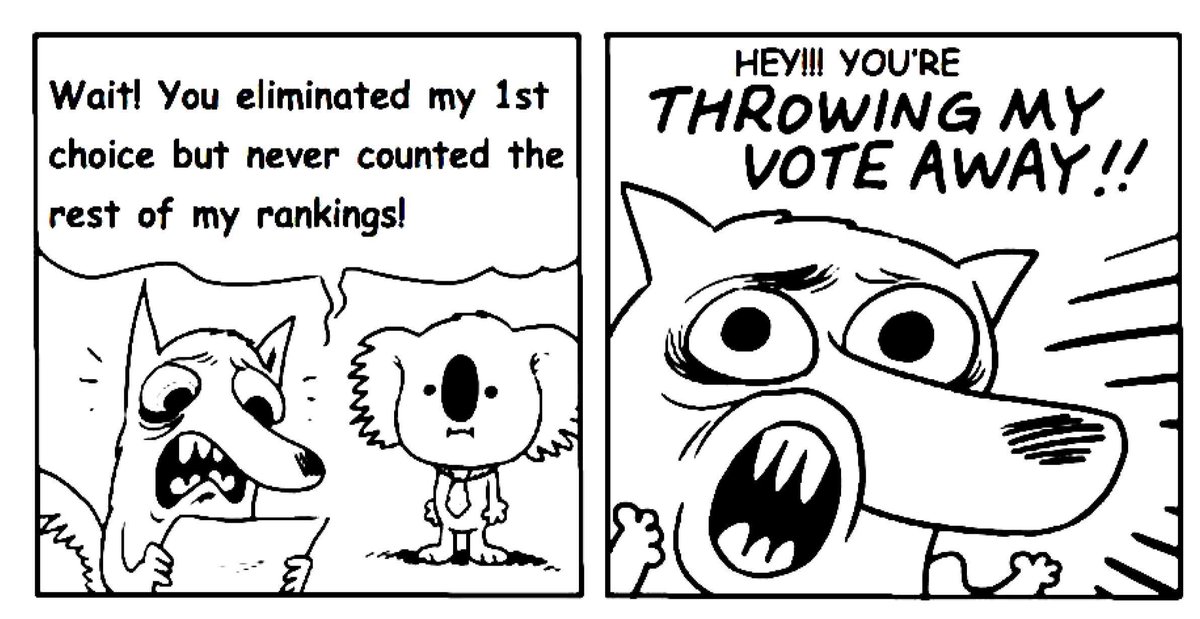
Ranked Choice Voting allows voters to vote their true preferences.
But it has a fundamental flaw.
It does NOT fix a two party system.
That's right, Ranked Choice Voting still has a two party drift.
That's because it can ignore relevant rankings that could have made a difference.
Voters still have to worry about wasting their vote. Does that sound familiar?
We've grown so accustomed to an F grade system that a C grade feels amazing.
But it's ok, because it's not just a matter of RCV and Choose-One-Only.
There's Approval Voting, Ranked Robin, Score Voting, and many others.
And our favorite: STAR voting.
We implore you to demand better of your voting methods. We and you deserve it.
STAR Voting: Better Voting for a Better World.
https://t.co/dqUwxduhzG
Fixing Windows, one kilobyte at a time.
Back in the NT days, Notepad was lean, fast, and stayed in its lane. Today? It wants an account, cloud sync, and Copilot’s opinion.
So I did what any retired OS engineer would do: rebuilt it from scratch.
2,686 bytes. Full features. Zero bloat. Pure Win32.
All in assembly language.
No telemetry. No nonsense. Just the Notepad you remember — only smaller than the thumbnail image!
Would love to hear what you think — and what other “impossible” tiny apps we should tackle next.
911 is one of the most important public services available, but many people are still unsure about when to call, what information to provide or what happens after the call is made.
Will you help us by taking this survey? https://t.co/Cd73vpnhva
PICARD: Data, shields up
DATA: Brilliant! Shields can reduce damage we sustain. Not immunity. Not hubris. Just prudence. It's not precaution—it's strategy.
[camera shakes]
WORF: HULL BREACHES ON NINE DECKS
DATA: Here's what happened: you told me to raise shields, and I didn't
Turns out U.S. vetting of immigrants for extremist views has been a weak point for at least 100 years.
Also, interesting thread about the Norden bombsight.
🧵 4/5
The Norden Bombsight Company manufactured the sights in a factory on Lafayette Street in lower Manhattan.
The factory employed many craftsmen of German descent.
Carl Norden himself spoke German fluently.
One of his most trusted employees was a 36 year old assembly inspector named Hermann W. Lang.
Lang had immigrated to the United States from Germany in 1927.
He was a naturalized American citizen.
He lived in a German American neighborhood in Queens.
What American authorities did not know was that Hermann Lang had served as a Nazi stormtrooper in Germany from 1923 to 1927.
He had been on the streets of Munich during the Beer Hall Putsch in November 1923.
He was a member of the Nazi Party from its earliest years.
In 1937 Lang was recruited into a German espionage network operating in New York.
The network was called the Duquesne Spy Ring, led by a South African born German agent named Fritz Joubert Duquesne who claimed credit for sabotaging the HMS Hampshire in 1916 and killing Lord Kitchener.
Lang's mission was simple.
Memorize the Norden bombsight plans one section at a time.
Reproduce them at home on his kitchen table.
In 1938 Hermann Lang traveled to Germany on a return visit.
He met with Abwehr Colonel Nikolaus Ritter in Hamburg.
From memory Lang reconstructed the complete plans of the Norden bombsight on Ritter's office floor.
He was paid by German intelligence for the work.
German engineers studied the stolen material and compared it with their own bombsight systems, including the Lotfernrohr 7.
By 1940 Luftwaffe bombers were carrying advanced bombsights of their own on combat missions over Europe.
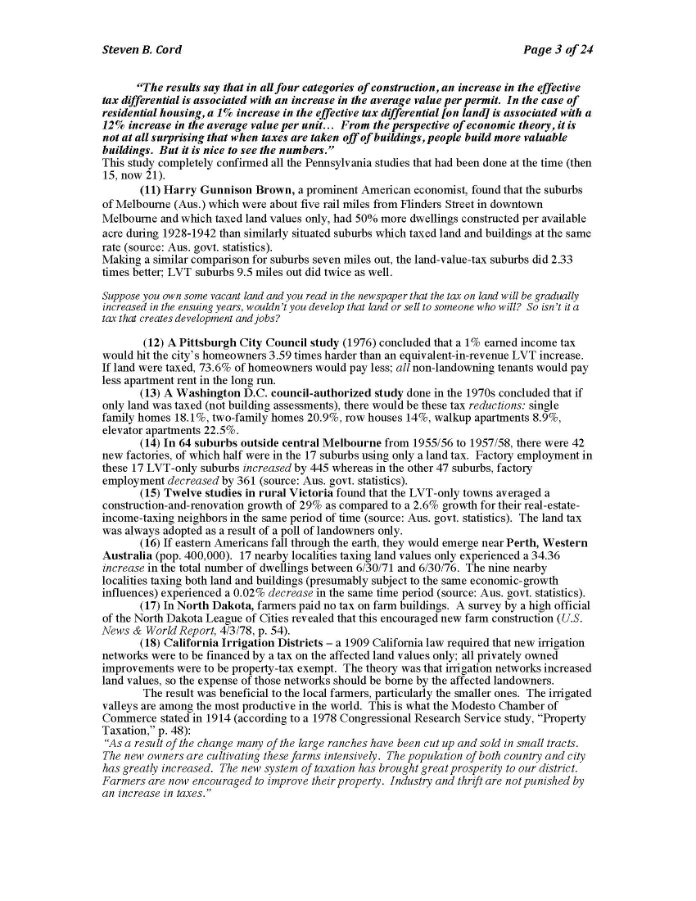
In 1991, Connecticut became the last state to enact an income tax. It was sold as a 4.5% flat tax "on the rich." No state has tried it since, until Washington. Here's what happened. 🧵
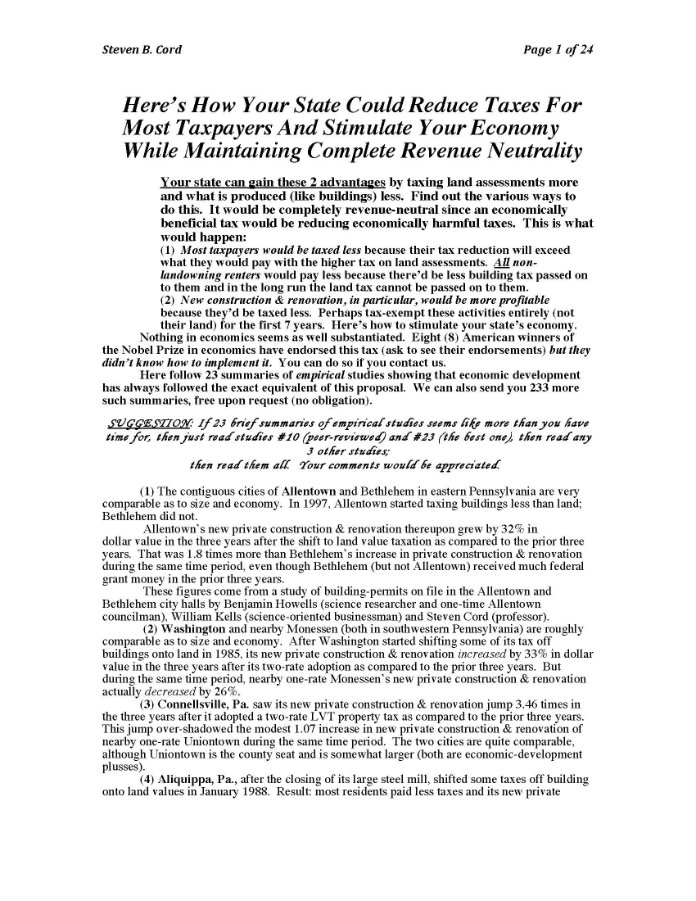
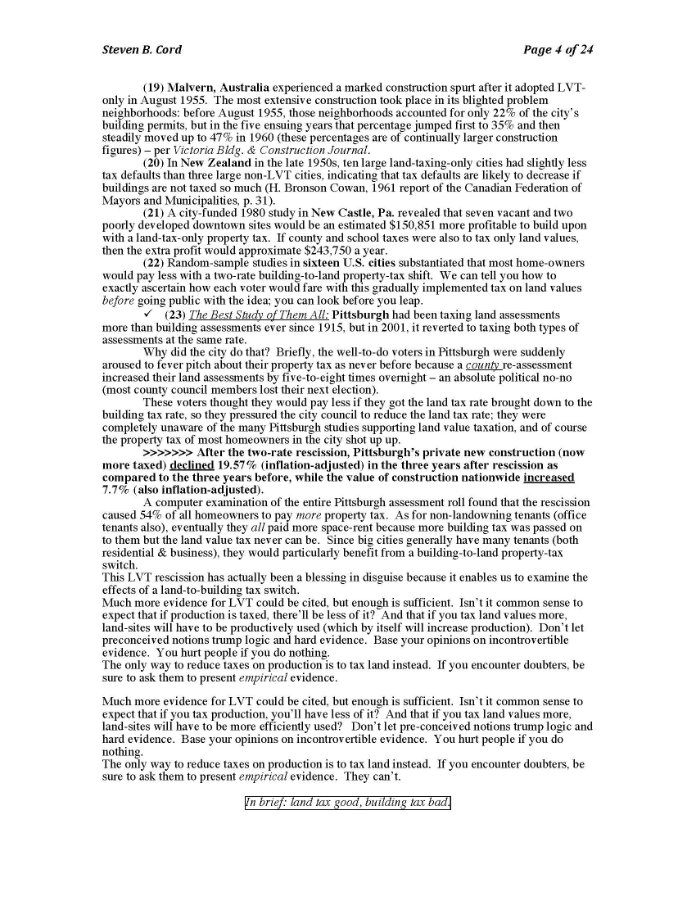
Exactly. And it's true even in expensive NYC. Parking lots often pay 1/10th the tax of multi-story buildings right next door. They stay underused for decades until the owner decides to make a killing by selling them to a developer who then has to build luxury housing just to pay the higher building taxes that punish all development here. If the vacant lot had to pay the same tax as the developed lot, we'd have no shortage of housing.
I bet they didn't test a full Land Value Tax. Land under classical economics means ALL of nature's products: physical space, locational advantage in urban areas, air, water, freedom from pollution, oil, etc.
Tax the real things from nature. There's no escaping that even in the AI world. They are finite & locational value can't be moved to a cheaper location; a skyscraper in midtown NYC loses nearly all its value in the middle of NY state. Even a data center has to be located somewhere that can be taxed, even in LEO, which is finite too. Tax the finite bandwidth to transmit data to/from Earth. Tax pollution. All of this will encourage more efficient use of resources: good for the environment too.
Eliminate deadweight taxes that retard productivity too, which will make humans more valuable too, countering the competition from robots/AI.
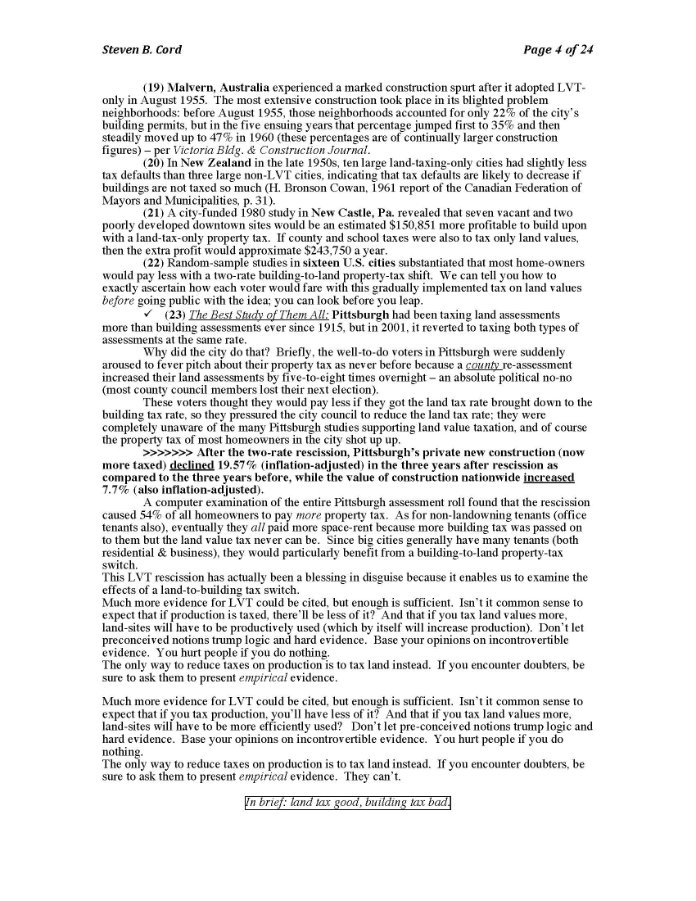
There is a solution, tried & proven.
@LVTYIMBY@LVT_USA@mmt_lvt@Lvt@LVT253@henrygeorgepgm@HenryGeorgeInst@henrygeorgeuk@HGSSSNYC@Geolibertarian@elonmusk@Wharton@paulkrugman
i know this for VERY annoying reasons, but watson and crick's DNA paper is still copyrighted. so much for open science.
842 words. 73 years old. watson and crick both passed away. british taxpayers funded it. nature still owns it. the iconic helix drawing was made by odile crick, who wasn't even an author, and her copyright runs separately through 2078. the data was rosalind franklin's photo 51, taken without her consent. she got no royalties in life. nature still collects them.
watson died last november, so under UK law the paper enters public domain on january 1, 2096. 143 years of private rent on a publicly-funded discovery, while nature publishes editorials about open science.
i'm the founder of a biotech company and i cannot legally put this paper on our website. the pattern is constant in biology: the moment an observation crosses a publisher's desk, the observer loses it. franklin's photo. paywalled, MTA'd, or licensed back to the people who paid for it.
this stuff they do to a scientist's work is even worse than what happens to musicians and artists and no one cares.
When I was dating my not-yet-wife, I asked her why she dumped her previous boyfriend (my best buddy, actually and no I didn't make a move on her till she gave him the boot). One of the reasons she gave was, "Because he always tells me these long boring stories from history."
Shaken, I quavered, "But ... I tell you long stories from history."
She assured me, "But YOUR stories are really interesting!" So anyway yay me I guess.
Who else is a history buff?
Replacing property taxes with income or sales taxes (or nothing) is a very bad idea.
Traditional property taxes should be replaced with land value taxes, though.
There's a tiny shred of truth in what he says, but I'm 99% sure he doesn't realize what it is: Land (location) can't be moved. And location is why people pay so much rent to live or work here. If we shift taxes off of wages, sales, capital (like buildings, factories), and onto land/location, we'll get more productive untaxed stuff we want/need, while hoarding and speculation on land/location will drop or be eliminated altogether.
Tried & proven. See below & my short video here: https://t.co/Ie6HHR8kdi (the exact percentages of Land Value Tax to replace current dead-weight taxes don't matter for this exercise, since it's designed to be revenue-neutral against current taxes).