Network School’s problem is not that Malaysia is hostile to innovation. Malaysia already has a much stronger example of privately built innovation, education, housing and commerce working together. It is called Bandar Sunway.
The difference is that Sunway was built to become part of Malaysia. Network School appears to be built to use Malaysia as a backdrop, while selling access to a transnational social circle whose loyalty is to the network rather than the place hosting it.
Bandar Sunway created a durable urban ecosystem: universities, hospitals, offices, housing, retail, hospitality, transport links and thousands of jobs. Even Malaysians who never study at Sunway University, enter its theme park or use its medical facilities still benefit from the surrounding employment, training, supply chains, property demand and institutional capacity it creates. Its success enlarges Malaysia’s own capabilities instead of merely importing consumers with money.
Bandar Sunway also shows that a private development can pursue profit without becoming socially detached from its host country. Its commercial success depends on attracting students, patients, workers, residents and businesses into institutions that Malaysians can actually use. The project gains value as the surrounding society becomes stronger. That is very different from a model where exclusivity itself is the product and where local participation is secondary to access granted by a foreign network.
That is what serious place-making looks like. The developer does not merely attract affluent outsiders and call their proximity a community. It builds institutions that remain useful when the original founders leave.
Its legitimacy comes from value embedded in the country, not from the prestige, wealth or social connections of people temporarily occupying rooms. The host society is not scenery; it is the main stakeholder whose long-term interests justify the project.
Network School, by contrast, seems to treat networking itself as the product. Its central promise is access to other selected members, while Malaysia supplies the land, infrastructure, labour, legal jurisdiction and low operating costs. If the network relocates, most of the supposed intellectual value leaves with it. Malaysia is left with rooms, publicity and an argument about special treatment. That is closer to an exclusive membership club than a genuine development institution.
Chinese AI companies offer another useful comparison. Their strongest projects do not define innovation as placing ambitious people in an expensive enclave and hoping that useful ideas emerge. They build models, platforms and infrastructure that are then pushed into manufacturing, logistics, healthcare, robotics, vehicles, energy systems, education and enterprise operations. Innovation is expected to enter production, lower costs and increase national capability, not remain a lifestyle experience for a self-selected elite.
The important point is that ordinary people can benefit without ever opening the AI product themselves. A worker may benefit because a factory becomes more productive. A patient may benefit because medical imaging improves. A consumer may benefit because logistics become cheaper. A local developer may benefit because powerful open-weight models can be adapted without paying a foreign company for every use. The technology becomes part of the economy rather than a gated social identity.
DeepSeek, Qwen and other Chinese systems are not valuable only because they answer prompts. They strengthen domestic research, reduce dependence on foreign platforms, lower costs for local firms and create tools that can diffuse across the entire economy. Their public value is not limited to direct users. Even where companies remain commercial and competitive, the underlying expectation is that technological capacity should circulate through society and industry.
That is the standard Network School should be judged against. Does it train Malaysians, build institutions, create transferable technology, employ local talent, solve Malaysian problems or leave behind infrastructure that still matters after its members depart?
If the answer is mostly no, then Malaysia is not rejecting innovation. It is being asked to subsidise exclusivity, branding and a mobile foreign network. Malaysia should welcome builders, but builders must leave behind more than expensive rooms and flattering stories about themselves. Otherwise, the country provides the platform while outsiders capture the prestige, relationships and upside for themselves, then move on.
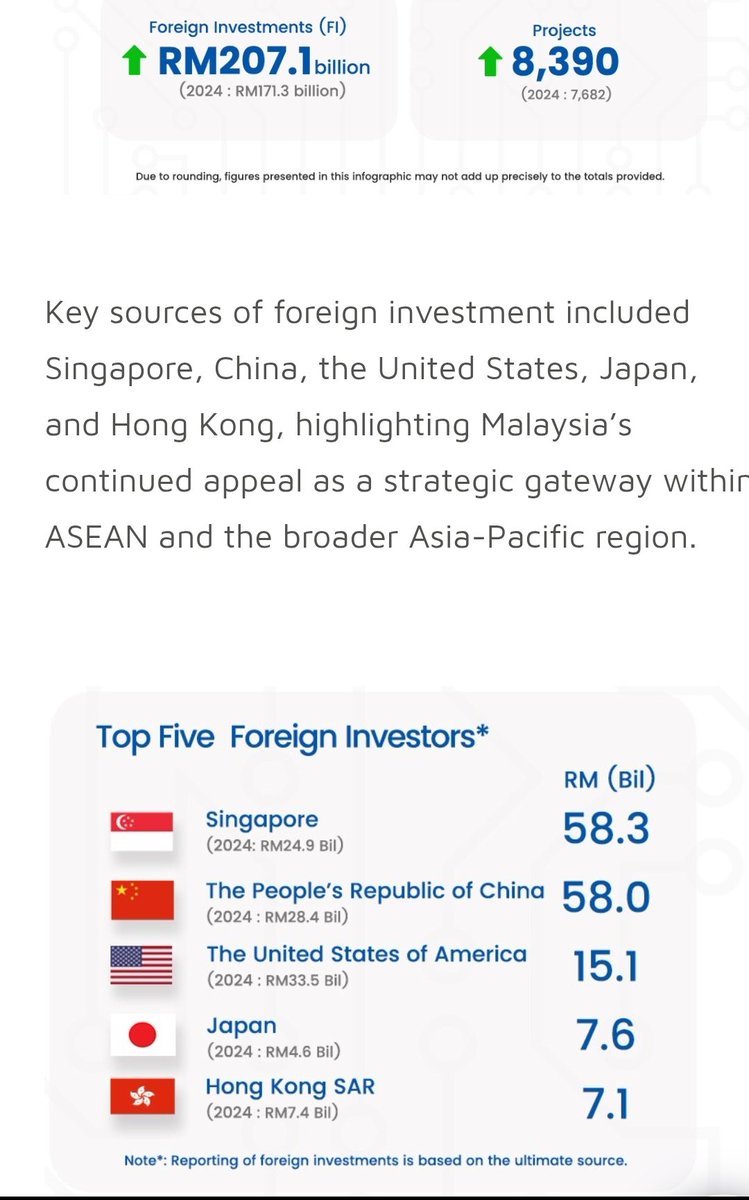
Malaysia received RM207.1 bil in FDI in 2025.
You r running an Airbnb and boasting about RM100 mil which you used to develop the property and equipments is amusing.
What high value tech jobs did you create for Malaysians? Hiring cooks and cleaners is tourism not tech.
Why does it have to be Network School and why can't Network School comply with Malaysian laws?
Why should any digital nomad pay $1500 to $3000 per month for a room when $1500 a month in Kuala Lumpur provides the same networking experience, rent for an entire apartment (not a room), amenities, and much better food?
And why is your advertisement about being next to Singapore instead of being in Malaysia?
Malaysia contingent for Star Wars Celebration Tokyo 2025 by Star Wars Malaysia Alliance. Thanks @starwarsmfc for organizing this pre-event gathering.
#starwarscelebration#swcj2025#SWCJ
Stop shamimg org yg buat trend dance duit raya tu. Kau pun baru tau gak. Tegur dengan adab, share and educate saja lah. Takyah nak kecam org lain macam kau la makhluk terpaling maksum.
Kepala serabut dengan kerja, terskip satu ingredien masa salin resipi. Bila dah bako, tgk balik video macam ada tak kena. Maaf @khairulaming, bukan niat derhaka. Sy insan yg lemah 🫣