@R_taleb92 This expression is inspired from a societal-based understanding of disability while “persons with disabilities” is inspired from a rights-based approach of disability.
Today, the UN as well as the international, regional disability NGOs all use “persons with disability”.
@msaderr@nadinewnjeim@lbfirstlady This expression is inspired from a societal-based understanding of disability while “persons with disabilities” is inspired from a rights-based approach of disability.
Today, the UN as well as the international, regional disability NGOs all use “persons with disability”.
@truth707070@lbfirstlady This expression is inspired from a societal-based understanding of disability while “persons with disabilities” is inspired from a rights-based approach of disability.
Today, the UN as well as the international, regional disability NGOs all use “persons with disability”.
@AmerMeraaby@lbfirstlady This expression is inspired from a societal-based understanding of disability while “persons with disabilities” is inspired from a rights-based approach of disability.
Today, the UN as well as the international, regional disability NGOs all use “persons with disability”.
كيف يجب على اللبنانيين الذين قرر عنهم حزب الله أن يفتح جبهة حرب مع اسرائيل أن يقرأوا هذا الفيديو الدعائي؟؟
هل يجب علينا غض النظر عن المقتلة الاسرائيلية المفتوحة بغزة وعن الاستخفاف بأرواح الناس هناك واحتمال تكرارها هنا في لبنان..؟
أنفاق واسلحة تمر من تحت اللبنانيين من دون علمهم ومن دون قرار منهم أو من شبه الدولة التي يحكمها حزب الله بقوة سلاحه؟
هل هذه الانفاق في قراهم وجبالهم المحيطة وقرب مدارسهم ومنازلهم؟؟
هل حزب الله معني بالرسالة التي يرسلها لاسرائيل لاستهداف المزيد من المنشآت المدنية بذريعة أن انفاق سلاحه تمر تحتها؟؟
هذا ليس استعراض قوة بل استخفاف بكل اللبنانيين وبحياتهم وبقرارهم وبحقهم بالقول إن هذه ميليشيا مسلحة طائفية لا تقيم وزناً لا لعدالة ولا لمستقبل شعب مهدد وتصادر كل شيئ باسم قضية عادلة هي القضية الفلسطينية..
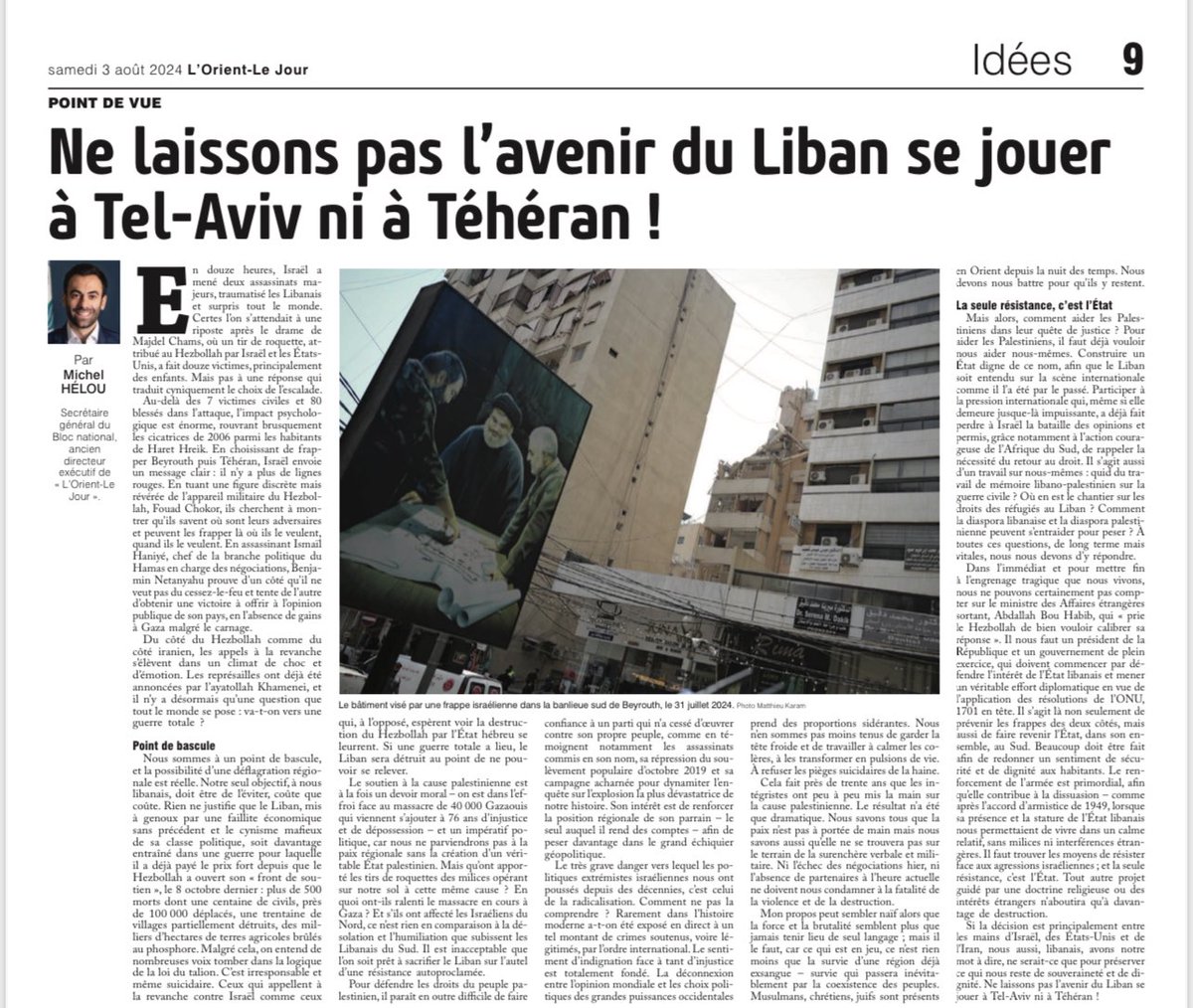
“Le soutien à la cause palestinienne est à la fois un devoir moral et un impératif politique. Mais qu’ont apporté les tirs de roquettes des milices opérant sur notre sol à cette même cause ? En quoi ont-ils ralenti le massacre à Gaza ?”
https://t.co/IsWrfnI7xk
par @michelhelou_lb
ألف مبروك للصديق @karimbitar ، الأستاذ الجامعي والمناضل يللي ما بيفقد الأمل ببناء لبنان أفضل. كل الشكر للعمل الجبّار يللي قام فيه @AlbertKostanian خلال الانتخابات وحتى اليوم. لبنان بأمسّ الحاجة لمنظّمات متل @KullunaIrada يللي بتجمع المغتربين وبتطمح لبناء دولة حديثة بالبلد.
Judith Butler in the @LRB: “Those who use the history of Israeli violence in the region to exonerate Hamas use a corrupt form of moral reasoning to accomplish that goal.”
https://t.co/8x1UhNo4pp
“Let’s be clear, Israeli violence against Palestinians is overwhelming: relentless bombing, the killing of people of every age in their homes and on the streets, torture in their prisons, techniques of starvation in Gaza and the dispossession of homes. And this violence, in its many forms, is waged against a people who are subject to apartheid rules, colonial rule and statelessness.
When, however, the Harvard Palestine Solidarity Committee issues a statement claiming that ‘the apartheid regime is the only one to blame’ for the deadly attacks by Hamas on Israeli targets, it makes an error. It is wrong to apportion responsibility in that way, and nothing should exonerate Hamas from responsibility for the hideous killings they have perpetrated.
At the same time, this group and its members do not deserve to be blacklisted or threatened. They are surely right to point to the history of violence in the region: ‘From systematised land seizures to routine airstrikes, arbitrary detentions to military checkpoints, and enforced family separations to targeted killings, Palestinians have been forced to live in a state of death, both slow and sudden.’
This is an accurate description, and it must be said, but it does not mean that Hamas’s violence is only Israeli violence by another name. It is true that we should develop some understanding of why groups like Hamas gained strength in light of the broken promises of Oslo and the ‘state of death, both slow and sudden’ that describes the lived existence of many Palestinians living under occupation, whether the constant surveillance and threat of administrative detention without due process, or the intensifying siege that denies Gazans medication, food and water. However, we do not gain a moral or political justification for Hamas’s actions through reference to their history. If we are asked to understand Palestinian violence as a continuation of Israeli violence, as the Harvard Palestine Solidarity Committee asks us to do, then there is only one source of moral culpability, and even Palestinians do not own their violent acts as their own. That is no way to recognise the autonomy of Palestinian action. The necessity of separating an understanding of the pervasive and relentless violence of the Israeli state from any justification of violence is crucial if we are to consider what other ways there are to throw off colonial rule, stop arbitrary arrest and torture in Israeli prisons, and bring an end to the siege of Gaza, where water and food is rationed by the nation-state that controls its borders. In other words, the question of what world is still possible for all the inhabitants of that region depends on ways to end settler-colonial rule. Hamas has one terrifying and appalling answer to that question, but there are many others.
If, however, we are forbidden to refer to ‘the occupation’ (which is part of contemporary German Denkverbot), if we cannot even stage the debate over whether Israeli military rule of the region is racial apartheid or colonialism, then we have no hope of understanding the past, the present or the future. So many people watching the carnage via the media feel so hopeless. But one reason they are hopeless is precisely that they are watching via the media, living within the sensational and transient world of hopeless moral outrage. A different political morality takes time, a patient and courageous way of learning and naming, so that we can accompany moral condemnation with moral vision.”
Au Liban les anti-guerre tentent de faire entendre leur voix
https://t.co/Z1WFOMo1Wt
via @LorientLeJour
"Selon un récent sondage de Statistics Lebanon, près des trois quarts des Libanais (73,5 %) sont contre l’entrée en guerre du Liban dans le conflit entre Israël et le Hamas.”
It’s cruel to witness Holocaust memory being weaponised, when knowledge is declining, argues @NatashaRoth01. “What should be a universalist set of lessons applied to atrocities everywhere is being warped to validate violent, ethnonationalist objectives.”
https://t.co/DICiRTUEvW
My latest @FRANCE24 interview on tonight’s 8 pm evening news. I mentioned the rising tensions on the Lebanese border, the blind and unconditional Western support for Israel, the need to call for an immediate ceasefire, for the respect of the Geneva Conventions & International Law
🇪🇺After Josep Borell’s condemnation of @vonderleyen, 800 EU officials also wrote a letter lambasting her betrayal of European values, condemning a “patent show of double standards”, and refusing disregard for human rights and international humanitarian law”https://t.co/AUvDtOFHbK
L’Europe saigne à l’Est,le Proche-Orient est à feu et à sang,l’Afrique subit les coups d’Etat à répétition,l’Amérique centrale est gangrenée par les gangs,le Conseil de sécurité est paralysé.Où sont donc les dirigeants d’envergure pour tenter d’arrêter ce glissement dans l’abîme?
إن المجزرة الأخيرة التي ارتكبها الجيش الإسرائيلي، بعد استهدافه "المستشفى الأهلي العربي" (المعمداني) في غزّة، "جريمة حرب" موصوفة تستوجب ملاحقة المسؤولين عنها أمام المحاكم الدوليّة.
@nationalbloc_lb
How many hospital patients and civilians in Gaza should be killed to assuage the immense desire for Israeli revenge, disguised by its western friends as the right to “ self-defense”?!