my father once told me the happiest people on earth are the homeless because they ain’t got no responsibilities, and i said “that’s bullshit dad” and he said you’re right son i was just trying to sound profound
New from me:
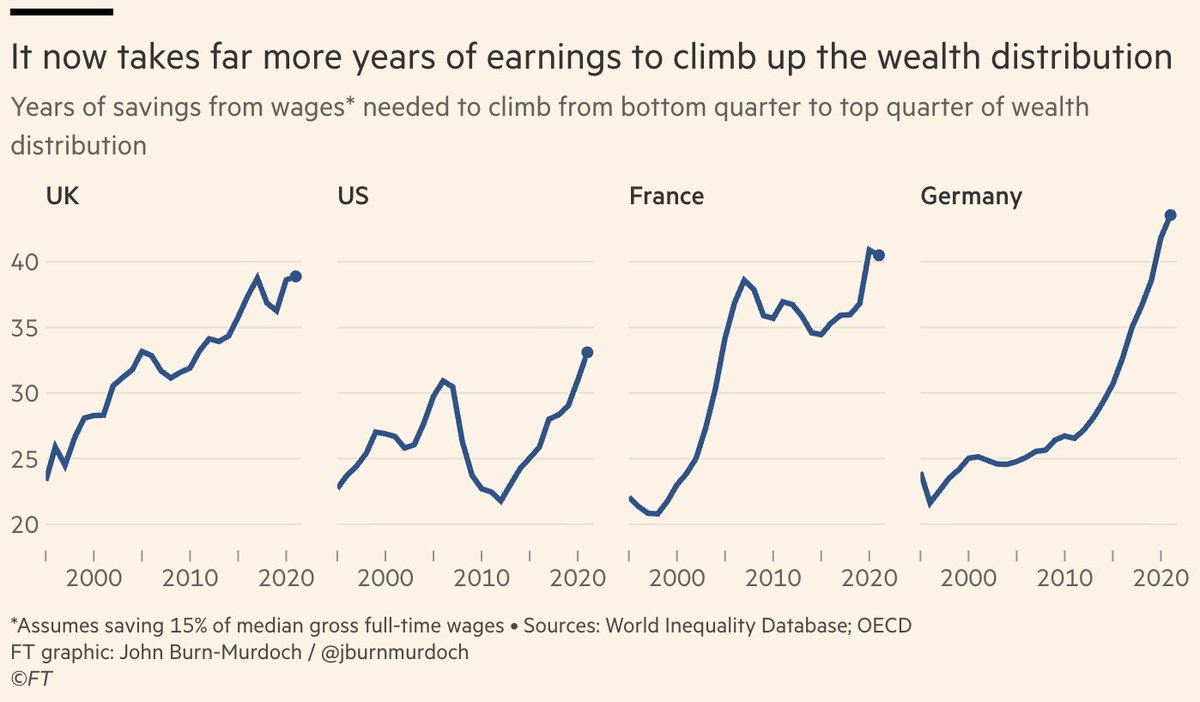
Until recently, the gap between comfortably-off and just-getting-started could plausibly be crossed in a decade or two of hard work.
Growth in asset prices means that’s no longer true.
My column on moving from income world to wealth world: https://t.co/UDmzA8tmPA
In 1946, Welles spent five weeks on his radio show bringing attention to the beating and blinding of a Black WWII veteran by police.
He ended the first episode “You're going to be uncovered… I will find means to remove from you all refuge, Officer X. You can't get rid of me.”
The War Horse reports that newly obtained Department of War records provide the most detailed public accounting to date of U.S. casualties during the opening phase of the Iran war, revealing 400+ casualty incidents between Feb. 28 and April 8, including at least 17 life-threatening injuries. The data shows head trauma was the single most common injury, with at least 170 cases, raising concerns that traumatic brain injury (TBI) could become the conflict's defining wound.
The War Horse also reports several previously undisclosed mass casualty events, including 70 casualties on March 18 and 29 casualties on March 3, that were never publicly detailed by U.S. Central Command. Two generals-Brig. Gen. Clint Barnes and Maj. Gen. Brad Hinson-were among those who sustained head injuries during the March 1 drone strike on Port Shuaiba, Kuwait.
The reporting also aligns with @TheIntelFrog's documentation of medical evacuation flights throughout Operation Epic Fury in near real time, repeatedly noting that the tempo of those flights suggested the number of U.S. casualties was rising beyond the figures publicly acknowledged by the Department of War. These newly released records provide independent evidence consistent with that assessment.
Source: https://t.co/4K8qsMb8Nj