Cybercrime depends on an ecosystem of services designed to help attacks scale. Over the past nine months, the @Microsoft Digital Crimes Unit has disrupted five operations that targeted the infrastructure, services, and tools attackers rely on.
For 250 years, Americans have met big problems the same way: together.
Alexis de Tocqueville saw it in 1831, and the nonprofits Microsoft supports are still proving him right.
Watch the fourth America 250 video: https://t.co/pYSljp78DQ
In 1831, a Frenchman named Alexis de Tocqueville visited Cincinnati and saw something that stopped him in his tracks: Americans coming together to build schools, establish hospitals, and address societal needs on their own. He saw a nation of problem-solvers who formed associations, or what we now call nonprofits. This spirit lives on today in a nation that doesn’t wait for change, but comes together to create it.
Episode 5 publishes this Wednesday. https://t.co/8KAJ2Rfmsm #A250 @Microsoft@America250
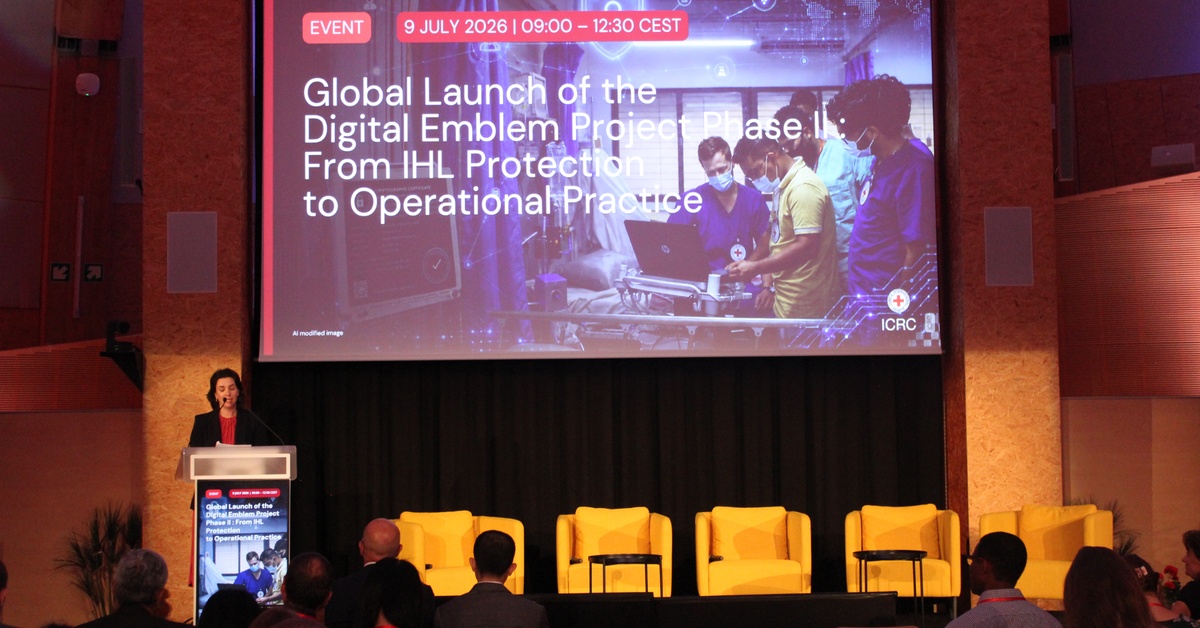
A new chapter for the Digital Emblem initiative. In Geneva, Natasha Crampton, Vice President and Chief Responsible AI Officer at @Microsoft, joined the International Committee of the Red Cross (@ICRC) as the effort moves into its next phase.
What makes a new technology part of everyday life?
It's not only what technology can do, or who can access it, but how the public decides to use it.
Watch the third America 250 video: https://t.co/5AkJGyUU2E
In 1904, Henry Ford helped put the world on wheels. In a factory in Detroit, @Ford didn't just create a better automobile. He transformed the way automobiles were made. Using standardized parts and innovative manufacturing techniques, Ford reduced assembly time from twelve hours to just ninety-three minutes. The Model T that emerged changed history, turning the automobile from a luxury item into a practical and affordable product for ordinary families.
Technology changes the world when it becomes accessible to everyone, not just a few. It is the same idea that helped put a computer on every desk and in every home. And it is how we think about the cloud and AI today.
Stay tuned for Episode 4 on Monday: Nonprofits empower a nation of problem solvers.
See the full series: https://t.co/8KAJ2ReOCO @Microsoft@America250
Microsoft's 2026 Environmental Sustainability Report is out today.
📄 Learn how we're helping build the infrastructure needed for the AI future while advancing our environmental commitments to address the growing demand for natural resources: https://t.co/FNwAddNduF
Humanity’s needs are rising — can AI pick up the slack?
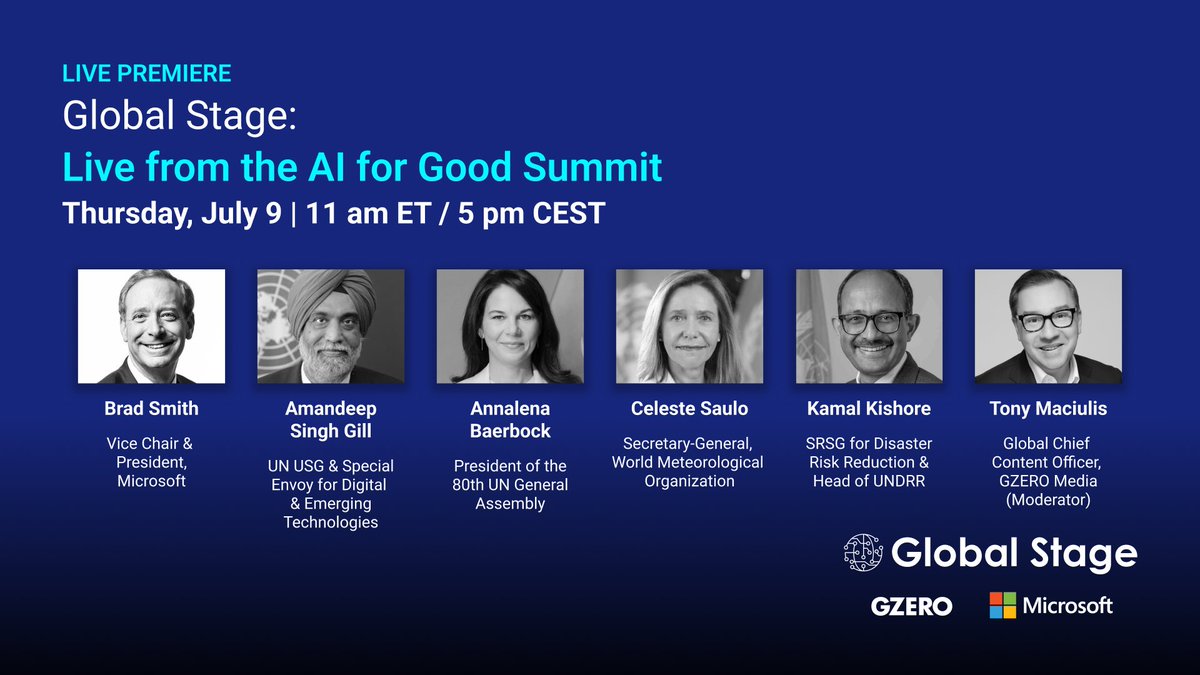
At this year's #AIforGood Summit, our Global Stage discussion examines how AI can help humanitarian institutions on the frontlines of crises and shortfalls. Our panel comprises @UN_PGA, @gioasempre, @HeadUNDRR, Prof. Celeste Saulo of the @WMO, and @Microsoft's @BradSmi with @TonyMaciulis moderating. Catch the live premiere on Thursday, July 9th at 11am ET at https://t.co/A9KgnnFvKe.
Some rights must be understood again with every generation.
Freedom. Trust. The limits of power.
Watch the latest episode of our America 250 series: https://t.co/2GVkHBUfvt
One of the most exciting opportunities with AI is its potential to expand access to knowledge.
For more than a century, Theodore Roosevelt's writings and historical records were spread across dozens of collections and institutions. Now, through the Theodore Roosevelt Presidential Library, people can explore those materials in entirely new ways using AI-powered tools, making history more accessible and easier to navigate.
Projects like this demonstrate how technology can help cultural institutions reach more people, deepen learning, and connect new generations with the ideas and experiences that shaped our country.
https://t.co/azmN2FX8nH
What 20 years in Quincy, WA can teach us about community-first datacenters:
💧 Protecting local water
🏘️ Long-term partnerships
⚙️ New cooling approaches
📊 Real economic impact
This month’s Sustainably Speaking explores what’s working—and what’s next. https://t.co/t8hBktVErP
For 250 years, America has been shaped by choices. Now we face the next ones.
Microsoft’s America 250 series looks at moments from US history that still shape innovation, progress, and what comes next.
Watch: https://t.co/JQaQwTlmEM
Microsoft TechSpark brought together Fellows from across its nationwide network alongside community leaders in El Paso, Texas to highlight local innovation already creating jobs, strengthening economies, and expanding access to digital skills across the United States.
As demand for AI grows, so do questions about water use.
Microsoft has improved datacenter water use effectiveness by nearly 90% since the early 2000s and, in FY25, replenished more water globally than it withdrew.
Learn more: https://t.co/xEeEOI71UN
Ten years from now, what will we wish we'd done differently?
We asked six experts from Microsoft AI Economy Institute the same question. Their answers reveal different ways of thinking about the future of AI.
Read their perspectives: https://t.co/e5wRHsO0Pz
AI is changing how people work. The bigger question is whether we’re helping people adapt. Learn how Microsoft is joining @raiseus_ai to bring together states, employers, and educators to support workers as jobs evolve: https://t.co/qEygwEl51n
#RAISEUS
.@Microsoft Digital Crimes Unit has taken down five operations in nine months that were enabling Cybercrime as a Service (CaaS).
Cybercrime runs on coordination. Disrupting it takes the same approach, working with partners to break up the systems that make these attacks possible.
Cyberattacks on water utilities can move fast from digital systems into physical infrastructure.
The good news: our work with @Cyber_Readiness shows simple cybersecurity fundamentals can reduce risk and strengthen resilience. Read more: https://t.co/Wm36ejj1f8