Excited to share my PhD work in bioRxiv.
In this study, we systematically explored the evolutionary arms races between TE families and KRAB-ZFPs. We reconstructed the evolutionary arms race dynamics with KRAB-ZFP in some ERVs, including LTR7_HERVH.
https://t.co/yIsXJn5kp6
Our latest work, “Hidden Challenges in Evaluating Spillover Risk of Zoonotic Viruses Using Machine Learning Models”, is out in @biorxivpreprint. (1/n)
https://t.co/gfD2szLeyP
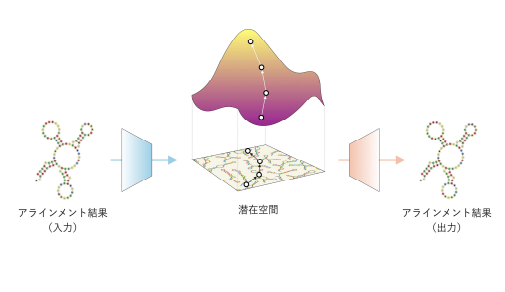
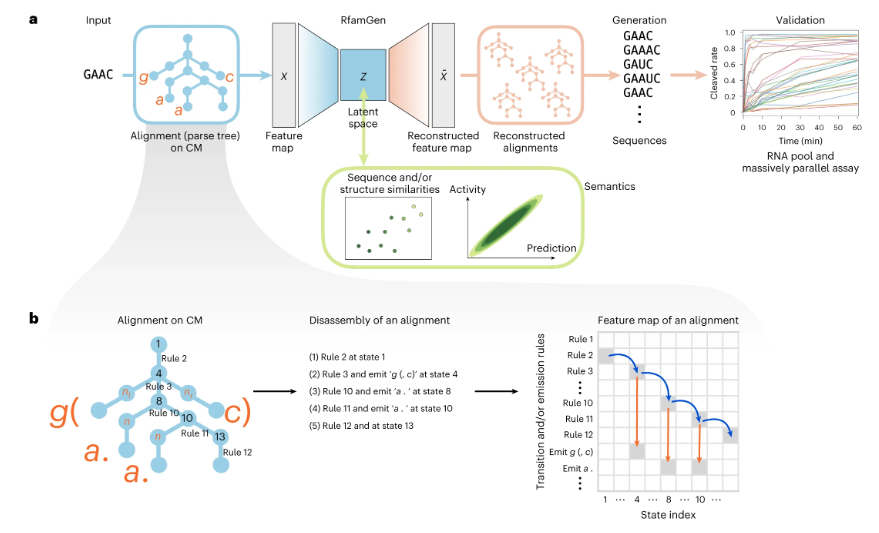
An exciting advance for deep learning in RNA engineering from the Hamada and Saito labs! RNA family sequence generator (RfamGen) is a deep generative model for designing novel, functional RNA sequences. https://t.co/y3oJJ5gx3L
Excited to share our latest work, 'RfamGen' - an AI-driven breakthrough in RNA synthesis, published in @naturemethods! Developed with @m_hama and Mr. Sumi, this technology paves the way for advanced RNA synthetic biology and drug discovery. #AI#RNA https://t.co/t3Ei7v8781
A #Waseda professor's #research findings unlock new potential in exploring the involvement of RNA in biological processes such as cancer development and progression, viral RNA degradation, and cellular stress responses.
https://t.co/1UYVvwjAkI
A public dataset of scATAC-seq is analysed to identify transposable element-derived cis-elements specific to certain cell types, possibly contributing to different functions or morphologies in the brain @hamada_lab
https://t.co/psU5kqigDp
Our new review article on RNA informatics, co-authored with Prof. Hamada @m_hama, has been published in Briefings in Bioinformatics. https://t.co/sCyNPs447B