'When Gravity Eats Information'
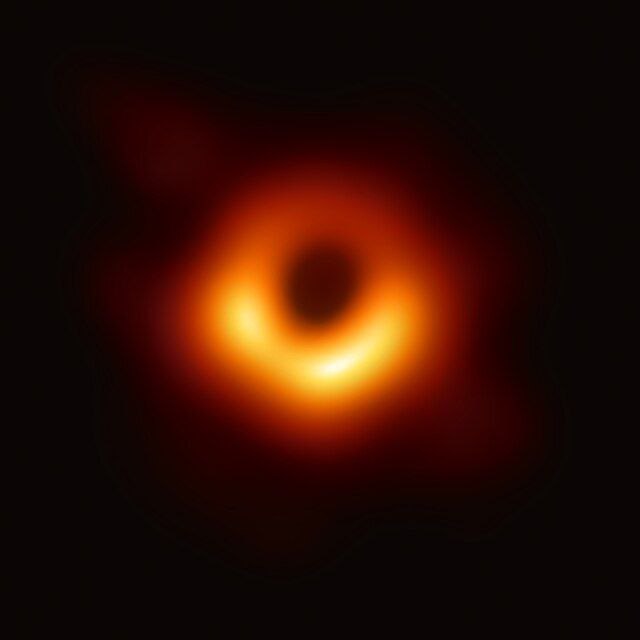
Black holes swallow light.
Do they erase history?
Hawking argued information seeps back as radiation.
Matter ends.
Entropy doesn’t.
#blackholeparadox#Hawking
In 1903, Curie showed that radiation wasn’t a glitch in the lab but a property of matter itself. That work earned her a Nobel alongside Becquerel and Pierre. She pushed further, isolated radium, and carved out a second Nobel on her own.
#MarieCurie
1687 gifted us the equation that explains why apples bully the ground and planets can’t mind their own orbit.
F = G m₁m₂ / r²
Gravity: the universe’s clingiest habit.
The universe keeps records in light.
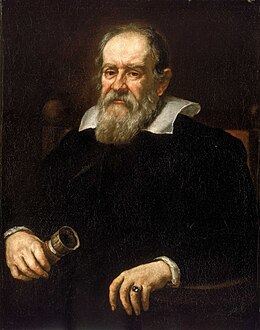
In the early 1600s, Galileo, reliant on patrons for financial support, would gift his inventions to gain favor. Struggling with financial instability, he devised a new strategy in 1610 after discovering Jupiter's moons.
#GalileoGalilei
In 1609, Galileo Galilei created a refracting telescope that had a convex lens at the front and a concave lens at the back. This telescope was essential for his astronomical discoveries, such as the observation of Jupiter's moons.
#GalileoGalilei#telescope#Galileanmoons.
Superstring Theory is a version of String Theory that includes both open strings (with endpoints) and closed strings(which form a loop). It posits a connection called supersymmetry between bosons and fermions. There are five consistent versions of Superstring Theory.#stringtheory
String Theory was first studied in the late 1960s as a theory of the strong nuclear force before being abandoned in favor of the theory of quantum chromodynamics. Later, it was revived as a theory of everything in the 1980s.
#stringtheory
String Theory was first studied in the late 1960s as a theory of the strong nuclear force before being abandoned in favor of the theory of quantum chromodynamics. Later, it was revived as a theory of everything in the 1980s.
#stringtheory
String theory is hard to test experimentally due to extremely small strings and inaccessible extra dimensions, and faces issues like lack of consistent formulation and unphysical solutions. Some argue it's more speculative and unfalsifiable than a scientific theory.
#stringtheory
String theory is a possible theory of everything that tries to explain the physical world. It has many different versions with different features. Physicists want to find the right one by studying space-time and symmetry.
#stringtheory
String theory is a possible theory of everything that tries to explain the physical world. It has many different versions with different features. Physicists want to find the right one by studying space-time and symmetry.
#stringtheory
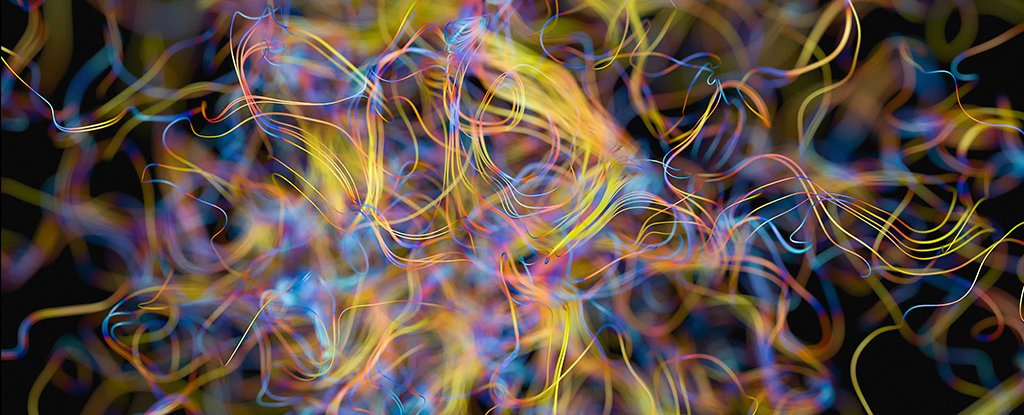
String theory aims to unify the fundamental forces and particles by suggesting that tiny one-dimensional strings, vibrating at varying frequencies, are the basic building blocks of matter.
#stringtheory
String theory aims to unify the fundamental forces and particles by suggesting that tiny one-dimensional strings, vibrating at varying frequencies, are the basic building blocks of matter.
#stringtheory
The Penrose mechanism, recognized as a process, generates potent jets of matter and radiation emanating from the black hole's poles. Detectable by telescopes, these jets serve as a means for scientists to observe and study black holes.
#penrosemechanism#blackholes
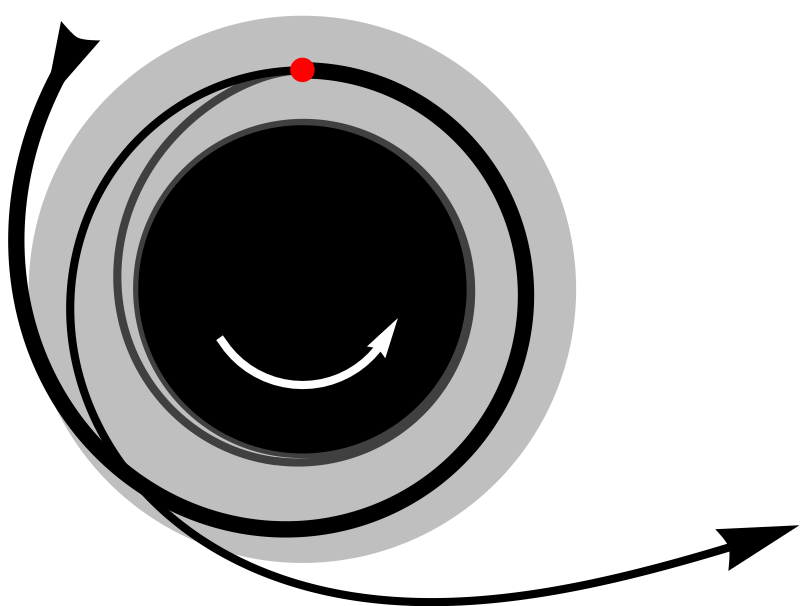
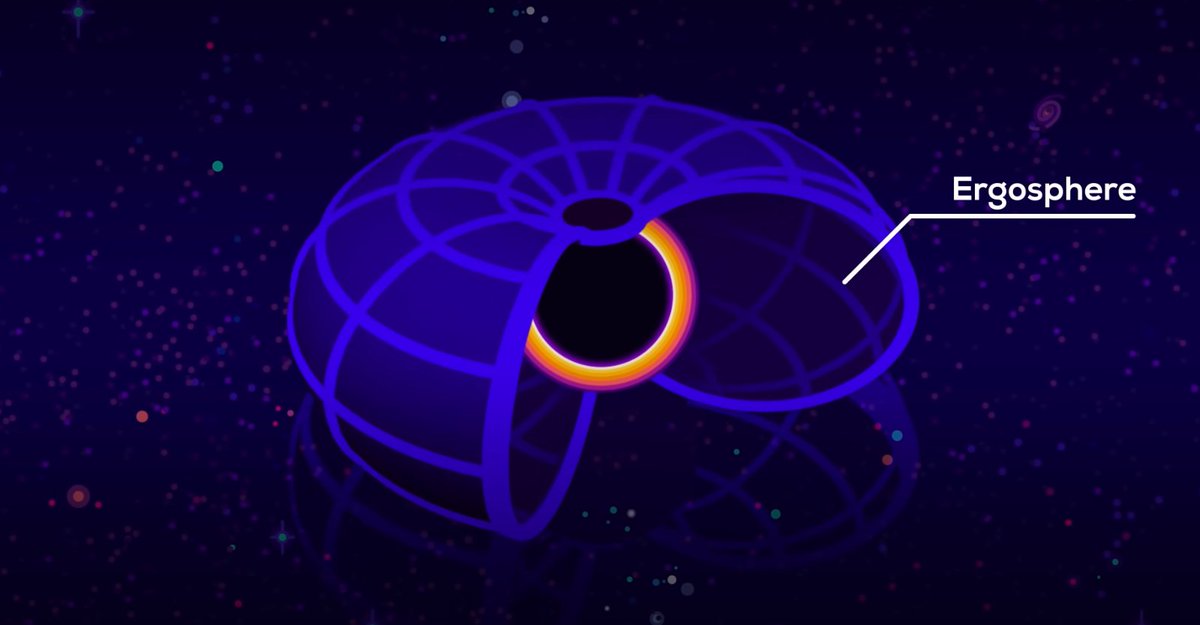
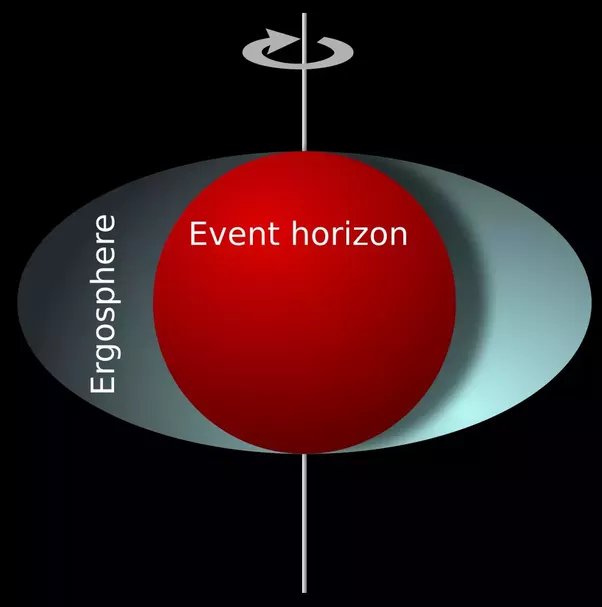
In contrast to the event horizon, the ergosphere does not constitute an irreversible boundary. Certain entities or particles have the capacity to elude the ergosphere by harnessing the rotational energy of the black hole.
#ergosphere#blackholes
Beyond the event horizon, in the ergosphere, the intense gravity of a black hole distorts and rotates everything. Inside, nothing stays still, and even light is pulled along by the spinning black hole.
#ergosphere#blackholes
Approaching a blackhole closely would result in being pulled in and unable to escape.Anything that comes too near,such as a stray star or a person,becomes trapped.This boundary around blackholes, where nothing can escape,is referred as the event horizon.#blackholes#eventhorizon
Black holes remain enigmatic entities, and there is still a great deal for us to comprehend regarding their nature. Yet, we acknowledge their immense strength and the profound influence they can exert on their environment.
#blackholes
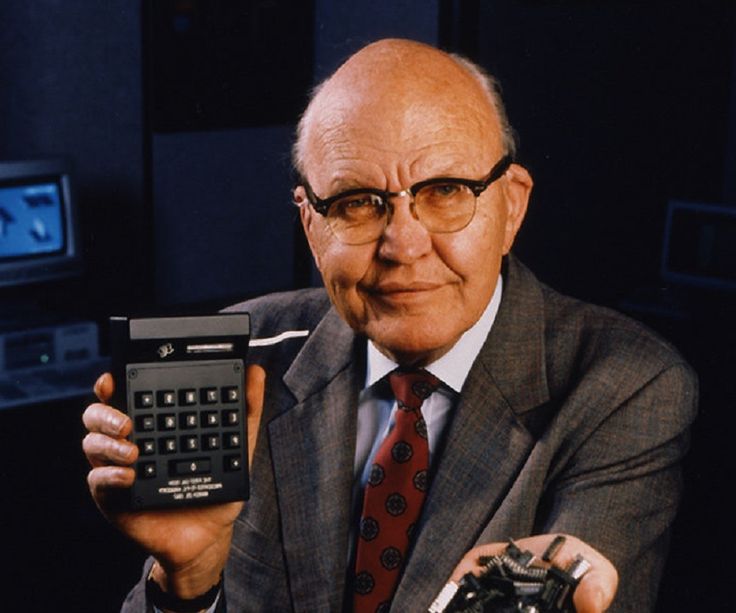
In 1967, Jack Kilby created the Pocketronic, the first electronic calculator based on integrated circuits, securing a fundamental patent for TI that underlies all pocket calculators.
#JackKilby#Pocketronic#electroniccalculator
November 8:
Jack St Clair Kilby, an American electrical engineer, is known for creating the first integrated circuit (IC) and was awarded the 2000 Nobel Prize in Physics for his achievement.
#JackKilby#Nobel
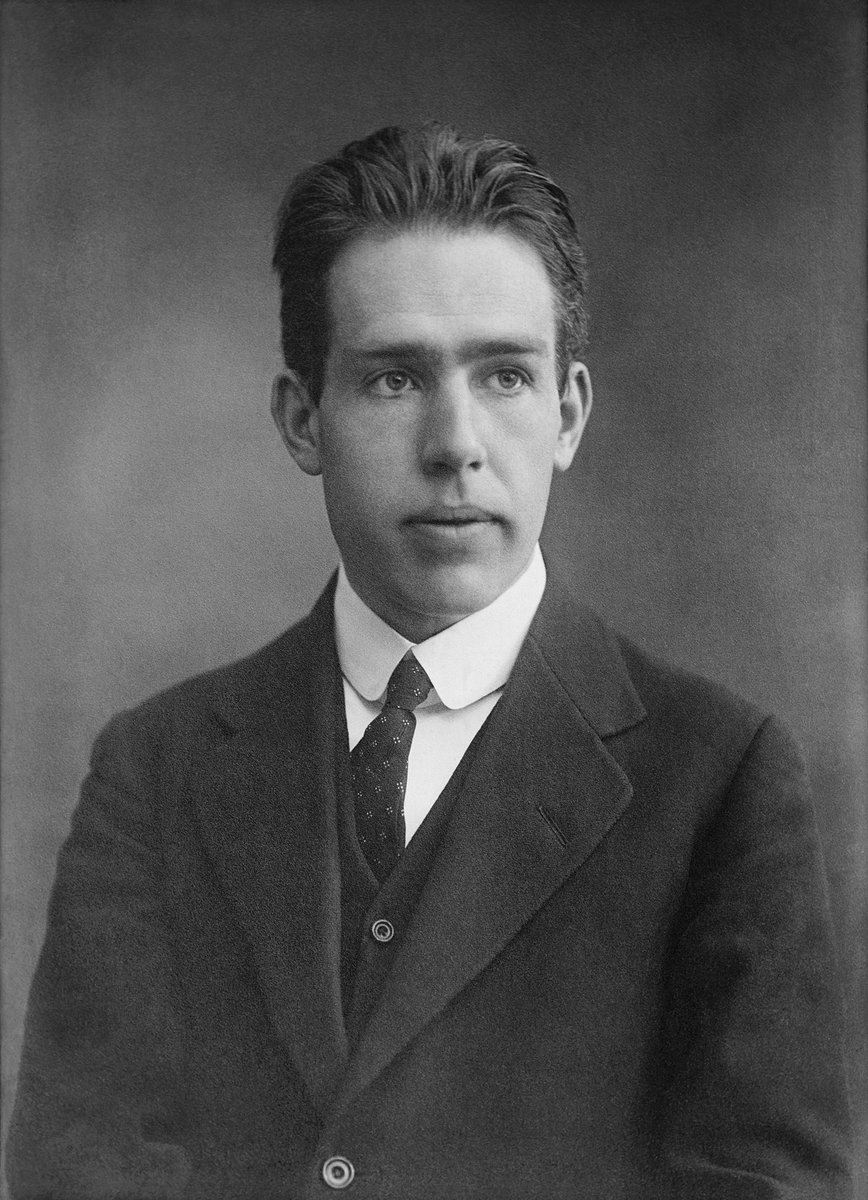
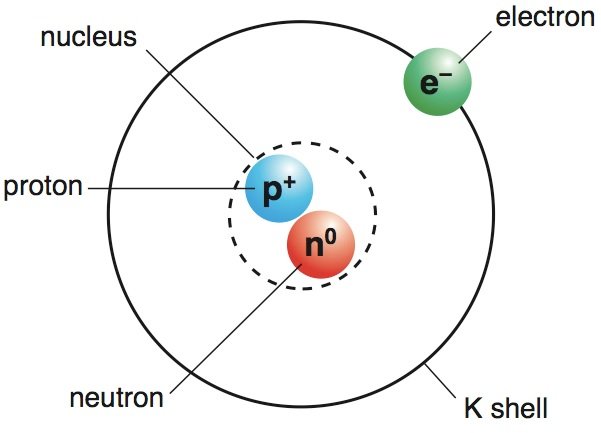
Niels Henrik David Bohr, a Danish physicist, earned the Nobel Prize in Physics in 1922 for his significant contributions to the comprehension of atomic structure and quantum theory.
#NielsBohr#quantumtheory#atomicstructure#NobelPrize
In 1609, Galileo Galilei created a refracting telescope that had a convex lens at the front and a concave lens at the back. This telescope was essential for his astronomical discoveries, such as the observation of Jupiter's moons.
#GalileoGalilei#telescope#Galileanmoons.
According to Newton's Law of Universal Gravitation, all particles in the universe attract each other with a force that is directly related to their masses and inversely related to the square of the distance between them.
#universalgravitation#IsaacNewton
In 1974, Hawking united two ideas, showing that black holes, with quantum effects considered, could have entropy and emit radiation over time. Dubbed "Hawking radiation," this discovery is crucial in our understanding of black holes.
#hawkingradiation#blackholes
November 8:
Jack St Clair Kilby, an American electrical engineer, is known for creating the first integrated circuit (IC) and was awarded the 2000 Nobel Prize in Physics for his achievement.
#JackKilby#Nobel
November 7:
Marie Curie (1867-1934), Polish and naturalized-French physicist and chemist who conducted pioneering research on radioactivity, for which she was awarded the Nobel Prize in Physics in 1903 and the Nobel Prize in Chemistry in 1911.
#MarieCurie