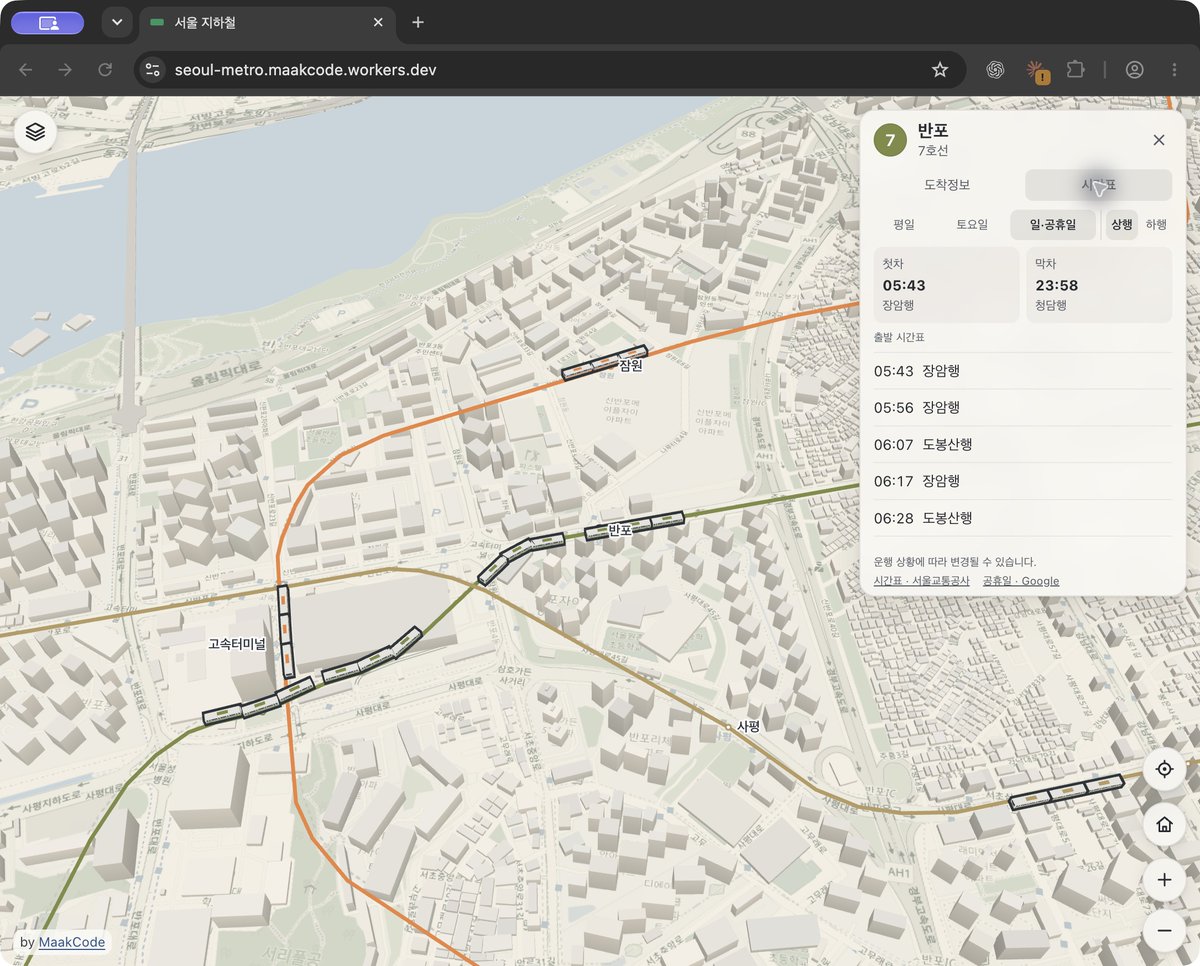
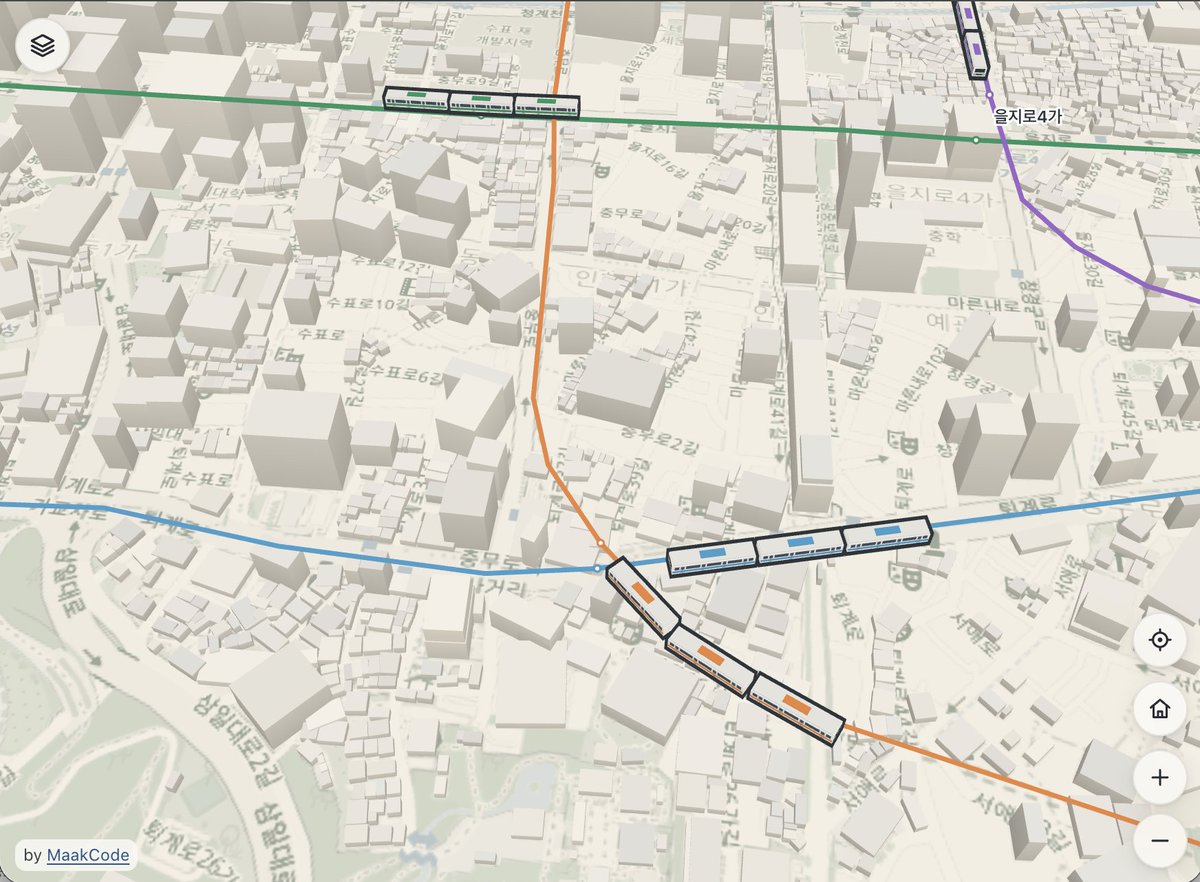
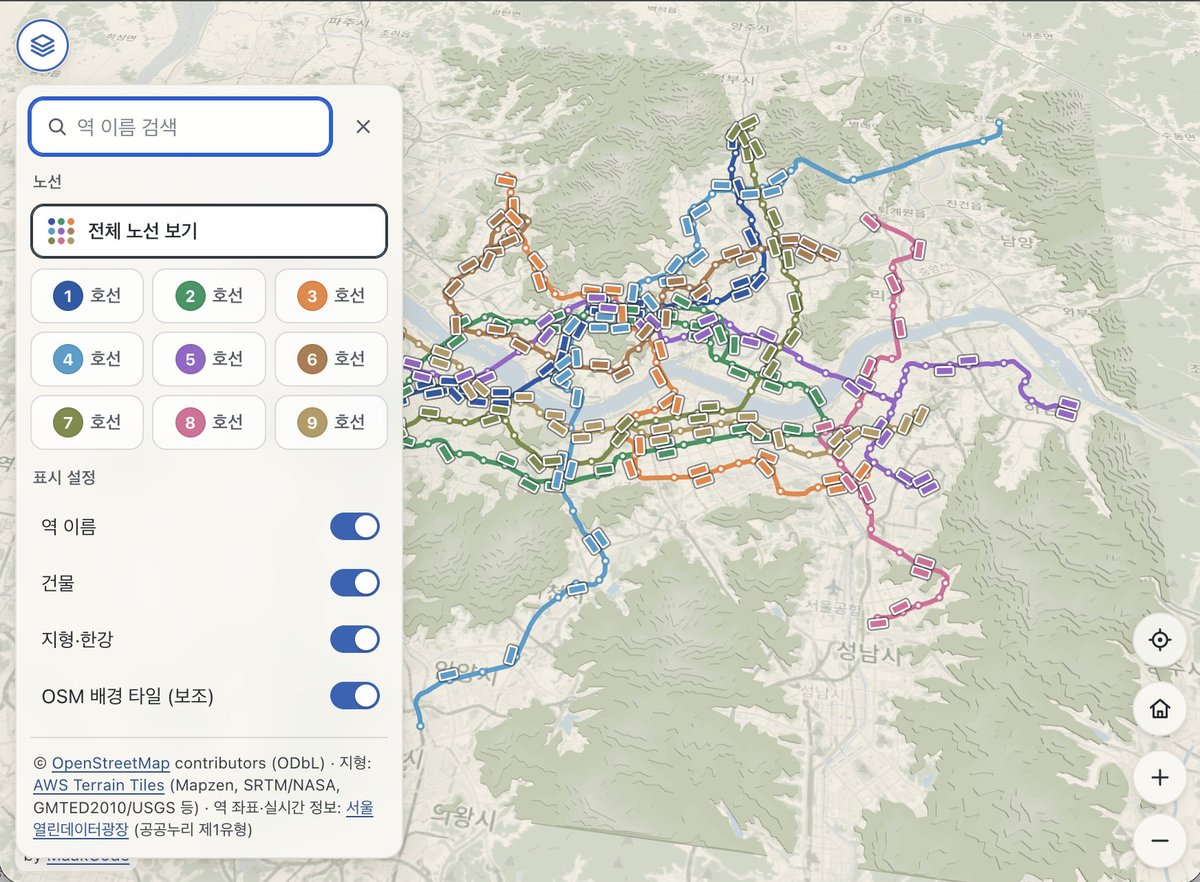
Seoul Metro turns Seoul’s subway into a miniature 3D city. It uses Seoul’s public APIs to estimate the positions of real trains in service. Follow a train, explore stations, and check first/last train times.
https://t.co/DjlLi3FrXS
I’ve been refining Seoul Metro since Claude Fable 5.1 Build Day Seoul. Updates include support for a few more languages, smoother train movement, better train following, and first/last train timetables.
I fixed position jumps when new arrival data came in. Trains now approach stops smoothly and wait for movement evidence before departing. This 4× clip compares the old and improved interpolation using the same synthetic observations.
My dot traced the crash to missing Scene lifecycle support, required on iOS/iPadOS 27 for SDK 27 builds.
It applied the Expo patch and configuration fix, verified the Release build and iPad simulator launch, then uploaded a new build.
Entering the OpenAI DevDay Side Quests sweepstakes for a chance to win! #OpenAISideQuest
After my app was rejected, I asked my dot to investigate, fix it, test, open a PR, and resubmit. I managed the whole process remotely. This video recreates our conversation.
The plugin is called ImageToolset. This demo shows real MCP calls:
2400 × 1600 PNG → 1200 × 800 WebP
1.94 MB → 40.5 KB (97.9% smaller)
Both the dimensions and format changed. The video demonstrates the MCP tools, not the Codex interface.
Entering the OpenAI DevDay Side Quests sweepstakes for a chance to win! #OpenAISideQuest
I built a Codex plugin that adds image-editing tools through MCP, so I can inspect, resize, crop, and convert images with a natural-language request.
Under the hood: a Node.js MCP server connected over stdio, with Sharp/libvips handling pixel processing and encoding. The agent chooses the tools and options; the plugin saves a new image and returns its details, keeping the original intact.
Entering the OpenAI DevDay Side Quests sweepstakes for a chance to win! #OpenAISideQuest
I brought my Phaser coin game to ChatGPT Sites. Click gold, avoid purple, and chase a high score.
Play: https://t.co/F81AhVr5em
Entering the OpenAI DevDay Side Quests sweepstakes! #OpenAISideQuest
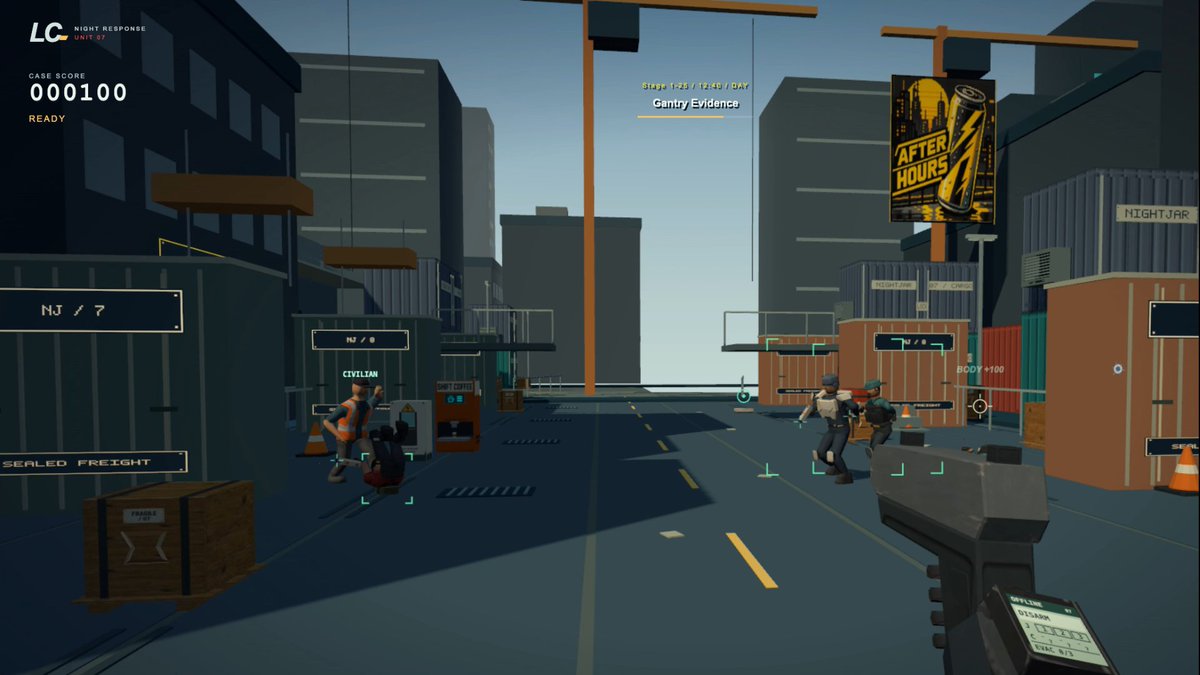
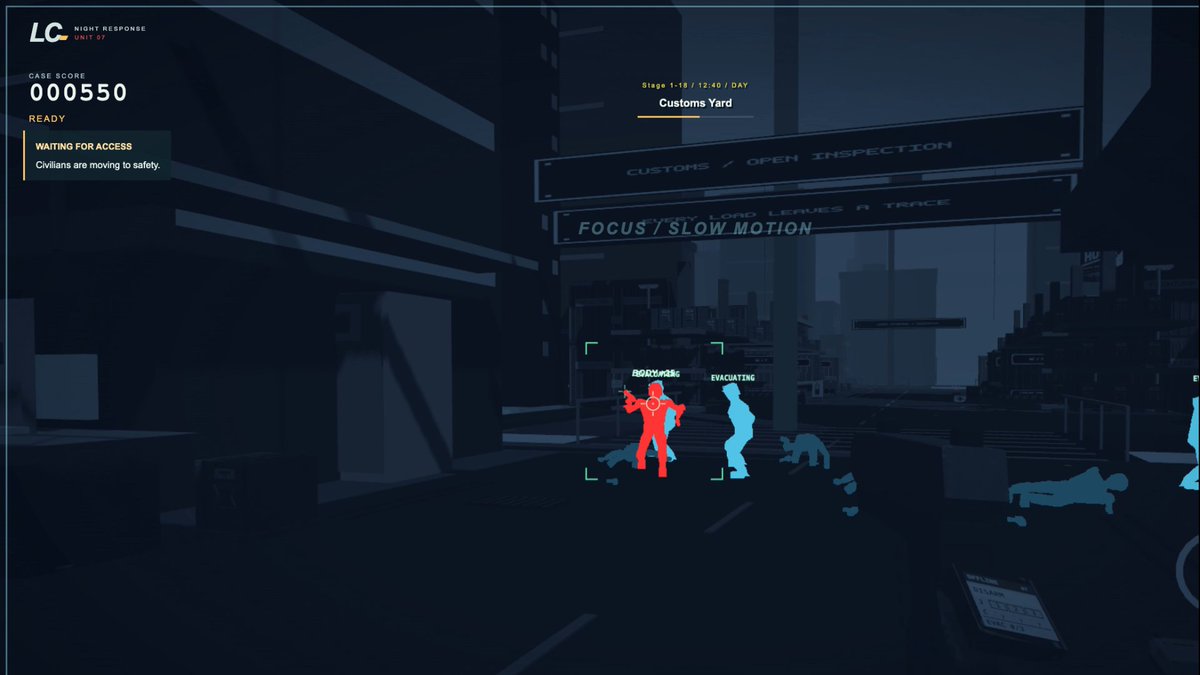
I used GPT-6 Astra in Codex to create LAST CALL, a 3D rail shooter, from concept art and 3D modeling to rigging, animation, and gameplay.
What surprised me most was how well it went from concept art to 3D models to animation. I gave feedback and watched it take shape.
It even suggested ideas I hadn't asked for, like coffee-powered slow motion.
My takeaway: getting a game running was easier than I expected. Making it match my taste was harder.
I spent more effort shaping encounters and boss ideas than I anticipated. That’s the part I want to get better at.
Try LAST CALL:
https://t.co/a43ZHP0tl0
When GPT 6 Astra came out, I wanted to see how far I could take an idea with it.
I built LAST CALL, a Three.js browser shooter, to explore a workflow from AI-generated concept art to playable 3D models using Blender MCP.
My favorite part: concept art → models → GPT Image textures → animation, all in one workflow.
I steered the look and feel through feedback. Astra surprised me with ideas I hadn’t asked for, like slow motion fueled by coffee.
The best part was bringing an idea to life so quickly. I described what I imagined, shaped it into a prompt, and provided a subway API key. Fable 5.1 handled everything from 3D modeling to implementation as I guided it through vibe coding.
I built this at Claude Fable 5.1 Build Day Seoul.
Watch Seoul’s subway trains move through a miniature 3D city. Each train carries people through their day. A familiar transit map becomes a living landscape.
https://t.co/AJt8fuM4MX
We ride the subway every day, but rarely get to see the whole city moving at once. I wanted to turn that everyday journey into a miniature world you could pause and watch.
@thsottiaux There also needs to be a way to build automated agents that accumulate experience over time, similar to Orca and Kiro. With Codex alone, it is difficult to build a complete agent pipeline.
@thsottiaux There needs to be a way to receive notifications and manage the status of completed local tasks from a single place on mobile, rather than having to remotely access each environment every time to check and manage its status manually.