The media is the most influential force in the world. It can portray the guilty as innocent and the innocent as guilty; that is real power. Because it shapes the thinking of the masses.
Malcolm X
“Precisely the message the country’s leaders need to hear.”
Omar S. Mahmood of the International Crisis Group on my forthcoming book, Security Misunderstood. His full assessment below, as I continue sharing reflections from early readers.
My second book,
Security Misunderstood:
Statecraft, Survival and the Somali Crisis, is coming soon.
Why has lasting security remained elusive in Somalia? I argue that the answer begins with governance.
Ahead of publication, I’ll share what early readers have said.
قبل 1430 سنة تقريباً، ما فعل النجاشي في سبيل مكانة الإنسان وحقوقه وكرامته وحرية الأديان، عجزت عنه الأمم المتحدة في القرن الـ21.
د. آدم كامل
باحث ومؤرخ في العلاقات الإثيوبية العربية
With the president’s focus elsewhere, the terrorist network led by a cleric who spent years preaching in England has been able to regroup in Somalia https://t.co/g1z6Ghu1vY
A 4,000 km radius from Tehran stretches deep into Africa, reaching across the Horn and into East Africa.
To put this into perspective:
🇪🇹 Addis Ababa (Ethiopia) is about 3,200 km from Tehran
🇸🇴 Mogadishu (Somalia) is about 3,700–3,800 km away
🇸🇸 Juba (South Sudan) sits just under 4,000 km
🇰🇪 Nairobi (Kenya) is just beyond that range at around 4,300–4,400 km
What this means is that within a 4,000 km reach, most of the Horn of Africa and parts of East Africa fall squarely within range, with countries like Kenya sitting just at the edge of that radius.
This is not a distant geography.
It is within the same regional neighborhood, from the Middle East into Africa’s eastern corridor.
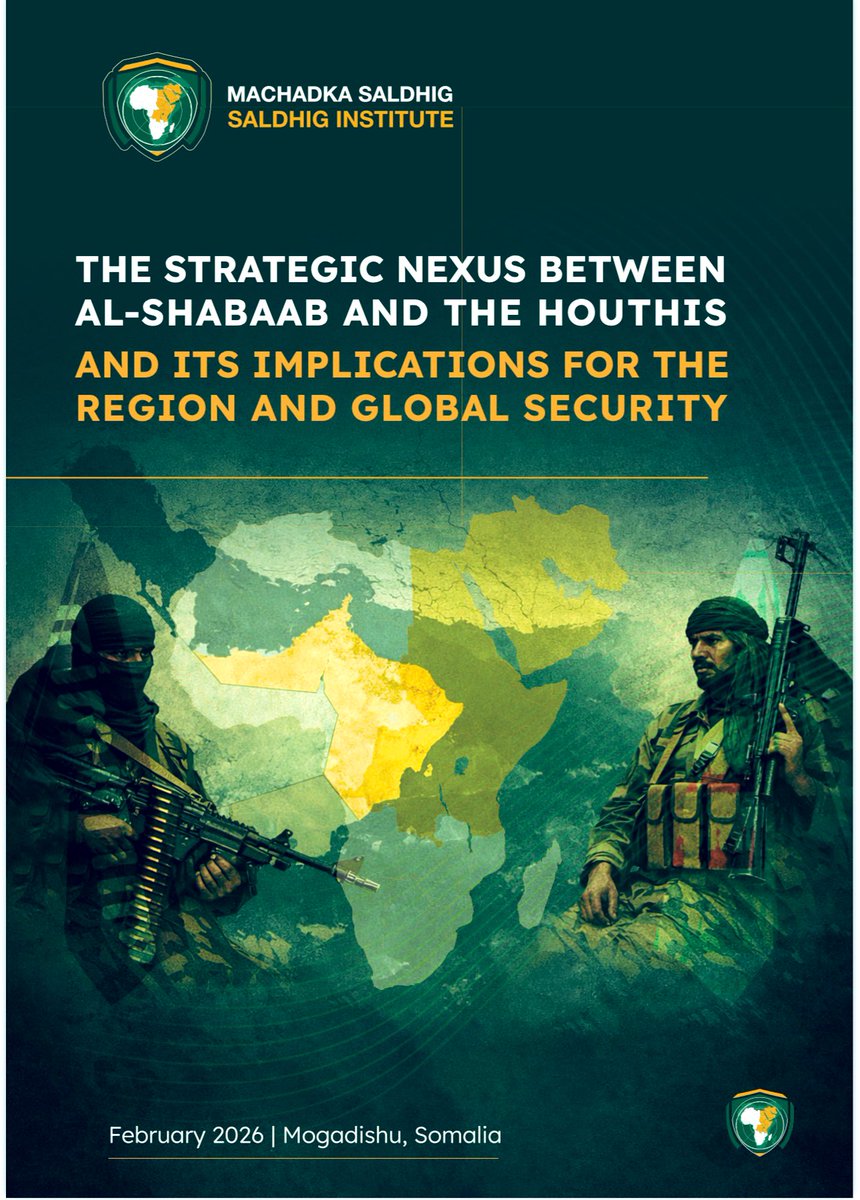
The report issued by @SaldhigSI on The strategic nexus between Al-Shabaab & the Houthis and its implications for the region and the global security (English version) is available. Interested readers can access it via the link below.
https://t.co/FSW26jfJUK
التقرير الصادر عن معهد @SaldhigSI حول العلاقة الإستراتيجية بين حركة الشباب والحوثيين وتداعياتها الأمنية على المنطقة والعالم، (بنسخته العربية)، يمكن للمهتمين الحصول عليه عبر الرابط أدناه:
https://t.co/Q4MF79vCyB
Warbixinta Machadka @SaldhigSI ee Xiriirka Istiraatiijiga ah ee Al-shabab & Xuutiyiinta iyo saameyntiisa amni ee gobolka iyo dunidaba (qaybtiisa Af-soomaaliga ku qoran) Link-iga hoose ayuu ka heli karaa qofkii daneynaya.
https://t.co/TfvddXTVec
"We (the military court) have the greatest need for security-related research. I encourage Hussein and the institute to continue such studies."
— Hassan Ali Nur Shute,
Chairman of the Somali National Armed Forces military court.
"Whereas previous studies focused on well-trodden subjects, the Saldhig Institute has taken a bold new approach. I commend their decision to focus on security affairs—a critical need today." 1/1
Happening now in Mogadishu:
Listening to a presentation of a new study by Saldhig Institute titled:
The Strategic Nexus Between Al-Shabaab and the Houthis and Its Implications for the Region and Global Security.
This security-focused institute was created by @XuseenMacallin, a two-time National Security Advisor to the Presidents of Somalia.
https://t.co/bG1IT04WAb
Talking to Terrorists
By Jonathan Powell
Jonathan Powell - Tony Blair's former chief of advisors - argues that talking to "terrorists" is not a political weakness but a necessity for ending armed conflicts.
From Northern Ireland to Colombia, and from Spain to the Middle East, Powell demonstrates that all civil wars ultimately end through negotiations rather than military force alone.
He views "terrorism" not as an eternal attribute but as a phase in the evolution of a political movement that can be contained through structured dialogue.
The core message: Every armed conflict ends with words, and the question is not "Should we talk?" but "When and how?"
From Demonizing the Enemy to Understanding Them
Powell analyzed how governments tend to demonize armed groups and portray them as “absolute evildoers” who cannot be negotiated with.
But history shows that every “terrorist of yesterday” can become “a statesman of tomorrow,” as in the cases of Nelson Mandela or Yasser Arafat.
Lesson: Understanding does not mean tolerating violence; it means seeking its political roots.
Lessons from Northern Ireland
Powell revisited his personal experience in the peace process between the British government and the Irish Republican Army (IRA).
He explained how secret negotiations and communication through intermediaries led to the Good Friday Agreement in 1998.
He emphasized that trust is built gradually, and that “talking” must be accompanied by realistic political pressure.
Lesson: Negotiating with terrorists succeeds only when a genuine political alternative is offered.
Colombia and Spain: When the Enemy Speaks
Powell analyzes the negotiation experiences with the FARC movement in Colombia and with the ETA organization in Spain.
In both cases, a purely military solution was impossible, but gradual political recognition ultimately led to disarmament.
Lesson: Sustainable peace cannot be imposed from the outside; it is built through mutual recognition of interests.
Negotiating with al-Qaeda and the Taliban: Is It Possible?
Powell raises the most sensitive question: Is it possible to talk to transnational groups driven by absolute religious motivations?
He argues that even extremist ideologies can fracture internally between pragmatists and hardliners, and that engaging in dialogue with the more moderate wings can weaken violence.
Lesson: No actor is completely outside the logic of politics; even “global terrorism” can be dismantled through selective negotiation.
Ethics and Politics: Is Dialogue a Betrayal?
Powell examines the accusations directed at politicians when they engage in dialogue with groups involved in violence.
He argues that dialogue does not mean tolerating crimes; rather, it is a tool to prevent further ones.
He contrasts the moral stance (refusing to talk) with the practical stance (saving lives).
Lesson: True ethics in politics lie not in rejection, but in reducing human suffering.
A Roadmap for Ending Conflicts
Powell proposes a practical six-stage model for any peace process:
1- Initial secret communications.
2- Mutual recognition.
3- A ceasefire.
4- Formal negotiations.
5- International guarantees.
6- The reintegration of armed actors into political life.
Lesson: Talking to “terrorists” must be managed as a long-term strategic project, not as an emergency tactic.
The World After 9/11
Powell argues that the “war on terror” paralyzed governments’ ability to think politically, turning every conflict into a battle of “good versus evil.”
But after two decades, experience has shown that military force alone cannot end terrorism.
Lesson: The future belongs to politics, not to cannons.
The Intellectual Message
Powell shifts the debate from the question “Who is the terrorist?” to “How do we end the violence?”
He calls for a political vision that does not view violence as an absolute essence, but as a symptom of deeper problems of legitimacy and representation.
In a post-9/11 world, where hatred and isolation have intensified, Powell reminds us that peace is not made with friends, but with enemies.
#Talking_to_Terrorists
#Jonathan_Powell
الحوار مع الجماعات المسلحة
لجوناثان باول
يجادل جوناثان باول – كبير مستشاري توني بلير السابق – بأن التحدث إلى "الإرهابيين" ليس ضعفًا سياسيًا بل ضرورة لإنهاء النزاعات المسلحة.
من أيرلندا الشمالية إلى كولومبيا، ومن إسبانيا إلى الشرق الأوسط، يبيّن باول أن جميع الحروب الأهلية تنتهي في النهاية بالمفاوضات لا بالقوة العسكرية وحدها.
يرى أن "الإرهاب" ليس صفة أبدية بل مرحلة في تطور حركة سياسية يمكن احتواؤها بالحوار المنظّم.
الرسالة الجوهرية: كل صراع مسلح ينتهي بالكلام، والسؤال ليس "هل نتحدث؟" بل "متى وكيف؟"
من شيطنة العدو إلى فهمه
قام باول بتحليل كيف تميل الحكومات إلى شيطنة الجماعات المسلحة ووصفها كـ"أشرار مطلقين" لا يمكن التفاوض معهم.
لكن التاريخ يُظهر أن كل "إرهابي الأمس" يمكن أن يصبح "رجل الدولة غدًا"، مثل نيلسون مانديلا أو ياسر عرفات.
الدرس: التفاهم لا يعني التسامح مع العنف، بل البحث عن جذوره السياسية.
دروس من أيرلندا الشمالية
يستعيد باول تجربته الشخصية في عملية السلام بين الحكومة البريطانية والجيش الجمهوري الإيرلندي (IRA).
يشرح كيف أدت المفاوضات السرّية، والاتصال عبر وسطاء، إلى اتفاق "الجمعة العظيمة" عام 1998.
يشدد على أن الثقة تُبنى ببطء، وأن "الحديث" يجب أن يرافقه ضغط سياسي واقعي.
الدرس: التفاوض مع الإرهابيين ينجح فقط عندما يُقدَّم بديل سياسي حقيقي.
كولومبيا وإسبانيا: عندما يتكلم العدو
يحلل باول تجارب التفاوض مع حركة فارك (FARC) في كولومبيا ومع منظمة إيتا (ETA) في إسبانيا.
في الحالتين، كان الحل العسكري مستحيلاً، لكن الاعتراف السياسي المتدرّج قاد إلى تفكيك السلاح.
الدرس: السلام المستدام لا يُفرَض من الخارج بل يُصنَع بالاعتراف المتبادل بالمصالح.
التفاوض مع "القاعدة" و"طالبان": هل هو ممكن؟
يطرح باول السؤال الأكثر حساسية: هل يمكن التحدث مع جماعات عابرة للحدود ذات دوافع دينية مطلقة؟
يرى أن حتى الأيديولوجيات المتطرفة يمكن أن تنقسم داخليًا بين براغماتيين ومتشدّدين، وأن الحوار مع الأجنحة المعتدلة يُضعف العنف.
الدرس: لا أحد خارج منطق السياسة بالكامل؛ حتى "الإرهاب العالمي" يمكن تفكيكه عبر تفاوض انتقائي.
الأخلاقيات والسياسة: هل الحوار خيانة؟
يناقش باول الاتهامات التي توجَّه إلى السياسيين عندما يتحدثون مع جماعات متورطة بالعنف.
يرى أن الحوار لا يساوي التسامح مع الجرائم، بل هو أداة لمنع المزيد منها.
ويقارن بين الموقف الأخلاقي (رفض التحدث) والموقف العملي (إنقاذ الأرواح).
الدرس: الأخلاق الحقيقية في السياسة ليست في الرفض، بل في تقليل المعاناة.
خريطة طريق لإنهاء النزاعات
يقترح باول نموذجًا عمليًا من ست مراحل لأي عملية سلام:
١- الاتصالات السرّية الأولية.
٢- الاعتراف المتبادل.
٣- وقف إطلاق النار.
٤- مفاوضات رسمية.
٥- ضمانات دولية.
٦- إعادة دمج المسلحين في الحياة السياسية.
الدرس: التحدث مع "الإرهابيين" يجب أن يُدار كمشروع استراتيجي طويل المدى لا كتكتيك طارئ.
العالم بعد 11 سبتمبر
يرى باول أن “الحرب على الإرهاب” جمّدت قدرة الحكومات على التفكير السياسي، إذ حوّلت كل صراع إلى معركة بين “الخير والشر”.
لكن بعد عقدين من الزمن، أثبتت التجربة أن القوة العسكرية وحدها لا يمكنها إنهاء الإرهاب.
الدرس: المستقبل للسياسة لا للمدافع.
المغزى الفكري
يُحوّل باول النقاش من سؤال "من هو الإرهابي؟" إلى "كيف نُنهي العنف؟"
يدعو إلى رؤية سياسية لا ترى العنف كجوهر مطلق بل كعرضٌ لمشكلات أعمق في الشرعية والتمثيل.
في عالم ما بعد 11 سبتمبر، حيث تصاعدت الكراهية والانغلاق، يُذكّر باول بأن السلام لا يُصنع مع الأصدقاء بل مع الأعداء.
#الحوار_مع_الجماعات_المسلحة
#جوناثان_باول