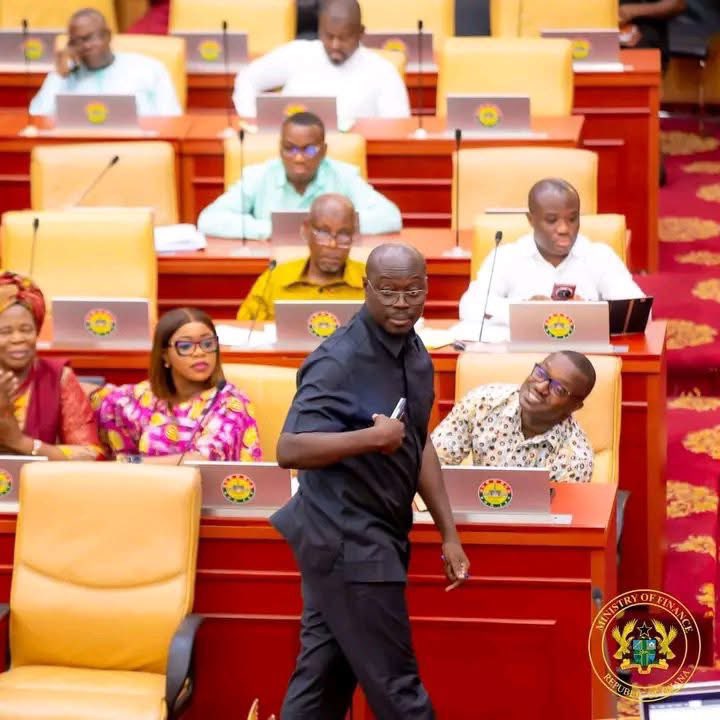
𝟭𝟬 𝗧𝗔𝗞𝗘𝗔𝗪𝗔𝗬𝗦 𝗙𝗥𝗢𝗠 𝗚𝗛𝗔𝗡𝗔’𝗦 𝟮𝟬𝟮𝟲 𝗠𝗜𝗗-𝗬𝗘𝗔𝗥 𝗥𝗘𝗩𝗜𝗘𝗪
----------------------------------
𝟭. 𝗡𝗢 𝗦𝗨𝗣𝗣𝗟𝗘𝗠𝗘𝗡𝗧𝗔𝗥𝗬 𝗕𝗨𝗗𝗚𝗘𝗧. 𝗡𝗢 𝗡𝗘𝗪 𝗧𝗔𝗫𝗘𝗦. 𝗧𝗔𝗥𝗚𝗘𝗧𝗦 𝗨𝗡𝗖𝗛𝗔𝗡𝗚𝗘𝗗
Government is not seeking additional appropriations (money), and total expenditure remains unchanged, although spending is being strategically realigned within the existing envelope. Despite the abolition of the E-Levy, Betting Tax, COVID-19 Levy, Emissions Levy and VAT on motor insurance, non-oil tax revenue increased from 12.6% of GDP in 2024 to 13.1% in 2025.
𝟮. 𝗚𝗥𝗢𝗪𝗧𝗛 𝗜𝗦 𝗔𝗛𝗘𝗔𝗗 𝗢𝗙 𝗧𝗔𝗥𝗚𝗘𝗧 & 𝗔𝗡𝗗 𝗘𝗫𝗧𝗘𝗡𝗗𝗦 𝗕𝗘𝗬𝗢𝗡𝗗 𝗚𝗢𝗟𝗗
Real GDP grew 6.4% in Q1 2026, against the 4.8% full-year floor, while non-oil GDP grew almost as quickly at 6.3%. Services expanded 7.1%, industry 6.9% and agriculture 4.0%. The GDP deflator also fell from 23.9% to 4.1%, indicating that growth was driven more by real output than price increases. However, growth remains concentrated in just five subsectors.
𝟯. 𝗧𝗛𝗘 𝗚𝗢𝗩𝗘𝗥𝗡𝗠𝗘𝗡𝗧’𝗦 𝗧𝗨𝗥𝗡𝗔𝗥𝗢𝗨𝗡𝗗 𝗦𝗧𝗥𝗔𝗧𝗘𝗚𝗬 𝗥𝗘𝗦𝗧𝗦 𝗢𝗡 𝗧𝗛𝗥𝗘𝗘 (𝟯) 𝗞𝗘𝗬 𝗧𝗥𝗔𝗡𝗦𝗙𝗢𝗥𝗠𝗔𝗧𝗜𝗢𝗡𝗔𝗟 𝗣𝗢𝗟𝗜𝗖𝗬 𝗥𝗘𝗙𝗢𝗥𝗠𝗦 (𝗞𝗧𝗣𝘀
These are: (1) Fiscal Correction (including Commitment Authorisation regime), which reset spending to 2023 levels and swung the primary balance from a 2.9% of GDP deficit to a 2.5% surplus; (2) Modernising the Tax Regime; and (3) Complementary Fiscal Policy to support inflation targeting and exchange-rate stability. Fiscal discipline (KTP1) created the space, tax modernisation (KTP2) proved revenue can rise without new taxes, and the gold-anchored external strategy (KTP3) restored the cedi and reserves. Together they explain a recovery that critics wrongly attribute to luck.
𝟰. 𝗜𝗡𝗙𝗟𝗔𝗧𝗜𝗢𝗡 𝗠𝗢𝗥𝗘 𝗧𝗛𝗔𝗡 𝗛𝗔𝗟𝗩𝗘𝗗
Headline inflation fell from 13.7% in June 2025 to 5.3% in June 2026, after reaching a seven-year low of 3.2% in March. Imported inflation stood at 2.3%, compared with 6.7% for locally produced items, while services inflation remained elevated at 9.4%, largely driven by transport fares. Lower inflation has eased cost-of-living pressures and strengthened household purchasing power. Multidimensional poverty—which captures overlapping disadvantages in living conditions, education, health and employment—also declined from 24.9% in Q3 2024 to 21.9% in Q3 2025, equivalent to about 950,000 people moving out of deprivation.
𝟱. 𝗧𝗛𝗘 𝗙𝗜𝗦𝗖𝗔𝗟 𝗔𝗡𝗖𝗛𝗢𝗥 𝗜𝗦 𝗛𝗢𝗟𝗗𝗜𝗡𝗚, 𝗔𝗡𝗗 𝗧𝗛𝗘 𝗗𝗘𝗕𝗧 𝗥𝗔𝗧𝗜𝗢 𝗛𝗔𝗦 𝗥𝗘𝗔𝗖𝗛𝗘𝗗 𝗜𝗧𝗦 𝗧𝗔𝗥𝗚𝗘𝗧
PRIMARY SURPLUS of 0.9% of GDP (commitment basis) in H1, on track for the 1.5% full-year anchor. The debt-to-GDP ratio fell from 61.6% at end-2024 to 44.7% at end-2025 and stood at 45.0% in June 2026—meeting the statutory target years early. Interest payments were GH¢6.9 billion below target, while GH¢5.3 billion of legacy arrears were cleared and no new arrears accumulated.
𝟲. 𝗗𝗘𝗕𝗧 𝗜𝗦 𝗠𝗢𝗥𝗘 𝗦𝗨𝗦𝗧𝗔𝗜𝗡𝗔𝗕𝗟𝗘, 𝗔𝗡𝗗 𝗕𝗢𝗥𝗥𝗢𝗪𝗜𝗡𝗚 𝗖𝗢𝗦𝗧𝗦 𝗛𝗔𝗩𝗘 𝗙𝗔𝗟𝗟𝗘𝗡 𝗦𝗛𝗔𝗥𝗣𝗟𝗬
Debt service declined from 55.7% of domestic revenue in 2022 to 28.6% in 2025. The joint IMF–World Bank assessment now classifies Ghana’s debt as “sustainable with room to absorb shocks,” while the risk of debt distress has improved from high to moderate. The 91-day Treasury-bill rate fell to 5.7% by June 2026, and the average commercial lending rate declined from 30.2% at end-2024 to 15.6%.
𝟳. 𝗥𝗘𝗦𝗘𝗥𝗩𝗘𝗦 𝗖𝗢𝗩𝗘𝗥 𝗙𝗜𝗩𝗘 𝗠𝗢𝗡𝗧𝗛𝗦 𝗢𝗙 𝗜𝗠𝗣𝗢𝗥𝗧𝗦, 𝗔𝗡𝗗 𝗚𝗔𝗡𝗥𝗔𝗣 𝗛𝗔𝗦 𝗕𝗘𝗘𝗡 𝗙𝗨𝗟𝗟𝗬 𝗕𝗨𝗗𝗚𝗘𝗧𝗘𝗗.
Gross international reserves stood at US$12.9 billion, equivalent to 5 months of imports. Government has allocated GH¢5 billion in 2026 to fund the implementation cost of the Ghana Accelerated National Reserve Accumulation Policy (GANRAP). The average programme cost has been reduced from 14.5% to 5% of the gold purchased.
𝟴. 𝗧𝗛𝗘 𝗦𝗜𝗡𝗞𝗜𝗡𝗚 𝗙𝗨𝗡𝗗 𝗪𝗔𝗥𝗖𝗛𝗘𝗦𝗧 𝗜𝗦 𝗕𝗘𝗜𝗡𝗚 𝗥𝗘𝗕𝗨𝗜𝗟𝗧
About GH¢15.6bn has been set aside into the Sinking Fund as of 22 July, and on course for GH¢30bn by year-end. This would be enough to repay the GH¢30bn DDEP maturity due in February 2027. We are preparing for debt before it falls due rather than scrambling at the deadline. The Sinking Fund is being financed partly with 7% of non-oil tax revenues and domestic bond proceeds.
𝟵. 𝗧𝗛𝗘 𝗥𝗘𝗩𝗘𝗡𝗨𝗘 𝗦𝗧𝗥𝗔𝗧𝗘𝗚𝗬 𝗜𝗦 𝗖𝗢𝗠𝗣𝗟𝗜𝗔𝗡𝗖𝗘, 𝗧𝗘𝗖𝗛𝗡𝗢𝗟𝗢𝗚𝗬 𝗔𝗡𝗗 𝗔 𝗕𝗥𝗢𝗔𝗗𝗘𝗥 𝗕𝗔𝗦𝗘—𝗡𝗢𝗧 𝗛𝗜𝗚𝗛𝗘𝗥 𝗥𝗔𝗧𝗘𝗦
In 2025, the effective VAT rate was reduced from 21.9% to 20% , the registration threshold increased from GH¢200,000 to GH¢750,000, and the GETFund and NHIL levies became deductible. A cross-border VAT system for digital platforms was piloted in April and is projected to generate GH¢2.3 billion in its first full year. Fiscal Electronic Devices, a VAT Reward Scheme and AI-supported customs reforms are closing leakages and forecast to increase non-oil tax revenue to 14.1% of GDP in 2026.
𝟭𝟬. 𝗣𝗥𝗢𝗝𝗘𝗖𝗧 𝗗𝗘𝗟𝗜𝗩𝗘𝗥𝗬 𝗜𝗦 𝗔𝗗𝗩𝗔𝗡𝗖𝗜𝗡𝗚
Work has commenced on 87 Big Push projects: 74 trunk roads and bridges, 10 urban roads and three feeder roads. Thirteen had reached at least 50% completion by June. The Accra–Kumasi Expressway is a proposed 176-kilometre, six-lane road expected to reduce travel time to about two hours. By 22 July, 122 kilometres of right-of-way had been cleared and US$1.7 billion had been placed in a dedicated Bank of Ghana account. Sod-cutting to follow procurement in September. The 24-Hour Economy Authority Act is also in force, with multi-shift operations adopted by 268 fuel stations, 33 manufacturing companies and other institutions. It has a prospective investment pipeline of US$11.5 billion, of which US$5.5 billion is covered by Joint Development Agreements.
The bottom line: Ghana’s macroeconomic indicators have improved markedly. The next phase is turning these lower borrowing costs into more private investment, translating compliance technology into more revenue, and project allocations into fully completed infrastructure, enhanced exports and more jobs.
(c) Theo Acheampong, PhD. Views my own.
#Ghana #FiscalPolicy #Economy #PublicFinance #MidYearReview
Totally missed your response.
But this isn’t about pride, @garyalsmith. It’s about false narratives being given the time of day.
Underdogs lose leads to favourites. Everywhere. In every confederation.
When Japan lost a 2–0 lead to Belgium, people praised Belgium, gave Japan some slack and moved on. Nobody indicted Asian football.
Croatia scored first and lost yesterday.
It’s football.
But I find the way you build this supposed 30-year pattern strange.
Your most obvious pull was Nigeria in 1994. So I went back and checked the actual data.
All of it.
Since 1970, African teams have taken the lead in 79 World Cup matches.
They won 44, drew 21 and lost 14.
That means African teams avoided defeat 82.3% of the time after taking the lead.
Even in this tournament, the full picture is different from the story being told.
Yes, Côte d’Ivoire led and lost to Germany. DR Congo led and lost to England. Senegal led and lost to Belgium.
But Morocco led and drew with Brazil.
Egypt led and drew with Belgium and Iran.
Cape Verde led and drew with Uruguay.
Algeria led and drew with Austria.
South Africa led and beat South Korea.
Côte d’Ivoire led and won two games.
Egypt led and beat New Zealand.
Senegal led and beat Iraq.
Ghana led and beat Panama.
Algeria led and beat Jordan.
So African teams have led 15 times in this tournament: 7 wins, 5 draws and 3 losses.
That is not a continental pathology.
That is football.
And if this were an African problem, Africa should at least be uniquely bad at it.
We aren’t.
From 1970 to 2022, African teams lost 17.2% of World Cup matches after taking the lead.
AFC teams lost 20%.
CONCACAF teams lost 23.4%.
Even if we start from 1994, your 30-year window, it is CAF 16.4%, AFC 20% and CONCACAF 22.9%.
So where exactly is this unmistakable African pattern?
You have built a continental theory from a few painful games spread across decades.
To do that, you have to ignore Algeria holding against West Germany in ’82.
Cameroon repeatedly holding in ’90.
Nigeria seeing off Spain in ’98.
Ghana killing games in ’06.
And just four years ago, African teams led nine times at the 2022 World Cup and didn’t lose once.
Cameroon held against Brazil.
Tunisia held against France.
Morocco held against Belgium, Canada and Portugal.
That was four years ago. Not 30.
And before someone says these numbers are inflated by games against weaker opposition, let’s narrow the sample further.
Let’s look only at games where African teams took the lead against European and South American opposition.
Since 1970, it has happened 53 times.
African teams won 27.
Drew 14.
Lost 12.
That is a 77.4% non-loss rate after taking the lead against the two historically strongest footballing regions in the world.
So what you have identified is not a pattern.
It is a highlight reel of pain with the denominator deleted.
Yes, the collapses were real. Senegal’s was bad. DR Congo’s was bad. Côte d’Ivoire’s was bad.
But Japan’s against Belgium was bad too.
Croatia scored first and lost.
Spain’s collapse against Nigeria in 1998 was spectacular.
The difference is that those failures were attributed to the people who actually oversaw them: the players, the coach, the team.
Nobody said, “Croatia blew a lead, so Europeans lack concentration.”
Nobody built an Asian theory from Japan doing it more than once.
As for the coaches you cite, Thiaw was diagnosing Senegal’s game management.
That was his team in a game his team blew.
Senegal is a team.
Africa is a continent.
A coach owning his own failure is accountability. Stretching it into a verdict on 54 countries is your addition, not his.
And that is my pushback.
You may be coming from a place of good intentions. But Africa, and I must say this to you as an African, is diverse.
Sometimes coaches make bad decisions. Sometimes players panic. Sometimes underdogs sit too deep. Sometimes the better team comes back.
Sometimes a team just blows a lead.
Akandoh was even charitable by writing to the board chairman of KATH. We were here when Energy Minister suspended an agency CEO for the burning of Akosombo, did you see the workers go on strike in support? That's governance action! I repeat the strike is nonsense!
DO NOT RENEW GOLDFIELDS LEASE
DO NOT RENEW GOLDFIELDS LEASE
DO NOT RENEW GOLDFIELDS LEASE
DO NOT RENEW GOLDFIELDS LEASE
DO NOT RENEW GOLDFIELDS LEASE
IF South Africans would not respect Ghanaians in their country, they have no business in this country. We would hit the streets!
If president of Ghana dares to renew this lease he will hear from us on the street, Gold Fields should go to South Africa help them fix their broken economy for their lazy people.
@Joy997FM South Africa can't give them what Ghana is doing for them. They should be strategic in their dealings because Ghanaian companies now have the capacity to do such work.
@Joy997FM It is time a Ghanaian took over the Tarkwa mine. Goldfield needs to be strategic with the Ghanaian. They can use the MTN Ghana strategy by floating shares or enlisting on the Ghanaian Stock market to give back to the Ghanaian people.