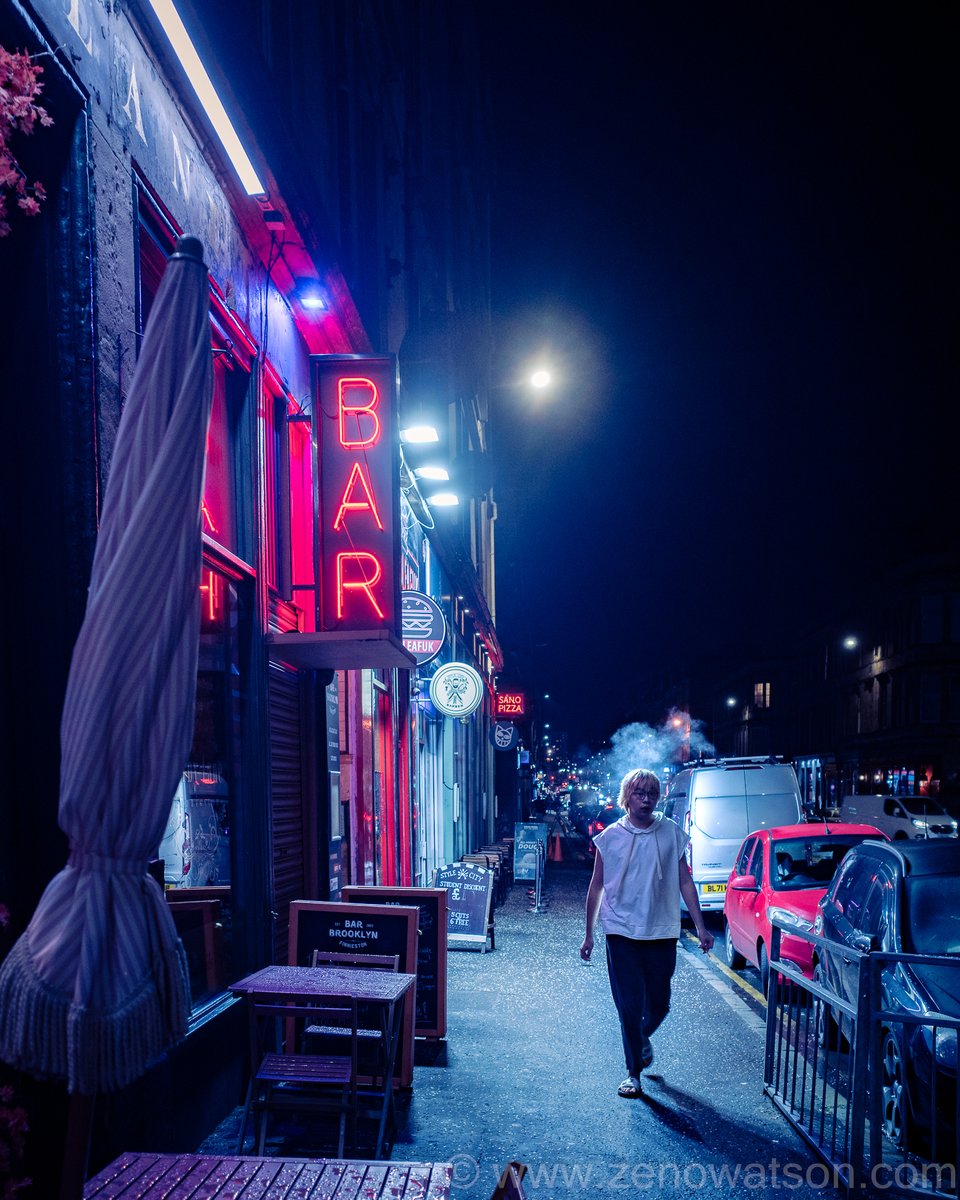
This sums up Britain in 2026.
We PERFECTED the house design.
Georgian homes are by FAR the MOST popular..
So, the Government decided to BAN them.
Nonsense laws now FORCE homes to look SOULLESS.
We must build HOMES, not BOXES.
Which one would YOU rather live in? ⬇️
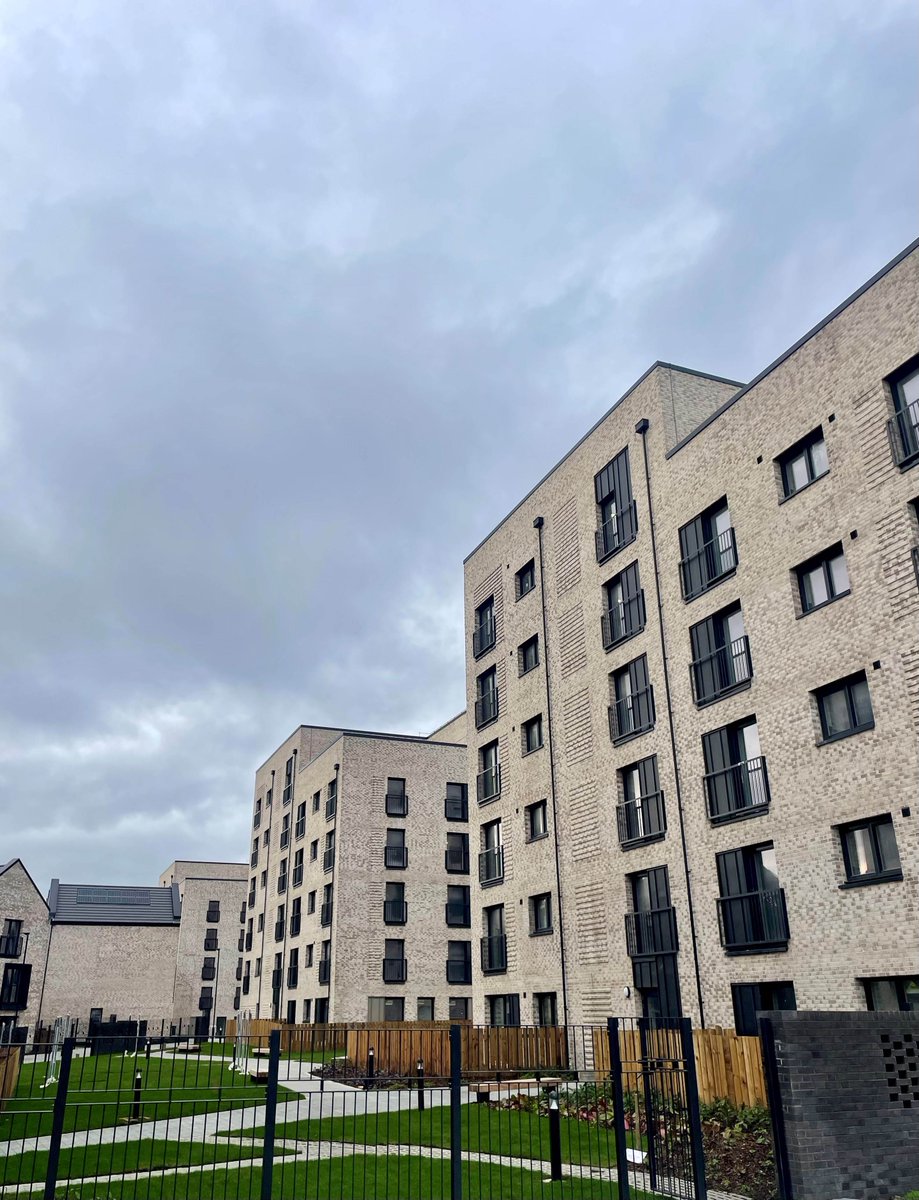
The second photo is from a "stunning" and "beautifully presented" new apartment building in London.
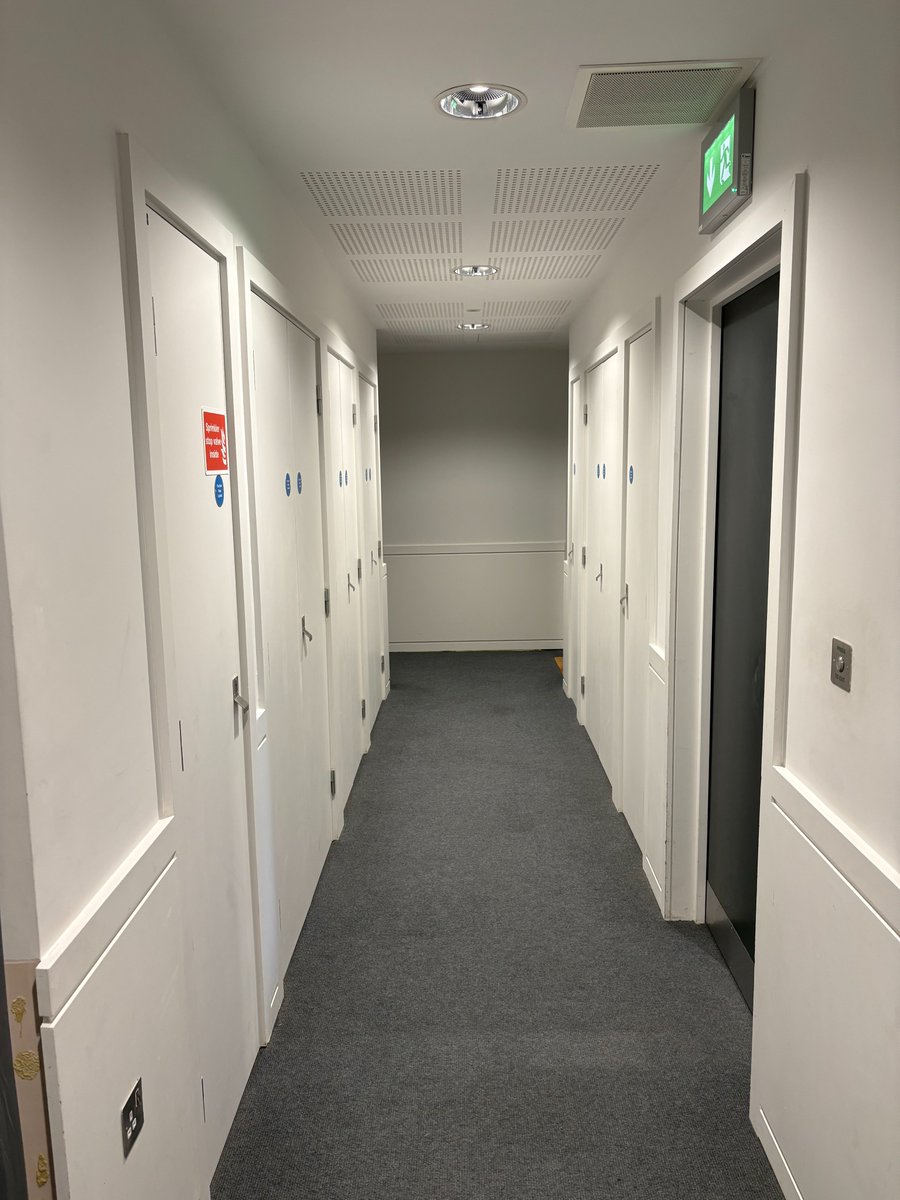
Backrooms (and similar films/shows like Severance) prove that the way we design most interiors is genuinely frightening and bad for our psychological health.
Grey carpets, grey chairs, plain walls, plain furniture, square ceiling tiles, and bright lights are not good for our humanity.
But what's strange is that these bland environments (and similar bland commercial/public spaces) are actually "better" from a certain point of view.
Everything here is supposedly "cheaper" than the alternatives and also better for maintenance (i.e. less work to maintain).
In other words, bland design is more "cost-effective", and because being "cost-effective" is what we value most... this is what we end up building everywhere, even though nobody particularly wants it.
If these places had warmer colours, maybe even some pattern, cornices, mouldings round the doors etc. then they would be more expensive, but they'd also be less damaging to our psychological health.
What makes people less stressed and less anxious is obviously better in the long-run, but it's harder to put on a spreadsheet and therefore it isn't usually factored in.
And so "more expensive" or "harder to maintain" aren't absolutes so much as expressions of priority; the initial cost of material is lower (e.g. standard pure white paint or standard LEDs) but the long-term cost to human joy, peace of mind, and happiness is way higher.
To put all of that another way: the only reason an aesthetic is disconcerting/frightening in films is because they're disconcerting/frightening in real life, and yet we keep using those aesthetics to design the world we're all actually living in!
I’m making a show about buildings.
The concept is simple: do for the man-made world what Planet Earth did for the natural world.
But, when I pitched the idea, the answer was that nobody would watch it.
So I released a pilot episode on YouTube. It’s got 5.4 million views, 379k likes, and 23k comments.
People are interested, and now it’s time to make the full show.
Six episodes, filming in the UK, France, Belgium, Germany, Italy, and the USA, and releasing on a streaming service like HBO, Netflix, or Prime.
Why does this show matter?
First: we’re surrounded by buildings all the time. Look around yourself, right now… what do you see? Buildings are the logical conclusion of everything a society believes in. That’s the real focus of this show: not the buildings themselves, but what they say about us.
Second: there’s global dissatisfaction with modern architecture. This feeling gets written about online, but nobody’s given a voice to it on film or TV. That’s what this show will be. But this isn’t just about criticising modernity. That’s easy. This is about learning from the past in order to understand and improve the present, for everybody.
Third: there’s a drought of high-quality culture shows. When I spoke to film executives they said that only documentaries about sports, music, or true crime get funded. That’s a colossal missed opportunity. Galleries are always full, content about architecture goes viral online all the time, and people spend their precious holidays visiting beautiful cities.
Why no shows about architecture, then?
Tourists flock in their millions to see (for example) the buildings of Antoni Gaudí in Barcelona. But, if you asked those same people if they’re interested in “architecture”, they’d probably say no.
To put that another way: not many people want to watch “a show about architecture”, but lots of people want to watch a show that illuminates the real world they’re living in, each and every day.
What will the show be like?
Six episodes, going chronologically through history and arriving at the present, each focussing on the architecture and design of a specific period:
1. Middle Ages
2. Renaissance
3. Enlightenment
4. The Nineteenth Century
5. Art Nouveau & Art Deco
6. Present Day
But, in each case, the point isn’t just to learn about that era; the point is to learn about our modern world through those eras and what they’ve left behind. If you watch the pilot episode (included below) you’ll see what I mean.
So the show’s not really “about” the past; it’s about the twenty-first century.
That’s why it’s called The Modern World.
When you think of a typical history show there are loads of interviews, stock footage, archive photos, historical recreations, and graphics. We’re doing none of that. Everything will be filmed on location, because we’re telling our story only through the real world that exists right now. And, rather than going to the most obvious places, we’ll focus on buildings that aren’t well-known but should be more famous.
But that’s all big picture; what will it be like on screen?
Buildings used to look different in every country, and now they look the same. Why? Because the weather is different everywhere, and buildings were always a way of dealing with that weather, using local materials. Now we have air conditioning and we ship concrete around the world, so we don’t need to design our buildings with regard to local weather or rely on local materials.
Look at really old clocks and you’ll notice something: they don’t have a second hand… because it was only invented 300 years ago! Then you look at the present and you realise we’re surrounded by timers, by seconds ticking down and ticking up relentlessly. If we’re looking for a cause of our anxiety-inducing culture, that might be it.
When you spend time with the sun-softened bricks and time-warped timbers of old cities you notice that synthetic materials like plastic have taken over. When we’re surrounded by things that feel temporary, how do you think it makes us feel?
It’s only by seeing 19th century train stations, designed like cathedrals, that you realise tradition and technology aren’t enemies. New things don’t have to look boring: if the Victorians had designed AI data centres, they’d look like Medieval castles.
In the 1920s, at the zenith of Art Deco, people believed technology would uplift humanity. That’s why they decorated their buildings with statues inspired by electricity. Only by seeing their enthusiasm can we realise our own cynicism, and perhaps begin to fix it.
All of that… and much, much more.
But, above all else, this show is about a way of seeing. If you want to understand any society then you need to look at what it creates, not what it says about itself.
There’s a worldview in every single object; our skyscrapers are designed the same way as our phones. Learn to look at this world, to notice its details, and everything else starts to make sense.
What now?
I’ve been quiet online recently because I’ve been researching and working on scripts for six full-length episodes. Production begins when we’ve raised the funding.
The Modern World is coming.
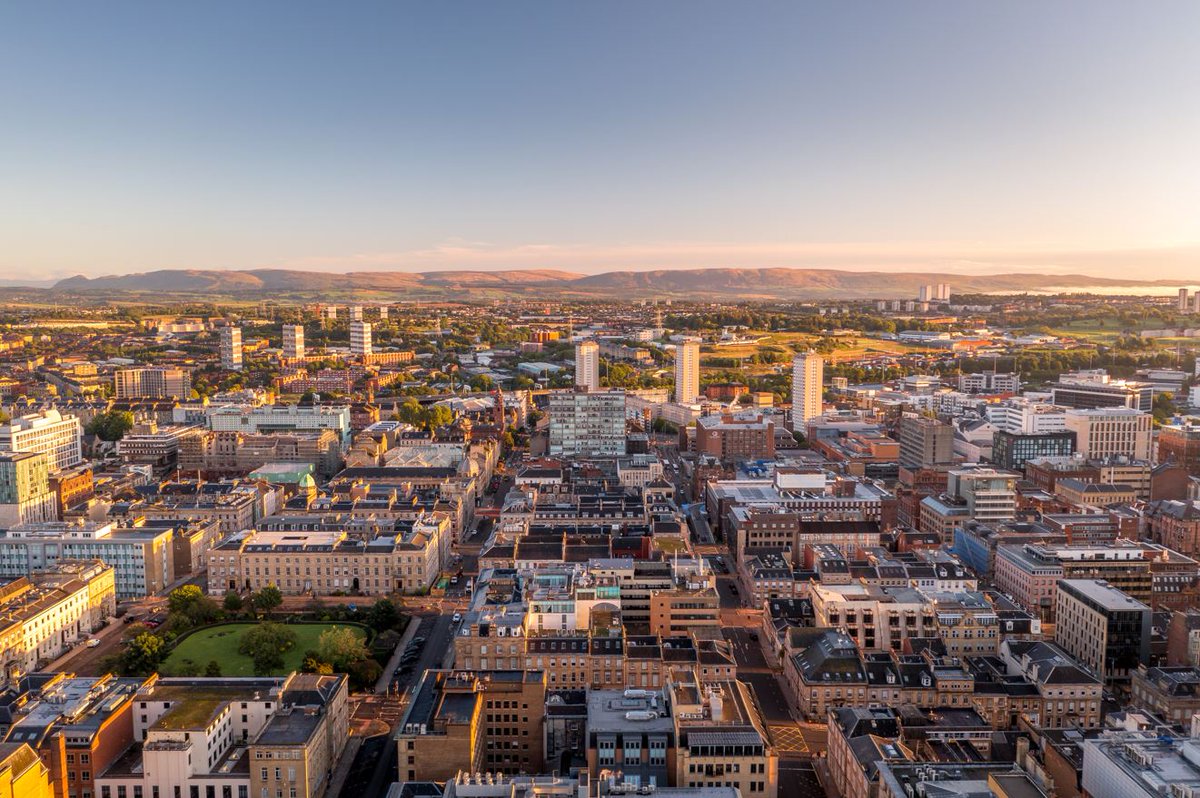
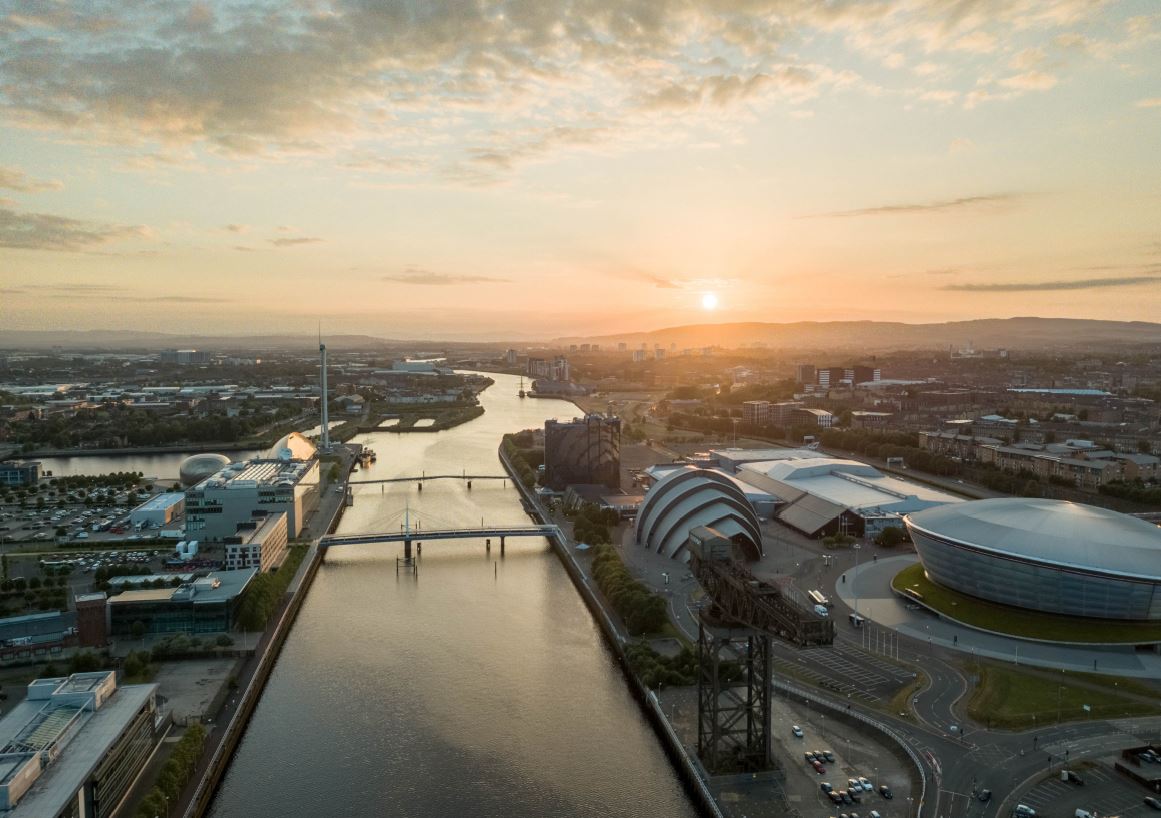
City Development Plan 2 (CDP2) has been given the green light by the Council's Economy, Housing, Transport and Regeneration Committee. It will now go before the City Administration Committee for approval and will be the subject of public consultation.
New Plan for Glasgow sets out framework for new homes and jobs, better communities and city’s future development.
Find out more 👉 https://t.co/5GV1MftKwH
I don’t think I’ve ever seen a better use of council money.
Huge shout to to @Merton_Council for the improve of their shop parades in the region.
Improving how an area looks has a major impact on the local economy.
I always remember the story of broken windows in New York.
The theory is simple. One broken window left unrepaired signals that nobody cares. So another gets broken.
Then another.
Until decline becomes the norm and feels impossible to reverse.
The opposite is also true.
One renovated shopfront tells the street that someone gives a damn.
A business owner sees their neighbour invest and thinks , maybe I should too.
A customer walks past and decides to go in rather than walk on.
A landlord fixes the flat above because suddenly the area feels worth it.
It’s not just paint and signage.
It’s a signal. And signals change behaviour at scale.
The before and after here isn’t just aesthetic.
It’s economic.
It’s the difference between a high street in decline and one with a future.
More councils should be doing exactly this.
I don’t think I’ve ever seen a better use of council money.
Huge shout to to @Merton_Council for the improve of their shop parades in the region.
Improving how an area looks has a major impact on the local economy.
I always remember the story of broken windows in New York.
The theory is simple. One broken window left unrepaired signals that nobody cares. So another gets broken.
Then another.
Until decline becomes the norm and feels impossible to reverse.
The opposite is also true.
One renovated shopfront tells the street that someone gives a damn.
A business owner sees their neighbour invest and thinks , maybe I should too.
A customer walks past and decides to go in rather than walk on.
A landlord fixes the flat above because suddenly the area feels worth it.
It’s not just paint and signage.
It’s a signal. And signals change behaviour at scale.
The before and after here isn’t just aesthetic.
It’s economic.
It’s the difference between a high street in decline and one with a future.
More councils should be doing exactly this.
"The 6th biggest economy in the world is run by infantile fantasists with no understanding of financial markets.... There's nothing progressive about driving the economy of a cliff"📉⛰️
@LiamHalligan @ #BattleFest 2025 "From steel to railways: can the state revitalise British industry?"👨🏭🚆
👇
111 Union Street should be replaced by a larger and grander building that meets the roofline of its neighbour. It should be built in a Glaswegian Victorian style.
It’s possible, despite what weirdo architects and the developer lobby will tell us.
Anyone planning on spending their boxing day stuffing themselves with leftovers may enjoy revisiting the time Fyfe Robertson travelled to Ennis in Ireland to experience the kind of food he himself had experienced in his youth.
New local plan system launching early 2026
Following today’s ministerial statement, we're sharing important news about the future of local plan development in England.
Read more: https://t.co/3WlaXvur8G
#LocalPlan#Planning@mhclg