Investor in emerging market real estate, equities & bonds. On the ground in CEE since 2015. Also work with clients to access superior opportunities abroad.
Thank you for the new (and existing) follows 🫡 Sharing a bit about me.
Background
- No formal background in finance. Worked in tech startups (2015-2021). Quit during the 2021 crypto bull market to focus more on private investing.
- Was in crypto 2019-2025. Did OK and learnt a lot on how finance works in the DeFi world. https://t.co/lNZw90uLsA
- Early 30s. Lived across 3 parts of the world. A multilingual and multi citizenship 'globalist' who ironically distrusts globalism and buys into a good amount of associated conspiracies.
What I invest in now:
I'm a top down macro investor. I identify themes and countries I believe in, then select the most assymetrical investment instrument to express that view.
1. Romanian and Polish real estate: my primary position. 20%> AAR since 2018. https://t.co/CxmRVSOdT0
2. High yield fixed income: began investing after the Ukraine war started in 2022 and yields spiked especially in Eastern Europe. From Hungarian, Romanian and Kazakh sovereign debt to Uzbekistan corp bonds at 29% YTM
https://t.co/998S9n02JP
3. Global equities: concentrated portfolio on energy, shipping and Kazakhstan banking. I attribute a good amount of my high returns to date to beginners luck. Will be happy if my returns averages out at ~20% AAR overtime. https://t.co/ihlsLferU3
📩 I have a private newsletter which you can subscribe to for free. I do the opposite of spamming. I'm lazy with newsletters and sent out around 4 last year. https://t.co/2lzwSn87DN
Spotted a nice opportunity to re-enter #coal this morning: 9% (!) dump at market open on https://t.co/OgWMyA7JYC - Kinetic Development Group. HK listed Chinese thermal coal producer. Entered at $1.93.
Going for a smaller position but on this higher risk / reward name (vs other thermal coal names I like and continue to monitor: $TGA.L, $YAL.AX and $NHC.AX).
Below: performance since May 22 Chinese coal mine explosion
Fully exited my remaining #coal positions - Thungela Resources $TGA.L at £6.49 GBP.
Around +30% since Feb entry (which I topped up on in April). Nothing remarkable but feel the 'Chinese coal mine explosion rally' may be over bought.
One reason could be that there are very few listed coal stocks - especially in developed markets. So when there is a coal hype - people pile in to whatever.
AFAIK the Chinese coal mine explosion affects mainly met / coking coal. But Thungela Resources sells thermal / energy coal - and mainly to Indian market not China. Thus the pump doesn't make direct sense to me.
Also with a tight energy market, China might crack down on met coal mining safety but not thermal coal. AFAIK, the mining methods of the two are different in China - with met coal mining being more dangerous.
Would be happy to re-enter my coal positions if there's an attractive entry.
@wpooichee Will they somehow be negatively affected by the recent coal mine explosion and safety crackdowns?
Since the explosion, seems $TGA.L (South Africa) benefited most whilst Aussie and HK names lagged ($NHC.ax, $YAL.ax)
Swapped 50% of my $PBR (ordinary shares) over to $PBR.A (preferred shares).
When I bought #Petrobras in early Jan, $PBR to $PBR.A ratio was 1.05. It is now 1.12.
Dividends per share is the same - so you get higher dividend yield whilst you wait for it to converge towards 1:1 again.
The 2 most convincing patterns I could observe as to when PBR becomes stronger vs PBR.A:
1. When there are strong talks about privatization then ordinary shares do better due to voting rights. (Though bear in mind Brazil govt owns 50%> of shares anyway)
2. When interest rate is high (or perhaps more precisely the differential between $PBR dividends and Selic risk free rate). Maybe local investors are more dividend focused and they rotate away from $PBR.A to fixed income during high yields / risk off periods.
$EWZ owns $PBR and $PBR.A in 50/50. Charts below: PBR vs PBR.A and Brazil interest rate since 2013.
Thanks @Jfarmer1776 and @Tonyforever2003 for the idea
I knew that in #Tajikistan and #Uzbekistan - beards and burqas are banned. Despite being 95%> Muslim, their governments makes a strong effort to retain secularism and prevent radical Islamic influence.
But I didn't know that even in more politically liberal #Kazakhstan (70% Muslim) - face coverings in schools and public places were also recently banned 🇰🇿🫡
All 3 of these countries strengthened their bans with new laws in 2023-25. Seems coordinated. Whilst they are liberalizing economically - they are standing firm on this.
My post on why Central Asians are my favorite Muslims: https://t.co/x81pvgaItP
Thanks @psow77 for letting me know here:
https://t.co/6t7ws9nCPG
Benevolent authoritarianism is the best form of government for many developing countries. If you cannot make sensible beard and hair style choices - a wise autocrat shall decide for you.
True, Heathrow airport security is mainly staffed by Indians and Africans. A native Brit (happens to be a man with painted nails) did scan my boarding pass though.
https://t.co/viUsxSbkYi
No just pubs, even airport security is full of indians. I'm an airline pilot and the worst experience I've had while going through the security checkpoint was at London, an Indian guy giving all the crews hard time.
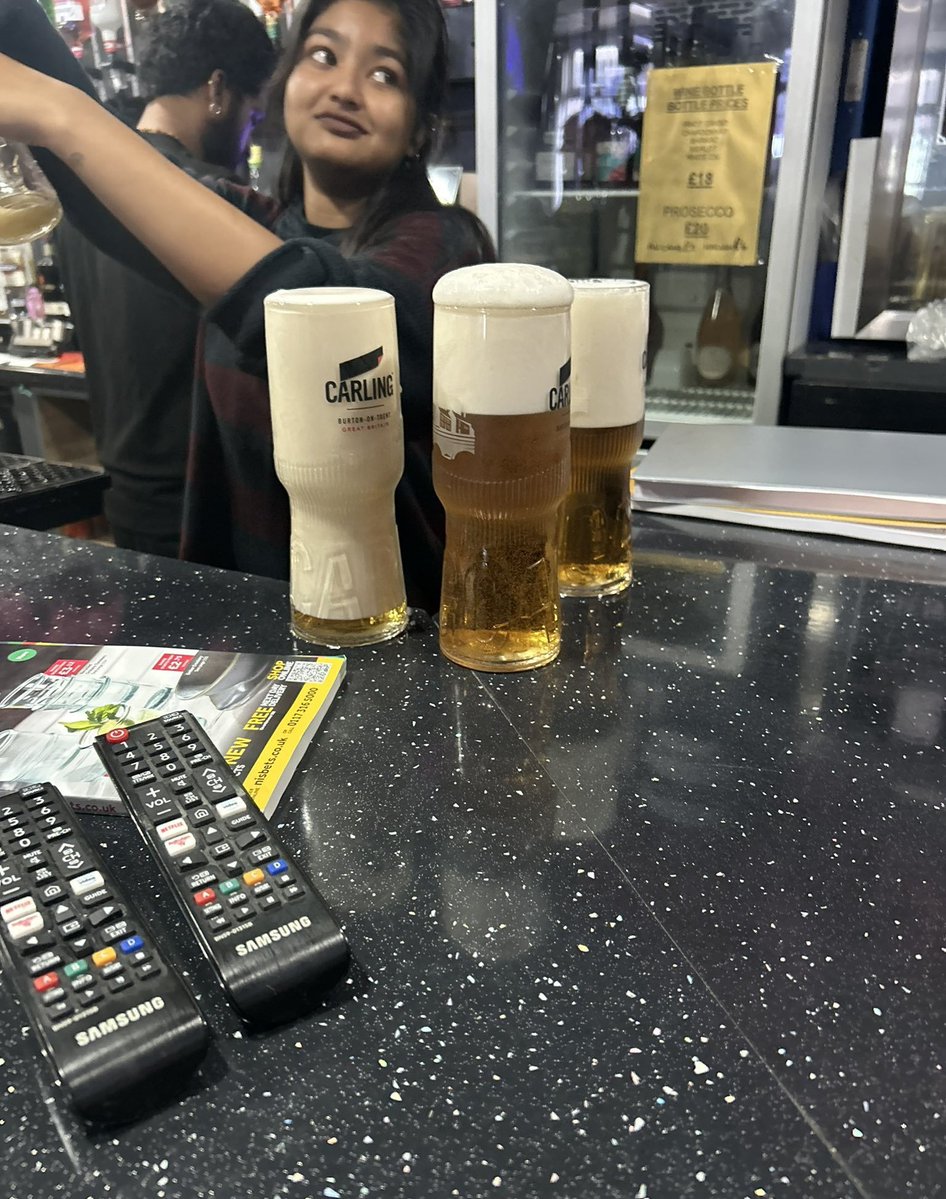
Pubs, restaurants and cafes in London have replaced Eastern European workers with Latinos & Indians over the last few years. The quality has gone downhill since.
Eastern Europe and East Asia may be the last remaining places where blue collar and service sector work is still done by ~100 IQ individuals. The impact this has on everyday quality of living is under appreciated.
@lorenz_swen And it actually tastes better than in many European and North American McDonald’s because the labour is high IQ enough to follow the exact quality protocols.
In terms of average wage (PPP) - Russia and Belarus ranks higher than many EU countries including: Greece, Slovakia, Bulgaria, Latvia, Portugal Malta, Romania, Estonia, Hungary, Slovenia and Lithuania.
I'm aware PPP carries some limitations (quality adjustments) but this certainly gives food for thought.
What if CEE's growth miracle was not because of - but in spite of its EU membership? Shouldn't we are least debate this, instead of treating EU membership as the key reason behind CEE's growth as a 'fact'?
@Tonyforever2003 Thanks for your post sir. Why do you think $PBR.A trades at a premium at times of extreme fear? Is it mainly because $PBR is more prone to selling by ‘tourists’ and traders, whereas $PBR.A is held by more passive investors
A few months ago, I visited London for the first time since Jan 2020. Lived in / spent a lot of time in London in the 2010s. The woke part I expected. The accelerated transition into a third world country - I did not.
Woke nonsense - saw at least 10x more LGBT flags than British flags. Also the only place in the world where 'Karl Marx walking tours' are on offer.
Lawlessness - got worse. Private security in front of many shops. Visited a Vodafone store at 10am - the door is locked by default (I asked why and they told me too many stores got robbed including in daylight). You knock, then they let you in.
Third worldization - this I did not expect. Much of this is because Eastern European blue collar workers have moved onto better things - and have since been replaced by Latinos and people from the sub continent.
Steak & coffee orders mixed up. Lazy hotel staff sat down chatting with each other instead of servicing customers. At the Vodafone shop, I asked for the cheapest phone contract to keep a UK number active - the Pakistanis who ran the shop started off trying to hustle me into a £30 / month plan - finally got it down to £10. Whole process took over an hour. (By comparison, was at a Vodafone Romania shop staffed by ethnic gypsies - got an honest price for my phone contract and all done in 15 min).
@psow77@MythoYookay Yes, Central Asian workers are much more preferable to Indians. Lately I have even seen YouTube videos by Indians of how to secure work permits in Kazakhstan and Uzbekistan which shows how behind India is.
On IQ, fertility rates and emerging markets (and what makes Kazakhstan & Uzbekistan unique) 🇰🇿🇺🇿👇
It is shocking to me that so many economists and investors simply say 'high fertility rate = good', with zero regard for median IQ. I hope they are just being politically correct but I fear a good % of them genuinely do not understand.
Median IQ represents the human potential of a country, which is genetically capped. As the East Asia and Eastern Europe growth stories show us - human potential is even more important than natural resource wealth. Many resource rich but IQ poor LatAm and African countries end up being poor and dysfunctional.
If you have a highly fertile country that is low IQ and especially with the development of robotics & AI - it is a net negative. Your country has an increasing amount of economically unproductive people to take care of.
As a foreign investor, you should be careful parking your wealth in such countries as you become the easy target in desperate times.
Looking at the entire world - there is currently only one country with a high population replacement rate (TFR 3>) that has a median IQ of 90 - that being #Kazakhstan. Clinically speaking (using the Pearson Wechsler scale) - 90 is the minimum to qualify for 'moderate' IQ.
#Uzbekistan's TFR is higher at 3.4 with a median IQ of ~86 which is 'low average' on the Wechsler scale.
No exaggeration - ALL other high fertility countries are in the 70-79 range (borderline intellectual functioning), 60-69 range (extremely low) or 50-59 range (mild intellectual disability).
Whilst IQ is mostly determined by genetics, there is an environmental factor too (likely 5-10 points). Considering the ethnic make up of Kazakhs and Uzbeks, IMO it is reasonable to assume that with better education, diet and healthcare - they can reach low 90s median IQ (near Balkans and Southern Europe).
Reasons:
- Estimated genetic composition of Uzbekistan: Iranic (50%), Turkic Steppe (35%) and East Asian / Mongol (15%)
- Estimated genetic composition of Kazakhstan: Iranic (20%), Turkic Steppe (45%) and East Asian / Mongol (35%)
- Thus the genetics are not bad: Iranic countries have a median IQ of 85, Turkic Steppe at 89 and East Asian / Mongol at 98. The Kazakh and Uzbek diets are also much more protein rich than other frontier markets. The Soviets left behind a healthcare and education system that is decent.
Additional notes:
- Kazakhstan's current median IQ (Richard Lynn, 2019) is skewed upwards due to ethnic Russians (~100 IQ) making up 15% of the country. However KZ's current fertility growth is mainly driven by ethnic Kazakhs. But with a ~5% annual GDP growth and ~10% annual average salary growth, IMO they can make up for it with environmental factor improvements.
- Uzbekistan is much more ethnically homogeneous with under 4% ethnic Russians. Thus their existing median IQ figure is more accurate than Kazakhstan's.
- Unlike Southern Europe & Balkans, these two 'stan' countries do not operate on liberal democracy - which is more optimal for governing a low to mid 90s IQ society. As we see in Southern Europe, low to mid 90s IQ population combined with liberal democracy leads to socialism, high debt and demographic replacement to fund pension ponzis.
Summarizing the combination of fundamental factors that makes Kazakhstan and Uzbekistan one of a kind:
- Moderate median IQ
- High fertility rate
- Natural resource wealth
- Geopolitical neutrality
- Healthy level of spirituality via Islam but without radical elements
- A mode of governance that works for them
- Moderate Islam as a spiritual and cultural anchor, with a government deeply committed to secularism
I am not aware of any other emerging markets that offer this combination. I will explore the key risks and limitations of 'stan countries' in future posts.
🇺🇸 Related: my thesis on why the US demographic future is even worse than Europe and China 👉 https://t.co/dA6oyMmF2a
The general story is: Western Europe got a bit richer, Eastern Europe got a lot richer and Southern Europe has been on siesta since 2008 (2 decades of zero growth)
The increasing divergence probably means looking at 'Europe' as a whole or even EU as whole makes less sense than before
The general story is: Western Europe got a bit richer, Eastern Europe got a lot richer and Southern Europe has been on siesta since 2008 (2 decades of zero growth)
The increasing divergence probably means looking at 'Europe' as a whole or even EU as whole makes less sense than before
>Believes the government is hiding a cure to cancer
>Refuse to get skin cancer
>Did not fall for the sunscreen hoax
Another victory for the Eastern Europeans
Yes and the main way to get exposure to RMB yield is banking stocks which carries it's own risks.
I've gone for Chinese port stocks - as they have similar div than Chinese banks, more beaten up and less domestic exposure (I find it easier to be bullish Chinese exports than domestic China).
https://t.co/Ni6CTNRm0d
Poland used to take North Korean migrant workers until 2017 UN sanctions. Cheap and high IQ workers that will be sent to the gulag if they misbehave. But Europe went for Indians instead.
Russia is technically bound by the same UN sanctions but it doesn’t care anymore.