🚨 Was Nvidia's $1 TRILLION comeback the biggest stock market manipulation of 2026?
The sequence of events surrounding Jensen Huang's exit and return as Nvidia CEO is raising some very serious questions.
First, Huang faced allegations of possible spying links, with reports that senior U.S. officials wanted him removed.
Then Nvidia crashed nearly 50% from its peak, reaching its lowest level in over two years.
And just when investors thought things couldn't get worse, news of an SEC accounting investigation added even more panic before Friday's close.
But what happened over the weekend changed everything.
Scott Bessent changed his tone on Huang, and the same government that had raised concerns about him later supported his return.
Then came Monday's massive reversal.
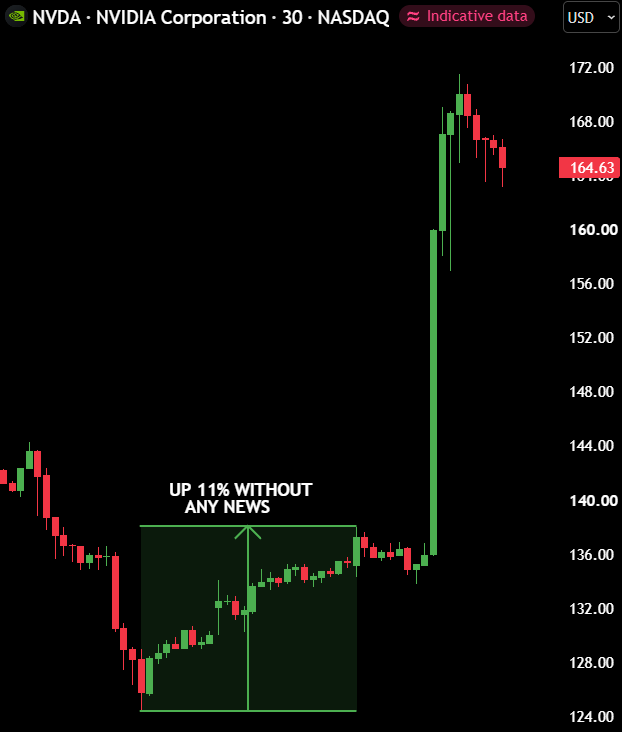
Nvidia was already up 11% in pre-market trading, even though there had been no announcement about Huang's return.
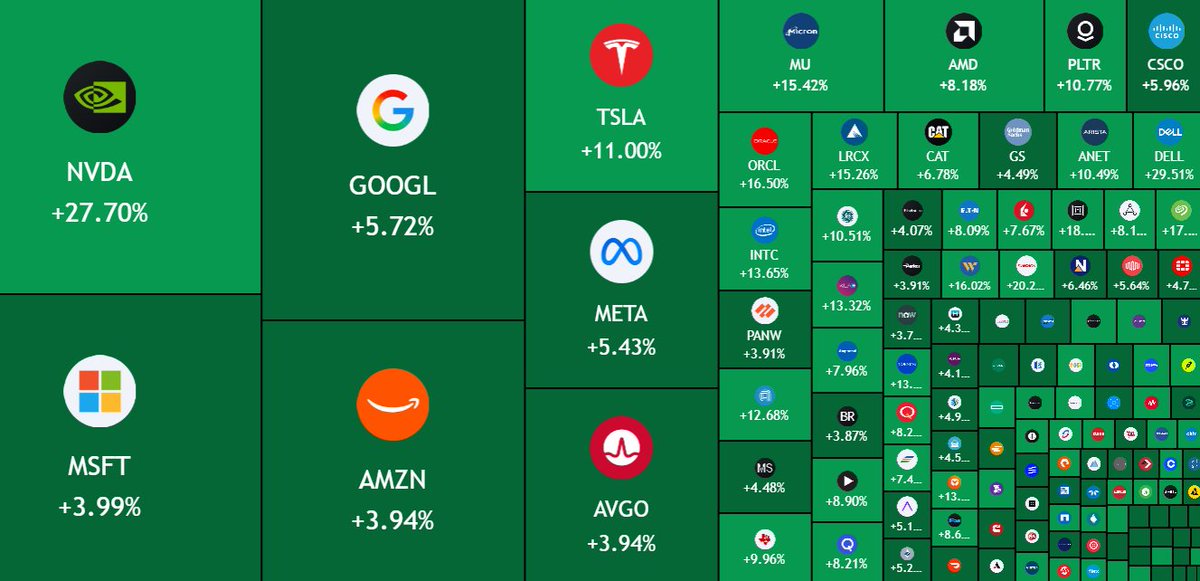
Then the news broke that Jensen Huang was coming back as CEO, and Nvidia surged another 35%, adding nearly $1 TRILLION in market value and becoming the world's second most valuable company again.
Now think about what happened to ordinary investors.
They watched the CEO leave amid spying allegations, saw news of an SEC investigation, and sold as the stock collapsed.
Meanwhile, anyone who bought near the bottom could have made enormous gains in just a few days.
And the biggest question is why Nvidia was already up 11% before the news even came out.
Did some major investors know Huang was returning before everyone else?
If anyone used advance information to profit from this crash and recovery, this could become one of the biggest insider-trading scandals in recent history.
🚨 Jensen Huang's return as NVIDIA CEO has triggered a MASSIVE political backlash in Washington.
Democratic lawmakers are furious that NVIDIA reinstated Huang while serious national security questions remain unanswered.
Here's what they're saying:
1. Sen. Elizabeth Warren: Called the decision "reckless" and warned that Huang, NVIDIA executives and the board still owe Congress answers about compliance with U.S. export controls.
2. Rep. Debbie Dingell: Accused NVIDIA's board of making an "irresponsible decision" by bringing Huang back before Congress has even questioned him.
3. Rep. Raja Krishnamoorthi: Warned that investigators still don't know what information Chinese intelligence may have obtained from Huang, while government and company investigations remain unfinished.
4. Sen. Ruben Gallego: Accused President Trump of "selling out our national security to keep the stock market high."
5. Gov. JB Pritzker: Blasted the reinstatement as an example of "greed and lack of accountability."
6. Rep. Richard Neal: Demanded answers from Congress about what exactly is happening behind the scenes.
And this is far from over.
Huang is back in charge of one of America's most valuable companies, but congressional investigations into NVIDIA's China-related activities and potential national security risks are still hanging over him.
NVIDIA's board may have brought Jensen Huang back, but Washington is clearly not ready to move on.
Jim Cramer should be studied.
On 18th November, Cramer says investors should give up on the hope that Jensen Huang will be back as $NVDA CEO.
He also said you don't need to own Nvidia and would rather get some Anthropic.
Today, Jensen Huang is back as the Nvidia CEO, and the stock has surged 35%, adding over $1 Trillion.
Trump could have just made millions from NVIDIA's massive comeback.
According to The Washington Post, Trump held between $13 million and $62 million worth of NVDA shares as of August 2026.
Over the past week, Trump repeatedly called for Jensen Huang to return as NVIDIA CEO.
Now Jensen is officially back, and $NVDA has surged 35%.
What's even more intriguing is that NVIDIA confirmed its board received input from senior US government officials before reinstating him.
And with NVDA surging 35%, Trump's investment portfolio could have gained millions in just a few hours.
Over $3 Trillion has been added to the US stock market at open.
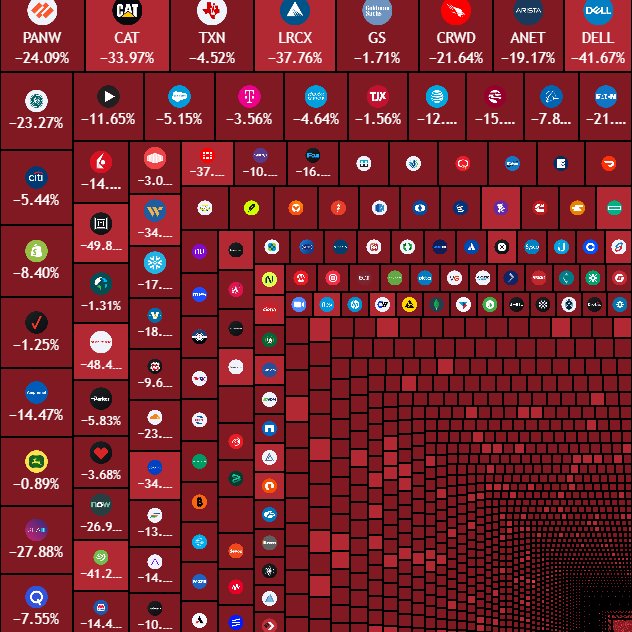
Jensen Huang's resignation wiped out $7 Trillion from the US stock market.
His comeback has already recovered 40% of that crash.
BREAKING: $NVDA explodes 30% in premarket trading as Jensen Huang makes a stunning comeback.
NVIDIA's board has officially reinstated him as President, CEO, and Board Director.
BREAKING:
DXY just breaks above 104 for the first time since April 2025.
A strong dollar often contracts the global liquidity and puts more downward pressure on assets.
🚨 SOUTH KOREA IS NOW IN FULL PANIC MODE TO STOP ITS STOCK MARKET CRASH.
At today's low, the KOSPI was down almost 50% from its record high in June.
That means half of the market's value has been wiped out in just 5 months.
The government is now stepping in with everything it has:
- A ₩10.76 TRILLION ($7B+) fund to buy stocks and stabilize the market
- Daily limits on company share buybacks removed for 3 months, so companies can buy back their own stock without limits
- Finance Minister Lee Hyoung-il says these steps should help restore investor confidence
But it's not working yet.
The KOSPI still crashed as much as 5.5% today.
The government is trying to bring buyers back, but investors are still rushing for the exit.
BREAKING:
🇺🇸 Democratic Congresswoman Yassamin Ansari calls for the 3rd time to ban artificial superintelligence in the US.
First time she said this, the US stock market wiped out $3 Trillion.
Second time she said this, the US stock market wiped out $1 Trillion.
THE AI CRASH IS ALREADY WORSE THAN THE DOT-COM CRASH FOR SOME OF TECH'S BIGGEST NAMES.
Out of 27 major tech stocks, 10 have already fallen more than they had at this point in 2000.
Nvidia is down 48% from its high this year, versus 32% at this point in 2000.
Intel, Oracle, Corning and Western Digital are all down around 60% or more.
The only reason the market doesn't look like 2000 yet is the mega caps.
Apple, Microsoft and Amazon are holding up, while back in 2000 they had already crashed 40% to 75% by this point.
The stocks holding up best are the ones that make most of their money outside AI, from iPhones, online shopping, Windows and Office.
The ones getting crushed are the companies whose growth depends on AI spending: chips, memory, data center fiber and AI cloud.
If AI spending keeps slowing, the pain could spread further.
🚨 BLACK MONDAY
₩316 trillion has been wiped out from the Korean stock market today as the KOSPI crashes to a new 10-month low.
The KOSPI is now just about 274 points (6.1%) away from turning negative for the year.
🚨 BEWARE:
Countries are preparing for a potential BLACK MONDAY in global stock markets.
Last week's stock market crash was so brutal that China, South Korea and Taiwan are taking emergency measures before markets reopen on Monday.
Governments are changing trading rules, preparing billions in market support and making it harder for investors to bet against stocks.
Here's what's happening:
🇨🇳 China
• Cutting margin requirements from 100% to 80%, potentially unlocking another ¥400 BILLION ($60B) in borrowing power to buy stocks.
• Proposing new market makers to improve trading and extending selected exchange fee cuts through 2028.
🇰🇷 South Korea
• Preparing a ₩10 TRILLION ($6.8B) stock market rescue fund to support markets if another massive crash hits.
• Allowing companies to buy back more shares while increasing checks on illegal short selling.
🇹🇼 Taiwan
• Raising short-selling collateral requirements from 130% to 150% to make betting against stocks more expensive.
• Introducing additional short-selling restrictions and encouraging companies to buy back shares.
• Keeping a NT$500 BILLION ($15B) stabilization fund available for potential intervention.
And all of this is happening just before Monday's market opening.
Three major Asian economies are taking steps to encourage buying and limit further selling after a brutal week for global stocks.
These are not normal market conditions.
When governments start changing trading rules and preparing billions in emergency funds at the same time, it shows how seriously they're taking the risk of another crash.
If Asian markets plunge again despite these measures, the panic could quickly spread to Europe, Wall Street and crypto.
Monday could be another extremely brutal day for global financial markets.
🚨 ALERT
The White House is taking EMERGENCY ACTION as fears of another nationwide shutdown grow.
The Trump administration has assembled a special team called the "Transportation Technology Transformation Tiger Team" to prevent another major air traffic control failure ahead of Thanksgiving.
And this comes after some seriously concerning developments.
• The recent nationwide flight grounding was only the SECOND since the September 11 attacks.
• Officials blamed outdated air traffic systems that struggled to handle new technology, causing major communication and radar failures.
• National Cyber Director Sean Cairncross was fired following a series of major technology outages.
• Director of National Intelligence Jay Clayton has now warned Americans to prepare for more disruptions as the country upgrades its systems for the AI age.
He says these technology upgrades could bring more "bumps in the road" and has urged greater investment in cybersecurity.
Officials have found no evidence of a coordinated cyberattack.
But the fact that the White House has formed a special team just days before Thanksgiving shows how seriously it is taking the risk of another aviation shutdown.
America's critical systems are already struggling with major technology upgrades, and another failure during Thanksgiving could disrupt travel for millions.
🚨 Some of the world's top leaders are preparing for a future where major cyberattacks become almost impossible to avoid.
And the latest warnings are much more concerning than people realize.
Axios spoke with over 50 leaders from government, AI, business and cybersecurity.
Even those who strongly disagree about AI agreed on one thing: the next 18 months could bring constant attacks on businesses and critical infrastructure.
The numbers are alarming:
• 1 in 3: Bridgewater's estimated chance of an economically destabilizing cyberattack within a year.
• Under 3 hours: The time some AI-powered attacks have taken to gain privileged access to computer systems, according to the FBI.
• 18 months: The period experts expect repeated, increasingly sophisticated attacks.
One of the leaders even warned that businesses should prepare for serious disruption now.
Banks, airports and other essential services could face repeated outages, potentially affecting millions of people.
The concern is that these attacks may no longer be rare emergencies. They could become something businesses and governments have to deal with regularly.
We warned that more pain is ahead for the US stock market.
And look what has happened since then.
U.S. stocks have been getting crushed, and nearly $6 trillion has been wiped out since that post.
S&P 500, Dow Jones, and Russell 2000 have entered correction territory, while Nasdaq 100 has entered a bear market.
NEXT WEEK COULD BE BRUTAL FOR THE US STOCK MARKET.
On Thursday, the S&P 500 closed -4.36%, wiping out nearly $2.9 Trillion.
In the past 15 years, the S&P 500 has only closed 18 days where it dropped more than 4%.
And in each case, what happened next was brutal.
1) AUGUST 2011: SPX closed -4.78% on 4th August 2011.
- In the next 3 trading days, SPX dumped another 8%.
2) FEBRUARY 2018: SPX closed -4.10% on 5th Feb 2018.
- In the next 4 trading days, SPX dropped another 4.5%.
3) FEBRUARY 2020: SPX closed -4.42% on 27th Feb 2020.
- In 2 weeks, we had the COVID crash, which everyone knows about.
4) SEPTEMBER 2022: SPX closed -4.32% on 13th September 2022.
In the next 10 days, SPX crashed another 8%.
5) APRIL 2025: SPX closed -4.84% on 3rd April 2025.
- In the next 2 trading days, SPX dumped another 8.7%.
This time, we had a 4.36% drop on 5th November, and if history is anything to go by, there's more pain ahead for US stocks.
🚨 BEWARE:
Countries are preparing for a potential BLACK MONDAY in global stock markets.
Last week's stock market crash was so brutal that China, South Korea and Taiwan are taking emergency measures before markets reopen on Monday.
Governments are changing trading rules, preparing billions in market support and making it harder for investors to bet against stocks.
Here's what's happening:
🇨🇳 China
• Cutting margin requirements from 100% to 80%, potentially unlocking another ¥400 BILLION ($60B) in borrowing power to buy stocks.
• Proposing new market makers to improve trading and extending selected exchange fee cuts through 2028.
🇰🇷 South Korea
• Preparing a ₩10 TRILLION ($6.8B) stock market rescue fund to support markets if another massive crash hits.
• Allowing companies to buy back more shares while increasing checks on illegal short selling.
🇹🇼 Taiwan
• Raising short-selling collateral requirements from 130% to 150% to make betting against stocks more expensive.
• Introducing additional short-selling restrictions and encouraging companies to buy back shares.
• Keeping a NT$500 BILLION ($15B) stabilization fund available for potential intervention.
And all of this is happening just before Monday's market opening.
Three major Asian economies are taking steps to encourage buying and limit further selling after a brutal week for global stocks.
These are not normal market conditions.
When governments start changing trading rules and preparing billions in emergency funds at the same time, it shows how seriously they're taking the risk of another crash.
If Asian markets plunge again despite these measures, the panic could quickly spread to Europe, Wall Street and crypto.
Monday could be another extremely brutal day for global financial markets.
ANOTHER MARKET DROP COULD TRIGGER $80 BILLION IN US STOCK SELLING.
Goldman Sachs says the pain in US stocks may not be finished.
If US stocks rally from here, systematic funds could sell $28.6 Billion in stocks.
And if stocks continue falling, CTAs and volatility control funds could be forced to sell as much as $80 Billion.
Over the past month, CTAs sold $57 billion in US equities, and that selling flipped them to a $19 billion net short position, meaning they are now positioned to profit if stocks fall further.
This means if market experienced another sharp drop, it'll only get worse because of forced selling.
🚨 A massive new threat to U.S. markets is emerging as stocks continue to crash.
The S&P 500 plunged 8.6% last week, its worst performance since the April 2025 tariff crash.
And now Wall Street is facing another serious problem.
Here's what's happening:
• Share issuance: Companies issued nearly $125 BILLION in new shares in just ONE WEEK, the biggest spike since 2014.
• Record IPOs: U.S. IPO fundraising has already hit a record high in 2026, driven by massive listings like SpaceX and Anthropic.
• IPO losses: The 10 biggest U.S. IPOs are already trading an average of 20.5% below their offering prices.
Even the European Central Bank has warned that massive share issuance booms have historically been followed by weaker stock market returns.
Companies are flooding the market with billions in new shares while investors are already suffering massive losses.
And this creates another major problem.
When more shares enter the market, investors need more money to absorb that supply.
If demand isn't strong enough, companies may have to sell shares at lower prices, putting even more pressure on stock valuations.
The U.S. stock market is already struggling after a brutal selloff.
Another massive wave of share issuance could make the crash even worse.
🚨 Elon Musk just warned that the AI industry could face a MASSIVE CASH CRISIS in 2027.
He says AI companies could need HUNDREDS OF BILLIONS in additional cash just to keep their massive data center projects running.
And the numbers behind his warning are absolutely insane.
• $1 TRILLION: Goldman Sachs estimates global AI investment could exceed this amount in 2026 alone.
• $1.2 TRILLION: Goldman projects spending by the five largest U.S. hyperscalers could reach this level in 2027.
• $1 TRILLION: Goldman also expects AI-related debt financing to reach this amount in 2027.
• Hundreds of billions: Musk warns that even a few months of delays could leave the industry needing this much extra cash.
Here's why this is such a serious problem.
Companies are spending enormous amounts of money on chips, servers, data centers and electricity before those investments generate revenue.
But getting all that computing power installed, cooled and running reliably takes time.
If projects get delayed by even a few months, companies still have to pay their bills while waiting for revenue to start coming in.
And when nearly $1 TRILLION is being spent every year, even small delays can create an enormous cash shortage.
Goldman has already warned that major AI hyperscalers collectively reported negative free cash flow in Q3 2026.
That means the industry is becoming increasingly dependent on borrowing and outside financing to keep expanding.
And if lenders become less willing to provide that money, some companies could be forced to delay projects, cut spending or raise even more expensive debt.
Musk's warning is not about AI demand disappearing.
It's about companies potentially running short of cash before their massive investments can start paying for themselves.
The AI industry could have trillions in spending commitments, enormous demand and still face a brutal funding crisis.
And Musk is already questioning where all that extra money will come from.