Watch this video.
I’ve lived my entire life in and near New York City, which has the best hospitals in the world (I’ve been in them). And this new hospital looks better than any of them. Never thought I’d say that.
@PatrickBosch11 For anyone wondering about this, I strongly recommend going to a BTC/tech conference in ES. There are multiple ones every year. It's easy to meet people there, make connections, etc. These events are not only interesting, they are valuable opportunities. And as Stacy suggested, you can just visit any time. Stay a week in Bitcoin Beach and you'll meet lots of like-minded people. During my last trip a few months ago, I saw lots of techies working on their laptops or having group meetings by the beach.
Quick BTC update. In the ten years I’ve been here, this is by far the most subdued sentiment I’ve seen. It’s understandable, but the extent is striking -- especially in light of a favorable policy climate in DC, continued sovereign and corporate accumulation, etc.
While overleveraged traders are getting blown out on dips, a sovereign wealth fund like Abu Dhabi’s Mubadala is happy to sit on the bid and take it in.
For traders and investors looking to take advantage of this type of environment, the key is to watch for when price starts to diverge positively from depressed sentiment. For assets in long-term uptrends, that's when huge percentage gains can happen. This was certainly true for eventual winners like AMZN in the years after the tech bust a quarter-century ago; sentiment was terrible, but price gradually started to diverge upwards, quietly regaining levels that were previously lost and reflecting the long-term underlying growth story.
I posted about this in 2023 -- when BTC was 25k, and sentiment was also subdued.
Seeing lots of tweets about BTC and lower engagement/public interest. I personally find this fascinating and any trader active 20 years ago should be getting flashbacks. In terms of sentiment and interest, 2023 = 2003. You can go to the dusty finance message boards for AMZN and other eventual winners and see the same dynamic back then. Retail and fast-money desks were blown out after '99, but a new ownership base was slowly moving in as tech leaders survived and continued to build.
In terms of price action, one of the keys back then was to watch the longer term charts (weekly and especially monthly) for when price levels that were previously lost were quietly regained. This led to huge profits for traders who were still in the game and paying attention, because it indicated the continuation of a long-term secular trend. In the case of BTC, for example, a recent level to watch would be 28-30k. And so on at higher levels. I can tell you this: despite all the fundamental company analysis that Wall Street and the media like to peddle, you'd probably be surprised by how many smart institutional guys act off the charts (especially true with BTC). Self-fulfilling on the way down...and on the way up.
The same thing happened to me five years ago. My only symptom was fatigue (I'm fit, clean diet, etc). I did a sleep test which confirmed apnea. CPAP made a huge difference.
Since then, I've become an evangelist for awareness about this (I urged two friends to get tested, which showed severe apnea). I think it's the most common undiagnosed medical condition globally. Many millions are unaware they have it. It can kill suddenly in your sleep, or gradually over years. I think it should be a national health priority.
Anyone with risk factors (obesity, snoring) or just unexplained fatigue should talk to their doctor about getting a sleep test, which is easily done at home.
Old Guy, health advisory. Public Service. So i go pretty hard, never felt fully rested and generally feel cranky at 68 yo. Nap a lot. Wife says I snore a lot. New Doc said you gotta take a sleep test. I did. Severe sleep apnea. Got a CPAP machine, 25 days in and holy shit do I feel great. Wake up refreshed. Like when I was young. Mind is clearer and more positive. I cannot overemphasize the difference. ChatGPT says over 50% of older men have apnea. Worth getting checked out.
SpaceX today:
"As of March 31, 2026 and December 31, 2025, the Company also held 18,712 units of Bitcoin with a cost basis of $661 million and fair value of $1,293 million and $1,637 million, respectively."
Pages F-26 and F-74:
https://t.co/dgENiHamwn
Lots of debate about whether we're in a stock market bubble. Good post by @dampedspring below.
In the late 90s, I was also a sell-side trader -- an equity marketmaker on one of the largest desks on the street. We were the "axe" (dominant firm) in many of the names we traded. For a time, I was our marketmaker in AMZN. So I had a good view of institutional and retail sentiment.
By the last year of the 1990s tech bubble, we were clearly in a full-blown national mania. There was zero skepticism or doubt. I'm not sure current sentiment is at that level. Maybe it's 1997-1998 instead of 1999. But I'm older now and not as in touch with daily fast-money sentiment as I was 30 years ago, so I don't have a strong opinion on this.
Even in a late-stage bubble, it's ok to participate as long as you're agile. You can have an oar in the water and an eye on the exit. Dance while the music is playing. The problem is that many traders get whipsawed in the type of market conditions that accompany bubbles -- especially if they’re smart enough to know it's a bubble.
I’ve learned that if you think financial conditions are unsustainable, time (and capital) is better spent focusing on the inevitable policy response to the bust. Example: By 2004-2005, it was clear that a US housing bubble was underway and the eventual fallout would be brutal. So I got bullish on gold around $400. By 2011, after the Fed's policy response to the crisis got traction, gold was $1900.
It’s good to be familiar with that gold cycle. As the financial crisis spread in 2008, gold fell from $1000 to $700. It showed that in a crash, everything gets sold. The key is to have done your research beforehand (and have the capital available to take advantage of it) so you’re positioned for the inevitable policy response.
So maybe it’s 1997-1998. Or it’s late 1999. Regardless, readers know what I think is a good way to be positioned for the inevitable -- whether that’s a shock-and-awe policy response to a bust, or just an elevated inflation regime (out of necessity) that lasts for years.
Do you know where I sat in 1999?
My literal chair on the trading floor was on the index trading desk with my back 4 feet away from the single options trading desk.
The entire hedge fund sales team was facing these poor souls.
Cramer, SAC, Pequot, Galleon, Omega, Soros, Andor, Bass, Tiger, Tiger cubs, Tudor, Moore, Appaloosa, Och Ziff. All trading on momentum and the next hot stocks. And every single one of them knew it was a bubble. At the same time slower money was quite aware it was a bubble and just feeding the ducks (or drucks) Don't tell me about sentiment in 1999. Everyone knew it was a bubble and was either riding the wave or watching from the sidelines. The longs knew it was a musical chairs game.
The single stock options desk was literal ground zero for sentiment
The only argument is whether sentiment is like that now.
Twitter sentiment is identical.
Reply guys, beta bros and momo jockeys set up for a doubling and a bunch of skeptics on the sidelines. Same o same o.
But my seat isn't front and center anymore. My hedge fund and pod shop clients are from the top 20 macro and biggest 6 pod shops and I have some vision on their thinking.
But maybe they are just about to go all in bullish.
El Salvador's favorable climate for investing and technology is getting lots of attention. There's a specific area that deserves to be watched closely: AI.
On Friday, the country presented its National AI Strategy 2026. This is an impressive, no-nonsense framework. Focus areas for AI augmentation include education and healthcare. And here's something that readers will no doubt find interesting: "The Republic is awarding 5,000 passports to highly qualified individuals from abroad, with full citizenship status including voting rights and zero taxes and tariffs on relocating families, equipment, software, and intellectual property."
The strategy highlights El Salvador's key national advantage: agility. "Our vision is to serve as the world's testbed for the real-world application of Al, moving at a velocity that legacy jurisdictions cannot match."
And here's something very important to this industry: "Our near-perfect time zone alignment provides a critical advantage for startups and investors targeting the U.S. market."
This document will get lots of attention in the global AI sector. You can read it here (and the ANIA account is worth following):
https://t.co/JxGRirue9p
I've visited El Salvador four times in the past few years. I'm often asked about opportunities in the country by people who want to build or invest. My advice is to visit. Go to a Bitcoin or technology conference there. These events are valuable opportunities to meet like-minded people from all over the world (including many of your favorite Twitter personalities). The country has become a fertile environment for ideas and action.
The sovereign buying of BTC continues. In a filing today, Abu Dhabi's Mubadala reported owning $566 million of IBIT (14,721,917 shares) as of March 31.
That's a 16% increase in shares from 12,702,323 reported for the previous quarter.
This is an important one.
Filing:
https://t.co/haurS0lfW1
Tomorrow is the 13F deadline. Seeing some interesting names pop up. In a filing today, Dartmouth College reported owning $7.7 million of IBIT as of March 31 (201,531 shares, unchanged from the previous quarter).
Dartmouth also reported a new position: $3.4 million of the Bitwise Solana Staking ETF (304,803 shares).
Just in case you weren't sure if this sector is catching on with the most rigorous institutional investors.
Filing:
https://t.co/2xn43nupiC
In my El Salvador trip report from February, I posted this:
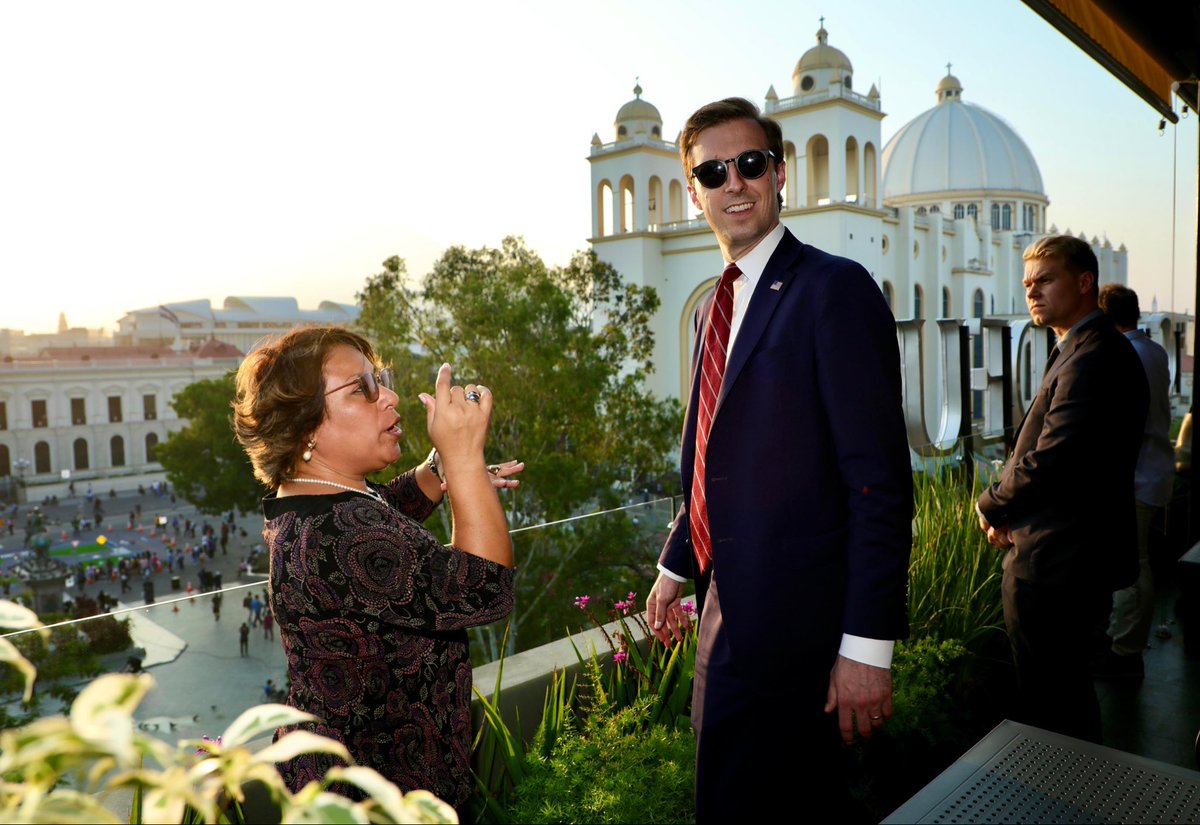
"Go to San Salvador’s historic center on a Friday or Saturday night. Have dinner at a rooftop restaurant overlooking the National Palace, while a DJ's soft beat plays in the background. I promise you will feel like you’re in an important place at an important time."
That view is in the photo below.
San Salvador's historic center is thriving. Assistant Secretary Caleb Orr toured the revitalized downtown with the Tourism Ministry—a testament to President Bukele's vision for a safe and prosperous El Salvador. The government restored landmarks like Plaza Libertad, upgraded infrastructure, and created incentives that attracted over $195 million in private investment. Today, the historic center is a vibrant hub for art, culture, and families, proof that security and economic growth go hand in hand.
#CentroHistórico
The deadline for 13F filings is mid-May. During the next two weeks, we’ll see what some closely-watched institutions were buying and selling during the first three months of 2026.
Here’s one from Friday. Brown University reported these positions as of March 31:
IBIT $8.1 million. 212,500 shares, unchanged from the previous quarter.
GLD $16.9 million. 39,500 shares, unchanged from the previous quarter.
OBDC (Blue Owl Capital Corp) $16.8 million. 1.52 million shares, a decrease of 53% from the previous quarter.
They sold the private credit. They kept the Bitcoin and gold.
Filing:
https://t.co/Ygg3DYLWXT
The deadline for 13F filings is mid-May. During the next two weeks, we’ll see what some closely-watched institutions were buying and selling during the first three months of 2026.
Here’s one from Friday. Brown University reported these positions as of March 31:
IBIT $8.1 million. 212,500 shares, unchanged from the previous quarter.
GLD $16.9 million. 39,500 shares, unchanged from the previous quarter.
OBDC (Blue Owl Capital Corp) $16.8 million. 1.52 million shares, a decrease of 53% from the previous quarter.
They sold the private credit. They kept the Bitcoin and gold.
Filing:
https://t.co/Ygg3DYLWXT