Let me trace the timeline here because nobody's connecting it.
Step 1: Scrape the entire internet. Every book, every article, every conversation, every piece of art, every forum post. Do it without asking. Do it without paying.
Step 2: Train a model on all of it. Call it "artificial intelligence."
Step 3: Go to BlackRock's Infrastructure Summit and announce: "We see a future where intelligence is a utility, like electricity or water, and people buy it from us on a meter."
Step 3 is where you sell people's own knowledge back to them. On a meter.
They took the collective output of human thought, compressed it into a model, and now they want to charge you by the token to access a version of what you and everyone you know already created.
One Reddit user put it perfectly: "They stole all this data from us, the people, our life's work, creativity, art, by devouring the internet and blowing through all copyright laws. Now they want to sell it back to us in the form of a utility."
Imagine if someone photocopied every book in the public library, burned the library down, and then opened a subscription service for the copies.
That's the metered intelligence business model.
And they're pitching it to infrastructure investors as though they invented water.
There is only one sure way to counter-act the damaging effects of AI on learning: the face to face encounter between teacher and pupil, including the former subjecting the latter to questioning about what they have written.
Such tutorials are the gold standard of education for a reason. But the problem with this solution is not so much that it is very expensive; rather, it is the dearth of suitably equipped teachers to act as interlocutors. And there will be fewer of them as time goes by and AI corrodes our educational eco-system.
I lectured on a college campus this week and asked students about Chromebooks. Outside of math, 94% finished middle and high school on Chromebooks, with no textbooks or fiction books. College is the first time they’ve touched a paper book for class since elementary school.
Friends-
This is a tough note to write, but since a bunch of you have started to suspect something, I’ll cut to the chase: Last week I was diagnosed with metastasized, stage-four pancreatic cancer, and am gonna die.
Advanced pancreatic is nasty stuff; it’s a death sentence. But I already had a death sentence before last week too — we all do.
I’m blessed with amazing siblings and half-a-dozen buddies that are genuinely brothers. As one of them put it, “Sure, you’re on the clock, but we’re all on the clock.” Death is a wicked thief, and the bastard pursues us all.
Still, I’ve got less time than I’d prefer. This is hard for someone wired to work and build, but harder still as a husband and a dad. I can’t begin to describe how great my people are. During the past year, as we’d temporarily stepped back from public life and built new family rhythms, Melissa and I have grown even closer — and that on top of three decades of the best friend a man could ever have. Seven months ago, Corrie was commissioned into the Air Force and she’s off at instrument and multi-engine rounds of flight school. Last week, Alex kicked butt graduating from college a semester early even while teaching gen chem, organic, and physics (she’s a freak). This summer, 14-year-old Breck started learning to drive. (Okay, we’ve been driving off-book for six years — but now we’ve got paper to make it street-legal.) I couldn’t be more grateful to constantly get to bear-hug this motley crew of sinners and saints.
There’s not a good time to tell your peeps you’re now marching to the beat of a faster drummer — but the season of advent isn’t the worst. As a Christian, the weeks running up to Christmas are a time to orient our hearts toward the hope of what’s to come.
Not an abstract hope in fanciful human goodness; not hope in vague hallmark-sappy spirituality; not a bootstrapped hope in our own strength (what foolishness is the evaporating-muscle I once prided myself in). Nope — often we lazily say “hope” when what we mean is “optimism.” To be clear, optimism is great, and it’s absolutely necessary, but it’s insufficient. It’s not the kinda thing that holds up when you tell your daughters you’re not going to walk them down the aisle. Nor telling your mom and pops they’re gonna bury their son.
A well-lived life demands more reality — stiffer stuff. That’s why, during advent, even while still walking in darkness, we shout our hope — often properly with a gravelly voice soldiering through tears.
Such is the calling of the pilgrim. Those who know ourselves to need a Physician should dang well look forward to enduring beauty and eventual fulfillment. That is, we hope in a real Deliverer — a rescuing God, born at a real time, in a real place. But the eternal city — with foundations and without cancer — is not yet.
Remembering Isaiah’s prophecies of what’s to come doesn’t dull the pain of current sufferings. But it does put it in eternity’s perspective:
“When we've been there 10,000 years…We've no less days to sing God's praise.”
I’ll have more to say. I’m not going down without a fight. One sub-part of God’s grace is found in the jawdropping advances science has made the past few years in immunotherapy and more. Death and dying aren’t the same — the process of dying is still something to be lived. We’re zealously embracing a lot of gallows humor in our house, and I’ve pledged to do my part to run through the irreverent tape.
But for now, as our family faces the reality of treatments, but more importantly as we celebrate Christmas, we wish you peace: “The people walking in darkness have seen a great light; on those living in the land of deep darkness a light has dawned….For to us a son is given” (Isaiah 9).
With great gratitude, and with gravelly-but-hopeful voices,
Ben — and the Sasses
People stopped liking poetry because we got too good at teaching it.
For thousands of years, poetry was central to education and people loved it because we were so bad at teaching it. Then came a group called the New Critics in the 1920s who figured out how to analyze poetry. For the first time in history, poetry was taught right and it killed the audience.
How was poetry taught before? You memorized it. You recited it. You sang it. And you didn't teach poetry as something that needed to be understood via analysis.
The best way to teach poetry is like this: experience it, perform it, memorize it. Once you've done that, then you can do the analysis. But analysis is secondary to what poetry is.
We don't make people analyze pop songs before they fall in love with them, so why do we do that for poetry?
— @DanaGioiaPoet
I'm teaching "Political Theology" @UNC next spring. I don't think there's been a course like it here in the last 125 years or so, if ever. It should be good. If you want to think & talk about politics, God, nationalism, justice, common good, & the anti-Christ, you should take it.
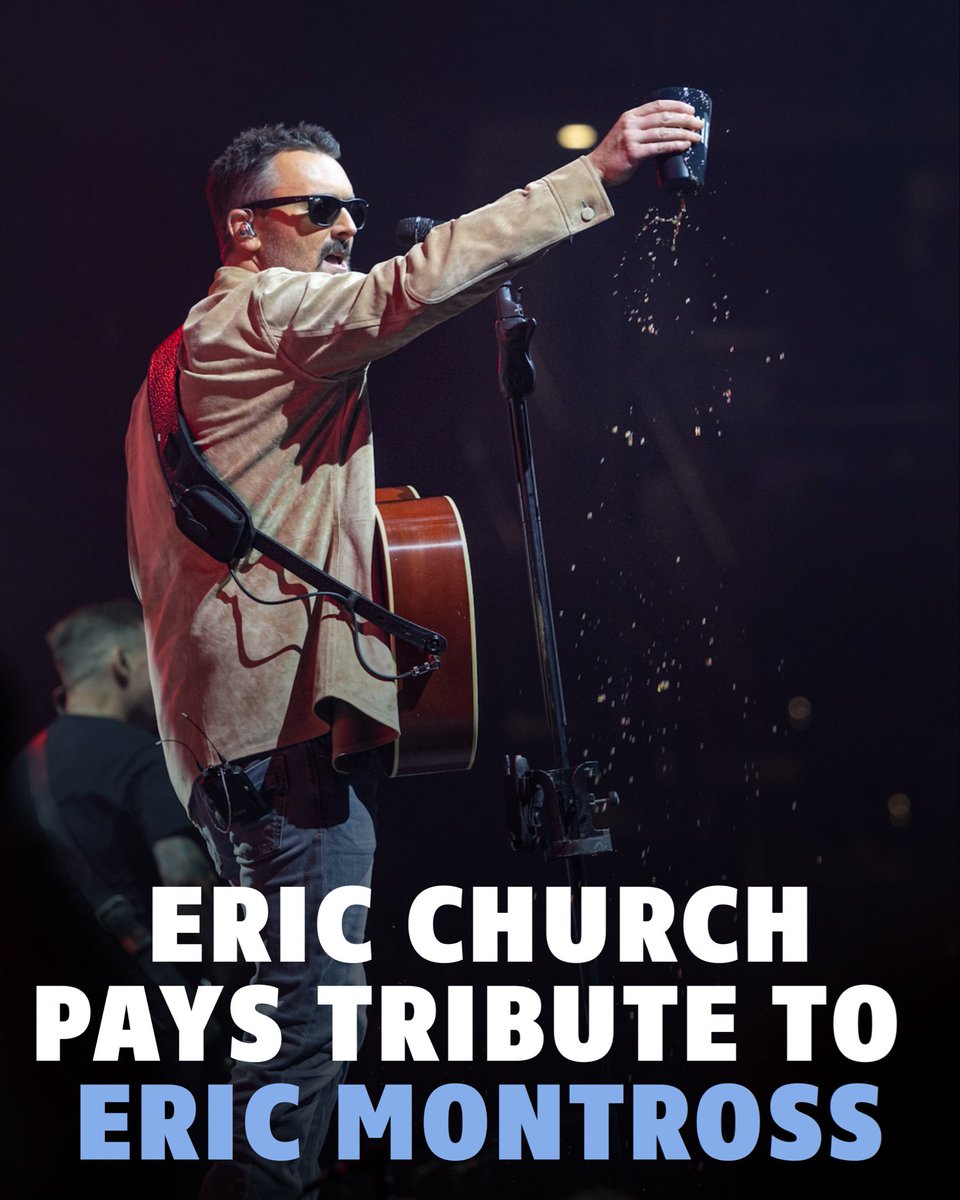
New column: An emotional night in Indianapolis, as @ericchurch used music to pay an impromptu tribute to @UNC_Basketball’s Eric Montross.
https://t.co/6hgNpa2zMt
My brother, Joseph Decosimo, is making some of the best American music out there. Music deeply tied to land, tradition, & community. Much of it he learned from elder fiddlers & pickers in the hollers & mountains of TN & NC. Here’s ‘Billy Button’ from his new album, Fiery Gizzard.
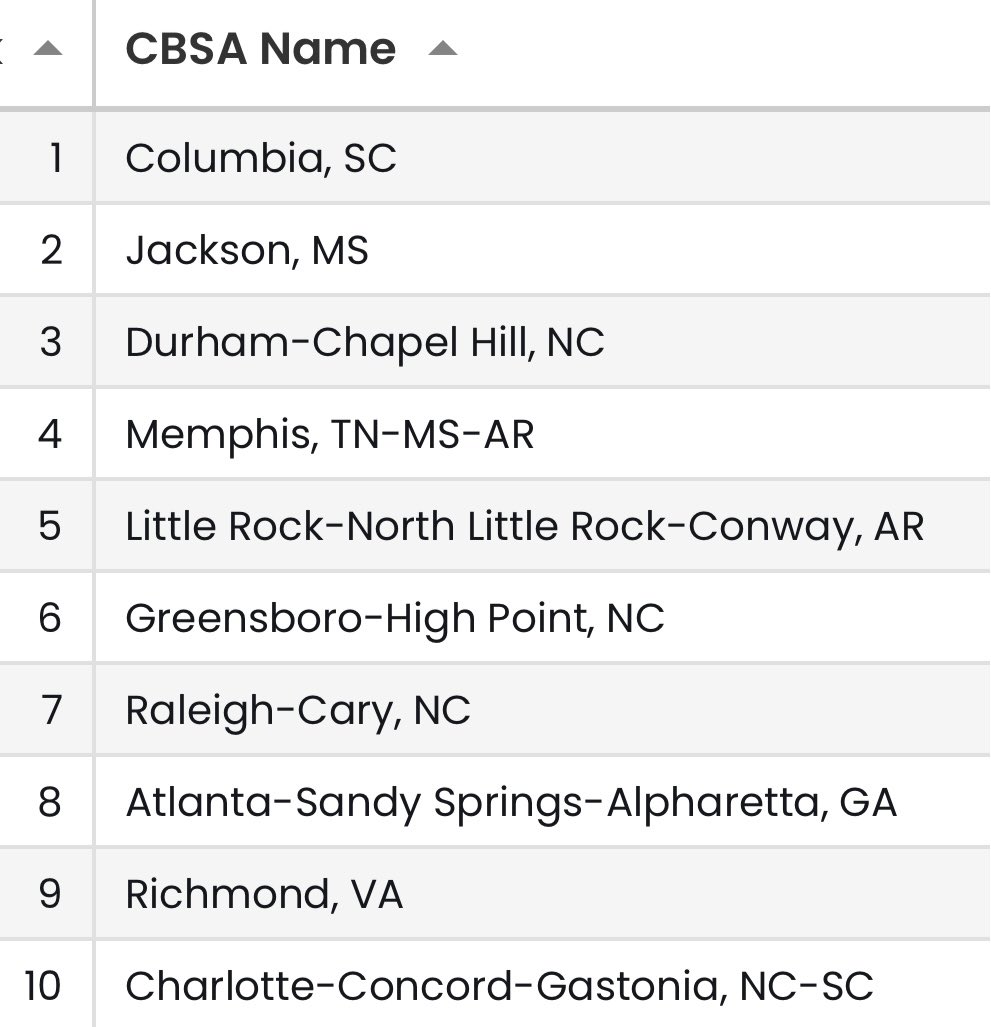
These are the Top 10 Cities for producing Division I Men’s Basketball talent PER CAPITA - NOT overall numbers. @statswithsasa compiled the data from the @NCAA
I wrote about the lack of administrative support for the liberal arts in @nytimes. The standard story we hear is that students don't want it. But a darker reality is that even when it wins big with students and donors it loses with those in power.
https://t.co/RApg6AGTm0
I saw someone saying that they thought scrolling was affecting their memory formation, because it teaches the brain to immediately discard what it just saw to situate itself in a new context, over and over again. Something to this I think
The 1 percent rule of social media goes like this: 1 percent of people create new content, 9 percent engage with it—likes, comments, shares—and the other 90 percent just lurk. They scroll, they watch, but you’d never know they’re there.
Most people don’t post much. The only people who post all the time are the ones who make a living online—or want to. And the stuff that gets shared the most is almost never normal. No one’s going viral for being reasonable or predictable. What spreads is whatever’s angry, extreme, ridiculous—anything that gets a reaction. So when you’re scrolling, just remember: you’re not seeing real life. You’re seeing a distorted feed from a tiny group of loud people who spend all day online.
Graduates of Missouri Welding Institute are earning about $3400 per week. Schools like this are solving the crisis of young men in America. We need to bring back shop class in high schools.
Science/religion debates yielded the ill-conceived "god of the gaps" concept, relegating god to a filler in then-current gaps in human knowledge.
AI discourse offers a similarly misguided "human of the gaps" approach, relegating the human to gaps in AI capabilities.
Alasdair Macintyre died yesterday aged 96. One of the very greatest thinkers of the later Twentieth Century. Reading After Virtue changed the course of my thinking as a young man entirely. He will turn out eventually to have helped change the course of history. Rest in Peace.