That's not a product insight. It's a distribution insight dressed up as one. Stop optimizing the model. Start asking: how close am I to the actual decision? More on building in the right rooms → https://t.co/nS4GMTjcSv
75% of AI startups that raised in 2022–2023 haven't hit meaningful revenue. The ones surviving didn't build a better model. They embedded into a workflow people already hated. Proximity to the decision is the moat. Distribution beats demo every time.
CB Insights data shows 75% of AI startups from 2022–2023 missed revenue milestones. The pattern: brilliant demo, weak distribution, zero retention. Winners embedded into existing painful workflows. They're in the room when decisions get made.
Policy isn't the enemy of velocity. Ignoring it is. If you're building compliant, interoperable health tech for the Canadian market, this is exactly what Doktochain was designed for. https://t.co/EPZTTEGlNb
Building health tech in Canada without knowing PHIPA, FHIR R4 scope, or the pan-Canadian Health Data Charter isn't moving fast — it's moving blind. The hospital procurement table will find out before you do.
FHIR R4 isn't uniform across provinces. What clears Ontario won't necessarily clear BC. That delta is technical debt you inherit the moment you skip the policy layer. Health Canada's pan-Canadian Health Data Charter isn't bureaucratic noise — it's your system constraints doc.
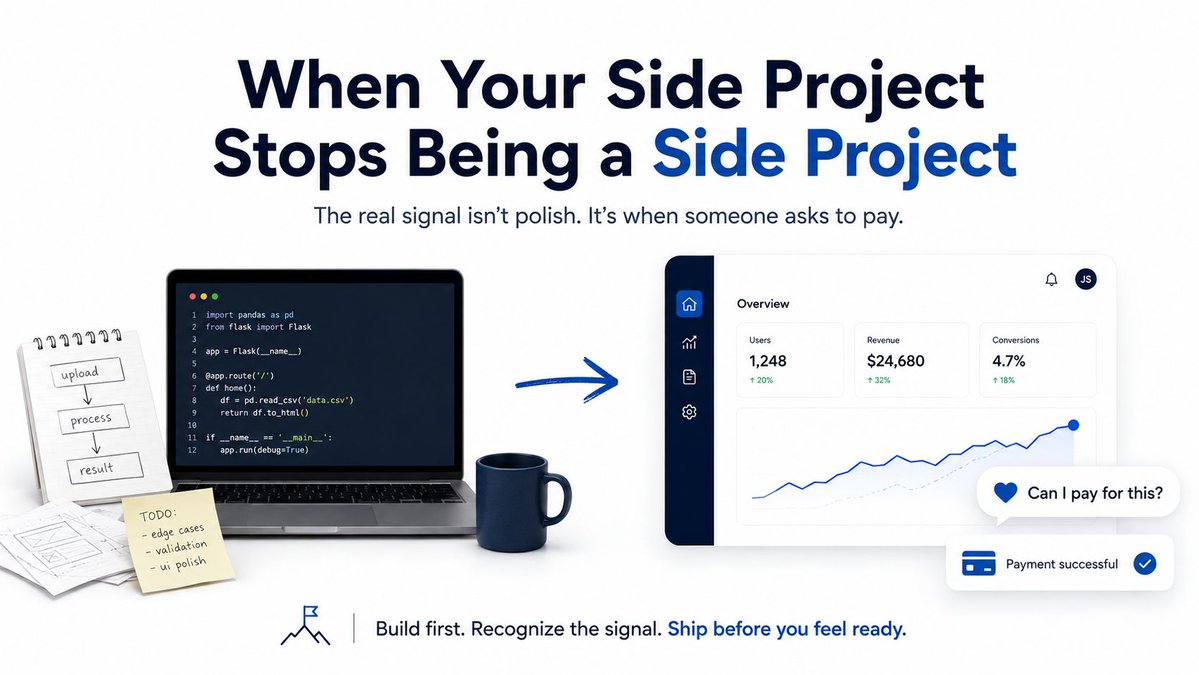
The real signal it's a product isn't traction, a pitch deck, or market research. It's when a stranger asks if they can pay for it, and you have no way to take their money. That moment tells you more than any roadmap ever will. More on building in public → https://t.co/nS4GMTjcSv
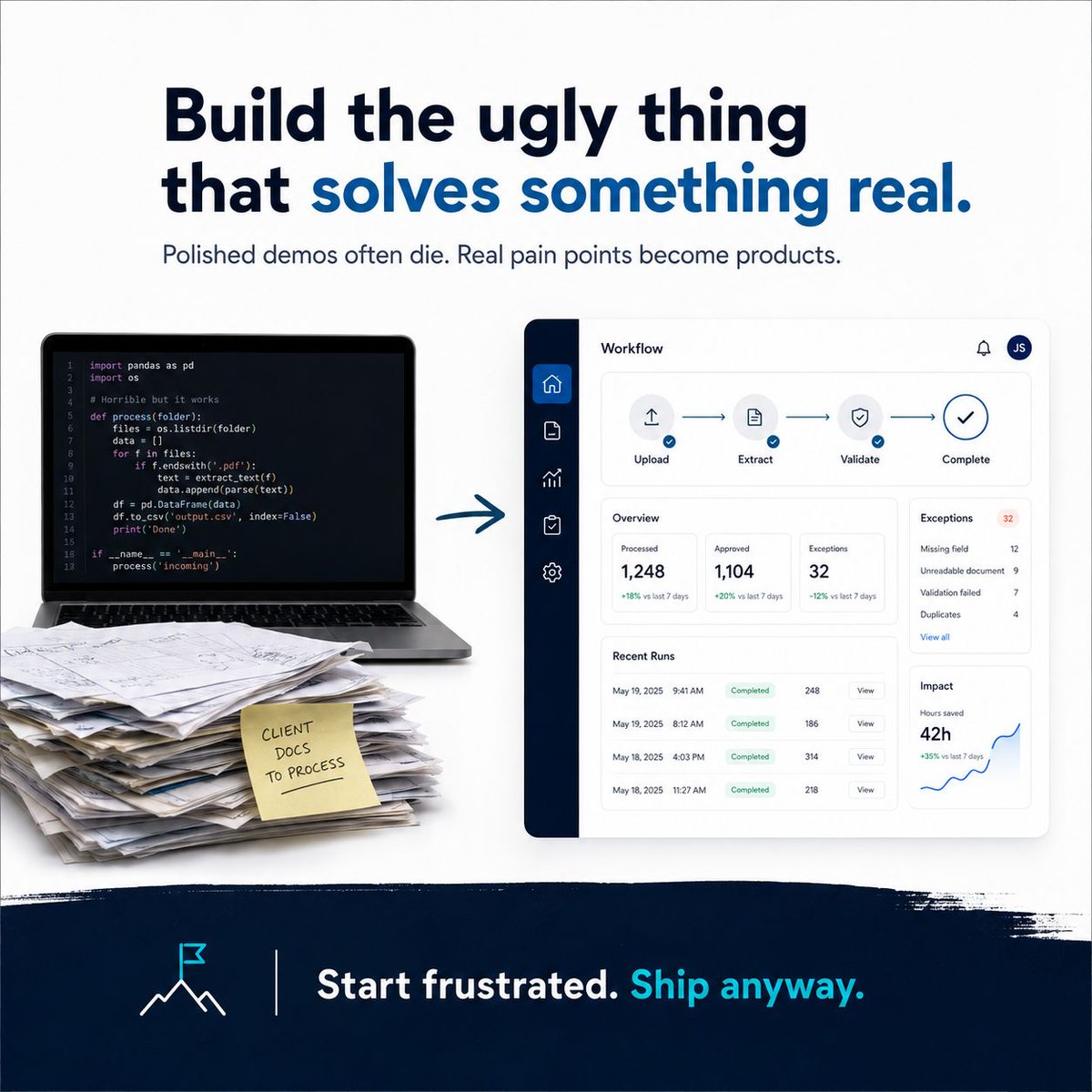
The side project worth building is the one you're embarrassed to show people. Polished demos die quietly. Ugly scripts that solve real problems don't. You're not waiting to feel ready — you're waiting for permission nobody is going to give you.
Building health tech in Canada without mapping your regulatory environment first? You didn't avoid the problem — you inherited it as technical debt. https://t.co/xY9PmZy4eq
Status is making your architecture worse. AI feels like building the future. A bash script feels like admitting you didn't need the fancy thing. Kill that instinct. More on how I think about this at https://t.co/nS4GMTjcSv
Reaching for an LLM when a 40-line Python script works is its own kind of technical debt. AI feels like progress. A bash script feels like admitting you didn't need the fancy tool. That status game is costing your team weeks.
The honest engineering question was never "can AI do this?" It's "what does this task actually require?" Ambiguity, judgment, unstructured language → AI earns its compute. Deterministic inputs with deterministic outputs → write the script.
Slapping an LLM on every problem isn't innovation — it's laziness. The actual skill? Knowing when to use AI and when to just write the script. https://t.co/oC5ytMR99J
Policy isn't the enemy of velocity. Ignoring it is. If you're building compliant, interoperable health tech for the Canadian market, this is exactly what Doktochain was designed for. https://t.co/EPZTTEGlNb
Building health tech in Canada without knowing PHIPA, FHIR R4 scope, or the pan-Canadian Health Data Charter isn't moving fast — it's moving blind. The hospital procurement table will find out before you do.
FHIR R4 isn't uniform across provinces. What clears Ontario won't necessarily clear BC. That delta is technical debt you inherit the moment you skip the policy layer. Health Canada's pan-Canadian Health Data Charter isn't bureaucratic noise — it's your system constraints doc.