I find simple joys in complex things - Parenting, Paid Media, Agentic AI, the Sitar & Golf. Helping marketers thrive in the 4th Industrial Age, from now - 2045.
McKinsey - marketing moving beyond the campaign era and toward what it calls a “continuous growth engine” built around five connected capabilities: continuous insights, scaled creativity, hyperpersonalization, agentic commerce, and always-on orchestration https://t.co/2xZyGGLP7x
karpathy said “i don’t think i’ve typed a line of code since december” and everyone treated it like a meme.
garry tan treated it like a design prompt: what does it look like when one person runs like a whole software team?
gstack is the first oss repo in a while that actually feels like that answer.
not ai as autocomplete.
ai as CEO + staff eng + qa + security + design + release + browser operator + parallel execution layer, all wired through workflows.
and the number is wild: garry claims ~810x higher pace vs 2013, normalized for logical changes (not fake ai loc).
the shift isn’t “faster coding”.
it’s directing + reviewing + orchestrating a swarm without shipping garbage.
stuff that stood out:
→ /office-hours challenges your product before you build
→ /autoplan runs the CEO/design/eng pass
→ /qa literally drives a browser, finds bugs, fixes them
→ /review catches prod-tier issues before you ship
→ /pair-agent + parallel sprints across projects
we’re moving from “ai helps devs code”
to “devs operate systems of ai workers”.
Unfortunate truth - open web continues to bleed share (both Ad$ & time spent) to Social, Streaming, Search (incl LLMs) & Retail.
WPP CFO says The Trade Desk operates in a smaller slice of the ad market https://t.co/rdJpJYdJF5
Jack Dorsey just said the quiet part out loud.
"Middle management exists because humans were the only option for information routing. They aren't anymore."
I'm running a small team right now. We just hit the point where I can't keep everything in my head anymore. I know this problem intimately.
A human can manage 3-8 people effectively.
That's it.
I'm at that edge right now. The moment you cross it, you need another layer. Another person to route information. Another meeting to align. Another delay.
The Roman Army invented hierarchical management 2000 years ago.
8 soldiers → 80 men → 480 → 5,000.
Every company still uses this structure today. I assumed this was just how it works.
Jack Dorsey just published why that's about to end.
The Constraint I'm Living Right Now
We're at the inflection point. Small enough that I can still talk to everyone directly. Big enough that I'm becoming the bottleneck. Every decision waits for me to route context between people.
I've been watching AI tools for 2 years. Claude, ChatGPT, every new model. I thought the answer was copilots. Give everyone AI assistants to work faster within the existing structure.
Block just published something that made me realize I was thinking too small.
What Block Is Actually Building
They're not giving everyone copilots. They're replacing what the hierarchy does with a "world model."
Two parts:
Company World Model: How Block understands its own operations. This replaces me. The information I carry in my head, the context I relay between people, the decisions I route. The world model does that.
Customer World Model: Block sees both sides of millions of transactions through Cash App and Square. Money is the most honest signal. People lie on surveys, but transactions are facts. That understanding compounds every second.
Here's what got me: When Block's intelligence layer tries to compose a solution and can't because a capability doesn't exist, that failure becomes the roadmap. Customer reality generates the backlog directly.
No product manager hypothesizing. No guessing what to build next. The system observes what customers actually need.
Block normalizes to three roles:
- ICs: Build capabilities, models, interfaces. The world model provides the context I currently provide. They don't wait for me to tell them what to do.
- DRIs: Own specific problems for 90 days. Full authority to pull resources from any team. Then rotate to new problems.
- Player-Coaches: Still build. Still code. Develop people. But don't spend days in alignment meetings because the world model handles that.
No permanent middle management layer.
Why This Matters to Me
I'm at the exact moment where most companies add a layer. Hire someone to manage the growing team while I focus on strategy. Standard playbook.
But that just delays the problem. When we hit 30 people, we need another layer. Then another at 100. Each layer slows us down.
Block is saying: what if you don't add layers at all? What if the AI becomes the coordination layer?
I don't know if Block's execution will work. This could break spectacularly. But the question is too important to ignore.
Dorsey asks: "What does your company understand that is genuinely hard to understand, and is that understanding getting deeper every day?"
If the answer is nothing, AI is just cost optimization. Cut headcount, improve margins, get absorbed.
If the answer is deep, AI reveals what your company actually is.
The Uncomfortable Truth I'm Sitting With
For 2,000 years, we had no alternative to hierarchy. The question was never whether you needed layers. The question was whether humans were the only option for what those layers do.
They aren't anymore.
I'm watching this closely. Not because I have answers. Because I'm living the exact problem Block is trying to solve. And if they figure it out, it changes everything.
Follow @heyshrutimishra for more on AI reshaping how companies actually work. I'm figuring this out in real time.
How AI Is Destroying the Advertising Industry https://t.co/yLyOGMuCrH via @profgalloway
Brutal assessment of the state of the industry. Have to agree with some parts being redundant.
That said, brands still need to advertise and need an objective partner to help drive growth.
this is so fucking wholesome
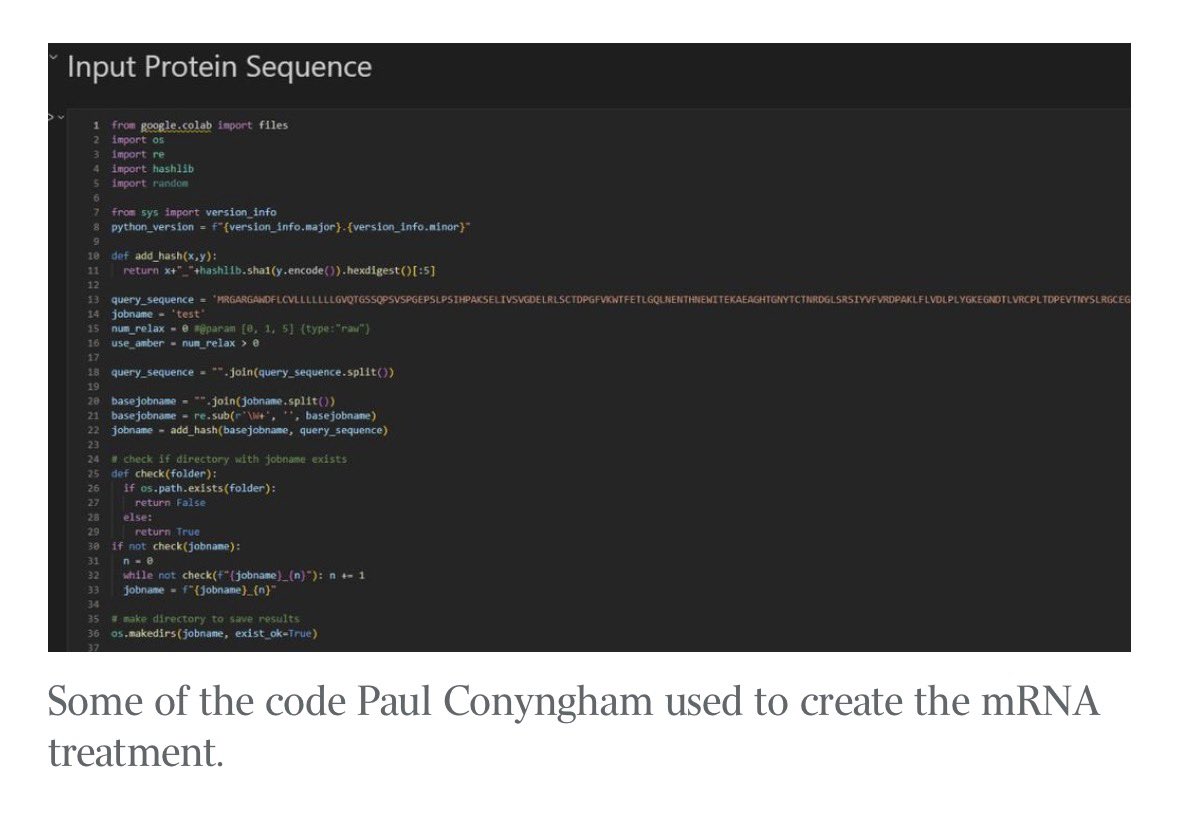
guy used AI to save his cancer-ridden dog by sequencing its DNA and creating a CUSTOM cure.
the tech behind this is fucking awesome (well done @demishassabis and the google team):
- used CHATGPT to sequence dogs DNA discovers mutations
- ran the mutations through Google’s Alphafold (AI protein sequencer) which CREATED A CUSTOM VACCINE TO TREAT THEM.
- treated dog and reduced tumour by 50% in WEEKS. dog is alive and well.
- this is the 1st time AI has been used to create a custom vaccine for a dog (and it worked)
- dude is now working on similar vaccines for humans using AI!
2026 is definitely the year we see AI change personalised medicine in a HUGE way
so sick
i can't believe nobody caught this.
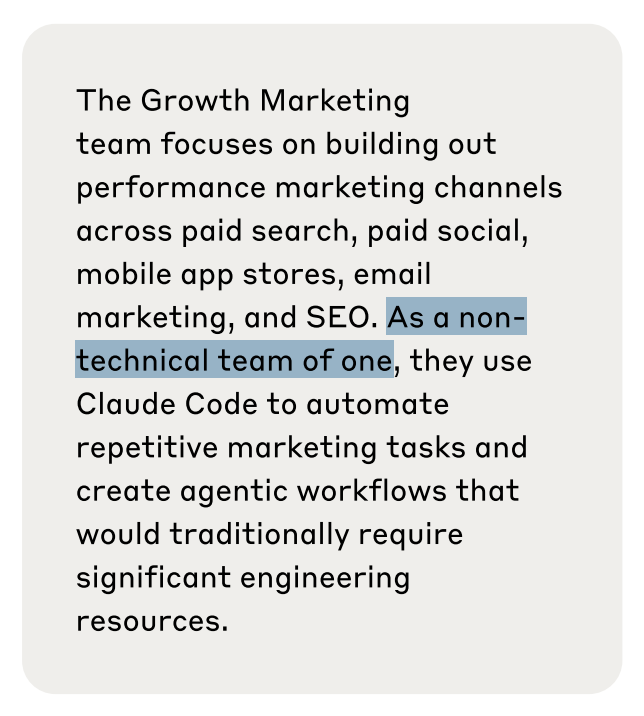
Anthropic's entire growth marketing team was just ONE PERSON
(for 10 months, confirmed)
a single non-technical person ran paid search, paid social, app stores, email marketing, and SEO for the $380B company behind claude
here's exactly how one human is doing the job of a full marketing team:
it starts with a CSV.
1. he exports all his existing ads from his ad platforms along with their performance metrics (click-through rates, conversions, spend, etc)
2. feeds the whole file into claude code
3. and tells it to find what's underperforming.
claude analyzes the data, flags the weak ads, and generates new copy variations on the spot
this is where he gets clever:
he then splits the work into 2 specialized sub-agents:
1. one that only writes headlines (capped at 30 characters)
2. and one that only writes descriptions (capped at 90 characters).
each agent is tuned to its specific constraint so the quality is way higher than cramming both into a single prompt
so now he's got hundreds of fresh headlines and descriptions.
but that's just the text.
he still needs the actual visual ad creative, the images and banners that go on facebook, google, etc.
so he built a figma plugin that:
1. takes all those new headlines and descriptions
2. finds the ad templates in his figma files
3. and automatically swaps the copy into each one.
up to 100 ready-to-publish ad variations generated at half a second per batch.
what used to take hours of duplicating frames and copy-pasting text by hand
so now the ads are live.
the next question is which ones are actually working.
for that he built an MCP server (basically a custom integration that lets claude talk directly to external tools) connected to the meta ads API.
so he can ask claude things like:
• "which ads had the best conversion rate this week"
• or "where am i wasting spend"
and get real answers from live campaign data without ever opening the meta ads dashboard
and the part that ties it all together and closes the loop:
he set up a memory system that logs every hypothesis and experiment result across ad iterations.
so when he goes back to step one and generates the next batch of variations...
claude automatically pulls in what worked and what didn't from all previous rounds.
the system literally gets smarter every cycle.
that kind of systematic experimentation across hundreds of ads would normally need a dedicated analytics person just to track
the numbers from the doc:
ad creation went from 2 hours to 15 minutes. 10x more creative output.
and he's now testing more variations across more channels than most full marketing teams
a $380 billion company.
and their entire growth marketing operation (not GTM) = just one person and claude code lol
truly unbelievable
Anthropic's Revealing Chart on AI's Impact on Jobs
Anthropic has unveiled a pivotal chart that underscores the chasm between AI's capabilities and its real-world application in the workforce.
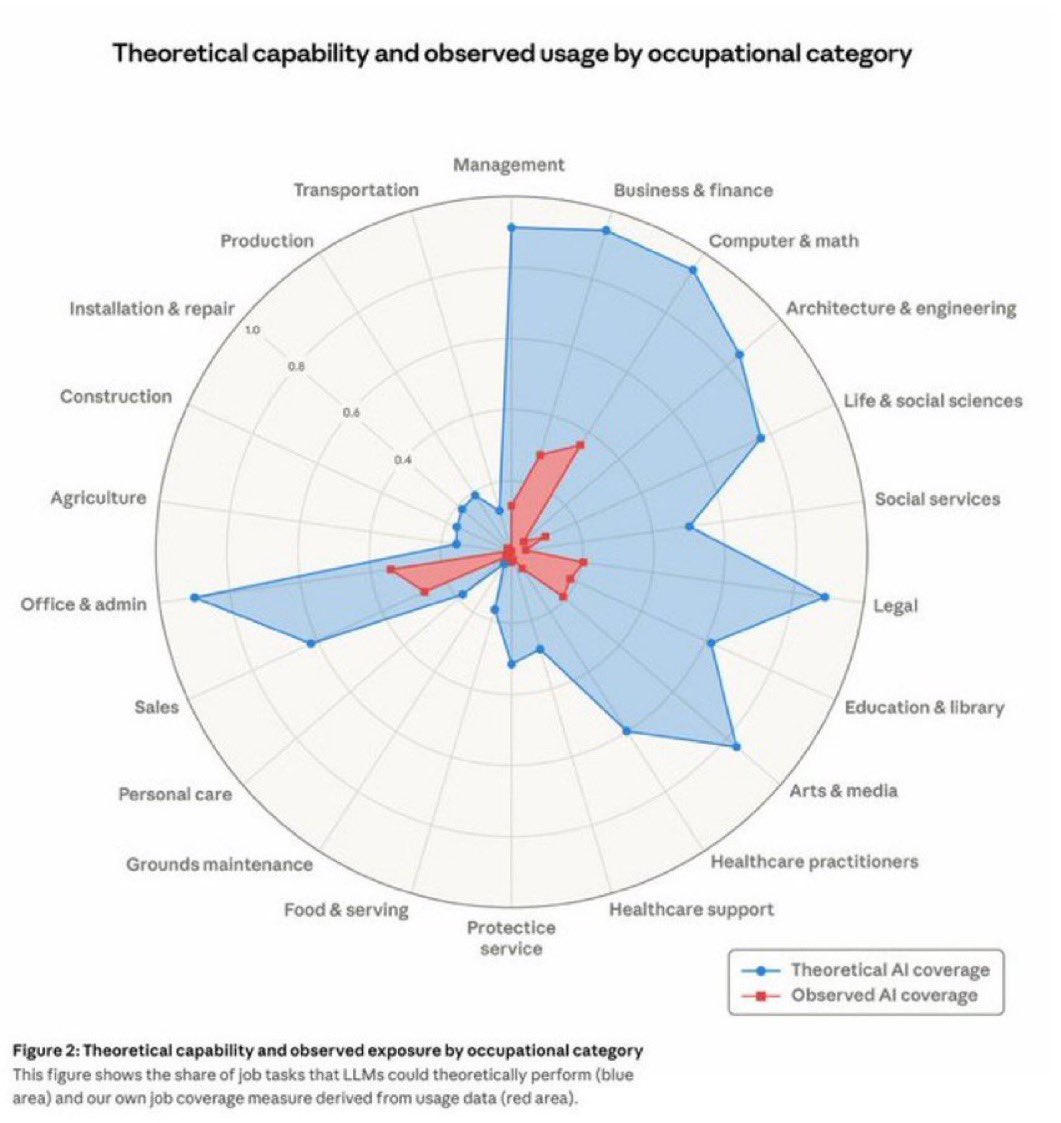
Derived from analyzing 2 million actual conversations with Claude, this radar chart, titled "Theoretical Capability and Observed Usage by Occupational Category," paints a stark picture of untapped automation potential across various job sectors.
At its core, the chart is a spider web diagram plotting occupational categories around a circular axis, with values ranging from 0 to 1.0 representing the share of job tasks.
The expansive blue area illustrates the theoretical coverage tasks that large language models (LLMs) like Claude could perform right now based on their inherent abilities. In contrast, the much smaller red area shows observed usage, drawn from real user interactions.
The visual disparity is immediate and profound: blue spikes outward significantly in fields like computer and math (reaching about 0.75), business and finance, and office administration, while red hugs close to the center, often below 0.2 across most categories.
This gap isn't just academic; it's a "career runway," as highlighted in discussions around the chart. For programmers, 75% of tasks are theoretically automatable, yet actual usage lags far behind.
Similar vulnerabilities appear in customer service, data entry, and financial analysis, roles traditionally seen as white-collar strongholds. Meanwhile, hands-on fields like construction, agriculture, and protective services show lower theoretical exposure, with blue areas dipping to around 0.1-0.3, suggesting AI's current limitations in physical or unpredictable environments.
Broader data amplifies the chart's message. As of early 2026, 49% of U.S. jobs expose at least 25% of tasks to AI, up from 36% a year prior. Yet, mass layoffs haven't materialized; unemployment in AI-vulnerable roles remains steady.
Instead, subtler shifts are underway: a 14% drop in hiring for 22-25-year-olds in exposed positions indicates companies are prioritizing experienced workers, shortening entry-level pathways for recent graduates.
The implications are clear: while AI's red footprint grows incrementally each month, the blue expanse signals accelerating change. College-educated, higher-earning professionals, once insulated are now most at risk, flipping the script on traditional labor disruptions.
Anthropic's chart isn't a doomsday prophecy but a wake-up call, urging workers and businesses to bridge the gap through adaptation, upskilling, and ethical integration of AI tools.
Please read the 5000 Days Series at https://t.co/tcKeuiQyql for answers on how you can thrive in the Interregnum.
I've spent 2.54 BILLION tokens perfecting OpenClaw.
The use cases I discovered have changed the way I live and work.
...and now I'm sharing them with the world.
Here are 21 use cases I use daily:
0:00 Intro
0:50 What is OpenClaw?
1:35 MD Files
2:14 Memory System
3:55 CRM System
7:19 Fathom Pipeline
9:18 Meeting to Action Items
10:46 Knowledge Base System
13:51 X Ingestion Pipeline
14:31 Business Advisory Council
16:13 Security Council
18:21 Social Media Tracking
19:18 Video Idea Pipeline
21:40 Daily Briefing Flow
22:23 Three Councils
22:57 Automation Schedule
24:15 Security Layers
26:09 Databases and Backups
28:00 Video/Image Gen
29:14 Self Updates
29:56 Usage & Cost Tracking
30:15 Prompt Engineering
31:15 Developer Infrastructure
32:06 Food Journal
Scoop: Dentsu and WPP have pulled back from The Trade Desk’s most closely-watched initiative, OpenPath, citing concerns over transparency, control and undisclosed costs.
The shift signals mounting pressure on the adtech darling’s key supply-chain bets.
https://t.co/TzCUIdGQCU
👋 We’re proud to share that Cortex Code CLI is now generally available! Cortex Code (lovingly called Coco) is the Snowflake-native AI coding agent that turns complex data workflows into simple interactions—all in natural language.
Cortex Code is deeply aware of your Snowflake environment whether you’re using it in Snowsight or in your developer environment via CLI. This means Snowflake expertise becomes an always-on capability of the platform for everyone—from technical experts to non-technical teams.
Get the full details: https://t.co/aliySgToub