We are Zimbabwean based agricultural company that manufactures and supplies agricultural inputs and services, providing solutions for the agricultural industry.
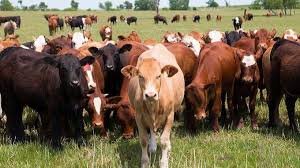
From 60M litres to 115M litres in 2025,our dairy sector is transforming,driven by private sector growth,value addition & global market integration. This strategy is more than production; it’s about competitiveness,sustainability & food sovereignty,propelling us toward Vision2030
This Easter, Maga Agri celebrates the season of hope, renewal, and new beginnings. 🌱🐣
May this sacred time bring growth to our farmers, strength to our partnerships, and abundance in every harvest ahead.
Wishing you all a blessed and joyful Easter.
#HappyEaster#MagaAgri
Don’t chase trends — cultivate GREEN GOLD.
Organic turmeric is building Africa’s next generation of agricultural millionaires.
#GreenGold#AgriBusiness#MagaAgri
🎥 Honoured to be featured on @ZBCNewsOnline#GoodMorningZimbabwe discussing the upcoming Chipinge Agricultural Expo 2025! 🌾
📅 24–25 Oct | 📍 Chiriga VBU
🎯 Theme: “Driving Zimbabwe Agriculture from Field to Factory”
💪🇿🇼
Today, Maga Agri successfully conducted a Turmeric Training in Glendale! Participants learned about the economic opportunities in turmeric farming and its powerful health benefits for communities
Together, we’re building knowledge for healthier lives & stronger agri-businesses.
Yesterday we deployed drones in Chipinge on coffee & macadamia trees using Maga Fert Folia sprays!
✅ Precision application
✅ Reduced chemical waste
✅ Healthier trees & higher yields
✅ Eco-friendly & cost-efficient
Sustainable farming, powered by innovation. 🌍💧
#MagaAgri
My agro-tourism initiatives were highlighted at the recent Zimbabwe Agricultural Show, emphasizing the impact of my Agric4She programmes on food security and women's empowerment.
As Patron of Agric4She, I have brought awareness and working culture in our women to prevent problems caused by laziness, procrastination, rumour mongering, prostitution, GBV, child marriages and ubuntu/unhu cascading down to our children.
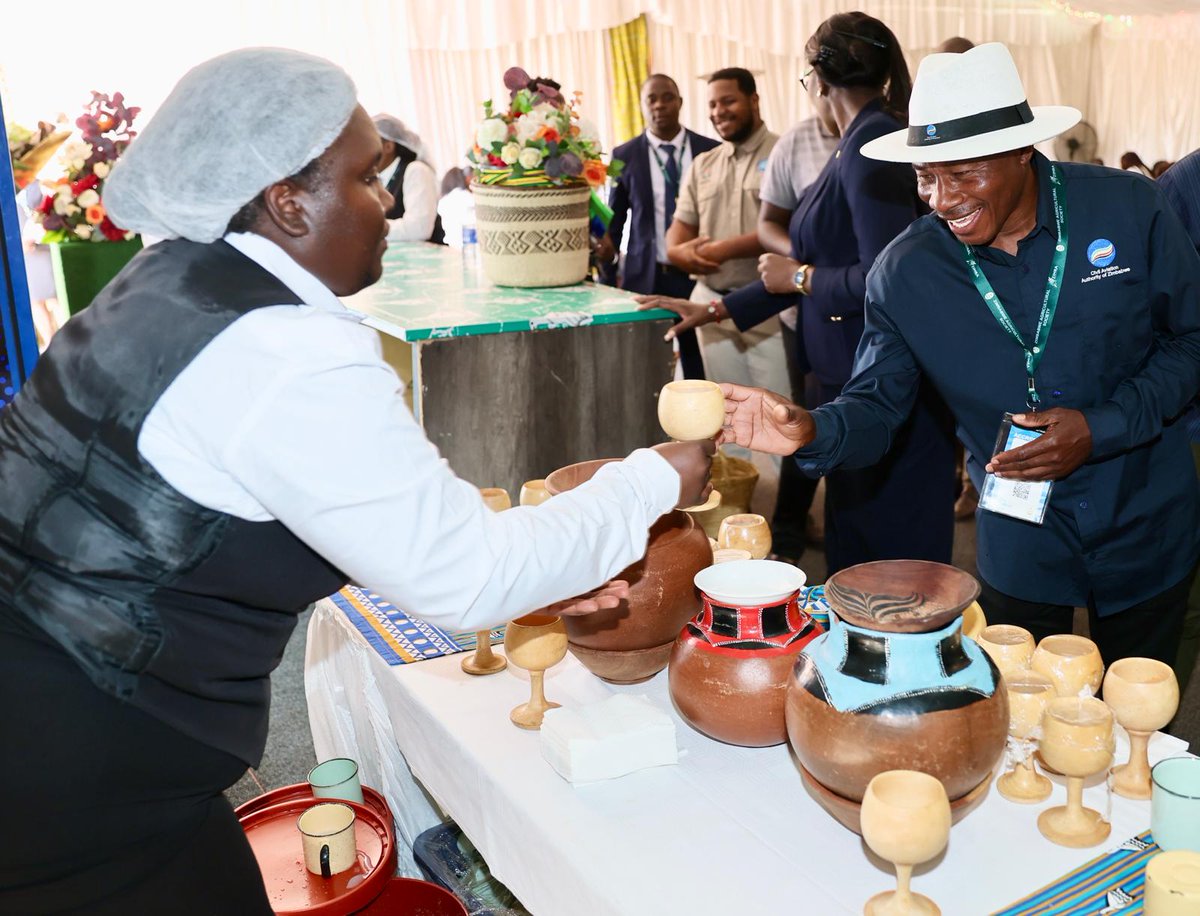
Visitors experienced authentic farm life with displays of high-quality crops and traditional foods at Amai Kitchen, showcasing dishes made from ingredients sourced from women farmers.
My Angel of Hope mobile hospital provided free health screenings for women, emphasizing the link between health and agriculture.
As tourism Patron, I emphasized the promotion of cultural tourism, thus preserving Zimbabwe's heritage. I indicated that tombstones should carry historical records, which include what the past generations consumed, valued, and enjoyed so that future generations can learn.
The Garden of Remembrance of our dear departed lineage gave visitors the opportunity to engage with Zimbabwe's cultural traditions.
These efforts aligned with the theme “Building Bridges: Connecting Agriculture, Industry, and Community,” thus strengthening community ties and promoting sustainable practices.
At Maga Agri, Food Security Everywhere, Everyday starts in the greenhouse 🌱. Practical exchanges between leadership and technical teams drive seedling health, nursery management, and scaling sustainable production — built on quality inputs, teamwork, and innovation.
It was an honor to represent Maga Agri at the Zimbabwe Agricultural Show 2025.
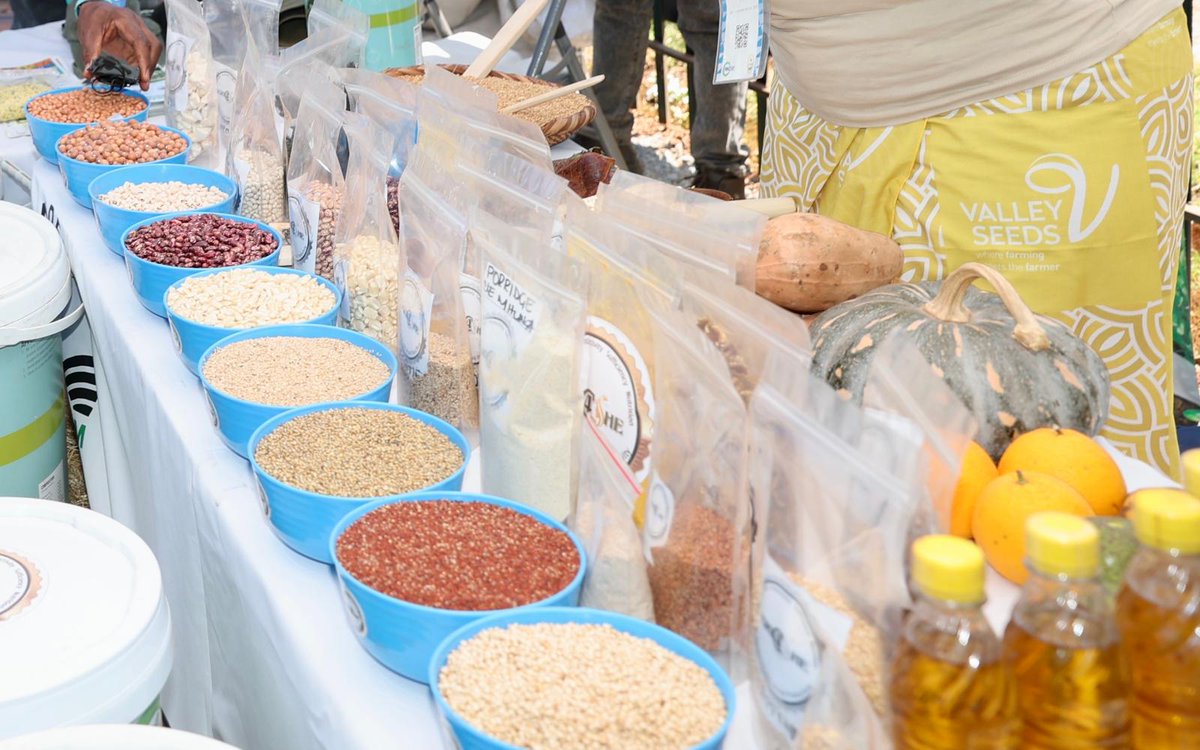
Engaging with stakeholders and showcasing our organic fertilizers, soil health solutions, and market-ready products reminded me why we do what we do: feeding the soil to feed the nation.
#ZAS2025
Our journey at Maga Agri is guided by a simple principle: healthy soils, healthy communities. Grateful for the opportunity to collaborate with government and development partners in shaping the future of sustainable farming.
🌾✨ Maga Agri at the Harare Agricultural Show 2025! ✨🌾
Join us from 25–30 August at the Ministry of Agriculture Stand as we showcase our organic fertilisers, garden solutions, and renewable energy innovations.
Let’s build sustainable agriculture together.
Private Ownership of Agricultural Land Through the Government's 'Title Redistribution' Initiative Is Constitutional
A troubling trend in Zimbabwean politics is the deepening tendency of some opinion makers—across the political spectrum—to assert conclusions without substantiating them. Typically, they rely on their perceived authority or self-importance, rather than building persuasive arguments. This approach undermines public discourse. Globally, effective opinion leaders convince audiences and policymakers by presenting reasoned analyses, supported by evidence, allowing audiences to evaluate the logic and facts, to draw their own independent conclusions.
What matters most is not the conclusion itself, but the arguments, analysis, and information provided to support it. In essence, arguments grounded in analysis are informative and valuable, while those based solely on mere assertions and conclusions amount to empty pontification.
A stark example of this "argument by conclusion" syndrome is the claim that "[the] Constitution as it currently stands does not allow for private ownership of agricultural land. Sections 72(4) and (5) of the Constitution expressly provide that all title deeds that existed in respect of agricultural land were cancelled and all agricultural land is now owned by the State. The Constitution does not allow for private ownership or the granting of title deeds in respect of such land."
This unsubstantiated assertion was made in response to the government's ongoing initiative to issue title deeds for redistributed agricultural land.
On Monday, President Emmerson Mnangagwa officiated the granting of titles to around 1,000 A1 farmers—many of them veterans of the liberation war—in Mazowe. This effort is led by the Land Tenure Technical Committee, chaired by Cde Kudakwashe Tagwirei.
The unsubstantiated claim appeared in a widely shared X post by @advocatemahere, which for full context, the post reads:
"Why is Govt dishing out monopoly title deeds? The Constitution as it currently stands does not allow for private ownership of agricultural land. Sections 72(4) and 72(5) of the Constitution expressly provide that all title deeds that existed in respect of agricultural land were cancelled and all agricultural land is now owned by the State. The Constitution does not allow for private ownership or the granting of title deeds in respect of such land. In order to lawfully issue title deeds, you will need first to amend the Constitution. This is law 101. Any pieces of paper being touted as title deeds for agricultural land are invalid and of no force or effect. No bank will take them as security and the holders don’t have the power to transfer the land lawfully as is the case with title deeds that are recognized by law. The Gazetted Lands (Consequential Provisions) Act only allows the State to issue permits, offer letters and leases for agricultural land - not title deeds. Why play such illegal psychological games with the unsuspecting public?"
This assertion is unfortunate, as it is misleading, factually incorrect, and reflects a fundamental misunderstanding of Zimbabwe's 2013 Constitution—particularly section 72 (on rights to agricultural land) in the Declaration of Rights (Chapter 4), and Chapter 16 (dedicated to agricultural land), including sections 289, 293, 296, and 297, which directly relate to section 72.
Historical Context: Land Reform and the 2013 Constitution
To dismiss the government's title deeds programme as unconstitutional ignores Zimbabwe's history. One would have to overlook the Third Chimurenga—the historic land reclamation efforts that restored the land rights of the indigenous population—to suggest that its leaders did not anticipate the need for subsequent agrarian reforms.
During the drafting of the 2013 Constitution, especially leading up to the March 2013 referendum, sections 72 and Chapter 16 underwent rigorous scrutiny. Zanu-PF's COPAC structures and Politburo debated these provisions clause by clause over and over again, often late into the night, redrafting them to ensure they balanced historical redress with future flexibility.
Key Constitutional Provisions
A proper assessment of whether the Constitution permits private ownership or title deeds for agricultural land cannot focus solely on section 72(4) and (5). It must begin with comparing section 72(4) and section 290(1), which are identical:
Section 72(4): All agricultural land which— (a) was itemised in Schedule 7 to the former Constitution; or (b) before the effective date, was identified in terms of section 16B(2)(a)(ii) or (iii) of the former Constitution; continues to be vested in the State, and no compensation is payable in respect of its acquisition except for improvements effected on it before its acquisition.
Section 290(1): All agricultural land which— (a) was itemised in Schedule 7 to the former Constitution; or (b) before the effective date, was identified in terms of section 16B(2) (a)(ii) or (iii) of the former Constitution; continues to be vested in the State.
This duplication is intentional and common in the drafting of constitutions. For example, South Africa's 1996 Constitution repeats property rights provisions in its Bill of Rights and land reform sections to ensure consistency amid historical inequities.
In Zimbabwe, the verbatim similarity between sections 72(4) and 290(1) reinforces the irreversibility of past acquisitions, addressing colonial dispossession and the Fast-Track Land Reform Programme (FTLRP) of the early 2000s, while clarifying contexts: rights protection in Chapter 4 versus operational management in Chapter 16.
Section 72(4), within the property rights framework (outlined in section 71), limits compensation to improvements and vests land in the State to protect against claims by former (white) owners. This entrenches reforms as a constitutional imperative, aligned with section 289's six principles of equitable access.
Notably, section 289(b) states: "subject to section 72, every Zimbabwean citizen has a right to acquire, hold, occupy, use, transfer, hypothecate, lease or dispose of agricultural land regardless of his or her race or colour."
Section 290(1), as a transitional provision, ensures State title continuity after August 22, 2013. Subsection (2) addresses inconsistencies in prior notices or deeds, preserving the State's title despite errors.
This structure resolves historical tensions—colonial land theft and post-independence reforms—by prioritising redress while enabling stability. Detractors who claim a ban on private ownership misinterpret "vesting" as perpetual State monopoly, ignoring provisions for flexible implementation, such as alienation under section 293.
Section 293 states in full:
293 Alienation of agricultural land by State
(1) The State may alienate for value any agricultural land vested in it, whether through the transfer of ownership to any other person or through the grant of a lease or other right of occupation or use, but any such alienation must be in accordance with the principles specified in section 289.
(2) The State may not alienate more than one piece of agricultural land to the same person and his or her dependants.
(3) An Act of Parliament must prescribe procedures for the alienation and allocation of agricultural land by the State, and any such law must be consistent with the principles specified in section 289.
Clearly, section 293(1) authorizes the State to alienate vested land "through the transfer of ownership," without needing constitutional amendments.
Nothing in section 72(4) or (5) prohibits alienation to Zimbabweans.
Section 72(4) affirms ‘State vesting’ post-acquisition, limiting compensation to improvements to prevent FTLRP reversals. Section 72(5) requires registering the State's title and cancelling prior deeds—a procedural step to eliminate competing claims. These secure initial State control but allow subsequent transfers via section 293, subject to legislation and equitable principles.
The Land Commission Act [Chapter 20:29], enacted in February 2018 under sections 296 and 297 (which, instructively are in Chapter 16 on agricultural land), operationalizes this.
Section 17 of the Act provides:
(1) The Minister may, after consultation with the Commission and with the approval of the President, lease, sell or otherwise dispose of State land for such purposes and subject to such conditions as he or she may determine.
(2) Land may be leased or alienated to a single individual, a single corporate body, a single household or to two or more persons jointly.
Section 23 adds: "The Minister may, subject to section 17, issue offer letters, leases, deeds of grant and permits in respect of Gazetted or other State land."
Thus, sections 289, 290, and 293 (read with section 72) and the Land Commission Act explicitly permit private ownership of gazetted land, including title deeds. This is an open and shut matter. No question about it.
Practical Implications
Recent initiatives, like the 2024–2025 Presidential Title Deeds Programme, exemplify this by issuing freehold titles to resettled farmers, improving bankability and productivity without violation. The claims of detractors to the contrary stem from equating ‘vesting’ with ‘inalienability’, overlooking the Constitution's clear and holistic design.
Zimbabweans are indeed entitled to acquire title deeds to gazetted agricultural land under section 289(b), subject to section 72. Sections 72(4) and (5) vest land initially to extinguish prior claims, constitutionalizing FTLRP outcomes and enabling resettlement without full compensation liability (only for improvements). This "vesting" protects reforms while allowing alienations to promote equity and productivity.
Detractors confuse this safeguard with a ban on private ownership of gazetted agricultural land, but the Constitution envisions transfers to citizens—via section 293 and the Land Commission Act—to enhance farmer viability. The program converts leases to titles for A1 and A2 farmers, enabling loans with safeguards (e.g., indigenous-only transfers) to prevent reversal. It aligns with section 289(b)'s race-neutral rights, prioritising Black Zimbabweans to redress historical disparities, without amendments.
Sections 72(4) and (5) shield State title from challenges (e.g., the misguided and nefarious 2008 SADC Tribunal ruling) while facilitating redistribution. They are not barriers but foundations for equitable reform, supporting programs like this to boost tenure security and prosperity. Legislation like SI 76 of 2025 (for digital deeds) bolsters legality.
No court has invalidated the initiative; ultimately, the law is what courts uphold, not what detractors pontificate.
Moving back to Zimbabwe was the best decision of my life. Nothing beats building sustainable agriculture and investing in our soil, our people, and our future. 🌱🇿🇼 #AgriBusiness#ZimbabweRising
Maga Agri is proud to align with this vision. Integrated farming is a proven pathway to efficient resource use, climate resilience, and enhanced food security for all Zimbabwean communities.
Integrated farming thrives by combining crops, livestock, aquaculture, and renewable energy into a single, efficient system. This holistic approach not only maximizes resource use but also builds resilience, diversifies income, and reduces environmental impact.
#FoodSecurity
Integrated farming thrives by combining crops, livestock, aquaculture, and renewable energy into a single, efficient system. This holistic approach not only maximizes resource use but also builds resilience, diversifies income, and reduces environmental impact.
#FoodSecurity
💧 Grow smarter with MagaAgri Drip Irrigation 🌱
✅ Save water & labor
✅ Reduce fertilizer loss
✅ Fits any field shape
✅ Safe with recycled water
✅ Healthy soil, less erosion
✅ Works on all soil types
✅ Even water distribution
✅ Lower energy costs
#MagaAgri
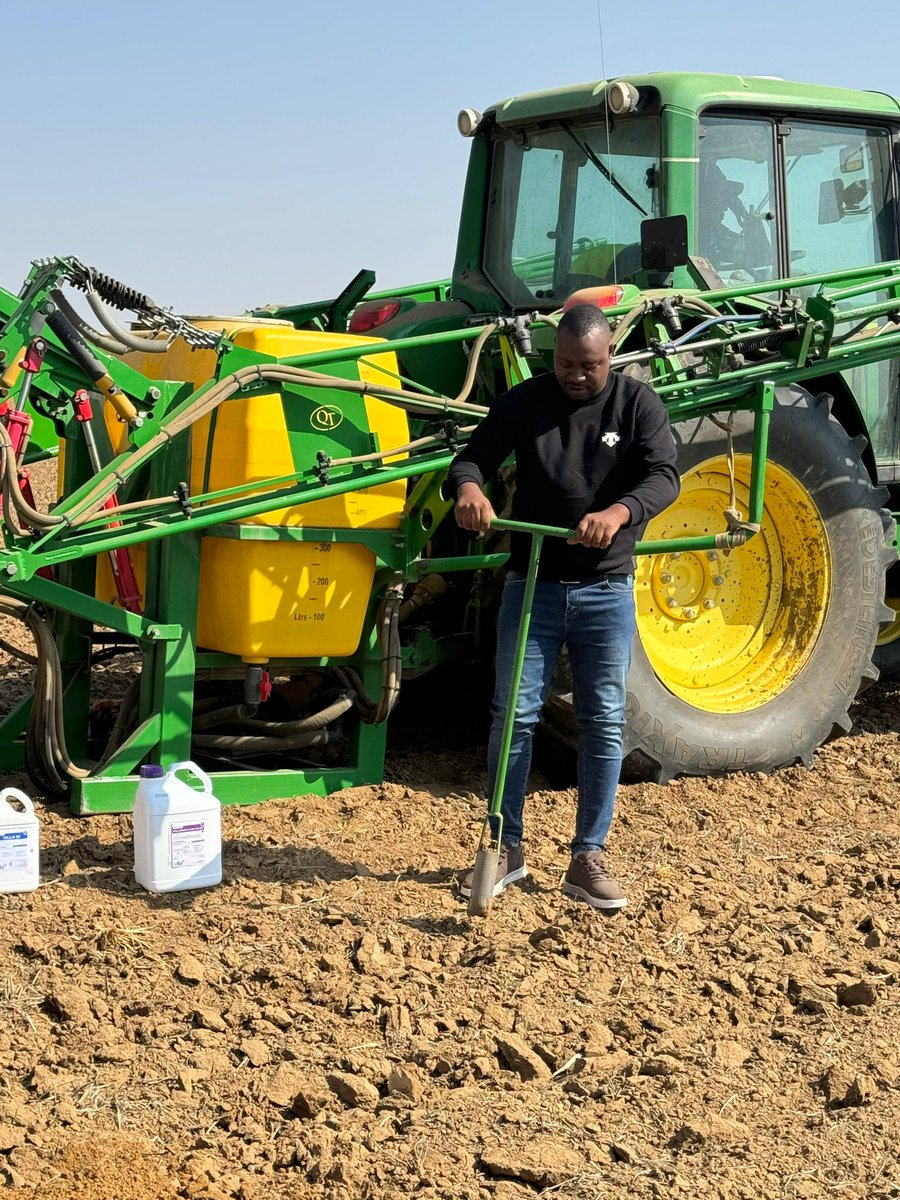
Farming starts with the soil beneath your feet. Soil testing helps you know exactly what your land needs — no guesswork, just healthier crops and better harvests.
Strong soil, strong yields, strong farmer.
#SoilTesting#SoilHealth#FarmingSmart