Years of collaboration & dedication from incredible colleagues made this possible! It highlights crucial steps in safeguarding farmer interests from exploitation by the tobacco industry. @JacobKibwage @RLencucha @Tobacconomics @IILAinfo@acsglobal@IDRC_CRDI@MOH_Kenya @kilimoKE
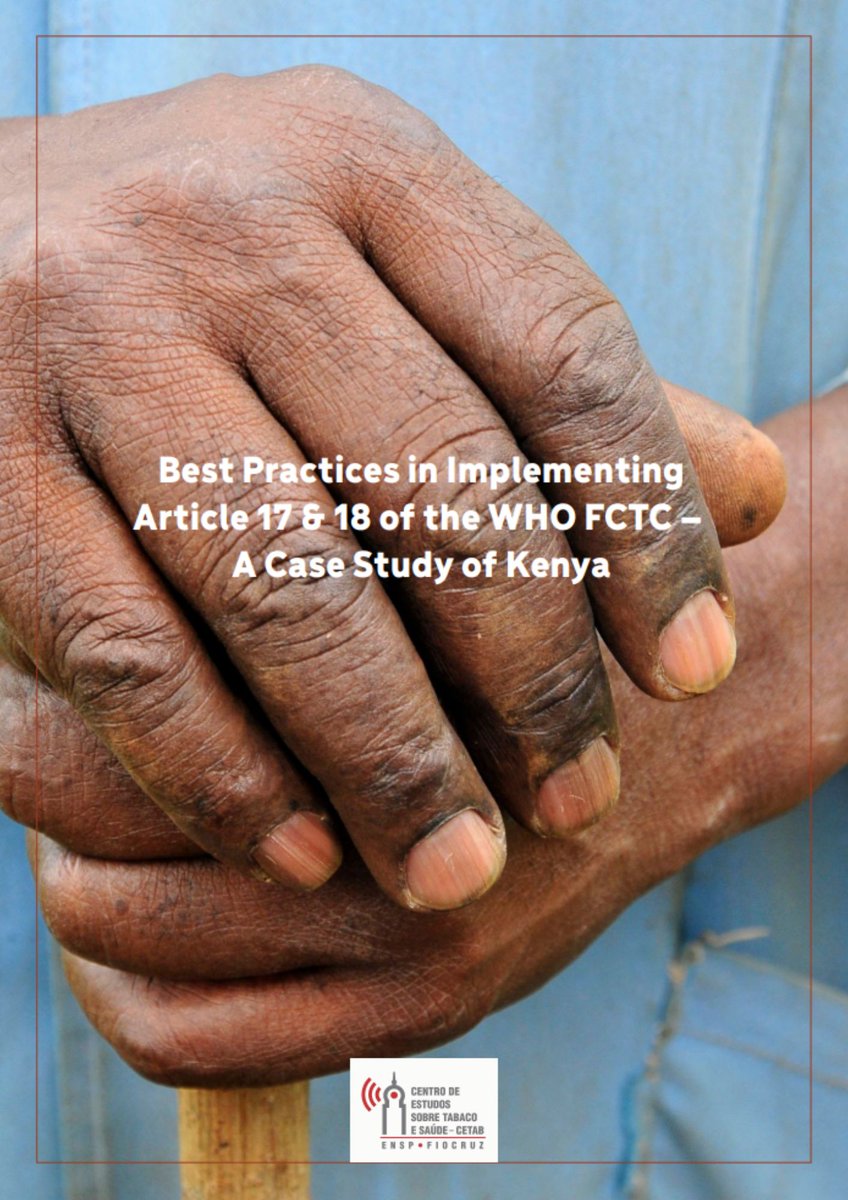
📢New report alert!
@CETAB_Fiocruz , where our Knowledge Hub is based, has published a report by @magatipeter on best practices in Kenya regarding Articles 17 and 18 of the #WHOFCTC.
+
First, money. Take the 11000 acre Ruiru holding. The Northlands City development occupies 5,000 acres. Take a conservative figure of Sh50m per acre. That’s a tidy Sh250b monetization of land for which there is no record of purchase.
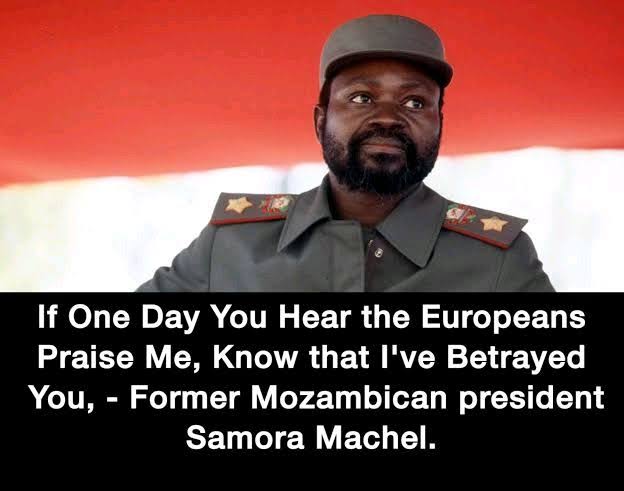
The nation that arranged the poisoning of Toussaint Louverture of St Domingue ( Haïti) for demanding the end of slavery and the liberation of his people in 1803; that assassinated Ruben Um Nyobe, the Cameroonian independence leader hunted down and killed in 1958 by French forces before independence was even formally granted, that had Felix Moumie of Cameroon, poisoned in Geneva by his intelligence in 1960, that orchestrated the assassination of Sylvanus Olympio of Togo by soldiers of his colonial army in 1963, that armed and protected the man who murdered Thomas Sankara in 1987 and sheltered him for decades, that supported the destabilisation that led to the overthrow and death of Modibo Keita of Mali, that printed millions of fake currency to destroy the Guinean Franc after 8 failed assassination attempts at Sekou Toure because he stood his grounds and demanded independence, that stood behind the forces that removed and destroyed Patrice Lumumba, coordinating with Belgium and the CIA to ensure Congo’s most visionary independence leader did not survive his own government, that massacred at least 100,000 Malagasy people, 250,000 Cameroonians, 1.2 million Algerians between 1955 and 1962 simply because they demanded their independence.
The president of that nation, less than half a century after committing such atrocities stood before a room full of African heads of state in 2026 and declared itself the true Pan-Africanist. And not one of them stood up. Not one said: you cannot use that word: not here, not with that history on this continent. Not a single one had the dignity to say what any person with an elementary knowledge of what Pan-Africanism means and what France has done to those who practiced it would have said immediately and without hesitation.
It is the equivalent of a Nazi leader standing before a Jewish assembly and announcing that Germany is the true defender of the Jewish people. There are words that carry such historical mass that no political convenience, no diplomatic ambition, no funding arrangement justifies allowing them to be stolen and worn by those who spent generations trying to destroy what those words represent; Pan-Africanism is one of those words. And it was surrendered in that room without a fight, by men who were supposed to be there representing us.
France is not even a formidable power anymore. It cannot impose its will on its own European neighbourhood. Its economy is strained, its global influence is null, its African military presence has been expelled. It intimidates no one who has chosen not to be intimidated. And yet these boneless, prideless, senseless humans we call Africa leaders sat and applauded this humiliation ritual.
What breaks me is knowing that every generation, without fail, produces its quota of leaders who will trade the dignity of their people for a photograph with a western head of state, for a seat at a table that was never set for them. They dress it up as pragmatism and call it diplomacy. But it is the oldest and most contemptible transaction in the postcolonial playbook: the surrender of collective dignity for personal visibility.
And these are days, I will not pretend otherwise, where I genuinely wonder if we will ever be free. Not because the struggle is not real or the people are not capable, but because freedom requires leaders at the decisive moment, and every decisive moment seems to find us represented by spineless, glory-hunting, photograph-chasing men who would sell the graves of their own predecessors for a handshake with those that tried to erase their people. Every generation inherits the fight for freedom but also produces the cowards who auction it.
@shikshaarora_@Ayieko__ Sik moja utaelewa kitu kimoja, mitandao ya kijamii ni kama soko. Kuna wachuuzi, wateja, wezi, wendawazimu, wapita njia n.k. Wewe mwenyewe kwa hiari yako, utachagua wale utaongea nao. Lakini kama sokoni huongei na wendawazimu, mbona mitandaoni ujisumbue nao?
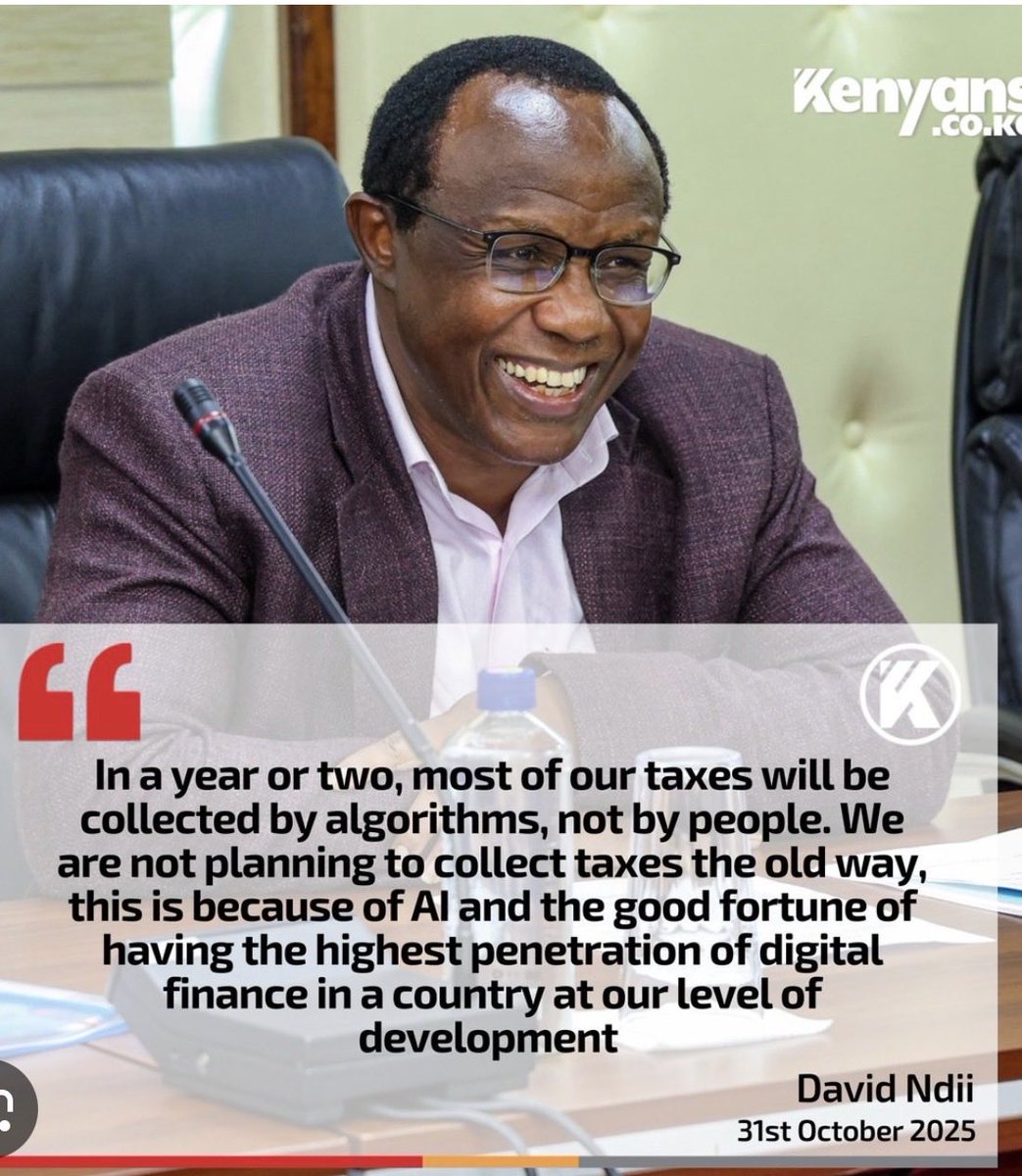
The civil service implements existing policies. Our work is to change policy. Its not their job to think outside the box. They are the box. Why did the Treasury mandarins or KRA not come up with reforms like this before?
USD $250 + vat for a desk per month. Extra cost to book a meeting room and challenges in having private calls. They should review their understanding of the target market and competition (cheaper to rent space nearby ( renting at Kofisi Karen never made sense)
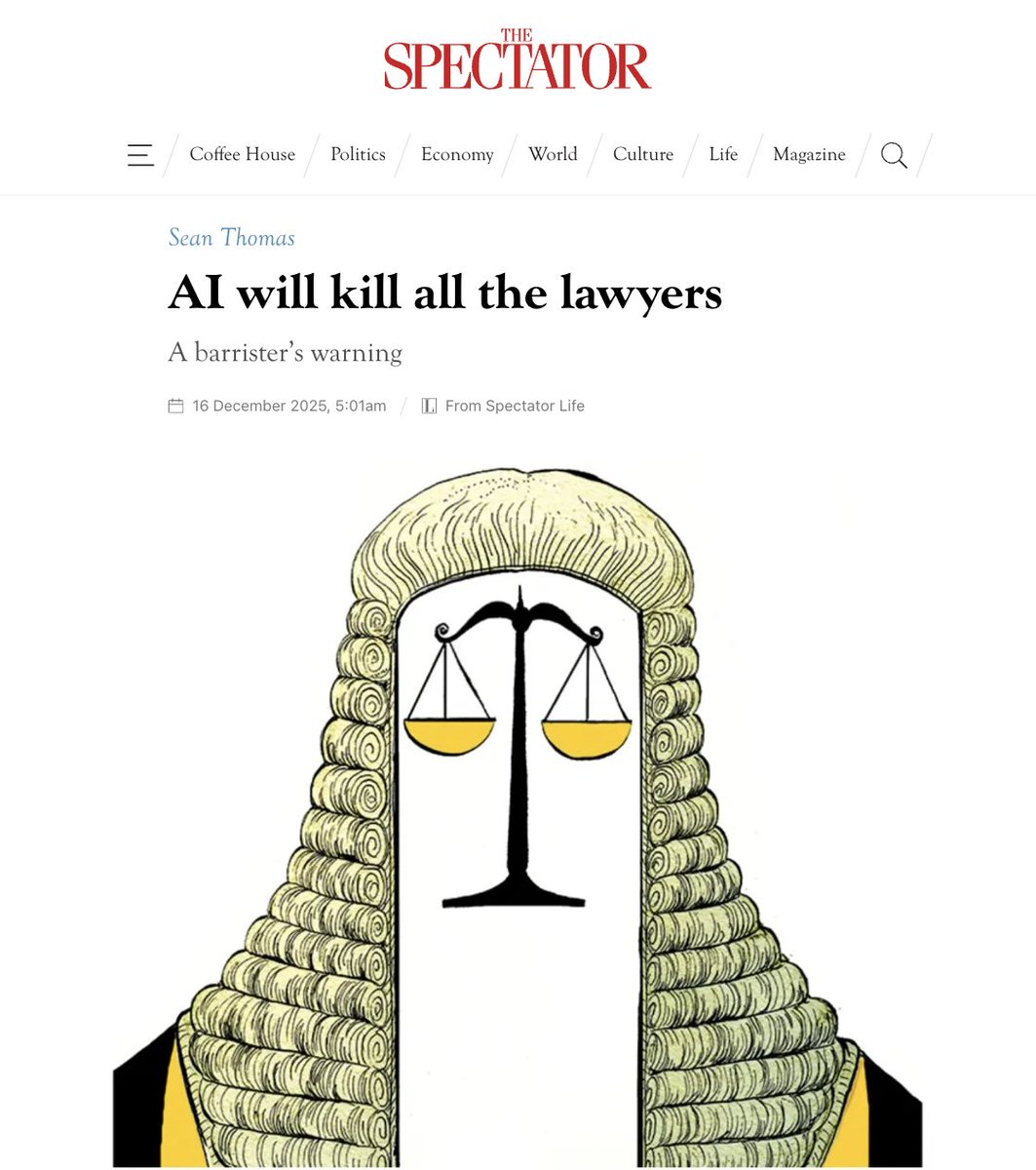
This Spectator piece reads like gossip until you realize it’s actually a warning.
A senior English barrister takes a real appeal he spent a day and a half writing, feeds it to an AI model, and gets back something better in 30 seconds. It matched the standard of the very best barristers, and it did it instantly, for pennies.
That’s the moment the illusion breaks.
Law has always sold itself as irreplaceable because it’s complex, nuanced, and human. But most of the value in modern legal work isn’t wisdom. It’s pattern recognition, structure, precedent matching, argument assembly, and risk framing. That’s exactly the territory AI eats first.
The scary part isn’t that AI can draft contracts or scan case law. That’s already obvious. The scary part is that once the output quality crosses a threshold, the pricing logic collapses. Clients don’t care how many years it took you to become a barrister if the document they receive is objectively worse than something generated in seconds.
So the profession reaches for comfort stories.
“AI is just a tool.”
“There will always be a human in the loop.”
“Judges and clients want a human face.”
Those are emotional arguments, not economic ones. And economics always wins.
The barrister in the piece understands something most of his peers don’t want to admit. Law isn’t protected by status or tradition. It’s protected by cost and friction. Once those disappear, so does the moat.
The first to go are process lawyers. Then drafting specialists. Then advisory roles with no client relationship. Eventually people start asking why they’re paying six figures for a human to read out arguments an AI already wrote better.
What makes this explosive isn’t just unemployment. It’s who lawyers are in society. They sit at the top of institutions. They write rules. They shape policy. They’re used to being indispensable. Replacing them doesn’t just disrupt jobs. It destabilizes power.
That’s why the resistance will be fierce. There will be calls to ban AI. To regulate it out of courtrooms. To slow it down. But you can’t regulate away a cost advantage that large.
The most honest line in the whole piece is the advice to his niece. Don’t take on decades of debt for a career whose core value has already been automated. Not in twenty years. Now.
This isn’t anti law. It’s anti denial.
AI isn’t coming for lawyers because it hates them. It’s coming because much of what they do turned out to be legible, compressible, and cheap.
And once that happens, respect doesn’t save you. Only reality does.
Allegedly under pressure from the U.S., the Dutch govt has seized Nexperia, a Chinese-owned semiconductor manufacturer. What an era we are living in. In the 1990s, when Africa began its wave of post–Cold War economic reforms and liberalisation, the West lectured African nations about its past folly of nationalising or seizing foreign-owned companies. Now the same West — once the loudest champion of the free market — is grabbing (Communist) China’s firms. Who would have imagined?
Raila Odinga was like the elephant in a dark room.Each of us touched a part of him;a leg and thought him a tree, a side and thought him a wall, a trunk and thought him a hose, a tail and thought him a whip.Only now, with the light on, and him resting with the ancestors do we see the enormity of who he was — good, flawed, immense, divisive and deliberative. An indelible part of 🇰🇪 journey.
Condolences to his family and supporters. One doesn't have to agree with him, especially in recent years, but Raila Odinga was arguably the most consequential political figure in Kenya for three decades. His passing marks the end of an era in Kenyan politics. #Railaodinga
The Nobel Prize in Economics is characterised by extreme institutional concentration: almost every prizewinner has passed through an economics department at an elite US university.
Sure, these universities attract top talent globally.
But this institutional concentration of prizewinners is part and parcel of a broader set of problems in the field of economics: elite dominance, intellectual gatekeeping, the dominance of Western perspectives, and disciplinary homogeneity.
These dynamics have been well documented. Here are three papers and one book that examine them:
Fourcade, Ollion, and Algan (2015), “The Superiority of Economists”: Economics is a uniquely hierarchical and self-reinforcing field, where elite training pipelines dominate publication and influence.
Baccini and Re (2023), “Who Are the Gatekeepers of Economics?”: A small group of elite institutions and scholars controls the editorial machinery, reinforcing disciplinary homogeneity.
Freeman, Xie, Zhang, and Zhou (2024), “High and Rising Institutional Concentration of Award-Winning Economists”: Economics has the highest and growing institutional concentration among elite academics across all disciplines.
Dutt, Alves, Kesar, and Kvangraven (2025), “Decolonizing Economics: An Introduction”: Mainstream economics is rooted in Eurocentric, colonial assumptions.
BREAKING NEWS
The Royal Swedish Academy of Sciences has decided to award the 2025 Sveriges Riksbank Prize in Economic Sciences in Memory of Alfred Nobel to Joel Mokyr, Philippe Aghion and Peter Howitt “for having explained innovation-driven economic growth” with one half to Mokyr “for having identified the prerequisites for sustained growth through technological progress” and the other half jointly to Aghion and Howitt “for the theory of sustained growth through creative destruction.”
#NobelPrize
Tu Youyou became the first mainland Chinese scientist to be awarded a #NobelPrize in a scientific field - for discovering artemisinin, a malaria cure that’s saved millions. Today we reveal the 2025 medicine laureate. Stay tuned.
The African Union has joined the call to replace the outdated 16th-century Mercator map which distorts Africa’s true size, with the Equal Earth projection, a map that shows the continent as it really is: vast, powerful, and central to our world. #CorrectTheMap
💬 “It might seem to be just a map, but in reality, it is not,” says AU Deputy Chairperson H.E. @DCP_Haddadi in an article with Reuters
Led by @africanofilter and @SpeakUpAfrica1 , this campaign urges governments, schools, and international organisations to adopt maps that reflect Africa’s true scale and restore balance to how our world is viewed.
📖 Read the full story here:https://t.co/zWooXteHgX