Elon Musk's first wife once described what it's like to watch him fail.
She said he doesn't react the way normal people react. When a rocket explodes, most people in the room go silent. Some cry. Some start calculating the financial damage.
Musk pulls out his phone and starts making calls. Not emotional calls. Engineering calls. "What failed. When can we fix it. When's the next launch." His voice doesn't change. His face doesn't change. The rocket that just cost $60 million is already in the past. The next one is all that exists.
She said it was the most unsettling thing she'd ever witnessed. Not because he was cold. Because he genuinely wasn't affected. The failure didn't register as failure. It registered as data. An experiment that produced results. Results that inform the next experiment.
This is why he wins. Not because he doesn't fail. He fails more spectacularly than anyone in history. He wins because failure occupies zero psychological space. It enters as data and exits as action.
Most people lose not because they fail but because they spend weeks processing the failure before acting again. Musk spends zero seconds. The gap between failure and next attempt is a phone call.
🚨Mel Gibson: «Cada mañana, al despertar, rezo para NO engañarme. Porque... la mente es un lugar muy peculiar. Siempre he dicho que eres responsable de tus segundos pensamientos y de tus primeras acciones. No de tu primer pensamiento».
#31Ene#Venezuela
Un profesor venezolano le dice a sus alumnos que ellos “que son la generación que no va a tener que migrar, que son el futuro de un país que está bendecido”
El presidente Trump es mucho más liberal y menos conservador que María Corina en los dos elementos que planteas.
¿Es el presidente Trump también un liberprogre de la escuela de Gloria Álvarez?
María Corina Is the Key.
Everyone wants to invest in Venezuela, but first, there must be a legal framework, political stability, and trust. That was the consensus among most oil executives at their meeting with Trump. It’s how every business leader thinks —whether in Colombia, Mexico, or Chile— when looking at Venezuela today. They want to invest, but only if the essence of the Venezuelan system changes.
Marco Rubio has laid out a promising and encouraging three-phase plan for Venezuela: stability, recovery, and a transition to democracy. The lingering concern is that for investment to truly take place, the third step must somehow materialize.
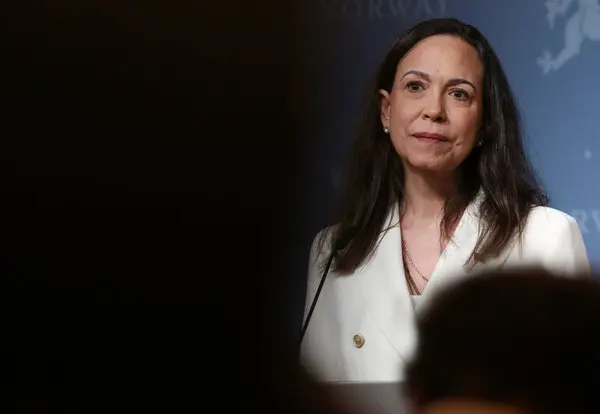
The key is María Corina Machado. Business leaders have been reaching out to her for months because she is the one who inspires confidence. Major global companies —including Norwegian and Argentine energy firms— see her as the only figure capable of providing the reassurance and trust needed to take the risk of investing in Venezuela.
It’s not that these executives are unwilling to take risks amid the current uncertainty. It’s that with Diosdado Cabello still wielding power, the regime’s criminal structure appears largely intact. Another major question looms: Donald Trump inspires confidence; the US administration of Venezuela is encouraging. But what happens if, in three years, the administration changes and everything unravels? What guarantees are there?
If someone is going to invest, they are thinking in terms of decades. And that is something only a democratic transition —one led by María Corina Machado and overseen through a U.S.-backed process— can provide.
@FabianTerr3 @ADICCIONLARRY Deja de ser tan ignorante y bruto. Sabes cuántos muertos tenemos entre 2014 y 2017? Ten respeto por la memoria de esa gente. Más los miles presos políticos que han sido torturados. Dónde estaba el puto derecho internacional? Por supuesto que celebramos que resuelvan esta mierda.
@MiguelScala@epanadiplosi El indigenismo y también que no tienen un historial tan amplio como Argentina, Brasil y Venezuela en recibir inmigrantes. Han recibido gente, pero no como nosotros. Son tribales y se sienten invadidos.