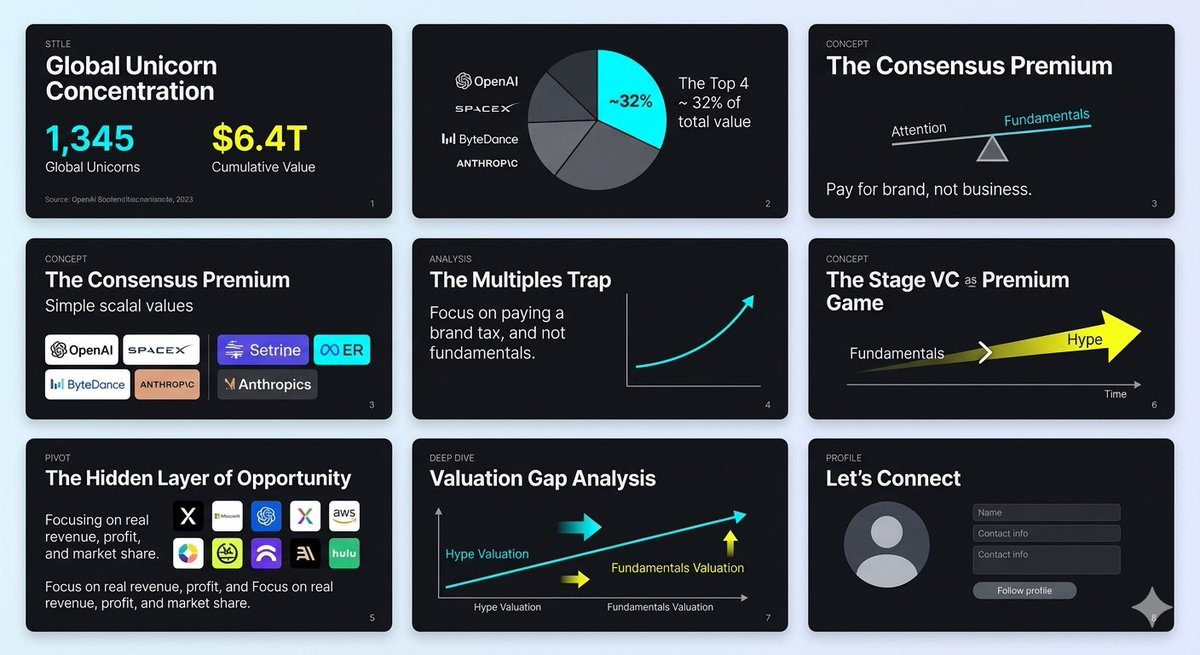
The best late-stage opportunities are usually not the most visible ones.
There are 1,345 unicorns in the CB Insights tracker, but value is concentrated in a few names at the top. That leaves a much bigger set of strong businesses that the market hasn’t crowded into yet.
Alpha is in the "Outliers". This chart reflects a fascinating "second wave" of AI adoption. Yet, what’s interesting here is that private markets saw it coming before anyone else. That’s what makes the strength of the secondary market, not the discounts.
Alpha is in the "Outliers". This chart reflects a fascinating "second wave" of AI adoption. Yet, what’s interesting here is that private markets saw it coming before anyone else. That’s what makes the strength of the secondary market, not the discounts.
For fifty years, we were told the computer would set us free. Looking back, I’m not sure it did. It may have quietly enslaved us instead. But rejoice and stand up. Things are about to change: The Silicon Genie is Back in the Bottle
https://t.co/4ypbaZmie9
Employee liquidity isn’t a perk. It’s a retention mechanism.
Leading companies now use structured tenders to recycle capital internally and keep top talent.
In venture-backed tech, liquidity is becoming HR policy.
https://t.co/iM64frQgaX
As a VC, I used to think waiting for a bigger exit was a sign of conviction.
It’s often a sign of fear.
Founders delay liquidity because they’re afraid of what it says about them: that cashing out means “giving up.”
But liquidity isn’t surrender. It’s strategic continuity.
The way institutional investors access tech investments has drastically changed.
Ten years ago, if you wanted exposure to innovation, you had to back a VC fund.
Today, you can buy pre-IPO shares directly on the secondary market.
The gatekeepers didn’t fall they multiplied.
𝐘𝐨𝐮 𝐭𝐡𝐨𝐮𝐠𝐡𝐭 𝐖𝐚𝐥𝐥 𝐒𝐭𝐫𝐞𝐞𝐭 𝐰𝐚𝐬 𝐞𝐧𝐭𝐞𝐫𝐢𝐧𝐠 𝐯𝐞𝐧𝐭𝐮𝐫𝐞? 𝐈𝐭’𝐬 𝐫𝐞𝐛𝐮𝐢𝐥𝐝𝐢𝐧𝐠 𝐭𝐡𝐞 𝐬𝐲𝐬𝐭𝐞𝐦 𝐛𝐞𝐧𝐞𝐚𝐭𝐡 𝐢𝐭.
It is assembling the Private-Markets Operating System through which venture, liquidity, and leverage will circulate.