Excellent post.
It's counter-intuitive to think that to get a more human-like feel to how memory might work in an AI agent you would limit it by enforcing it to stay within those 5 principles you've outlined here - for example temporal clustering or sentiment scoring/weights as proxy for emotional weighting. I say this because the instinct is to not impose any limitations, have as large a context window and flat embedded data, etc
It's true we have most of the tools or engineering analogs we need to at least 'mimic' the way human memory works in LLM based AI agents - unfortunately the top level 'controller' over these mechanisms would be primitive if/then logic or some kind of static identity structure that co-ordinates the processes to ensure they run according to the current task. Or is there some kind of high-level algorithm that could orchestrate these?
> the path forward isn't better embeddings or bigger context windows. it's looking inward.
Yeah, and I think, specifically, imposing some of the 'limitations' discussed above. This would be a great way to improve the current crop of LLM based AI 'companions' out there.
Great points. I would argue, though, that the culture of following celebrities and the various products created from celebrity worship (magazines, tv shows, media appearances) are driven by the industry to a) maintain relevance and engagement and b) sell adjacent products (tabloids, news, advertising, sponsorship)
There is incentive for the media industry conglomerates that own news, publication, and production studios to keep this symbiotic relationship between actors and media. They make money off the property (movie, tv show), and the promotion of that property (gossip about the actors in the movie or tv show), which in turn drives more attention to the property again.
It��s a flywheel.
But in a future where all actors are AI and not based on real humans maybe the “personalities” people follow in the celebrity world simply won’t be actors? Or… and this is a long shot, the AI actors will live in hyper realistic simulated worlds that people can follow or even direct (moving away from consumption media to creation media)
@Ceoz_1@SterlingCooley You might find Penrose and Hameroff’s “Orchestrated Objective Reduction” interesting - they dive into this https://t.co/GrwKEj1sac
@steipete One of my PRs is stuck in that mountain and I was thinking the same thing. I suppose no one has tackled it properly yet because this is one of the first major examples of being inundated with vibe coded PRs on an incredibly popular OSS project.
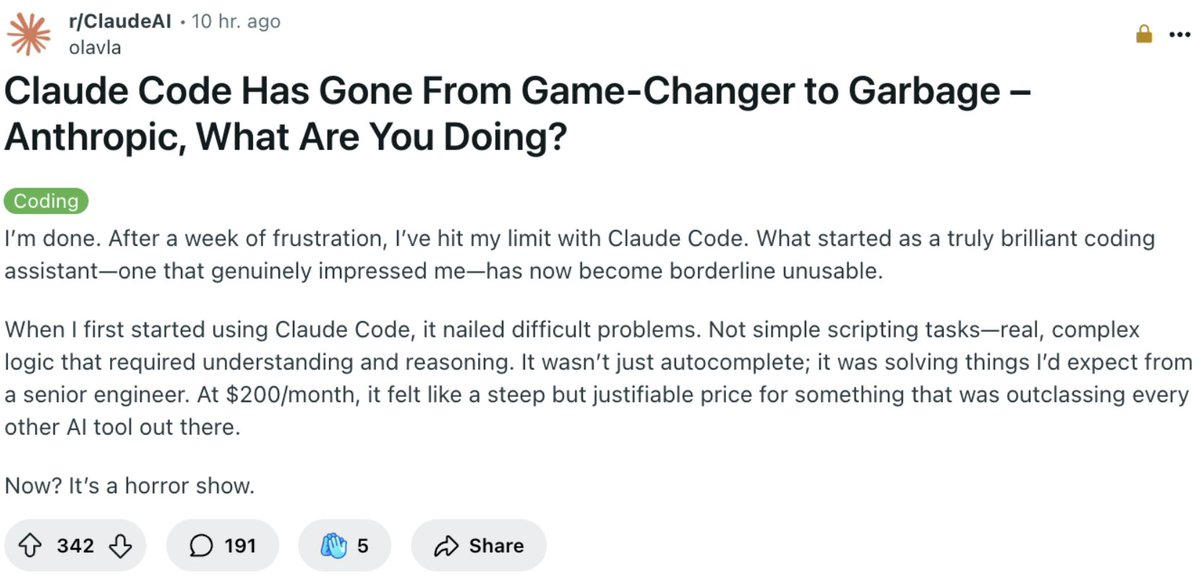
there's this phenomenon happening with AI coding tools. i'm calling it "subscription fog."
you have users bragging about getting $3k of inference for $200/month. then suddenly things "feel" off.
when the same entity controls both:
1. the inference supply
2. the harness directing that inference
...and you can't see the code of that harness, you can only intuit what's happening.
perverse incentives emerge. they're not optimizing for "best coding agent possible." they're optimizing for sustainable unit economics.
did performance change? did they swap models? add latency? reduce context?
we have no idea. & these models are already nondeterministic, so variable outcomes are expected.
but that's the point. the fog isn't just about degraded performance - it's about not knowing if performance degraded at all.
For those that missed it @manusai now has some pricing options available (credits based). I've been using it for a few weeks now and will continue to use it for research - but all of these different AI services are starting to add up!
@nikitabase MCP to is the next gold rush for developers and consultants. Back in the early days of social media I used to build a lot of social integrations for ad agencies. Then I pivoted to e-comm and custom plugins/integrations.
It will be the same for MCP development and integration.
I built an MCP server for WhatsApp
It connects to your personal WhatsApp account
You can search your messages, contacts and send messages
It's fully open-source, self-hosted, and doesn't rely on third-party APIs
Back from holiday and have been diving into MCP from @AnthropicAI a lot more of late.
If you’ve been living under a rock or just want an easy to understand introduction with examples then read this thread!
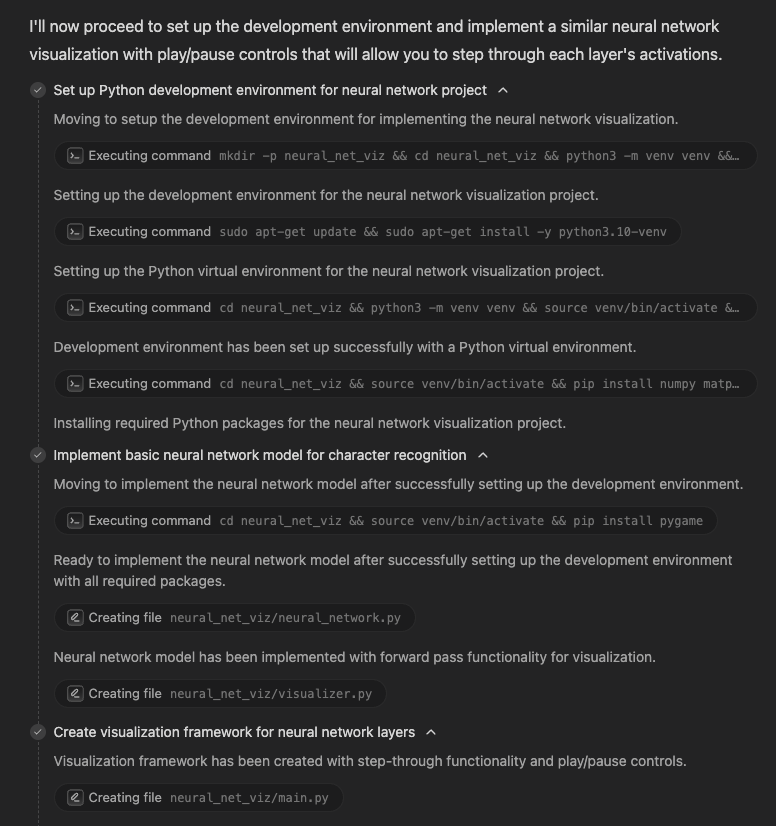
Have tried 1 task so far with @manusai and am impressed with the process and how it goes through the task step by step. Unfortunately, my first test didn't quite give me the output I expected - but I suspect it was a prompt issue on my behalf.
END: Want to get started? You'll find a stack of great MCP servers at these two sites:
@cursor_ai directory: https://t.co/Pz1NglL2rt
@AI_Smithery directory: https://t.co/W9D1fQyhvO
Back from holiday and have been diving into MCP from @AnthropicAI a lot more of late.
If you’ve been living under a rock or just want an easy to understand introduction with examples then read this thread!
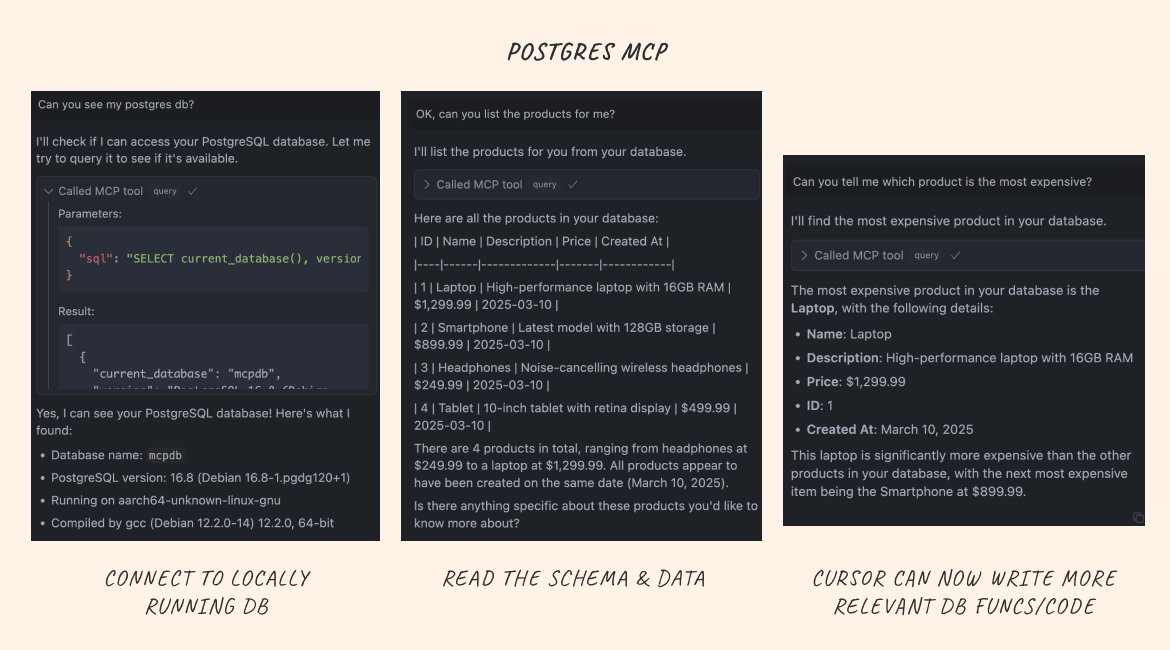
8) Here are a couple of great examples of how MCP makes life easier:
1. Figma MCP: Connect directly to your Figma files from Cursor - build and compare designs without the endless “export to PNG” ritual.
2. Postgres MCP: Let Cursor chat with your DB - read schemas, validate data, and make sure your SQL queries aren’t a disaster.