The Magic History of Cinema is a documentary showcasing magic and movies long continued history and how those ties continue with today’s top filmmakers.
TENET was released 4 years ago today. The 11th feature film of director Christopher Nolan and his first trip into time-travel, the story behind the scenes will have you unsure if your entropy is coming or going…
1/52
OPPENHEIMER was released one year ago today. One of Christopher Nolan’s most successful films, the behind the scenes story is, like most Nolan productions, enormous…
1/35
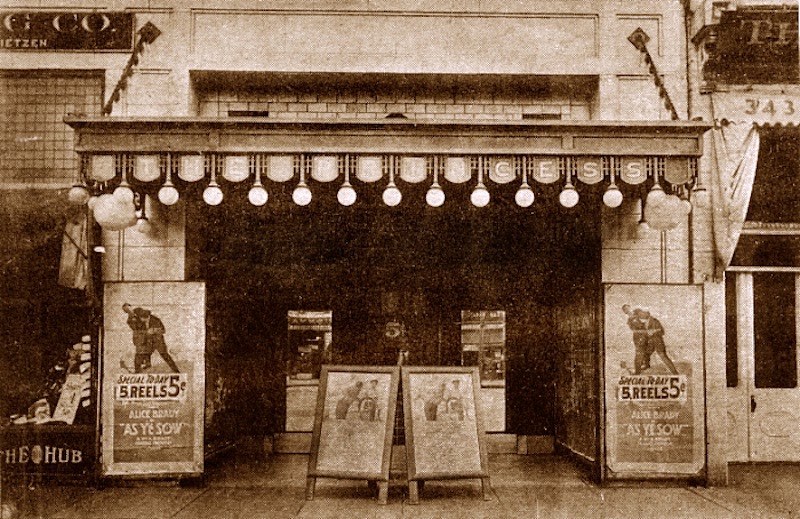
This is Grauman's Egyptian Theatre in Hollywood, built in the 1920s.
Why so grand? Because Hollywood was making 800 films per year and 75% of the American population went to the movies weekly.
What were they watching? Well, 1920s cinema was much stranger than you realise...
Renovations of these new movie houses were a simple enough task. A sheet for the screen, some rows of chairs or benches and some kind of curtain to darken the space, and an operator was in business.
Just realized @Justin_Willman’s new Magic Prank Show dropped and I can’t stop watching it…
In unrelated news, I’ll be calling in sick tomorrow. #BingeWatching#Netflix
Apple Vision Pro day has arrived Today! Minds will be blown. 🤯
Whooping 600 apps are already available specifically for Vision Pro!
And people have already come up with some insane apps, concepts and use cases.
10 incredible examples:
The world's largest consumer tech event, CES 2024, has come to an end.
Here are 10 reveals you don't want to miss from CES 2024 event:
1. Arovia's "SPLAY" is a Mix of a Projector and a Foldable Screen
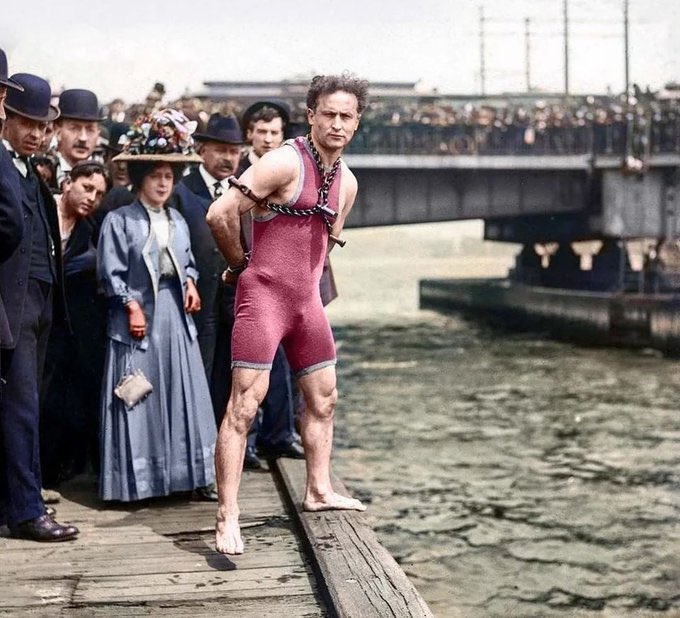
In 1908, Houdini stood at the edge of the Harvard Bridge—commonly referred to as the Mass. Ave. Bridge—and was shackled by a Boston patrolman. His hands were handcuffed behind his back and chained to a collar around his neck.
According to a Boston Globe article chronicling the feat, a signal was tooted from a towboat, and Houdini went overboard into the chilly waters below.
“There is always the possibility that I will be unable to free myself, as one never can tell what will happen to a lock,” Houdini told the newspaper.
“However, I am a good swimmer, have confidence in myself, and I hope to perform this feat successfully.”
The Globe estimated some 20,000 spectators gathered to see Houdini’s leap, including the mayors of Boston and Cambridge. They waited 40 seconds for the magician to resurface, which he did with the shackles in his hands.
For all the fans of “It’s A Wonderful Life” and Jimmy Stewart . . .
Just months after winning his 1941 Academy Award for best actor in “The Philadelphia Story,” Jimmy Stewart, one of the best-known actors of the day, left Hollywood and joined the US Army. He was the first big-name movie star to enlist in World War II.
An accomplished private pilot, the 33-year-old Hollywood icon became a US Army Air Force aviator, earning his 2nd Lieutenant commission in early 1942. With his celebrity status and huge popularity with the American public, he was assigned to starring in recruiting films, attending rallies, and training younger pilots.
Stewart, however, wasn’t satisfied. He wanted to fly combat missions in Europe, not spend time in a stateside training command. By 1944, frustrated and feeling the war was passing him by, he asked his commanding officer to transfer him to a unit deploying to Europe. His request was reluctantly granted.
Stewart, now a Captain, was sent to England, where he spent the next 18 months flying B-24 Liberator bombers over Germany. Throughout his time overseas, the US Army Air Corps' top brass had tried to keep the popular movie star from flying over enemy territory. But Stewart would hear nothing of it.
Determined to lead by example, he bucked the system, assigning himself to every combat mission he could. By the end of the war he was one of the most respected and decorated pilots in his unit.
But his wartime service came at a high personal price.
In the final months of WWII he was grounded for being “flak happy,” today called Post Traumatic Stress Disorder (PTSD).
When he returned to the US in August 1945, Stewart was a changed man. He had lost so much weight that he looked sickly. He rarely slept, and when he did he had nightmares of planes exploding and men falling through the air screaming (in one mission alone his unit had lost 13 planes and 130 men, most of whom he knew personally).
He was depressed, couldn’t focus, and refused to talk to anyone about his war experiences. His acting career was all but over.
As one of Stewart's biographers put it, "Every decision he made [during the war] was going to preserve life or cost lives. He took back to Hollywood all the stress that he had built up.”
In 1946 he got his break. He took the role of George Bailey, the suicidal father in “It’s a Wonderful Life.” The rest is history.
Actors and crew of the set realized that in many of the disturbing scenes of George Bailey unraveling in front of his family, Stewart wasn’t acting. His PTSD was being captured on film for potentially millions to see.
But despite Stewart's inner turmoil, making the movie was therapeutic for the combat veteran. He would go on to become one of the most accomplished and loved actors in American history.
When asked in 1941 why he wanted to leave his acting career to fly combat missions over Nazi Germany, he said, "This country's conscience is bigger than all the studios in Hollywood put together, and the time will come when we'll have to fight.”
This weekend, as many of us watch the classic Christmas film, “It’s A Wonderful Life,” it’s also a fitting time to remember the sacrifices of Jimmy Stewart and all the men who gave up so much to serve their country during wartime. We will always remember you!
Postscript:
While fighting in Europe, Stewart's Oscar statue was proudly displayed in his father’s Pennsylvania hardware store. Throughout his life, the beloved actor always said his father, a World War I veteran, was the person who had made the biggest impact on him.
Jimmy Stewart was awarded the Presidential Medal of Freedom in 1985 and died in 1997 at the age of 89.
H/T @mustangmarine
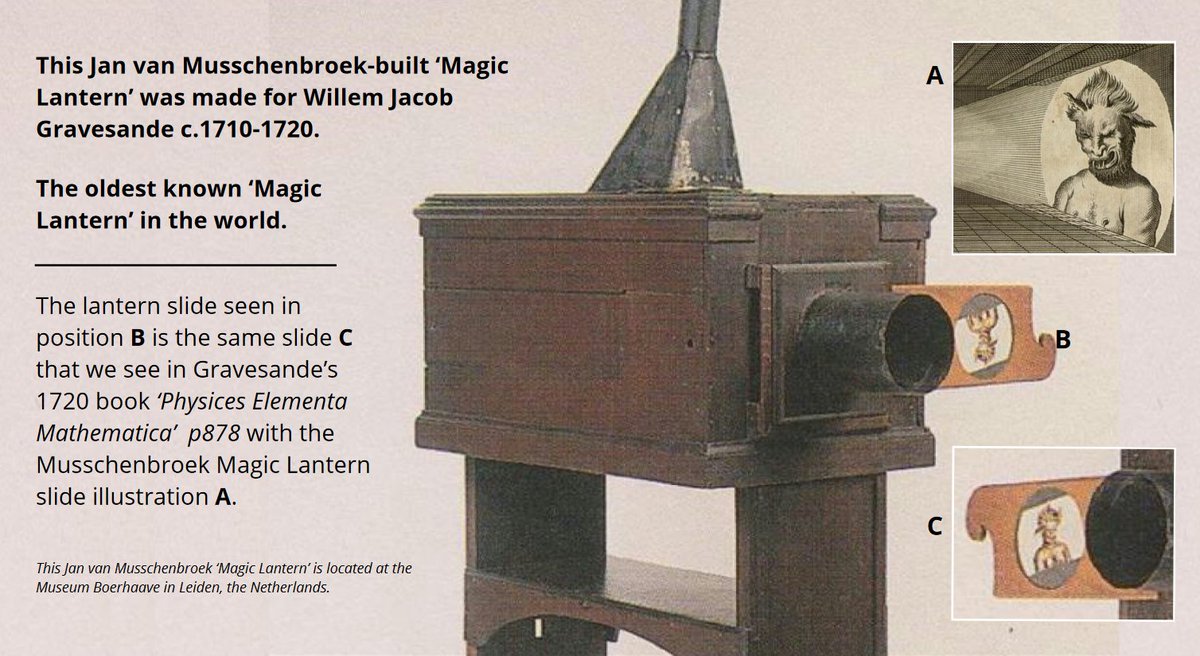
Jan van Musschenbroek built this Magic Lantern for Willem Jacob Gravesande. After Gravesande's death in 1742, Leiden University bought his collection of scientific instruments.
What the lantern represented for Huygens was an apparatus that would display images that moved.
This exclusive extended 3½ minute clip is the complete unedited "Biff Tannen Museum" film which Marty McFly (@realmikefox) sees at the museum's entrance featuring some elaborate glimpses into Biff Tannen's (@TomWilsonUSA) ill-gained rise to fame and power in Hill Valley.
100 years of stories. 100 years of magic. 🧚🪄✨
Once Upon A Studio, a new Original short film, premieres on ABC during “The Wonderful World of Disney: Disney’s 100th Anniversary Celebration!” on October 15 at 8/7c.
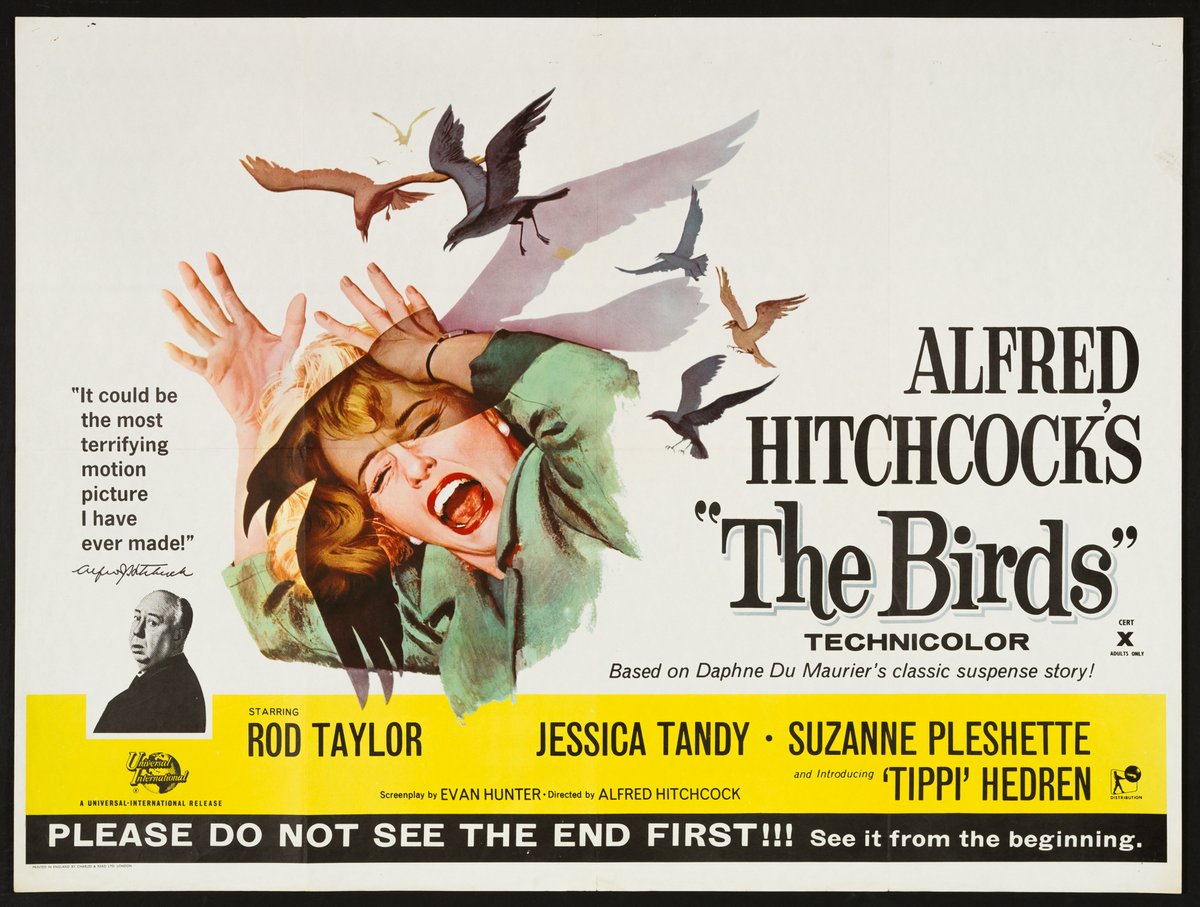
ALFRED HITCHCOCK was born on this day 124 years ago. Considered one of the greatest ever filmmakers, he directed over 55 movies. Here’s some great behind the scenes shots from his 54-year career.
🧵
1/30









![Judianna's tweet photo. For all the fans of “It’s A Wonderful Life” and Jimmy Stewart . . .
Just months after winning his 1941 Academy Award for best actor in “The Philadelphia Story,” Jimmy Stewart, one of the best-known actors of the day, left Hollywood and joined the US Army. He was the first big-name movie star to enlist in World War II.
An accomplished private pilot, the 33-year-old Hollywood icon became a US Army Air Force aviator, earning his 2nd Lieutenant commission in early 1942. With his celebrity status and huge popularity with the American public, he was assigned to starring in recruiting films, attending rallies, and training younger pilots.
Stewart, however, wasn’t satisfied. He wanted to fly combat missions in Europe, not spend time in a stateside training command. By 1944, frustrated and feeling the war was passing him by, he asked his commanding officer to transfer him to a unit deploying to Europe. His request was reluctantly granted.
Stewart, now a Captain, was sent to England, where he spent the next 18 months flying B-24 Liberator bombers over Germany. Throughout his time overseas, the US Army Air Corps' top brass had tried to keep the popular movie star from flying over enemy territory. But Stewart would hear nothing of it.
Determined to lead by example, he bucked the system, assigning himself to every combat mission he could. By the end of the war he was one of the most respected and decorated pilots in his unit.
But his wartime service came at a high personal price.
In the final months of WWII he was grounded for being “flak happy,” today called Post Traumatic Stress Disorder (PTSD).
When he returned to the US in August 1945, Stewart was a changed man. He had lost so much weight that he looked sickly. He rarely slept, and when he did he had nightmares of planes exploding and men falling through the air screaming (in one mission alone his unit had lost 13 planes and 130 men, most of whom he knew personally).
He was depressed, couldn’t focus, and refused to talk to anyone about his war experiences. His acting career was all but over.
As one of Stewart's biographers put it, "Every decision he made [during the war] was going to preserve life or cost lives. He took back to Hollywood all the stress that he had built up.”
In 1946 he got his break. He took the role of George Bailey, the suicidal father in “It’s a Wonderful Life.” The rest is history.
Actors and crew of the set realized that in many of the disturbing scenes of George Bailey unraveling in front of his family, Stewart wasn’t acting. His PTSD was being captured on film for potentially millions to see.
But despite Stewart's inner turmoil, making the movie was therapeutic for the combat veteran. He would go on to become one of the most accomplished and loved actors in American history.
When asked in 1941 why he wanted to leave his acting career to fly combat missions over Nazi Germany, he said, "This country's conscience is bigger than all the studios in Hollywood put together, and the time will come when we'll have to fight.”
This weekend, as many of us watch the classic Christmas film, “It’s A Wonderful Life,” it’s also a fitting time to remember the sacrifices of Jimmy Stewart and all the men who gave up so much to serve their country during wartime. We will always remember you!
Postscript:
While fighting in Europe, Stewart's Oscar statue was proudly displayed in his father’s Pennsylvania hardware store. Throughout his life, the beloved actor always said his father, a World War I veteran, was the person who had made the biggest impact on him.
Jimmy Stewart was awarded the Presidential Medal of Freedom in 1985 and died in 1997 at the age of 89.
H/T @mustangmarine](https://pbs.twimg.com/media/F_zo2o4WQAA8r8r.jpg)