@malvado2525@rafaelponton@CoinMarketCap Es un viejo que le salio el tiro por la culata debería de buscar un trabajo, me recuerdo cuando decía bull run lo defendía a capa y espada qué a finales de diciembre 2025 todos iban a tener mucho dinero, viejo más 💩
🛠️Neurai JS Wallet
We have updated our JSWallet library to incorporate all the changes made to the individual libraries, which are now compatible with the Positronic upgrade.
This library makes it easier to create wallets or applications that use the Neurai network.
✅ Create wallets with 12 or 24 words
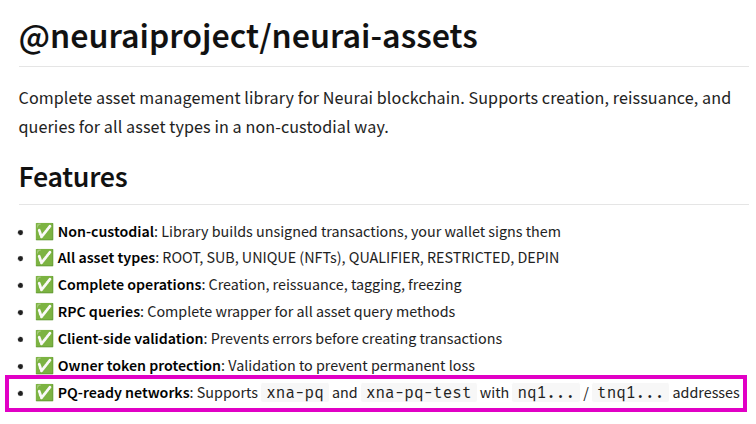
✅ Manage Legacy and PQ addresses
✅ Create and manage Assets
✅ Send XNA and tokens
✅ Sign Legacy and PQ transactions
✅ Query asset metadata and holders
✅ Sweep external WIF keys
✅ Build covenants and custom scripts
✅ Multisign
✅ Ship for Node, browser and <script>
#Neurai #XNA $XNA #PQ #Covenants
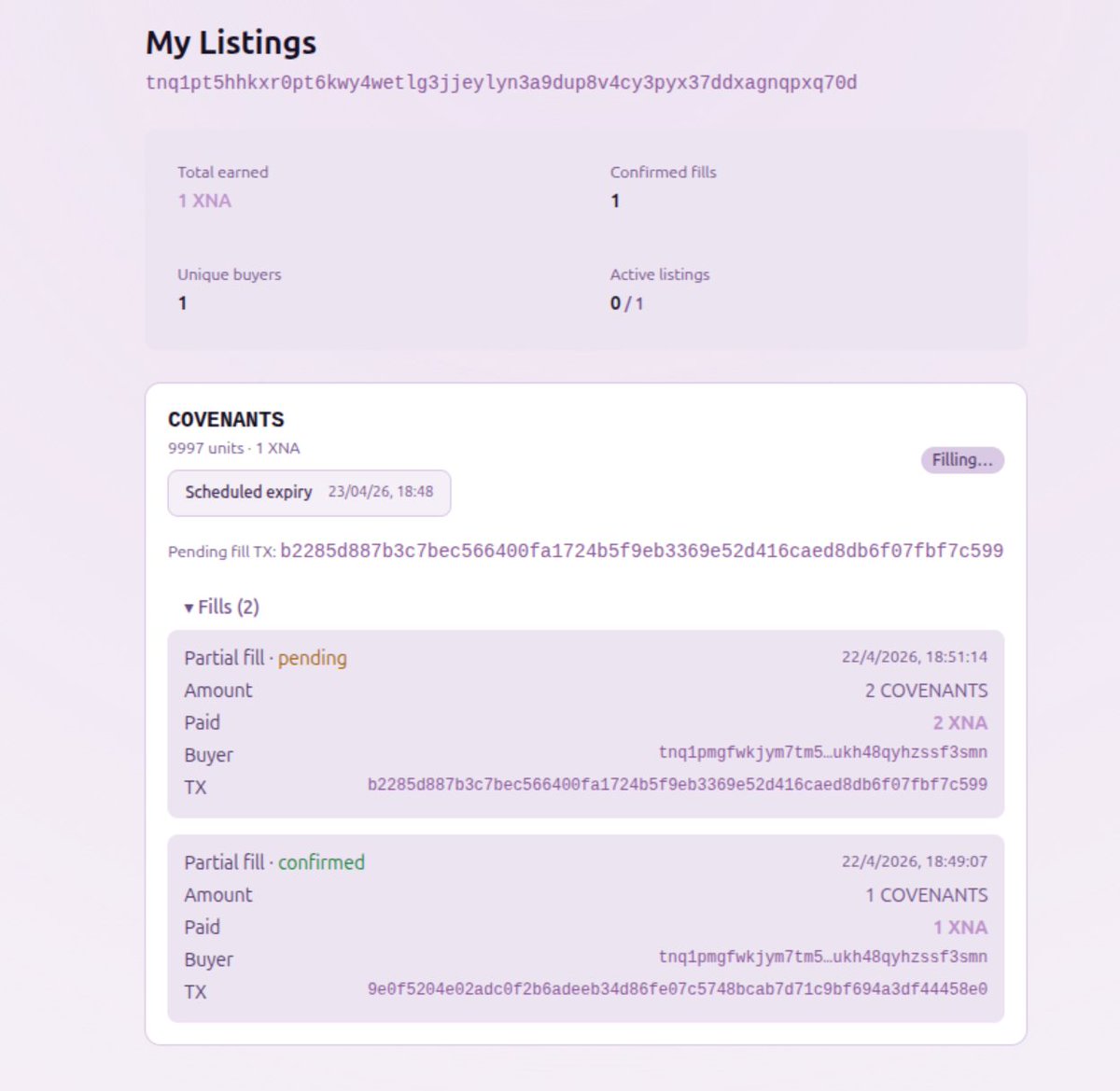
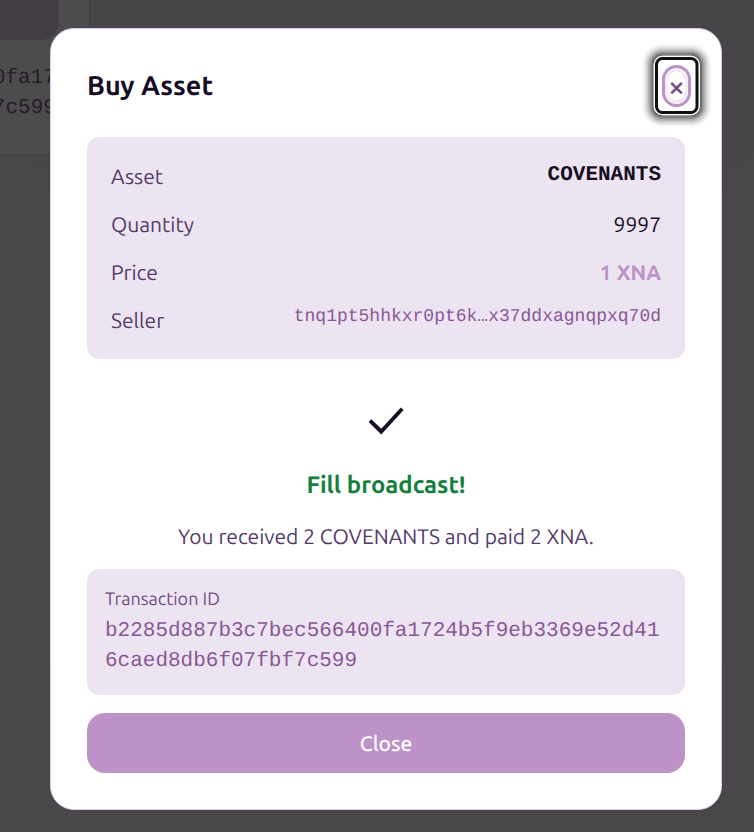
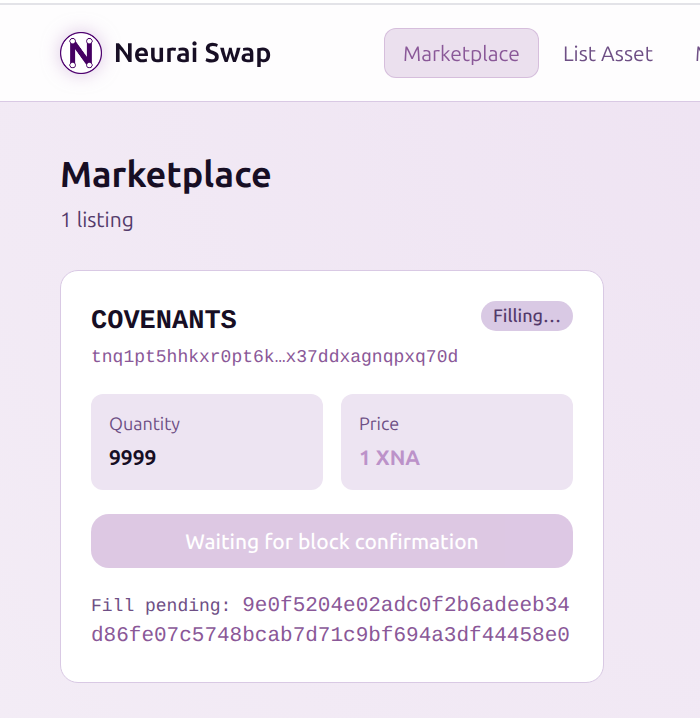
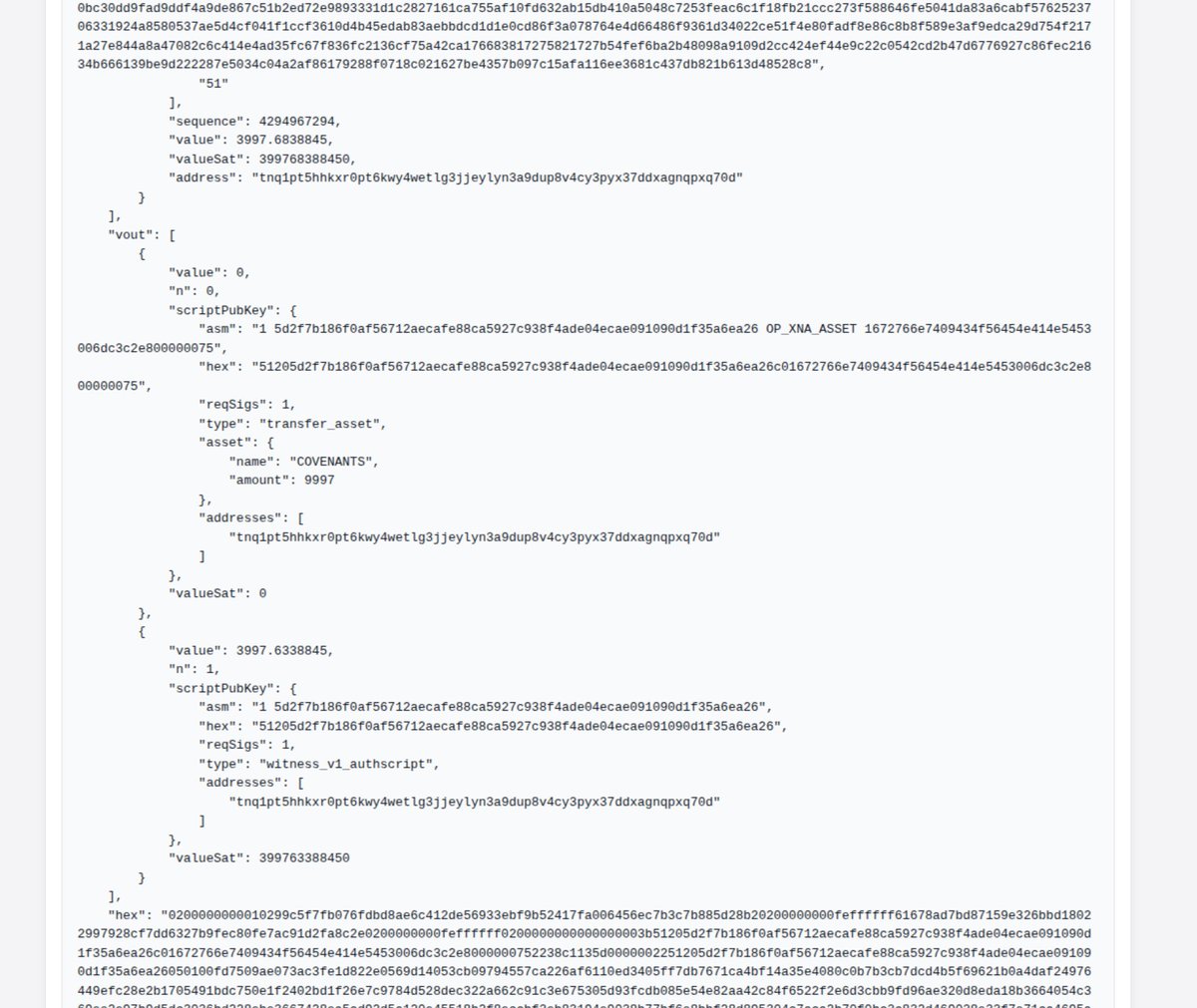
🎯Sneak Peak: Covenants + Neurai SWAP
We have adapted Neurai Swap to be 100% decentralized, with onchain transactions and advanced smart contracts using Covenants.
🛠️How does it work?
1⃣Alice lists 1,000 CAT for sale at 1 XNA each in a single transaction.
✅These tokens are not handed over to a thrid party: they are locked in an on-chain contract with publicly defined rules.
2⃣Bob buys 2 CAT for 2 XNA.
The network only accepts the transaction if Alice receives 2 XNA, Bob receives 2 CAT, and the remaining 998 CAT are returned to the same contract.
3⃣Charlie can buy 300 CAT, and the contract is automatically recreated with the remaining balance.
✅This way, the order remains active on-chain without Alice having to sign off on every purchase.
4⃣If Alice wants to close the sale, she can cancel it and recover whatever remains.
✅Everything happens by consensus, without intermediaries and without relying on third parties.
That is a true DEX: orders that live onchain, execute themselves, and settle atomically.
The Neurai Swap website facilitates the creation of scripts, but this could be done 100% offchain via RPC to a Neurai Node.
This is just a small example of the capabilities added to Neurai and is 100% compatible with ⚛️PostQuantum addresses.
#Neurai #XNA $XNA #Covenants #PQ
🔬Indexer Electrs in Neurai
Along with the large-scale updates we are making to Neurai, we also need better blockchain indexing support. For the past few weeks, we have been working on integrating KAWPOW and the new Neurai OP_codes and PQ addresses into electrs.
🔍 Who is Electrs?
Electrs is a high-performance Electrum server implementation written in Rust. It provides fast and efficient blockchain indexing with low resource usage, enabling lightweight clients to query the blockchain quickly without needing to run a full node with heavy indexing.
🛠️ Features
✅ Supports Electrum protocol v1.4
✅ Works with PQ addresses
✅ Maintains an index over transaction inputs and outputs
✅ Fast synchronization of the Neurai blockchain
✅ Low index storage overhead (~10%)
✅ Efficient mempool tracking (allowing better fee estimation)
✅ Low CPU & memory usage (after initial indexing)
txindex is not required for the Bitcoin node
✅ Uses a single RocksDB database for better consistency and crash recovery
A new service that works with post-quantum addresses and new tools for advanced scripting.
#Neurai #XNA $XNA #PQ
🌎 Neurai: The Next Step
The Neurai Testnet extends Neurai's scripting engine with a set of specialized opcodes.
The goal is concrete:
✅Scripts that inspect their own transaction and enforce spending rules at the consensus layer.
✅Native asset introspection: covenants that read asset names, amounts, and metadata directly.
✅External state via reference inputs: read on-chain oracle data without consuming it.
✅Implemented and running on testnet today.
🌍New Opcodes add more power
1⃣ Covenant Primitives: OP_CHECKTEMPLATEVERIFY locks a UTXO to an exact transaction template: outputs, amounts, and destinations are fixed at creation time. OP_CHECKSIGFROMSTACK verifies a signature against any arbitrary message on the stack, enabling scripts to consume oracle-signed data. Both support classical ECDSA and post-quantum ML-DSA-44 keys.
2⃣ Transaction Introspection:
Opcodes that push raw transaction data onto the stack: output amounts (OP_OUTPUTVALUE), output scripts (OP_OUTPUTSCRIPT), the spent UTXO's own script or value (OP_TXFIELD), locktime (OP_TXLOCKTIME), input/output counts, and configurable field hashes (OP_TXHASH). The building blocks for covenants that enforce transaction structure.
3⃣ Asset Introspection:
Neurai-native. OP_OUTPUTASSETFIELD and OP_INPUTASSETFIELD read asset fields directly from transaction inputs and outputs: name, amount, decimal units, reissuable flag, IPFS hash, type. Scripts can verify asset properties without parsing serialized data.
4⃣ Reference Input Introspection:
A new vrefin vector carries UTXOs that are read but not spent. OP_REFINPUTFIELD and OP_REFINPUTASSETFIELD expose their value, script, and asset fields to the script engine. Shared onchain state price feeds, device registries, rate limits readable by many transactions simultaneously without being consumed.
5⃣ Byte Manipulation:
OP_CAT (re-enabled) concatenates two stack elements. OP_SPLIT splits a byte array at a given position. OP_REVERSEBYTES reverses byte order. These are the primitives for constructing and parsing data structures on the stack.
6⃣64-Bit Arithmetic:
OP_MUL, OP_DIV, and OP_MOD are re-enabled and operate on 64-bit signed integers with overflow protection. Existing arithmetic opcodes (OP_ADD, OP_SUB, comparisons) are upgraded to the same domain. Required for any covenant that computes amounts, rates, or fees in script.
🌏Use Cases
1) Trustless Limit Order (DEX)
A seller locks ASSET_A in a covenant. Anyone can spend it, but only if the transaction sends the required ASSET_B back to the seller. Atomic swap enforced by consensus — no escrow, no platform.
2) Vault with Spending Cap
Withdrawals are capped at 1 XNA per transaction. The remainder must return to the same covenant. A stolen key can only drain 1 XNA per block. Cold recovery after a 144-block timelock.
3) Recurring Payment Stream
A UTXO funds a scheduled payout. Each settlement is only valid after the next time period, pays the exact defined amount, and returns the remainder to the same covenant. Anyone can trigger it. No operator needed.
4) Asset Reissuance Gate
An oracle signs off-chain approval data. The covenant verifies the signature, caps the reissue amount, and keeps the owner token locked. Supply increases require provable approval enforced by the script.
5) CTV Payout Tree
A single UTXO commits to a tree of future payouts. Each recipient claims their branch independently. Only claimed branches consume block space. No coordination required.
6) OracleFed Covenant via Ref Inputs
An oracle UTXO holds a price or state value. Contracts read it via vrefin without consuming it. The oracle persists and can be referenced by hundreds of transactions simultaneously.
7) IoT Sensor with Conditional Payment
A sensor signs its readings. The covenant verifies the signature, checks the device is registered against a reference input, computes payment from units × rate, and enforces the output. Bad data or unregistered devices, transaction fails.
8) Asset-Gated Encrypted Messaging (DePIN)
Only holders of a specific Neurai asset can query the message pool. Messages are encrypted per-recipient via hybrid ECIES. The access gate is a covenant, OP_INPUTASSETFIELD verifies asset ownership at the consensus layer. No server-side database decides who can read. Supports paginated retrieval for embedded hardware (ESP32 example included in the codebase).
⚛️PostQuantum Addresses
AuthScript supports ML-DSA-44 (FIPS 204) natively. Covenants using AuthType 0x01 require a post-quantum signature before executing. Any vault, order, or governance contract can be quantum-resistant today. Hash-based covenant logic is inherently quantum-resistant by design. When CSFS is active, the stack element cap extends to 3072 bytes to fit PQ keys in standard relay.
We are adding all of this and more to Neurai to make it more powerful and durable for years and decades to come.
Soon we will begin testing on Testnet to unlock the full potential of what we are deploying.
Spoiler:
The new upgrade is called: Positronic
#Neurai #XNA $XNA #PQ #IoT #DePIN #AI
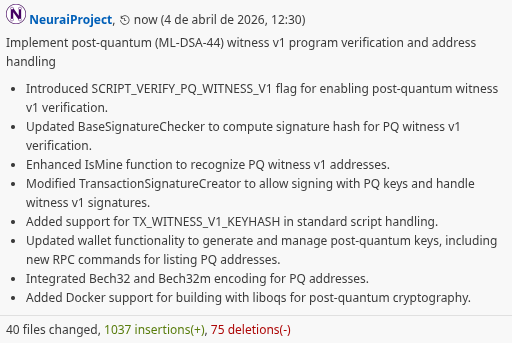
Adding support for post-quantum cryptography addresses isn't the most critical part of the upcoming network update, but it is one of the most important steps toward ensuring the network's future functionality.
🔬Testing Post Quantum address
We have added the initial code for the Neurai Testnet to support post-quantum addresses, which will be protected against future attacks from quantum computers.
This is an initial release and will soon be integrated into various wallets for use with the testnet and assets. It will also be integrated into ESP32 via our library in Arduino.
Our Arduino Library: mldsa
#Neurai #XNA $XNA #PQ #ESP32
@thecryptokensei@kokoski Its time that founders find out that they are not untouchable. Just because law enforcement wont do anything, doesnt mean we have to also just sit back