>Be a Mark Zuckerberg
>Started coding at 12, building small programs just for fun.
>Created “Facemash” at Harvard, which unexpectedly went viral.
>Launched Facebook from his dorm room in 2004.
>Expanded it from Harvard to universities across the U.S.
>Dropped out to focus entirely on building Facebook.
>Hit 1M users within the first year growth exploded.
>Transformed Facebook into Meta, acquiring Instagram, WhatsApp & Oculus.
>Built platforms used by over 3B people worldwide.
>Now driving Meta toward AI and the metaverse with the same startup mindset.
> be zuck
> create a platform connecting the world
> marry your college gf
> rock the same grey tee everyday
> meet with world leaders in said grey tee, unbothered
> keep that poker face strong
> let them meme you, it only makes you stronger
> do a complete rebrand
> surf some waves in your free time, find that flow state
> acquire that jiu jitsu blue belt
> curl your hair
> find the perfect pair of jeans
> invest in a pair of sneakers and buy a cool watch
> partner with ray-ban and build the coolest vr glasses
> start a new category of tech ceo fashion
> prove the coexistence of style and substance
> stay focused on the mission, tune out the noise
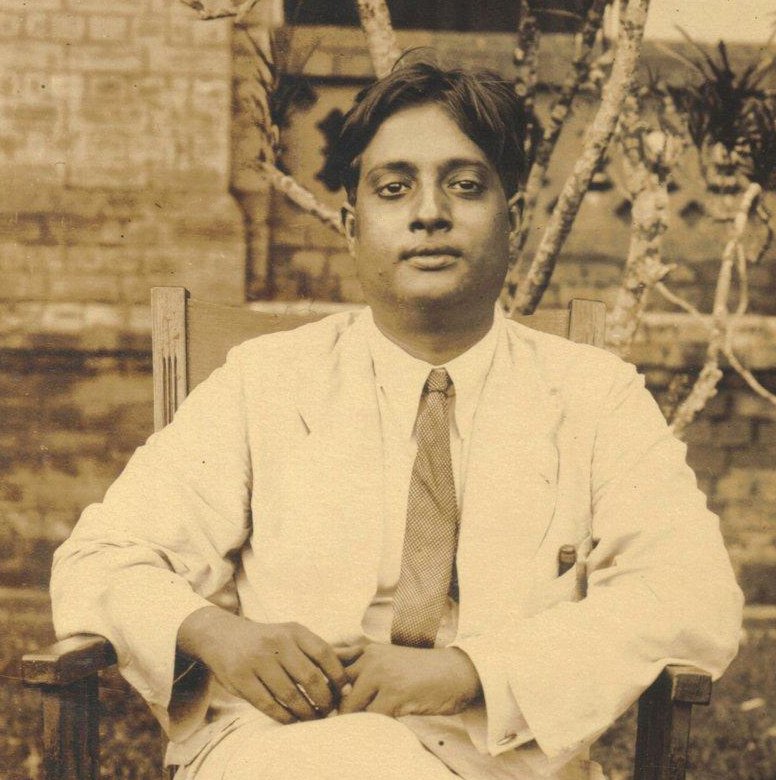
Today marks the birth anniversary of 𝘚𝘢𝘵𝘺𝘦𝘯𝘥𝘳𝘢 𝘕𝘢𝘵𝘩 𝘉𝘰𝘴𝘦, one of India’s greatest theoretical physicists, whose ideas permanently reshaped modern physics.
Satyendra Nath Bose is best known for his pioneering work in quantum statistics, developed in the early 1920s, which laid the foundation of what we now call 𝘉𝘰𝘴𝘦–𝘌𝘪𝘯𝘴𝘵𝘦𝘪𝘯 𝘴𝘵𝘢𝘵𝘪𝘴𝘵𝘪𝘤𝘴 and ultimately led to the prediction of a new state of matter: the 𝘉𝘰𝘴𝘦–𝘌𝘪𝘯𝘴𝘵𝘦𝘪𝘯 𝘤𝘰𝘯𝘥𝘦𝘯𝘴𝘢𝘵𝘦.
In 1924, while working as a lecturer in 𝘋𝘩𝘢𝘬𝘢 (now in 𝘉𝘢𝘯𝘨𝘭𝘢𝘥𝘦𝘴𝘩), Bose wrote a remarkable paper in which he derived Planck’s radiation law by treating light as a gas of indistinguishable quantum particles (photons). Crucially, he did this without relying on classical physics, introducing a fundamentally new way of counting quantum states. After the paper was rejected by a British journal, Bose sent it directly to 𝘈𝘭𝘣𝘦𝘳𝘵 𝘌𝘪𝘯𝘴𝘵𝘦𝘪𝘯, recognizing him as the one physicist who might appreciate its significance.
Einstein immediately grasped the importance of Bose’s insight. He translated the paper into German and arranged for its publication in 𝘡𝘦𝘪𝘵𝘴𝘤𝘩𝘳𝘪𝘧𝘵 𝘧ü𝘳 𝘗𝘩𝘺𝘴𝘪𝘬 under the title “𝘗𝘭𝘢𝘯𝘤𝘬’𝘴 𝘓𝘢𝘸 𝘢𝘯𝘥 𝘵𝘩𝘦 𝘏𝘺𝘱𝘰𝘵𝘩𝘦𝘴𝘪𝘴 𝘰𝘧 𝘓𝘪𝘨𝘩𝘵 𝘘𝘶𝘢𝘯𝘵𝘢.” Einstein then extended Bose’s method from photons to material particles, predicting a striking quantum phenomenon at very low temperatures—what we now call the 𝘉𝘰𝘴𝘦–𝘌𝘪𝘯𝘴𝘵𝘦𝘪𝘯 𝘤𝘰𝘯𝘥𝘦𝘯𝘴𝘢𝘵𝘦. Together, their work established Bose–Einstein statistics, one of the cornerstones of quantum mechanics.
The experimental realization of the Bose–Einstein condensate came much later, in 1995, when it was created in ultracold atomic gases—an achievement that confirmed Bose and Einstein’s theoretical prediction more than seventy years earlier.
Particles that obey this statistical law—those with integer spin—are now known as 𝘣𝘰𝘴𝘰𝘯𝘴, named in Bose’s honor. This class includes photons, gluons, W and Z bosons, and the Higgs boson. While Bose did not work directly on the Higgs mechanism, the very concept of bosons is essential to the Standard Model of particle physics, within which the 𝘏𝘪𝘨𝘨𝘴 𝘣𝘰𝘴𝘰𝘯 was predicted and finally discovered in 2012 at @CERN’s 𝘓𝘢𝘳𝘨𝘦 𝘏𝘢𝘥𝘳𝘰𝘯 𝘊𝘰𝘭𝘭𝘪𝘥𝘦𝘳 (𝘓𝘏𝘊). In this indirect but profound way, Bose’s ideas underpin our modern understanding of fundamental particles and forces.
Satyendra Nath Bose spent much of his life teaching and nurturing science in India, influencing generations of students. Despite the immense impact of his work, he never received a 𝘕𝘰𝘣𝘦𝘭 𝘗𝘳𝘪𝘻𝘦, a fact widely regarded as one of the most notable omissions in Nobel history. Nevertheless, his name is permanently embedded in physics—few scientists can claim an entire class of particles named in their honor.
He passed away on 4 𝘍𝘦𝘣𝘳𝘶𝘢𝘳𝘺 1974, and his death was widely mourned within the scientific community and beyond.
(📸: Courtesy of Falguni Sarkar/The S.N. Bose Project)
before YouTube and docs, people learned coding by reading books and source code, breaking things, studying manuals, and learning from mentors.
It was slower, but it forced deep understanding of how computers actually work.
before YouTube and docs, people learned coding by reading books and source code, breaking things, studying manuals, and learning from mentors.
It was slower, but it forced deep understanding of how computers actually work.
before YouTube and docs, people learned coding by reading books and source code, breaking things, studying manuals, and learning from mentors.
It was slower, but it forced deep understanding of how computers actually work.