DMARC is a standard protocol that helps domain owners protect against email spoofing.
It enables domain owners to set a policy for how to handle attempts at email spoofing, and provides them with reports when attempts to send fraudulent emails from their domains are detected.
An alias is basically a forwarding address (which you may also be able to send from) for your emails. Consider setting these up for frequent misspellings and common nouns to make sure nothing slips through the cracks.
The General Data Protection Regulation in the EU has a number of implications for businesses that send email. This applies not only to businesses based in the EU, but those sending to recipients there as well. Find more information here: https://t.co/SdJrksVk65
Inbox overwhelmed with email? Delete 'em! Declaring email bankruptcy has no official legal merit; it's just a bold strategy for redemption.
If you're actually going through with this, you should probably send a templated email to everyone you're ignoring to let them know.
DKIM is an email authentication method. It works by using a secret key with the emails you send. This corresponds to a public key, associated with your domain. Email servers can check if the two work together to make sure you're the sender you claim to be.
Your bounce rate is the percentage of emails you send that bounce (i.e. were unable to be delivered). Though a 0% bounce rate is unrealistic if you're sending at high volume, you should be able to keep it under 1%!
Our inboxes can be a major source of stress in our lives. Review the push notification settings for your email client. iOS and Android allow for fine-grained controls that could help improve your mental health.
Email has been used as an interface for turn-based games like chess and Diplomacy (both Mailclerk favorites).
What other games could be "ported" to email, and might be made even more fun this way? Are there MMORPGs that could make an aspect of their world interactive via email?
TO: [email protected]
SUBJECT: Happy 80th!
Today would have been the 80th birthday of Ray Tomlinson, who sent the first email 50 years ago while working at BBN Technologies.
SPF is an email authentication method. It allows email servers to check if an email is actually from the domain it claims to be from.
In short, it works by having the owner of the domain publish a record that identifies which servers are allowed to send email from it.
Listservs, popular in the early internet, allow you to subscribe and send messages to a list of users. This made for a sort of message board in your inbox. How could modern apps better utilize the reply button (and inbound email generally) to improve user experience?
Is email secure? Basically, no.
Archived messages may leak, forwarded messages typically carry the entire conversation with them, and (though there are different ways to mitigate this) "From" addresses can be spoofed.
IMAP is a standard protocol used by email clients (like Outlook). It was designed to allow multiple clients to connect the same inbox, which other protocols like POP3 don't handle as well.
Spam filters use a variety of techniques to determine whether an incoming message is spam. This can be based on the email's content, who's sending it, and how.
Check your spam folder regularly. These filters aren't perfect! There might be some important communication waiting...
"We realized that our weekly newsletter got something like two times as many people looking at it every week as our entire website." We interviewed @philipithomas (co-founder of @moonlight_work) about their email newsletter as a core part of their product. https://t.co/sswnYWqBwV
In 2003, the United States passed a law that regulates commercial email, requiring no false or misleading header information, disclosure of a physical address, and more. You can find more information here: https://t.co/Yrg6yxkPEm
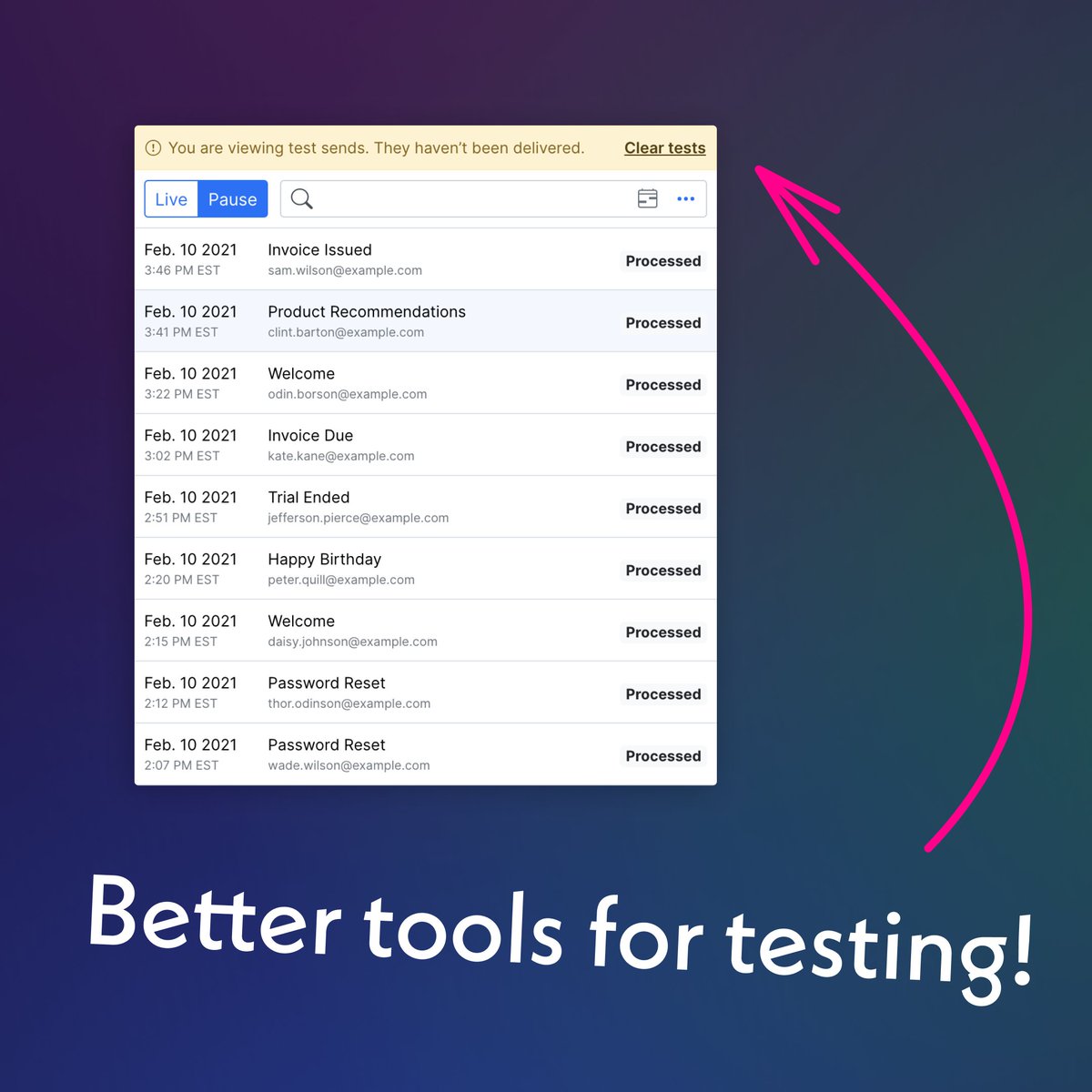
👩💻 We’ve just rolled out improvements for seamless development and testing workflows! View test sends during development (including the email content) and easily write automated tests for your codebase.
Check out the docs for more information: https://t.co/e7TPdGbdHB
You can "munge" your email address to disguise it from bots when posting it on the internet. But if you want to keep your email address protected online, consider putting it behind a CAPTCHA instead.
POP3 is a standard protocol used by email clients (like Outlook) to communicate with email servers. POP3 can retrieve and delete messages from the server.
Fun fact: POP4 has been specified but hasn't made much progress in recent years.
Spear phishing is a cyber attack where an attacker impersonates someone else, often via email, to extract sensitive information. This is the most common method for targeted cyber attacks.