We are hiring! Looking for two postdocs. Topics: a) ancestry informed polygenic scores for mixed ancestry individuals and b) integrating polygenic risk models with clinically actionable rare variants for comprehensive disease risk assessment.
https://t.co/gEaxLR6SgM
"While much of Europe is obsessing over this year’s European Football Championships, many Estonians — whose team didn’t qualify — are absorbed in their own genomes."
And they have pretty awesome genomes, I must say!
Read the full story by @ewencallaway:
https://t.co/UH1wtaqNeQ
Happy to see that our paper on archaic admixture and its phenotypic impact in Papua New Guinean populations is out now in @PNASNews! Thanks to all co-authors for this fun collaboration @genomicstartu https://t.co/2qxm5yB1sy
@JJalgratas@MilaniLili 3/3 Seega ei ole siin ka küsimust et millal sarnasus sakslastega tekkis. Nende konkreetsete sakslastega siin võrdluses on ka see probleem, et neid on seal maru vähe - seetõttu on ka jautus lai. St roosa jutt ulatub vaat et nullist pea 90%ni.
@JJalgratas@MilaniLili 2/3 Need roosad alad näitavad valitud võrdlusrahvuse esidajate sarnasust sellele samale referentspopulatsioonile. Punkt on mediaan ja roosa jutt näitab jaotust. Seega, me ei näita siin sinu arnasust nt sakslastele, vaid sakslaste sarnasust "Ida Euroopale".
@JJalgratas@MilaniLili Tänud huvi tundmast. Võrdlus käib vastu referentspopulatsioone. Üldise sarnasuse järgi siis "Ida Euroopa"; "Soome" jne. Sinine jutt näitab kui sarnane sina oled sellele võrdluspopulatsioonile. Näiteks siis Ida Euroopale 70% kui ütled et "keskmine eestlane".
I'm extremely happy to share this preprint on Bronze Age to early modern Ukraine, the product of my postdoc, working with @mt_genes , @pontus_skoglund and many others, including numerous incredible archaeologists in @Ukraine
https://t.co/Vv7mKnRzQ5
We are so excited to start exploring #longread sequencing of 10,000 Estonian genomes with @PacBio
🧬improved genotype imputation reference panel
🧬more precise #pharmacogenetics
🧬actionable genetic findings for #personalizedmedicine@ESTbiobank
https://t.co/s92iLj59c8
Excited to share our latest preprint about Italian Iron Age.
Our main findings in brief:
🌊Adriatic Sea was as corridor, Apennines a barrier.
🌍People moved from different regions, in a "cosmopolitan society.
Congrats to @FraRavasini as first author! 🎉
https://t.co/0hpGpPwJ6X
An interesting preprint from the Estonian biobank.
Across 180k genotyped Estonians, the authors looked at how genetic structure and polygenic scores for education were shaped by migration to Estonia's big cities.
🧵
https://t.co/9nOFhl7kLo
Three postdoc positions in Italy for computational and/or biological sciences, to work in two projects combining population genomics and complex trait analysis (Luca and Davide are great people to work with):
https://t.co/81N1VIZTy7
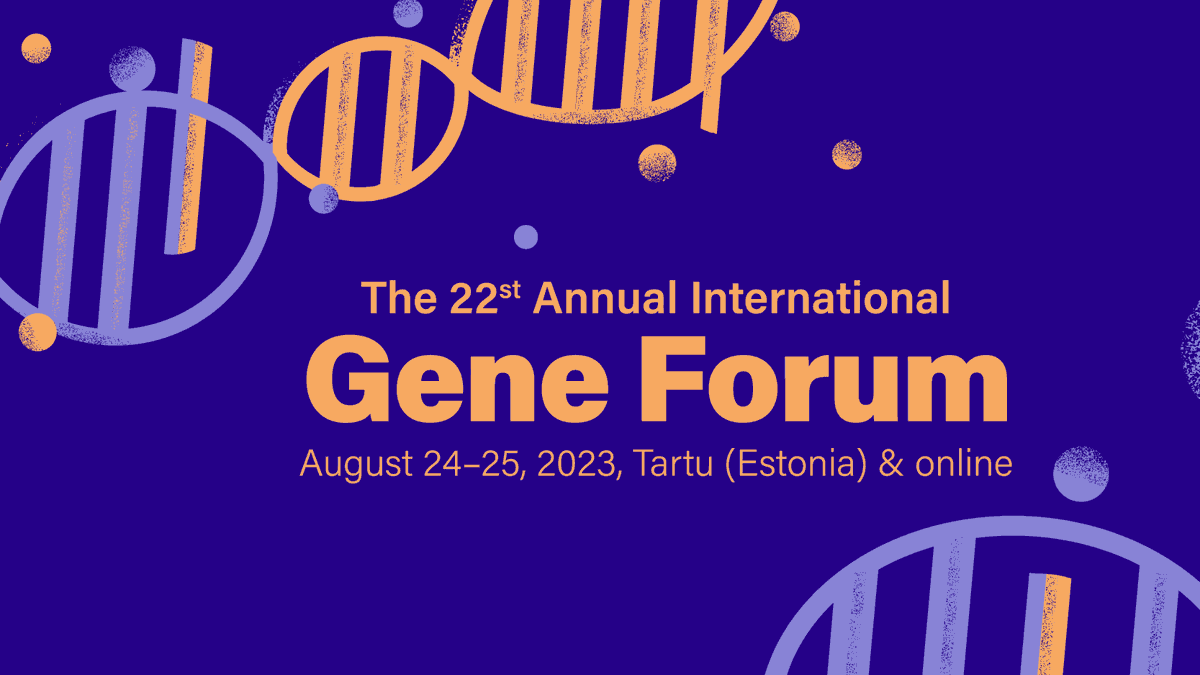
ANNOUNCING: The 22th International Gene Forum 🧬
📅 August, 24–25 2023
🧬20 prominent scientists from Europe and the USA to discuss advances in genetics
📍Estonian National Museum in Tartu, Estonia and online
📝 Register here: https://t.co/Njq0I93Hwt
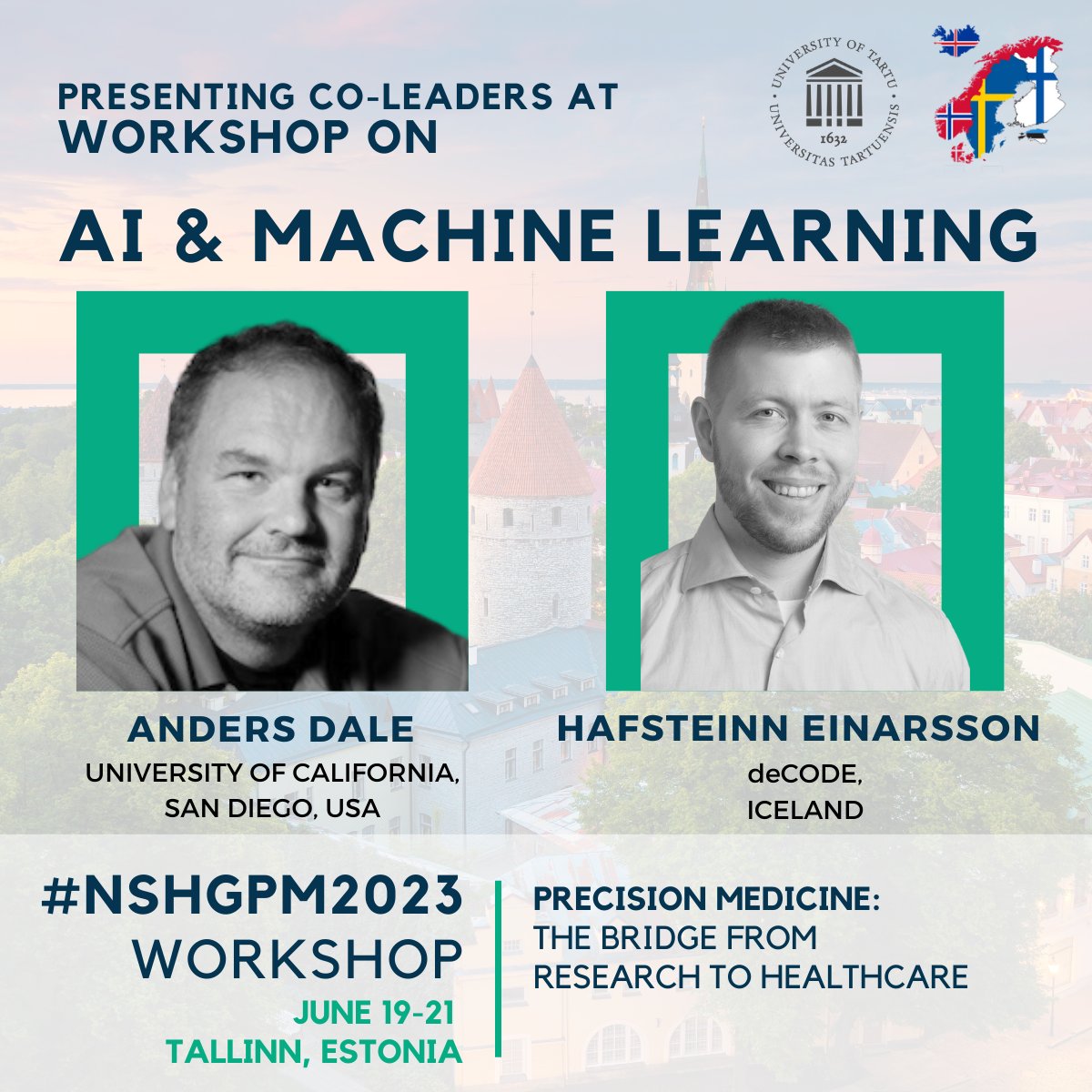
Attend an exciting workshop on AI & Machine Learning, co-led by:
- Anders Dale of University of California, San Diego
- Hafsteinn Einarsson of deCODE
at #NSHGPM2023 workshop on Precision Medicine: The Bridge from Research to Healthcare.
Learn more: https://t.co/UXq2Rsa1jQ
Our review on deep generative models for genomics with @florajay_ is now published in @AnnualReviews. We tried to write a smooth entry into these new approaches while covering as many important aspects as possible. Hope you enjoy the read.
https://t.co/YTMJnSrhxN