BREAKING: President Donald Trump has announced that the United States, together with its allies, will reopen the Strait of Hormuz by using military force to ensure safe navigation.
He calls on countries to deploy warships to the Strait of Hormuz alongside the United States, while America will continue large-scale bombardments along the coastline and the destruction of Iranian military targets.
A Marine Corps expeditionary force is on its way as well as the 82nd Airborne Division as President Trump‘s war quickly escalates into a new world war…
💥BREAKING:
ELON MUSK'S "X" IS ABOUT TO BECOME THE BIGGEST CRYPTO PLAYER.
Just today, it was announced that X will launch crypto trading directly from its timeline.
This is expected to happen within a few weeks, and most people are underestimating the impact.
X has nearly 600 million monthly active users, which is 50M+ more than global crypto users.
In several countries, X is the most visited social app and has 1B+ total downloads.
Compare it with any crypto exchange, X is by far the biggest platform which will provide crypto trading.
Elon Musk's other companies like Tesla and SpaceX already own Bitcoin and now X is going even deeper.
I know a lot of people are expecting a gigantic pump, but this is something which will play over a long period of time.
Just like ETFs didn't start a bull run immediately, this announcement will also take time to show its impact.
But once X starts going all-in crypto, hundreds of millions of new users will enter the crypto space which will result in both a parabolic adoption and price.
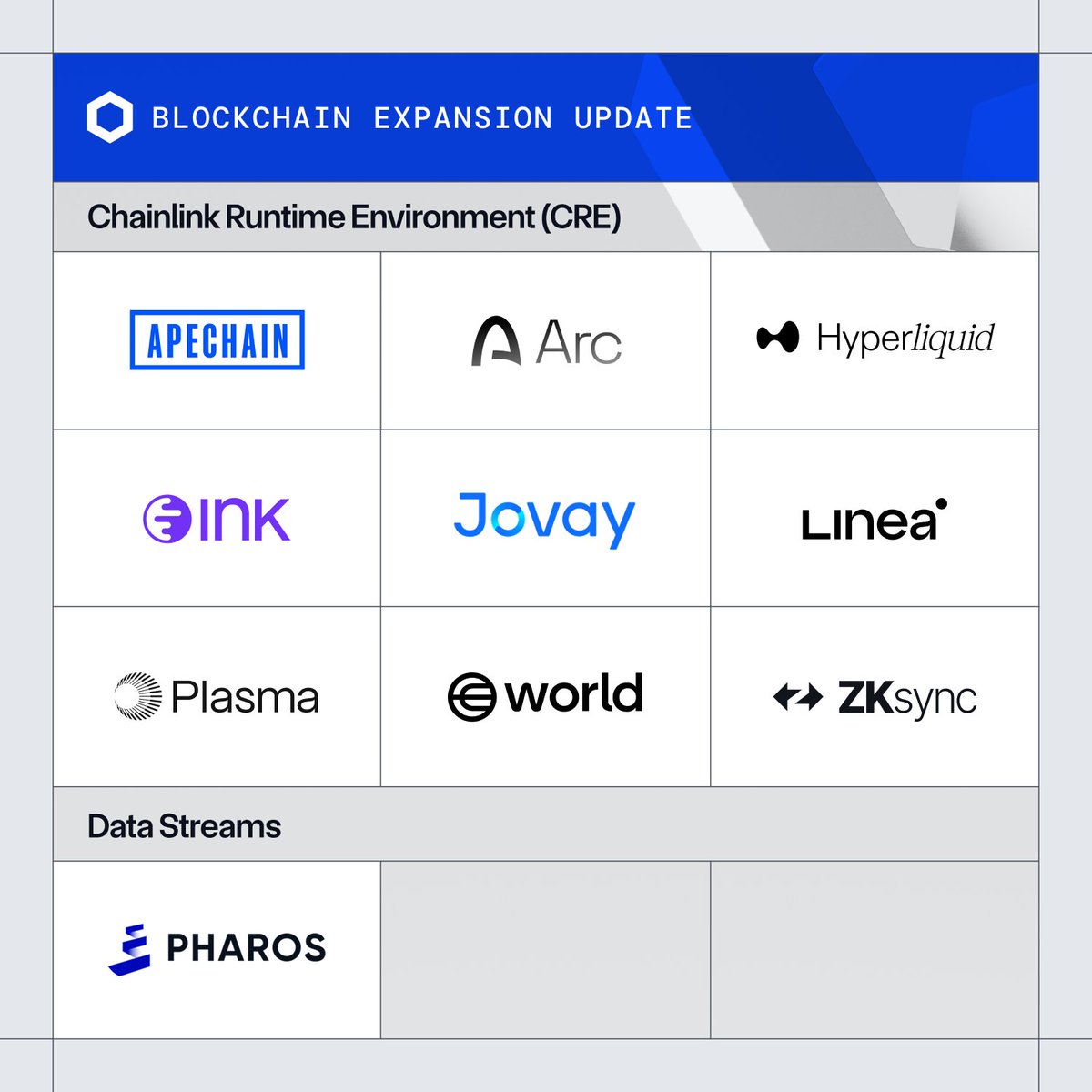
JUST IN: @RobinhoodApp launches public testnet and partners with Chainlink as the oracle platform for Robinhood Chain.
Builders can leverage Chainlink’s data, interoperability, and compliance standards to power advanced tokenization use cases.
Robinhood 🤝 Chainlink
In case you missed it, Robinhood Chain is now live on testnet.
An early step in our work to build onchain financial infrastructure, giving developers a place to build ahead of mainnet.
Explore the testnet: https://t.co/BqIJnHo40E
🚨 BITCOIN MAX SUPPLY IS NO LONGER 21 MILLION NOW.
And this is what causing market's crash.
If you still think Bitcoin price is moving only because of spot buying and selling, you are missing the bigger picture. Bitcoin no longer trades purely as a supply demand asset.
That structure changed the moment large derivatives markets took control of price discovery.
And that shift is a big reason why price behavior feels disconnected from on chain fundamentals today.
Originally, Bitcoin’s valuation was built on two core ideas:
• Fixed supply of 21 million coins
• No ability to duplicate that supply
This made Bitcoin structurally scarce.
Price discovery was driven mostly by real buyers and sellers in the spot market.
But over time, a second layer formed on top of Bitcoin, a financial layer.
This layer includes:
• Cash settled futures
• Perp swaps and options
• Prime broker lending
• WBTC products
• Total return swaps
None of these create new BTC on chain. But they do create synthetic exposure to BTC price.
And that synthetic exposure plays a major role in how price is set. This is where the structure changes.
Once derivatives volume becomes larger than spot volume, price stops reacting mainly to real coin movement.
It starts reacting to positioning, leverage, and liquidation flows.
In simple terms:
Price moves based on how traders are positioned, not just on how many coins are being bought or sold physically.
There is also another layer to this, synthetic supply.
One real BTC can now be referenced or used across multiple financial products at the same time.
For example, the same coin can simultaneously support:
• An ETF share
• A futures position
• A perpetual swap hedge
• Options exposure
• A broker loan structure
• A structured product
This does not increase on chain supply. But it increases tradable exposure linked to that coin.
And that affects price discovery.
When synthetic exposure becomes large relative to real supply, scarcity weakens in market pricing terms.
This is often referred to as synthetic float expansion.
At that stage:
• Rallies get shorted through derivatives
• Leverage builds quickly
• Liquidations drive sharp moves
• Price becomes more volatile
This is not unique to Bitcoin. The same structural shift happened in: Gold, Silver, Oil, Equity indices.
Once derivatives markets became dominant, price discovery shifted away from physical supply alone.
This also explains why Bitcoin sometimes falls even when there's not much spot selling.
Because price pressure can come from:
• Leveraged long liquidations
• Futures short positioning
• Options hedging flows
• ETF arbitrage trades
Not just spot selling.
So the current Bitcoin decline cannot be understood only through retail sentiment or spot flows.
A large part of the move is happening in the derivatives layer, where leverage and positioning drive short term price action.
This does not mean Bitcoin’s supply cap changed on chain.
The 21 million limit still exists. But in financial markets, paper Bitcoin is now dominating and this is what's causing the crash.