No complexity. No accident.
10/10 was caused by irresponsible marketing campaigns by certain companies.
On October 10, tens of billions of dollars were liquidated. As CEO of OKX, we observed clearly that the crypto market’s microstructure fundamentally changed after that day.
Many industry participants believe the damage was more severe than the FTX collapse. Since then, there has been extensive discussion about why it happened and how to prevent a recurrence. The root causes are not difficult to identify.
⸻
What actually happened
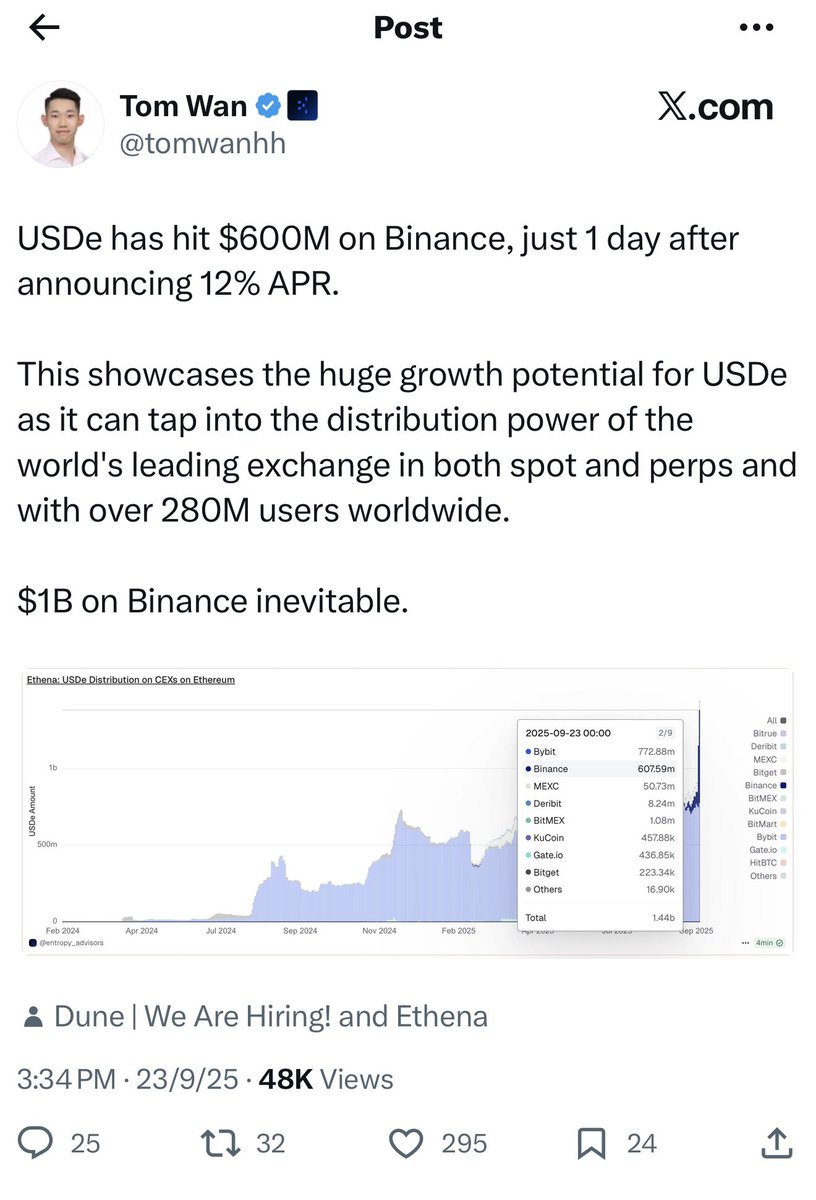
1.Binance launched a temporary user-acquisition campaign offering 12% APY on USDe, while allowing USDe to be used as collateral with the same treatment as USDT and USDC, and without effective limits.
2.USDe is a tokenized hedge fund product.
Ethena raises capital via a so-called “stablecoin,” deploys it into index arbitrage and algorithmic trading strategies, and tokenizes the resulting fund. The token can then be deposited on exchanges to earn yield.
3.USDe is fundamentally different from products such as
BlackRock BUIDL and Franklin Templeton BENJI, which are tokenized money market funds with low-risk profiles.
USDe, by contrast, embeds hedge-fund-level risk. This difference is structural, not cosmetic.
4.Binance users were encouraged to convert USDT and USDC into USDe to earn attractive yields, without sufficient emphasis on the underlying risks. From a user’s perspective, trading with USDe appeared no different from trading with traditional stablecoins—while the actual risk profile was materially higher.
5.Risk escalated further as users:
•converted USDT/USDC into USDe,
•used USDe as collateral to borrow USDT,
•converted the borrowed USDT back into USDe,
•and repeated the cycle.
This leverage loop produced artificial APYs of 24%, 36%, and even 70%+, widely perceived as “low risk” simply because they were offered by a major platform. Systemic risk accumulated rapidly across the global crypto market.
https://t.co/IK2gW4xUOP that point, even a small market shock was sufficient to trigger a collapse.
When volatility hit, USDe depegged quickly. Cascading liquidations followed, and weaknesses in risk management around assets such as WETH and BNSOL further amplified the crash. Some tokens briefly traded near zero.
The damage to global users and companies—including OKX customers—was severe, and recovery will take time.
⸻
Why this matters
I am discussing the root cause, not assigning blame or launching an attack on Binance. Speaking openly about systemic risks is sometimes uncomfortable, but it is necessary if the industry is to mature responsibly.
I expect there may be significant misinformation and coordinated FUD directed at OKX in the near future. Even so, speaking honestly about systemic risk is the right thing to do—and we will continue to do so.
As the largest global platform, Binance has outsized influence—and corresponding responsibility—as an industry leader. Long-term trust in crypto cannot be built on short-term yield games, excessive leverage, or marketing practices that obscure risk.
The industry needs leaders who prioritize market stability, transparency, and responsible innovation—not a winner-take-all mentality where criticism is treated as hostility.
Crypto is still early.
What we choose to normalize today will determine whether this industry earns lasting trust—or repeats the same mistakes again.
MSCI confirmed Digital Asset Treasury Companies will remain in MSCI Indexes for the Feb 2026 review. A strong outcome for neutral indexing and economic reality. Thank you to our investors and the $BTC community.
@bllzz00 @WachMic23908@Dan_Kostecki Nie rozumiem słowa bearishowa płynność, kiedy globalna płynność wybija ath i zaczynamy nowy cykl biznesowy. Lećcie dalej rysować kreski na wykresach.
Dla osób spoza branży, które nie rozumieją:
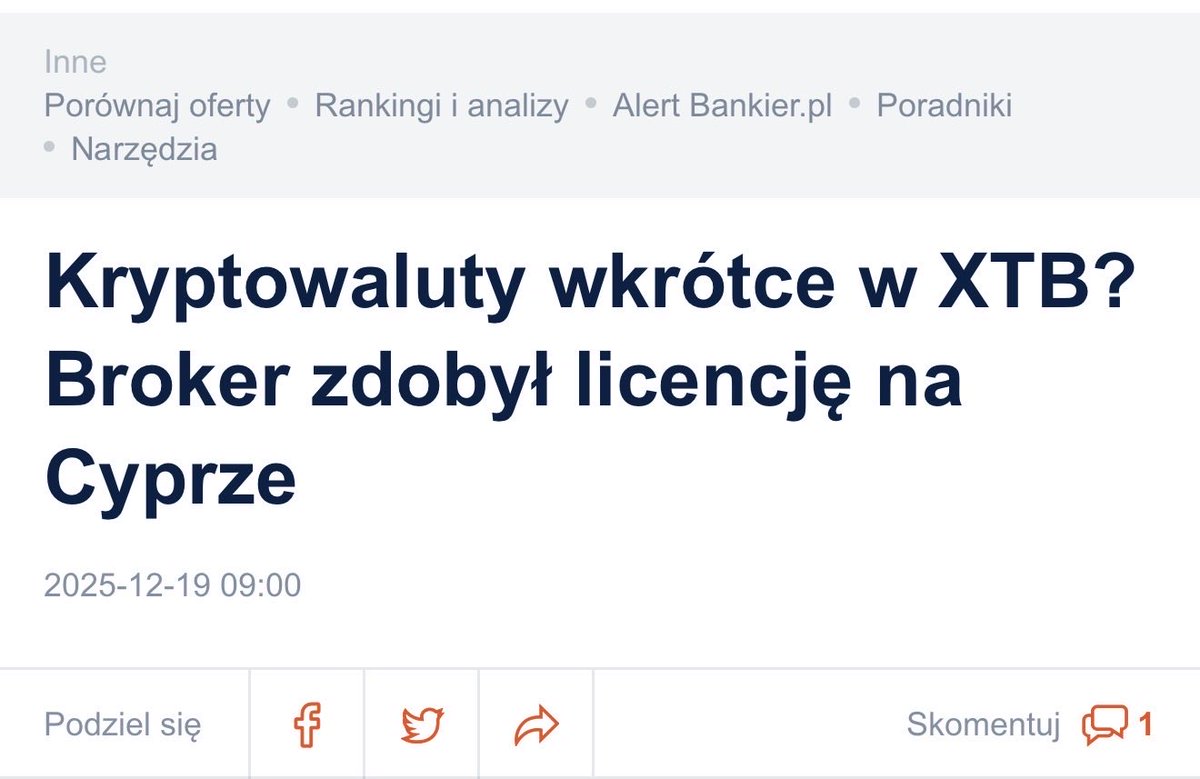
właśnie wyszło, że XTB lobbowało u @donaldtusk za wprowadzeniem surowej dla firm działających w Polsce krypto ustawy aby wykosić konkurencję bo samo załatwiało sobie w międzyczasie łagodniejsza licencję na Cyprze, którą teraz będą paszportowac do Polski.
Swoją drogą to premier nie ma szczęścia do wojenek z @NawrockiKn. Najpierw próbował go zniszczyć na podstawie autorytetu Jacka Muranskiego „postać znana”, a teraz przez XTB, które w 2018 zostało ukarane przez KNF kara w wysokości niemal 10 MLN za działanie na szkodę klientów.
Karol Nawrocki 2:0 Donald Tusk
Bitcoin bear markets happen for exactly two reasons:
1. Global liquidity turns negative (Fed / dollar tightening)
2. Forced selling from a Bitcoin-specific shock (Mt. Gox, miners, fraud)
Everything else is noise.
Let's examine the data, shall we? 1/