Roadmap to a New Nigeria That Is Possible – Part II
Education and Healthcare: The Foundation of a Renewed Nigeria
Recall that on July 1st, in Part 1 of "My Vision for a Productive and Prosperous Nigeria," I outlined the broad framework of my proposed roadmap for national renewal. In it, I emphasised that the transformation of Nigeria must begin with rebuilding our human capital through quality education and healthcare, supported by reforms in Technical and Vocational Education and Training (TVET), character and civic education, and strategic investments that will move our nation from a consumption-driven economy to a production-driven one. I promised to follow up with other parts in the coming weeks and months.
Today, July 16th, in the middle of July, I wish to expand on these two critical pillars - education and healthcare - because they are the bedrock upon which every prosperous nation is built. They are the cornerstones of the foundation that will ensure that a son of nobody can become somebody and remove many from the ranks of the disaffected who often become tools in the insecurity challenges confronting us.
Evidence from around the world shows that quality education and accessible healthcare are among the clearest distinctions between thriving nations and lagging ones. Princeton University Nobel Prize-winning economist Angus Deaton highlights this reality in his book, “The Great Escape: Health, Wealth, and the Origins of Inequality.”
Nothing, therefore, could be further from the truth than the claim by some young people that “education is a scam.” Education, when combined with good health, provides the ladder for individual upward mobility and drives economic growth for the nation.
We must become more intentional about aligning education with our national priorities, as Singapore did, and challenge our country to value education in the same way Deng Xiaoping repeatedly urged China to do from 1978 onwards, with the remarkable transformation we see today.
We will work through commissions that strengthen collaboration among the tiers of government, ensuring that primary education is domiciled at the community and local government levels, with strong parental involvement and curricula that are sensitive to local economic factor endowments and the value chains derived from them.
State governments will be supported to expand high-quality Technical and Vocational Education and Training (TVET), as well as general secondary education, through targeted grants and incentives.
We are also developing schemes that will enable universities to focus more deliberately on specialised areas of teaching and research, making them globally competitive while producing a workforce equipped for the demands of the future.
A NEW Nigeria is POssible. -PO
Why We Must Achieve Economic Sovereignty and Prosperity
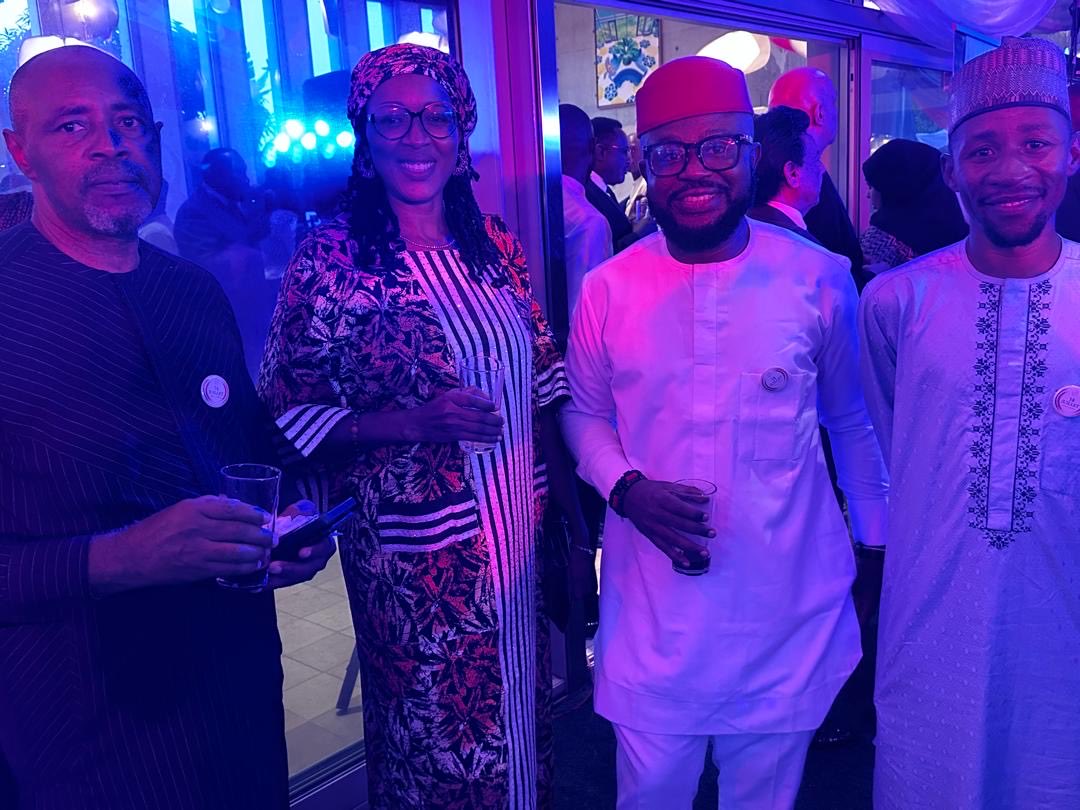
Yesterday, I attended the French National Day. It was nice – good food, friendly atmosphere, I met new people and rekindled with long lost contacts. To me, the event invites both celebration and reflection for Nigeria and the African continent.
For us, it is impossible to separate the ideals of liberty and fraternity from the enduring legacies of colonialism and the unequal relationships that too often persist between former empires and their former colonies.
The occasion prompts honest questions: have our nations truly secured economic sovereignty? Have we built institutions strong enough to serve our people rather than domestic elites and external interests? History teaches that freedom is not a gift bestowed, it is a responsibility that must be claimed, defended, and renewed by every generation.
Today, our country is at a crossroad, battling with hyper-inflation that is crippling lives. Some of the policies by government begs the question: who are those in power serving? One would think that under these circumstances, there’ll be uniform determination to fight bad governance to a standstill. But it doesn’t seem so.
For Nigeria and the African continent, the path forward lies in resolve. We must invest in a different type of education that liberates the mind of the people, strengthen our institutions, add value to our natural resources, and demand accountability from those entrusted with power. Partnerships with the world are most fruitful when they rest on mutual respect and shared benefit.
Ultimately, no nation is handed prosperity or dignity. They are earned through the courage of citizens who insist on good governance, the discipline to build enduring institutions, and the determination to shape their own destiny. That’s one of the reasons I joined politics. We must lead the way, and lead right.
#PoliticsforPublicGood #TakeBackYourGovernment.
Message from Dr. Chiogo Constance Ikokwu (Ugonecheora)
@asiwajuadenola@Jack_ng01 You're just a meddlesome interloper, it's not in your interest or what you represent for the opposition to actually come together to dislodge the pestilence at #Asorock and it's tentacles spreads across States and local government areas.
Elon Musk showed up to his own birthday party in 2008 and nobody was there. He had invited friends. Most of them had stopped returning his calls because he had borrowed money from nearly everyone he knew and the companies were failing publicly.
His brother Kimbal was the only one who came. They sat together in an almost empty room and Elon said something Kimbal has never forgotten. He said "I think I used up all my goodwill." Not dramatically. Factually. Like he was reading a balance sheet of human relationships and the number had hit zero.
This was the man who had made his friends millionaires from PayPal. The same people who became wealthy because of him were now avoiding his calls because his new ventures looked like they were going to fail. The loyalty evaporated at exactly the same speed as the bank balance.
Kimbal said Elon didn't seem angry about it. He seemed like a man confirming something he had always suspected. That most relationships are transactional and the transaction was no longer favorable.
The loneliest birthday in Silicon Valley history happened to a man who had made more people rich than almost anyone in the room. And the lesson it taught him about loyalty and isolation is visible in every decision he has made since.
He stopped expecting people to stay. He started expecting them to leave. And he built everything after that accordingly.
@nifemioguntoye So glad it was discovered under this circumstances,the State will now take up his medical bills till he has a clean bill of health by his physicians.
Wish him and others quick recovery.
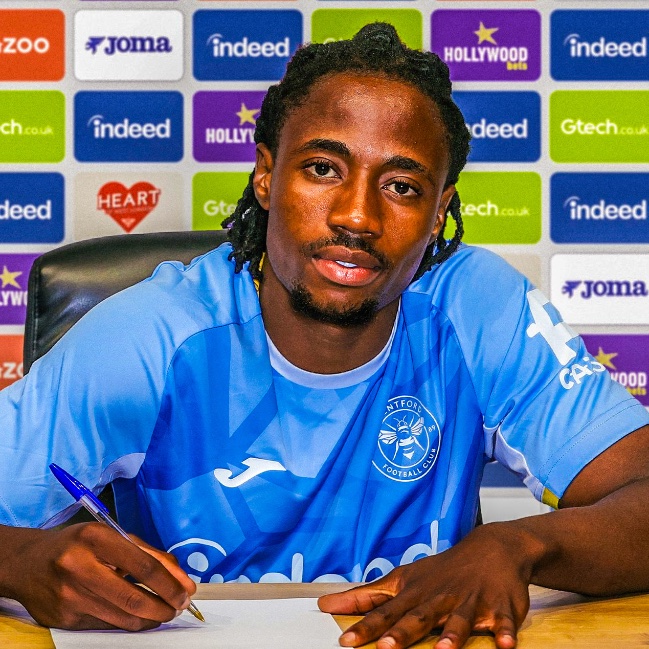
🚨🇳🇬 𝐎𝐅𝐅𝐈𝐂𝐈𝐀𝐋 | Benjamin Fredrick (21) has been promoted to Brentford's first team! ✅
He is a centre-back. Fredrick started his senior career at Nigerian club ABS F.C.
"We see a lot of POTENTIAL in him.", says Keith Andrews. ⭐
I was so poor in Mathematics that I was nicknamed "I don't know Math (sic)" in Class 6 because I gave that as answer to my teacher when he asked me a question in class.
JSS 1-3, same story.
I think I had P7 in it in Junior WAEC.
SS 1-2, similar story.
Then in January 1999, second term into SS2, with GCE staring me in the face, I attended a private lesson. The teacher taught me Factorization and I realized I got it. His explanation was spot on.
For the first time in my life, I understood a math topic clearly.
Then I went back to JSS 1 math texbook for personal study and finished it within a week. Then moved to JSS 2 and finished it within 2 weeks. Then JSS 3 math, then SS1, then SS2.
Then to GCE past questions.
I sat for GCE in August 1999 or so during holiday after SSS2 and made a B2.
Then WAEC in SSS3 in May 2000 and got B2 again (felt bad for this because I wanted A1).
Meanwhile, I saw that many of my school mates in Science classes (who did Further Math) did not even have B2 that I had in Math in WAEC and that prompted me to enrol for another private lesson in Further Math. "If I could score higher in Math than many science students that did Further math, I should be able to do Further math too".
I practiced a couple of topics in Further Math - Calculus, Partial Fraction etc - while waiting for OAU to resume, knowing I would need Mathematics to do well in Economics that I got admission for.
Math soon became my favourite subject. Needless to say I had A in all but one of the Math courses I did from Year 1 to graduation in Ife.
From being poor in Math to it becoming my best subject, it was a comeback I never saw coming. A turnaround that contributed largely to who I am today (my eventual grade in Economics helped largely by my scores in Math courses).
In 2022, 23 years after, I searched for and reconnected with the private teacher that saved me in SS 2 in 1999.
Meet Magnus Emenuga, the Young IGBO engineer and founder of MEmbedded TechLab, that built a mobile phone from scratch and presented to Abia State Governor Alex Otti, the Minister of Education, and development partners during an innovation event in Aba.
@ChidiOdinkalu@Egbeamofinoodua@NigBarAssoc I'm not a lawyer but your take seems rational to a layman like me in the field of legal profession.
Let the right thing be done always.