Good trades fail all the time.
Structured decision-making is what separates outcomes.
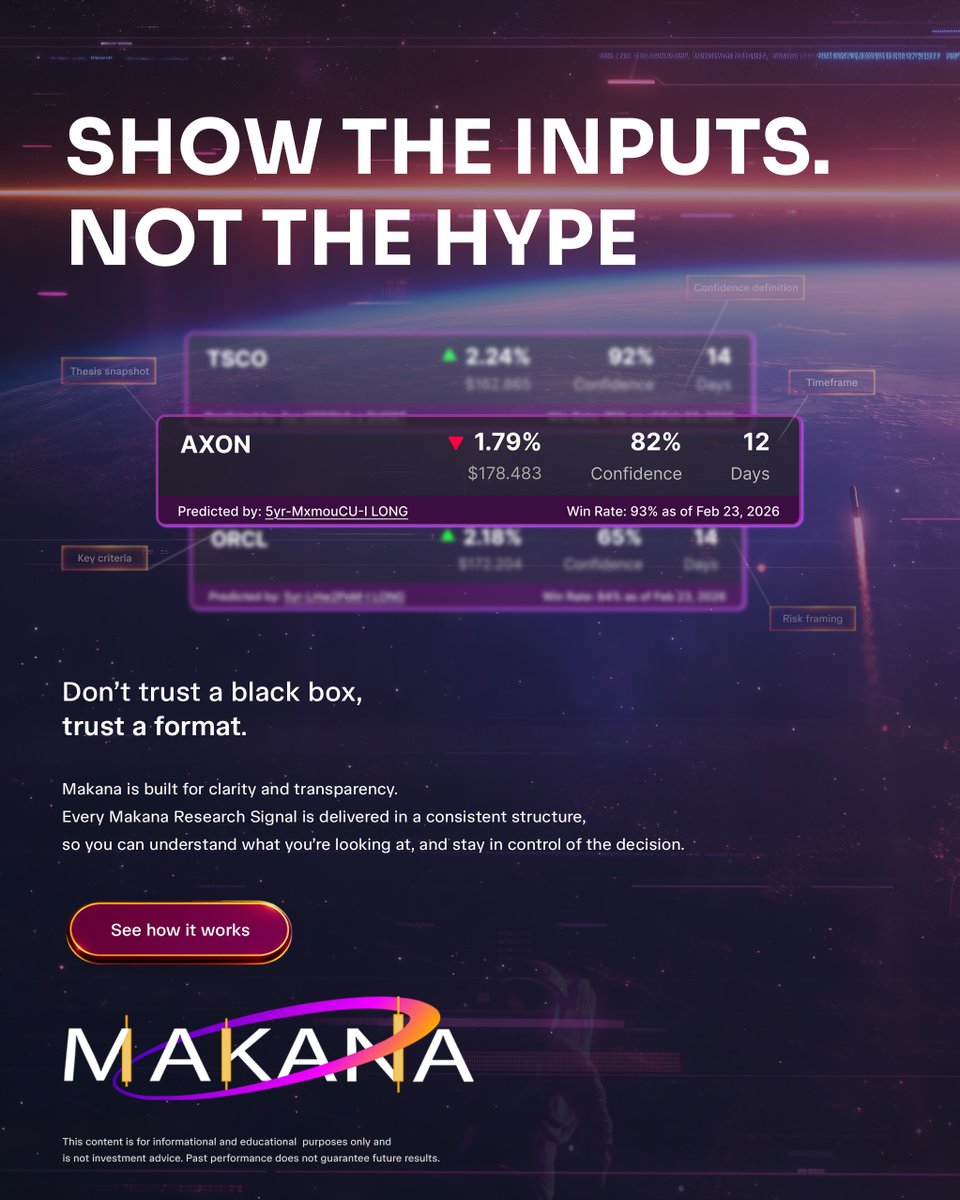
Here’s what a Makana signal means:
→ Confidence: probability of the move
→ Timeframe: expected window (5–10 days)
→ Target price: where you take profit
A graded signal — direction, confidence, time window — and a real decision on top of it.
Makana doesn't make the call. It gives you a better place to start.
▲ $NHPBP · 99.97% confidence · Long
The next 5 signals are free — the link in my bio.
🔑Keys to remember:
1⃣These are target-based signals with project move and time window. So don't ask "where did it close?" ask "did the price move through the target range while the signal was active?"
2�� Our signals are released in an email newsletter as statistical research based on data, not headlines or news.
❗️Not advice, just research!
We tracked 5 of our long signals released over the weekend on Sunday against the first tradeable price on Monday morning.
From the price snapshot at close today (05/21/2026):
COHR: +5.95%
SMTC: +10.05%
FLNC: -3.54%
CENX: +6.41%
CRWD: +10.16%
Average move: +5.8%
Not every signal wins.
What matters is:
→ risk vs reward
→ consistency over time
→ discipline in execution
Even the best traders are right ~50% of the time.
The edge is:
→ small losses
→ timeframe of position
That’s how this game is played.
You don’t need more trades.
You need better ones.
Most traders spend 40+ hours/month
searching for setups.
We reduce that to minutes.
Makana delivers:
→ 5 high-quality opportunities/month
→ clear targets
→ defined timeframes
Your job isn’t to search. It’s to execute.
Here's what The AI Analyst signals mean:
> Confidence: probability of the move
> Days: expected window (5-10 days)
> Target Price: where you take profit
> Win Rate: the models win rate on past signals produced (the "Predicted by:" section is the model)
If you’re looking for “quick flips” … this isn’t for you.
Makana isn’t day trading
We focus on:
→ 5–10 day setups
→ 3–5% opportunities
→ High-probability signals (only +75% confidence)
The best traders don’t chase signals.
They follow structure.
Most people:
→ jump in late
→ exit early
→ trade emotionally
Professionals:
→ define entry
�� define exit
→ execute consistently
Makana exists for one reason:
To remove the guesswork.