Coming soon: Oriens Extremus, "Exploring Revenge across Chinese History". Ed. Markus Haselbeck @CiaoCiaota, feat. Michael Nylan, Wen Ruoxuan, Marco Pouget @make_boluo_, Joachim Gentz, Zhang Rui, Raffaela Rettinger, Alison Bailey, Woohui Park, Zhang Huiwen. https://t.co/a434l8Q1pf
From the Western to the Eastern Han period, population numbers had dwindled. But within a rather short time, the registered population of the Eastern Han climbed to around 50 million in the first millennium CE again.
At the German Association for Chinese Studies' 2026 conference on "Thinking together inner and outer worlds of China", I learned (among many other things): ...
At this year's DVCS conference, I will give a presentation on the relationship between the human-governed state and the natural realm in the Zhouli 周禮 (Rites of Zhou or Comprehensive Rites). Curious as to what Göttingen is like!
There is now a combined hub for Taiwan Studies in Germany and beyond: TAPHub. https://t.co/1FcjkEFI27 It launched in September and contains a database for research and teaching, one for finding researchers working on Taiwan, and an activity tab.
Early Chinese forensic instructions (洗冤集錄) have been read as reflecting a supposedly innate proneness of Chinese people to unalive themselves rather than going to prison by early modern European observers. Chinese texts, meanwhile, do not reflect high numbers of such deaths.
Chinese and Taiwanese schoolbooks (both conducted curriculum reforms around 2020) on world history are intended to cover a multipolar world, yet still mostly cover European-dominated political history, for complex pragmatic and other reasons.
Jiang Qing 蔣慶 may not have been the first or only thinker to write about "national shame" (國恥), but he enmeshed the concept within the Gongyang exegetical tradition, concluding that revenge was an appropriate course of action for China. @CiaoCiaota
There is a monument to Chinese labourers in World War I in Weihai, built in the shape of a cross. That is, officially, it is a crossing, emblematic of the suffering and lack of recognition they were exposed to.
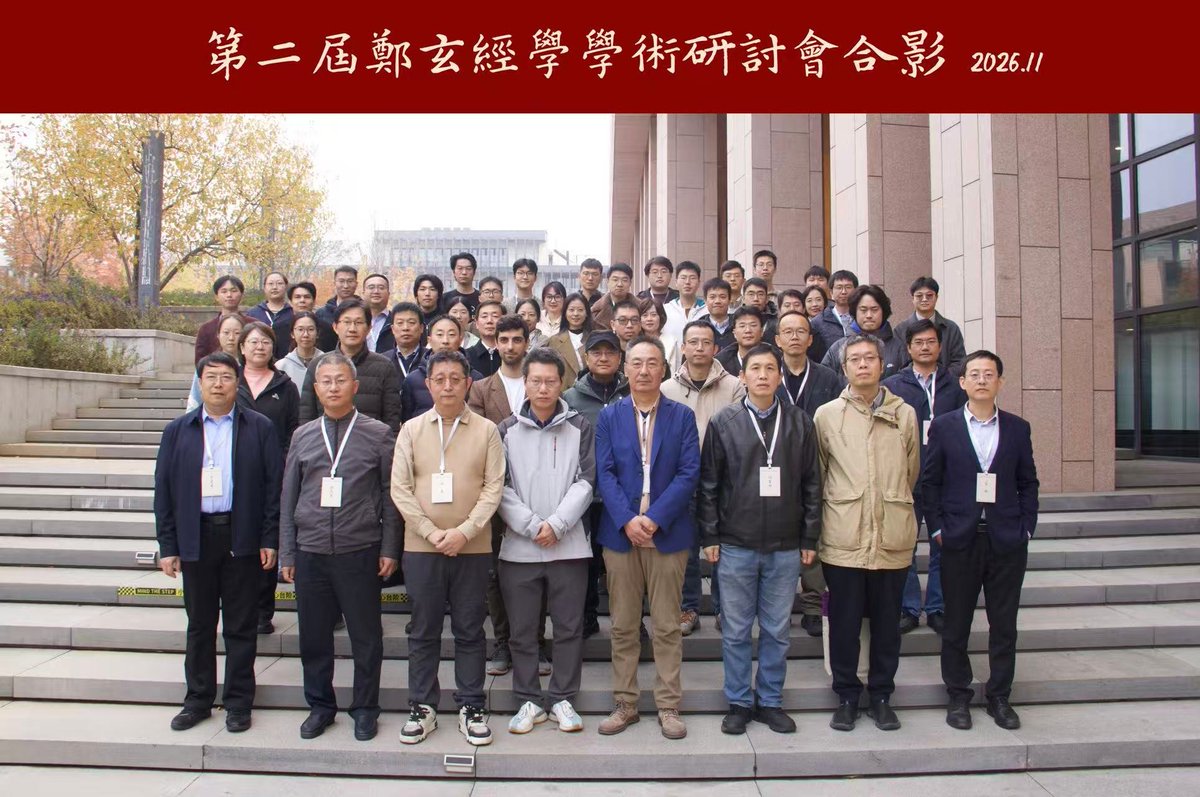
Last week, I had the honour to participate in a conference specifically dedicated to the classical studies (經學) of Zheng Xuan 鄭玄 at Tsinghua University in Beijing. @Tsinghua_Uni I met a great many scholars upon whose work my dissertation and ongoing research draws...
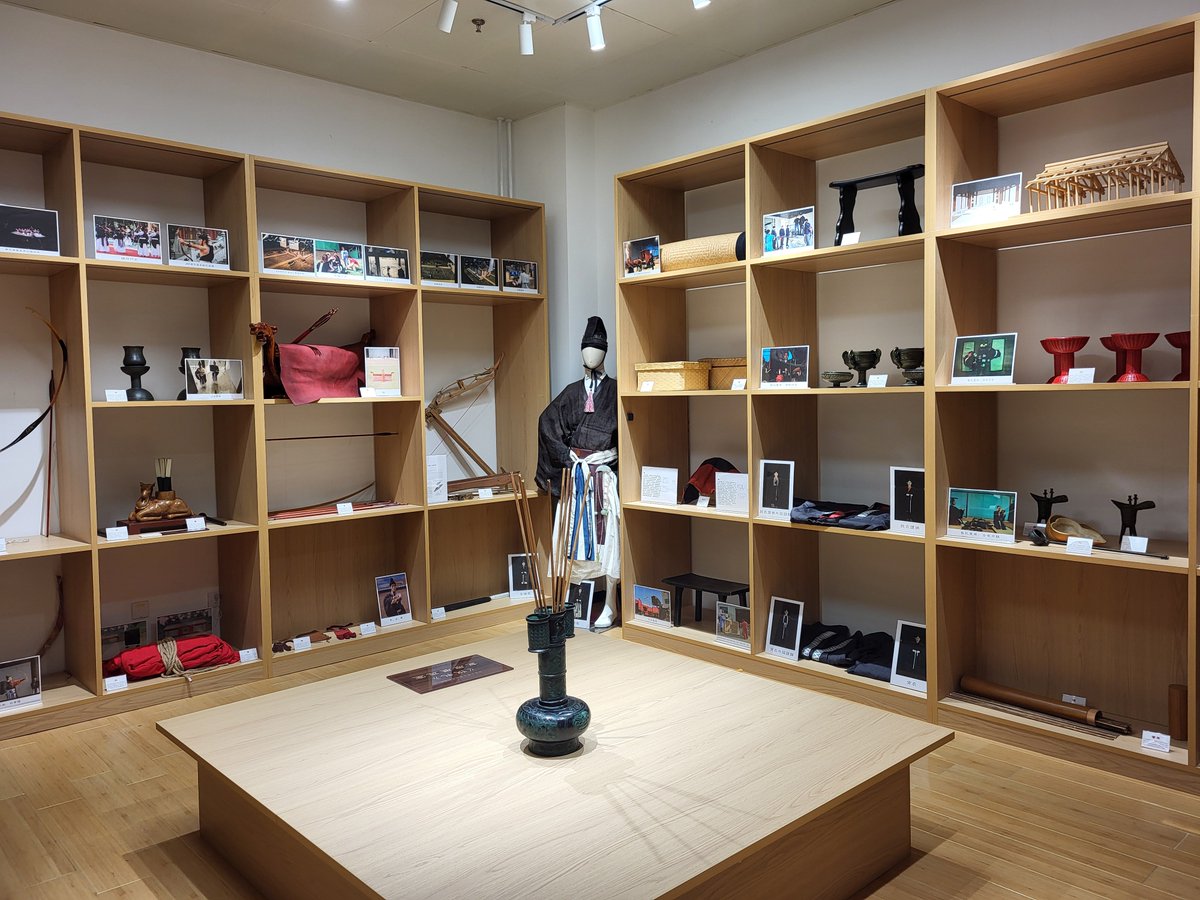
@Tsinghua_Uni Of particular interest to me was the exhibition to replicas of ritual objects and robes, alongside an introduction to the experimental history on rituals described in the Yili 儀禮 conducted at Tsinghua.
@Focus_Taiwan "the [15 minute] walk would help reduce the penguins' risk of bumblefoot, which can develop due to insufficient physical activity."
Almost as if it's not even that great for them to be locked up in a narrow concrete prison...
@Tsinghua_Uni Consensus seemed to be that Zheng Xuan studies, as well as "classical studies" (經學) more generally, are still considered young disciplines in China, so there is still much methodological exploration needed. Zheng Xuan's contributions are increasingly read as philosophical.
@Tsinghua_Uni The conference served as a prelude to further scholarly activities and an international conference surrounding the anniversary of Zheng Xuan's passing to be held next year, in what would be his home town today: Weifang 濰坊, Shandong province.
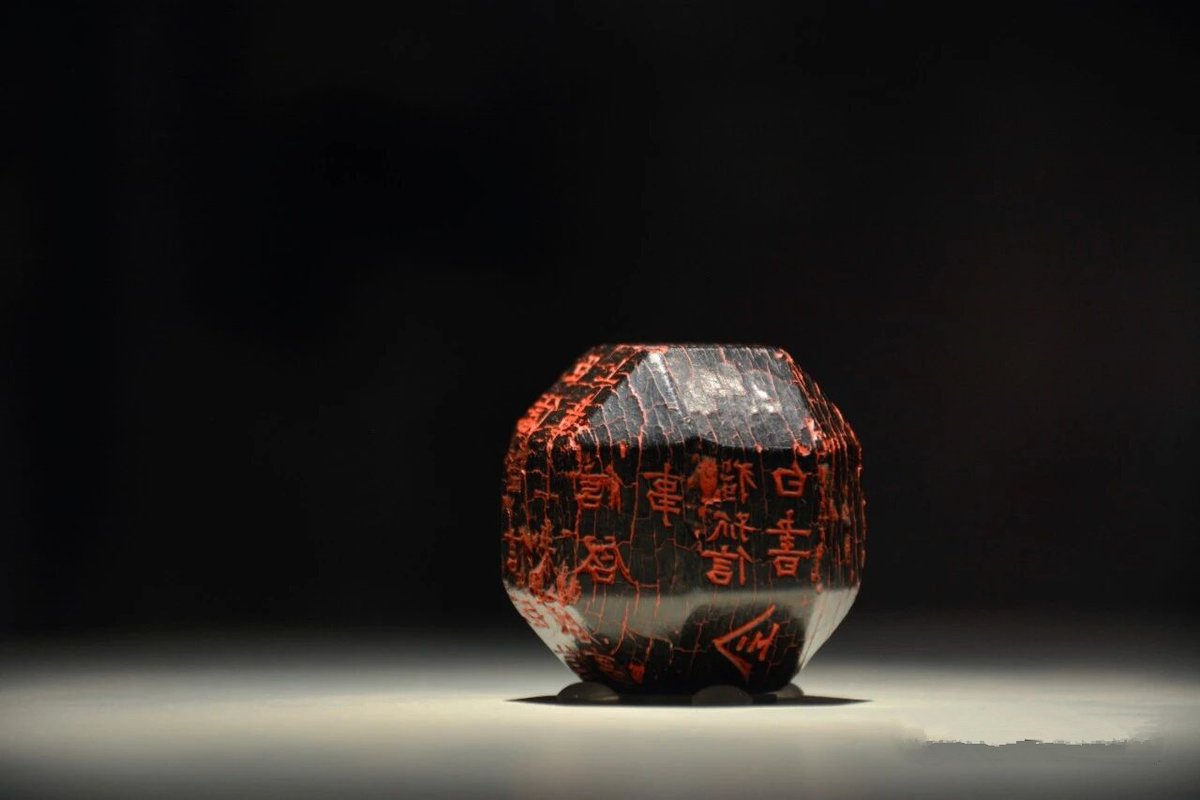
Imagine carrying a single seal that could handle almost any official or personal correspondence. That's exactly what this 26-sided seal from the Western Wei Dynasty (535-556) was designed to do!
Made of jet, this egg-sized seal belonged to Dugu Xin (502-557), a powerful general and one of the Eight Pillar Statesmen. Its 26 faces carried different inscriptions for issuing official orders, submitting reports to the emperor, exchanging letters, and even writing family messages. A masterpiece of both calligraphy and seal carving!
Its owner was quite a character, too. Renowned for his handsome looks and political influence, Dugu Xin also became famous because three of his daughters married into powerful imperial families, earning him the nickname "China's Number One Father-in-Law."
Want to see this extraordinary seal up close? Find it in Gallery 2 on the second floor of the Shaanxi History Museum in Xi'an, Shaanxi province.