Why is there no concept of summer jobs for teenagers in India?
14-15 year old in US, UK, Aus - works at McDonalds, Starbucks, Target
14-15 year old in India - Start preparing for the big entrance exams, whose paper may get leaked anyway
The biggest problem with campus hiring in India isn't technical skill - it’s operational maturity. I've hired in India, US & Australia - the gap in mindset and 'job readiness' is mind boggling .
When teenagers in the US/UK/Australia work retail or food service at 15, they learn:
• How to become independent at an early age
• Customer empathy & patience under pressure
• How to collaborate with complete strangers
• The difference between effort and output
In India, we treat our 21-year-olds like fragile schoolchildren until the day they graduate, then expect them to magically think like leaders. That doesn't happen!
Academics build resumes; early real-world work builds professional instincts.
Time for a much needed change?
Men should never marry, it's a trap.
Instead:
>Gonfor live-in like friends with benifits
>Hire a maid to clean your house and make a food.
>Get a dog for emotional support.
>Play video games, and sports, read books for entertainment.
>Go gym and eat healthy.
कुल मिलाकर भ्रष्ट नेता, अग्यानी तंत्र, बेहद भ्रष्ट ठेकेदार, चाइल्ड ट्रैफिकिंग के सरगना इत्यादि मिलकर समाज की ऐसी तैसी कर रहे थे/हैं और भगत भारतीय जन अपनी लौकिक समस्याओं को समझकर और तार्किक उद्यम से नहीं बल्कि श्रद्धा से हल कर लेना चाहता है ...
|| Everything That We Should Know About The Dark Days of Indian Democracy: Unraveling the #Emergency of 1975-1977 ||
In the annals of Indian history, few periods are as controversial and consequential as the 21 months between June 1975 and March 1977. Known simply as "The Emergency," this era saw the world's largest democracy teeter on the brink of authoritarianism. It's a tale of political ambition, judicial battles, and the fragility of democratic institutions. Let's dive into the complex web of events that led to this constitutional crisis and explore its lasting impact on Indian society.
Setting the Stage: A Clash of Powers
To understand the Emergency, we need to rewind to the early days of independent India. The nation's founders had crafted a constitution that enshrined fundamental rights and established a delicate balance between the legislature, executive, and judiciary. However, this balance was soon put to the test.
The newly formed government, led by Prime Minister Jawaharlal Nehru, embarked on an ambitious program of land reforms. These socialist-inspired policies aimed to redistribute wealth and reduce inequality. But there was a catch: many of these reforms clashed with the fundamental right to property, which was then enshrined in the constitution.
To overcome this hurdle, the government began amending the constitution. They created the Ninth Schedule, a constitutional safeguard that protected certain laws from judicial review. Initially, the Supreme Court was supportive, recognizing the need for social reforms. In early cases like Sajjan Singh and Shankari Prasad, the court sided with the government.
However, as the years passed, concerns grew about the potential misuse of these powers. The stage was set for a landmark legal battle that would reshape the relationship between India's parliament and its judiciary.
Golaknath: The Case that Shook the System
In 1967, the Supreme Court heard I.C. Golaknath v. State of Punjab. This case challenged the government's power to amend fundamental rights. The key question was whether constitutional amendments fell under the definition of "law" in Article 13, which prohibited the state from making laws that violated fundamental rights.
In a close 6-5 decision, the court ruled that constitutional amendments were indeed "law" under Article 13. This meant that Parliament couldn't amend the fundamental rights section of the constitution at all. It was a bombshell ruling that effectively placed fundamental rights beyond the reach of the legislature.
The Golaknath verdict created a major rift between the judiciary and the legislature. Politicians saw it as judicial overreach, while supporters hailed it as a necessary check on parliamentary power. This tension would simmer for years, setting the stage for future confrontations.
Political Storms Brewing
While legal battles raged in the courts, India's political landscape was undergoing seismic shifts. The 1971 general election saw Indira Gandhi, daughter of Jawaharlal Nehru, lead her Congress party to a landslide victory. Her campaign slogan, "Garibi Hatao" (Eliminate Poverty), resonated with millions of Indians struggling with economic hardship.
However, turning campaign promises into reality proved challenging. The government pushed for more constitutional amendments to overturn unfavorable court rulings on issues like the abolition of princely privileges (privy purses) and bank nationalization. These amendments further strained the relationship with the judiciary.
The period from 1973 to 1975 saw increasing social unrest. Strikes and lockouts paralyzed industries. Opposition parties gained strength, and the government faced repeated no-confidence motions in Parliament. The economy struggled under the weight of global oil shocks and domestic policy missteps.
Amidst this turmoil, a court case emerged that would push the country to the brink.
Indira Gandhi v. Raj Narayan: The Spark that Lit the Fire
In 1971, Raj Narayan, a rival politician, had contested against Indira Gandhi in her constituency of Rae Bareli. After losing the election, he filed a case alleging electoral malpractices. This seemingly routine case would have far-reaching consequences.
In June 1975, Justice Jagmohan Sinha of the Allahabad High Court delivered a bombshell verdict. He found Prime Minister Indira Gandhi guilty of minor electoral violations and invalidated her election. While she was allowed to remain in office pending an appeal, the political implications were enormous. For the first time, a sitting Prime Minister had been found guilty of electoral fraud.
The judgment sent shockwaves through the political establishment. Opposition leader Jayaprakash Narayan, already leading a movement against government corruption, intensified his calls for Indira Gandhi's resignation. Mass rallies and protests erupted across the country.
Indira Gandhi appealed to the Supreme Court, but only received a conditional stay. The political pressure was mounting, and her grip on power seemed to be slipping. It was in this atmosphere of crisis that the fateful decision to declare an Emergency was made.
The Emergency Descends
On the night of June 25, 1975, President Fakhruddin Ali Ahmed, acting on the advice of Prime Minister Indira Gandhi, declared a state of Emergency. The official justification cited threats to national security and economic instability. In reality, it was a desperate move to cling to power in the face of mounting opposition.
The consequences were immediate and far-reaching:
1. Fundamental Rights Suspended: The very core of India's democratic constitution was put on hold. Citizens lost their right to seek judicial remedies for rights violations.
2. Mass Arrests: Thousands of opposition leaders, activists, and journalists were arrested and detained without trial. Many were held under the draconian Maintenance of Internal Security Act (MISA).
3. Press Censorship: Strict controls were imposed on the media. Newspapers had to submit content for approval before publication, and critical voices were silenced.
4. Constitutional Amendments: The 38th and 39th Amendments to the constitution were passed, further centralizing power in the hands of the Prime Minister.
5. Sterilization Drive: In a controversial move to control population growth, a mass sterilization campaign was launched. Many reported instances of coercion and forced procedures.
6. Economic Measures: The government implemented its 20-point economic program with renewed vigor, free from judicial interference.
For 21 months, India experienced a form of authoritarian rule unprecedented in its democratic history. Civil liberties were curtailed, dissent was crushed, and the institutions meant to check government power were rendered toothless.
Life Under the Emergency
The Emergency affected different segments of society in various ways. For some, particularly in urban areas, it brought a semblance of order and efficiency.
For those who found themselves on the wrong side of the regime, life became a nightmare. Prisons filled with political prisoners, many held without formal charges. Student leaders, trade unionists, and opposition party workers faced harassment and detention. The atmosphere of fear and suspicion permeated society.
The press, often called the fourth pillar of democracy, suffered greatly. Prominent journalists were arrested, and newspapers faced intense scrutiny. The famous blank editorial published by the Indian Express, with just the word "Resigned" as a byline, became a symbol of protest against censorship.
Perhaps the most controversial aspect of the Emergency was the forced sterilization campaign. Led by Sanjay Gandhi, the Prime Minister's son, this program aimed to control population growth through aggressive measures. There were widespread reports of coercion, with people being rounded up for sterilization procedures against their will.
The Judiciary During the Emergency
The role of the judiciary during this period was complex. While some judges stood firm against government overreach, others were more accommodating. The infamous ADM Jabalpur case (also known as the Habeas Corpus case) stands as a dark chapter in Indian judicial history.
In this case, the Supreme Court was asked to decide whether citizens had the right to approach courts for enforcement of their fundamental rights during the Emergency. In a 4-1 decision, the court ruled that such rights were indeed suspended during an Emergency. Only Justice H.R. Khanna dissented, arguing that the right to life and liberty was inalienable.
This judgment effectively gave legal sanction to the government's actions and left citizens without recourse against arbitrary detention. Justice Khanna's principled stand cost him the position of Chief Justice, but he is remembered as a hero who chose conscience over career.
The End of the Emergency
By early 1977, international and domestic pressure was mounting on Indira Gandhi to restore democratic norms. Confident in her position and perhaps misjudging the public mood, she called for fresh elections in March 1977.
The result was a political earthquake. The newly formed Janata Party, a coalition of opposition groups, swept to power. Indira Gandhi herself lost her seat, as did many of her close associates. The Emergency had been decisively rejected by the Indian electorate.
The Aftermath and Legacy
The immediate aftermath of the Emergency saw attempts to right the wrongs of the previous 21 months. Political prisoners were released, press freedoms restored, and investigations launched into Emergency-era excesses. However, the Janata government, composed of disparate groups united mainly by opposition to Indira Gandhi, proved unstable. Internal squabbles and policy disagreements led to its collapse in 1979.
Ironically, Indira Gandhi herself returned to power in the 1980 elections, capitalizing on the Janata government's failures. However, the experience of the Emergency had lasting impacts on Indian democracy:
1. Constitutional Safeguards: The 44th Amendment to the constitution made it more difficult to declare and sustain a state of emergency. Fundamental rights related to life and liberty were made non-suspendable even during emergencies.
2. Judicial Activism: In the post-Emergency era, the Supreme Court became more assertive in protecting fundamental rights. The concept of Public Interest Litigation (PIL) emerged, making it easier for citizens to approach courts on matters of public importance.
3. Media Resilience: The Indian press, having experienced censorship firsthand, became more vigilant against threats to press freedom.
4. Political Awareness: The Emergency served as a wake-up call for many Indians about the fragility of democratic institutions. It fostered a culture of political engagement and skepticism towards unchecked power.
5. Electoral Consequences: Political parties learned that Indian voters could and would punish authoritarianism at the ballot box.
The Legal Aftermath: Kesavananda Bharati and the Basic Structure Doctrine
In the legal realm, the Emergency period led to a reevaluation of the relationship between Parliament and the Constitution. The landmark case of Kesavananda Bharati v. State of Kerala, decided just before the Emergency in 1973, gained new significance.
In this case, the Supreme Court partially overruled the Golaknath verdict. It held that Parliament did have the power to amend any part of the Constitution. However, it introduced a crucial caveat: amendments could not alter the "basic structure" of the Constitution.
This "basic structure doctrine" became a powerful tool for the judiciary to check legislative overreach. While Parliament could amend the Constitution, it couldn't change its fundamental character – principles like democracy, federalism, secularism, and the rule of law were deemed sacrosanct.
The Basic Structure doctrine has since been used in numerous cases to strike down constitutional amendments that threatened India's democratic fabric. It stands as a lasting legacy of the legal battles surrounding the Emergency period.
Lessons for Democracy
The Emergency period serves as a cautionary tale about the fragility of democratic institutions. It demonstrates how quickly hard-won freedoms can be eroded when power is concentrated and checks and balances fail.
Some key lessons include:
1. The importance of a robust and independent judiciary.
2. The need for a free press to act as a watchdog against government excesses.
3. The crucial role of opposition parties in a healthy democracy.
4. The power of citizen engagement and the ultimate sovereignty of the electorate.
5. The danger of personality cults and dynastic politics in undermining democratic norms.
Conclusion: A Democracy Tested but Resilient
The Emergency of 1975-77 remains a contentious chapter in Indian history. For some, it represents a period of discipline and progress, while for others, it was a dark time of repression and fear. The truth, as often happens, lies somewhere in between.
What's undeniable is that the Emergency tested the resilience of Indian democracy. That the country emerged from this ordeal with its democratic framework intact is a testament to the strength of its institutions and the will of its people.
Today, as India continues to navigate the challenges of governance in a diverse and complex society, the lessons of the Emergency remain relevant. They serve as a reminder of the price of liberty and the constant vigilance required to maintain a free and open society.
The Emergency have been a lowest point in India's democratic journey. In facing and overcoming this crisis, India demonstrated the enduring power of democratic ideals and the ability of a free people to correct the course of their nation's history.
Chauragarh Temple in Pachmarhi.
This temple dedicated to Lord Shiv is on top of Chauragarh hill and devotees have to climb nearly 1300 steps to reach the temple at the crest. Devotees offer Trishul in this temple.
“अच्छे लोगों की परीक्षा नहीं लेना चाहिए, क्योंकि वे पारे की तरह होते हैं, जब उनपर चोट होती है तो वे टूटते नहीं बल्कि फिसलकर चुपचाप आपके जीवन से बाहर निकल जाते हैं”
जय श्री राम🙏
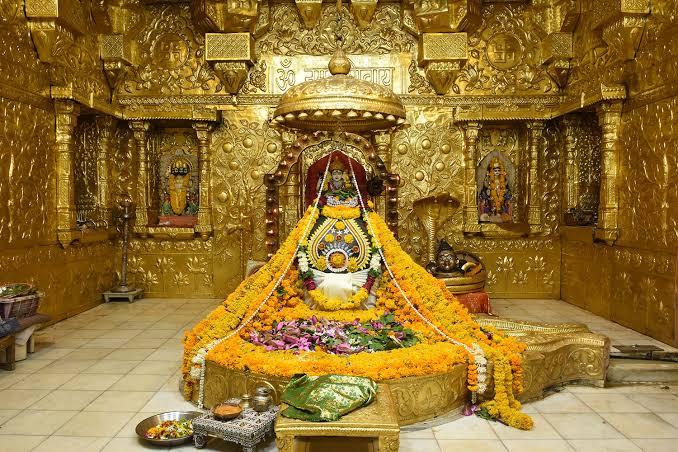
Shree Somnath Jyotirling Temple.
Somnath was plundered 17 times, but was rebuilt stronger & bigger.
Shree Somnath is first among the twelve Jyotirlings.
Chandrayaan-3 Mission:
The orbit-raising maneuver (Earth-bound perigee firing) is performed successfully from ISTRAC/ISRO, Bengaluru.
The spacecraft is expected to attain an orbit of 127609 km x 236 km. The achieved orbit will be confirmed after the observations.
The next firing, the TransLunar Injection (TLI), is planned for August 1, 2023, between 12 midnight and 1 am IST.