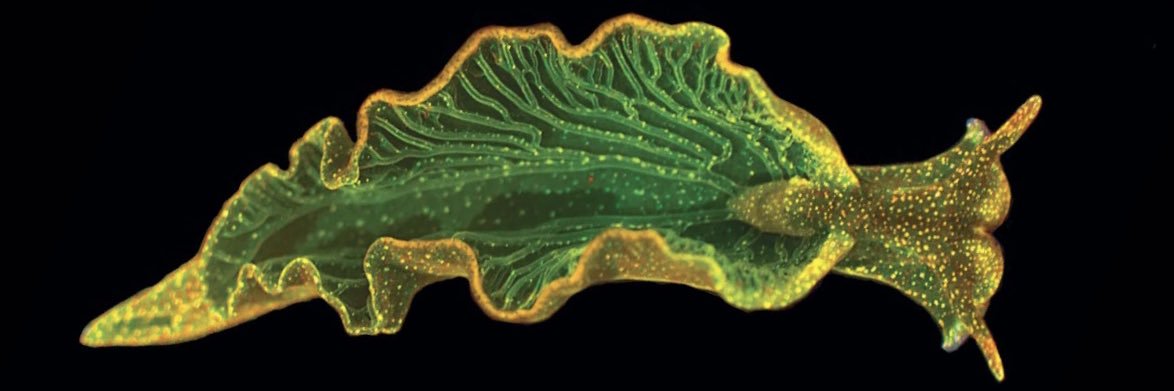
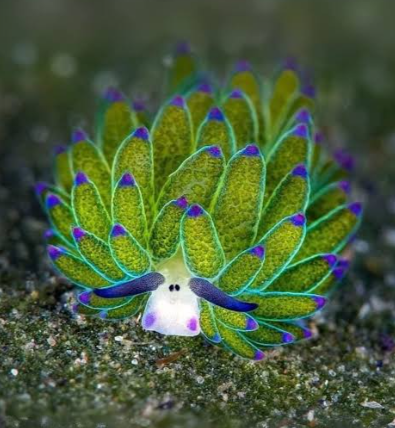
like other sacoglossan sea slugs, elysia flavipunctata performs kleptoplasty. it uses a specialized tooth to pierce algal cells and suck out the contents. instead of digesting the plants chloroplasts,it keeps them alive inside its own gut tissues and generates energy from the sun
often nicknamed "leaf sheep", costasiella k. is one of the only creatures that can essentially perform photosynthesis. theyre one of the most well known species of sea slug due to their adorable appearance!!
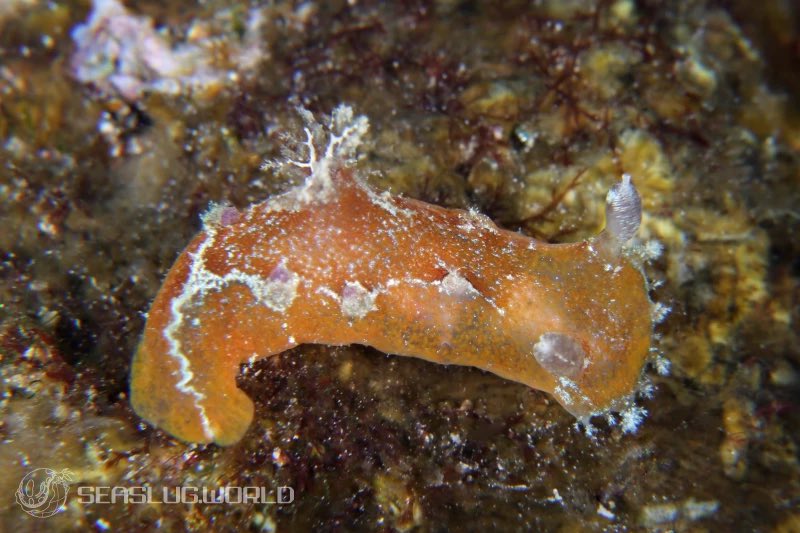
a. williamsi is a tiny nudibranch that mimics phyllidia species, copying their body shape and warning coloration, phyllidia are chemically unpalatable to predators, so the resemblance may help a. williamsi avoid being eaten (we dont know if theyre doing a good job tho...)
chelidonura amoena gets its name from its swallow-like tail extensions, its left “tail” is usually longer than the right! no two individuals look exactly alike, and many have shortened or missing tails from damage. theyre famous for their extreme color variation
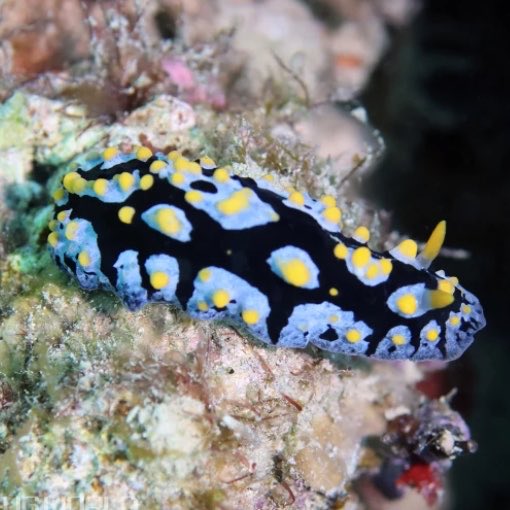
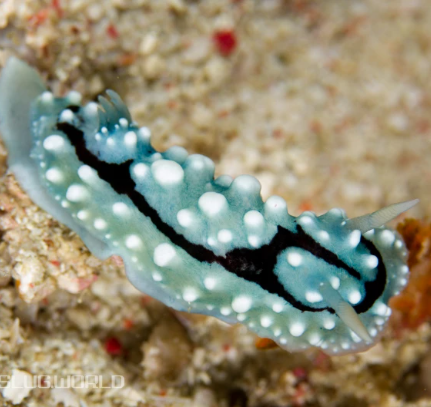
phyllidia picta wasn't always called that, it was once classified as fryeria menindie before research showed they were the same species. it also ranges across the western pacific, from malaysia and indonesia to fiji
like many other sea slugs, the thuridilla feeds on algae, however instead of digesting it it performs kleptoplasty (it steals and stores the chloroplasts in its own skin, meaning it briefly photosynthesizes). this species is also notoriously skittish
the entire underside of its front skirt is solid purple, its part of a group of sea slugs that "flaps" its front mantle up and down as it crawls, the continuous flapping creates a flashing purple strobe effect against the seafloor, acting as a warning signal to predators
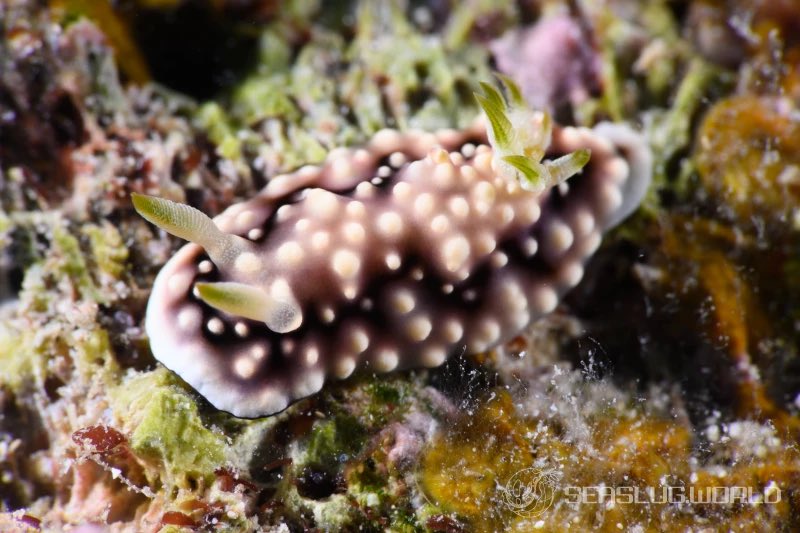
the diaulula have tiny caryophyllidia on their backs, which gives them a fuzzy or velvety texture rather than a smooth body. no two diaulula have the exact same spot pattern, researchers actually use these markings like a fingerprint to identify and track individual slugs