⚠️DATA: Shipping addresses of nearly 120,000 crypto hardware wallet buyers have been exposed in 2026.
Keystone just became the FOURTH wallet maker hit by a customer data breach this year.
Your keys stay offline with a hardware wallet. Your name and address are held by whoever sold and shipped it.
Ledger in January, with names, addresses and orders exposed through its e-commerce partner Global-e
Trezor in August, with nearly 80,000 customers' addresses exposed through its shipping partner
SafePal in August, with 39,798 customers' addresses exposed through an order-tracking plug-in
Trezor again in September, when fake security alerts went to about 347,000 newsletter subscribers
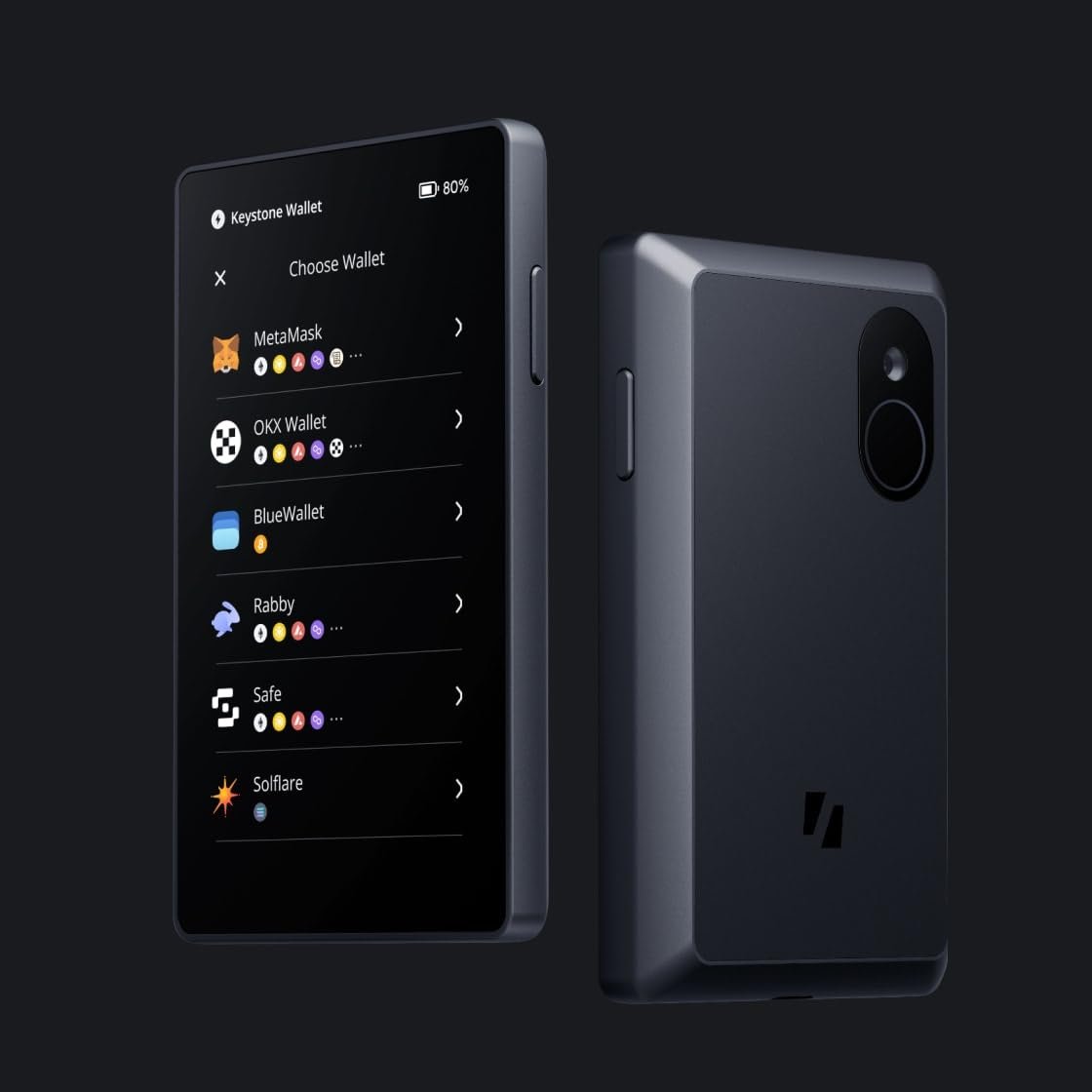
Keystone this week, with names, addresses and orders exposed
Ledger and Keystone haven't said how many customers were affected.
Back in 2020, Ledger's leak put about 1 MILLION emails and 272,000 home addresses online.
None of the breaches exposed recovery phrases or private keys.
Did you use your real home address when you ordered yours?
JUST IN: An American Airlines plane returned to Miami after the captain said a passenger rushed the flight attendants after takeoff.
The flight was headed to Guyana.
Seeker Connect is live.
Developers can now give users a named, branded, one-tap connection to the Seeker wallet across mobile apps and mobile web.
No generic “Mobile Wallet Adapter” option. No second wallet picker.
Just Connect with Seeker.
GM X
Crypto security has a blind spot: we spend so much time protecting private keys that we sometimes overlook the way people actually use their wallets.
A secure wallet can still leave users dealing with confusing addresses, risky copy-paste habits, and payment details that are publicly visible on-chain.
AmericanFortress is working on a different layer of that problem.
Its QBIP-32 approach focuses on quantum-safe key derivation across curves, alongside NIST-standardised signatures. At the same time, Send-to-Name™ makes payments easier to address through a readable FortressName and a fresh one-time address for each transaction.
These solve different problems, but they point toward the same goal: making wallet infrastructure more practical without asking users to become security experts.
That's the kind of engineering I find worth following. Not just adding another feature, but thinking about the weaknesses users might face before they even notice them.
@AmericanFort_io
https://t.co/06IRJ5njyE
If you told me 20 years ago that I’d be interviewing Andre Johnson, I wouldn’t have believed you.
If you told me I’d be the one wearing Jordans and he’d be the one wearing ASICS, I REALLY wouldn’t have believed you 😂
Be honest.
After all the hardware wallet drama lately…
Would you still keep 100% of your Bitcoin in self-custody, or have you moved some into an ETF for peace of mind?
If I'm being honest, Netflix’s Unabomber truly shifts your perspective on Ted Kaczynski. While his dangerous, anti-technology manifesto and horrific crimes shocked the entire world, I think his absolute worst offense might just be that atrocious wilderness attire.
Living isolated in the woods is no excuse for those oversized, mismatched flannel shirts and that infamous, oversized, and completely unwashed hoodie.🎬🍿
Wallet addresses are designed for networks, not conversations.
That's a gap I keep noticing in crypto. Sending funds can be straightforward, but sharing where to send them still feels unnecessarily technical.
This is why defi ID® from https://t.co/jdyd2OoLfS (@deficom ) caught my attention.
It gives your account a readable payment name, such as https://t.co/759sYDmaQz instead of making someone deal with a long wallet address.
What interests me most isn't just the shorter name. It's that the feature is designed to work across most major wallets and apps, rather than being useful only within one platform.
A few practical details worth knowing:
• Every name is unique and contains 3–12 characters.
• Names support lowercase letters, numbers and hyphens.
• Your defi ID® is transferable.
• It's optional. Your account works without one.
One thing I'd still be careful about: a readable payment name doesn't verify someone's identity. You should always confirm you're sending funds to the intended recipient.
To me, the value here goes beyond convenience.
Crypto has spent years improving transaction speeds, infrastructure and accessibility. But the experience also depends on how easily people can understand and interact with it.
Making payment details more recognizable might sound like a small improvement, but it's exactly the kind of usability detail that deserves more attention.
Explore early access:
https://t.co/tMOLh177Bg
𝐇𝐎𝐖 𝐓𝐎 𝐒𝐈𝐆𝐍 & 𝐕𝐄𝐑𝐈𝐅𝐘 𝐘𝐎𝐔𝐑 𝐑𝐔𝐍𝐒 𝐎𝐍 @axisrobotics
If you're contributing to @axisrobotics completing a task is only part of the process.
𝗬𝗼𝘂𝗿 𝗿𝘂𝗻𝘀 𝗻𝗲𝗲𝗱 𝘁𝗼 𝗯𝗲 𝘀𝗶𝗴𝗻𝗲𝗱 𝗼𝗻𝗰𝗵𝗮𝗶𝗻 𝘁𝗼 𝗰𝗼𝘂𝗻𝘁 𝘁𝗼𝘄𝗮𝗿𝗱 𝗘𝗽𝗼𝗰𝗵 𝗣𝗼𝗶𝗻𝘁𝘀.
Every trajectory you record appears in your Portfolio, but an unsigned run does not qualify for Points statistics. Signing creates a 𝐩𝐮𝐛𝐥𝐢𝐜𝐥𝐲 𝐯𝐞𝐫𝐢𝐟𝐢𝐚𝐛𝐥𝐞 𝐩𝐫𝐨𝐯𝐞𝐧𝐚𝐧𝐜𝐞 𝐫𝐞𝐜𝐨𝐫𝐝 𝐨𝐧 @base
Here's the complete step by step guide 👇
𝗦𝗧𝗘𝗣 𝟭: 𝗢𝗣𝗘𝗡 𝗬𝗢𝗨𝗥 𝗣𝗢𝗥𝗧𝗙𝗢𝗟𝗜𝗢
→ Visit the Axis Hub: https://t.co/5RsNRLmyCr
→ Click your avatar in the top right corner
→ 𝐒𝐞𝐥𝐞𝐜𝐭 𝐏𝐨𝐫𝐭𝐟𝐨𝐥𝐢𝐨
Your Portfolio is where you can track your trajectories, performance, badges and contribution statistics.
𝗦𝗧𝗘𝗣 𝟮: 𝗢𝗣𝗘𝗡 𝗧𝗛𝗘 𝗛𝗜𝗦𝗧𝗢𝗥𝗬 𝗧𝗔𝗕
Your Portfolio initially opens on the Badges tab.
→ Switch to History
→ Review your recorded runs
→ Check the task name, score, completion time, date and signing status
Look carefully for any run that still shows the Sign option.
𝗦𝗧𝗘𝗣 𝟯: 𝗦𝗜𝗚𝗡 𝗬𝗢𝗨𝗥 𝗨𝗡𝗦𝗜𝗚𝗡𝗘𝗗 𝗥𝗨𝗡𝗦
𝐓𝐡𝐢𝐬 𝐢𝐬 𝐭𝐡𝐞 𝐦𝐨𝐬𝐭 𝐢𝐦𝐩𝐨𝐫𝐭𝐚𝐧𝐭 𝐬𝐭𝐞𝐩.
→ Click Sign next to an unsigned run
→ Your wallet transaction prompt will appear
→ Review the transaction carefully
→ Click Approve to submit the onchain record
→ Repeat the process for every unsigned run
𝐄𝐚𝐜𝐡 𝐫𝐮𝐧 𝐦𝐮𝐬𝐭 𝐛𝐞 𝐬𝐢𝐠𝐧𝐞𝐝 𝐢𝐧𝐝𝐢𝐯𝐢𝐝𝐮𝐚𝐥𝐥𝐲.
Signing requires a Base transaction and may involve gas fees. Axis also runs gasless campaigns from time to time, so check whether fee coverage is available.
𝗦𝗧𝗘𝗣 𝟰: 𝗩𝗘𝗥𝗜𝗙𝗬 𝗬𝗢𝗨𝗥 𝗦𝗜𝗚𝗡𝗘𝗗 𝗥𝗨𝗡𝗦
After the transaction is processed, return to your History tab.
A successfully signed run should display:
✓ 𝐒𝐢𝐠𝐧𝐞𝐝 𝐬𝐭𝐚𝐭𝐮𝐬
✓ 𝐀 𝐩𝐮𝐛𝐥𝐢𝐜 𝐭𝐫𝐚𝐧𝐬𝐚𝐜𝐭𝐢𝐨𝐧 𝐡𝐚𝐬𝐡
✓ 𝐀𝐧 𝐨𝐧𝐜𝐡𝐚𝐢𝐧 𝐫𝐞𝐜𝐨𝐫𝐝 𝐭𝐡𝐚𝐭 𝐜𝐚𝐧 𝐛𝐞 𝐜𝐡𝐞𝐜𝐤𝐞𝐝 𝐨𝐧 𝐁𝐚𝐬𝐞
You can open the transaction hash on the Base explorer to inspect the transaction and verify that the record was included onchain.
Don't assume a transaction succeeded just because you clicked Approve. Check its status and confirm the record is available.
𝗦𝗧𝗘𝗣 𝟱: 𝗨𝗡𝗗𝗘𝗥𝗦𝗧𝗔𝗡𝗗 𝗪𝗛𝗔𝗧 𝗦𝗜𝗚𝗡𝗜𝗡𝗚 𝗔𝗖𝗧𝗨𝗔𝗟𝗟𝗬 𝗥𝗘𝗖𝗢𝗥𝗗𝗦
Signing is more than a simple confirmation.
According to the Axis documentation, each signed run anchors three important things:
→ 𝐔𝐧𝐢𝐪𝐮𝐞 𝐃𝐚𝐭𝐚 𝐈𝐃: Identifies the trajectory record
→ 𝐂𝐨𝐧𝐭𝐫𝐢𝐛𝐮𝐭𝐨𝐫 𝐃𝐚𝐭𝐚 𝐑𝐞𝐥𝐚𝐭𝐢𝐨𝐧𝐬𝐡𝐢𝐩: Connects the contribution to the wallet that produced it
→ 𝐓𝐚𝐬𝐤 𝐃𝐚𝐭𝐚 𝐁𝐢𝐧𝐝𝐢𝐧𝐠: Connects the trajectory to the task it belongs to
Together, these records establish data provenance, making contributions publicly verifiable and helping datasets and trained models trace back to their original contributors.
𝗜𝗠𝗣𝗢𝗥𝗧𝗔𝗡𝗧 𝗧𝗛𝗜𝗡𝗚𝗦 𝗬𝗢𝗨 𝗦𝗛𝗢𝗨𝗟𝗗 𝗞𝗡𝗢𝗪
1. Unsigned runs do not count toward Epoch Points statistics.
Completing tasks alone is not enough. Make sure qualifying runs have their onchain transactions recorded.
2. Every run must be signed individually.
Review your entire History tab for remaining unsigned submissions.
3. Signing and task completion are different.
4. Signing does not automatically guarantee rewards.
5. Check gas fees before approving.
Base transactions generally have low fees, but costs can vary. Gasless campaigns may cover eligible transactions when available.
𝗢𝗳𝗳𝗶𝗰𝗶𝗮𝗹 𝗔𝘅𝗶𝘀 𝗛𝘂𝗯:
https://t.co/5RsNRLmyCr
The key takeaway is simple:
𝐃𝐨 𝐭𝐡𝐞 𝐭𝐚𝐬𝐤. 𝐒𝐢𝐠𝐧 𝐭𝐡𝐞 𝐫𝐮𝐧. 𝐕𝐞𝐫𝐢𝐟𝐲 𝐭𝐡𝐞 𝐫𝐞𝐜𝐨𝐫𝐝.
𝗴𝗔𝘅𝗶𝘀 𝗳𝗮𝗺. 𝗦𝘁𝗮𝘆 𝗰𝗼𝗻𝘀𝗶𝘀𝘁𝗲𝗻𝘁 𝗮𝗻𝗱 𝗸𝗲𝗲𝗽 𝗯𝘂𝗶𝗹𝗱𝗶𝗻𝗴!
Good afternoon mates
A wallet integration can bring more users to a DePIN network, but it does not automatically make the data more trustworthy.
@GateDEX integrated @vangrid_io in August, giving Gate Wallet users an easier way to discover and access Vangrid. The capture process itself did not change.
Vangrid turns phone-recorded physical-world data into a resource for AI. Faces and vehicle plates are blurred on-device, while capture fingerprints are batched and anchored on Base through EAS. Accepted bounties settle in USDC.
There is one detail worth understanding. Onchain records can prove that a data fingerprint existed and has not been altered. They do not prove that the recorded scene itself is truthful. Stronger device attestation is still not live.
That distinction matters as Physical AI starts depending on real-world data at scale. Better distribution helps bring in more data, but proving where it came from and whether it reflects reality are different challenges.
reusing one wallet address makes it easier for anyone to track your transactions over time
@Americanfort_io takes a different approach with FortressName
instead of sharing a permanent address you send using an @name and the wallet derives a unique stealth address for the transaction
the goal is to make it harder for outside observers to connect your public name with your payment history while keeping the funds under the recipients control
what makes this interesting is that the name and the receiving address serve different purposes
the name stays familiar while the destination can change from one payment to another
AmericanFortress says its system works without mixing funds but repeated transactions and other on chain patterns can still matter for privacy
the question i still have is about the timing
when you register a FortressName in the beta wallet does that already establish the information needed for stealth address generation or does the computation happen only when the first payment is initiated