@thomaskffmn@GregLehman In any trial of an intervention it’s typically the mean that’s reported. There are some that respond, some that get worse. Same in practice. The research with interventions should really guide what we try first, or do what has worked in the past for that person.
@camtudor@DrZoffness 2/2 understanding that the pain experience is ALWAYS influenced by multiple factors is the important part. Which would also lead us down the road of how much suffering is linked to your pain experience. The hangover will likely cause you greater suffering in different contexts
@camtudor@DrZoffness I think what’s missing in the exploit the pain experience is that the physiological trigger of nociception is interpreted through a Biopsychosocial lens. The BPS framework is for the clinician, not the patient. The goal of the interaction is to make sense of their experience. 1/2
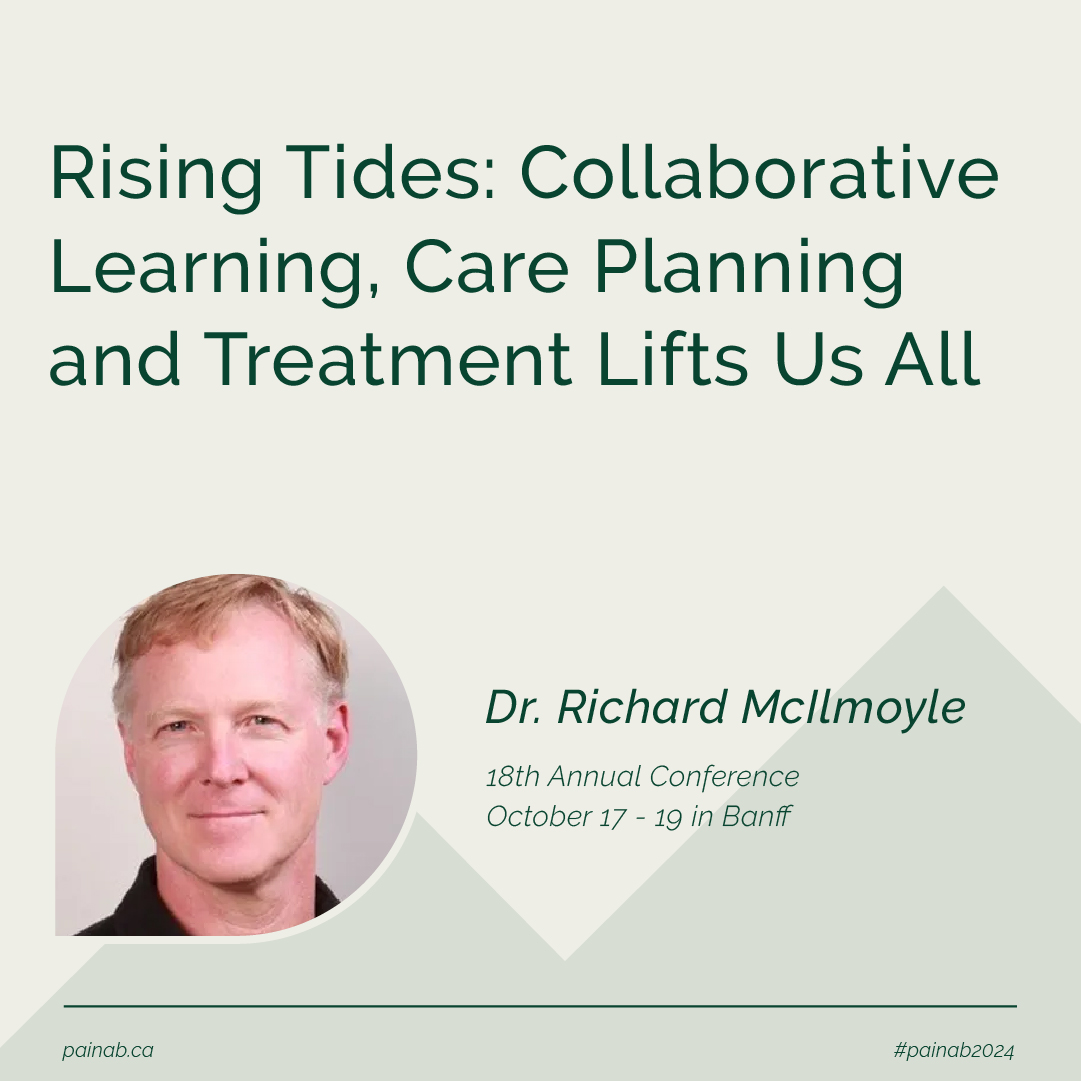
⏰ Happening NOW in the Wildrose Ballroom:
Rising Tides: Collaborative Learning, Care Planning and Treatment Lifts Us All with @maleablemind at #PainAB2024.
Orthopedic Truths: Part 3
Labral "tears" of the shoulder are incredibly common.
Especially superior or SLAP tears.
If you're over 40-50, odds are that you have one.
It's rarely the cause of pain.
They're not even tears per se.
The easiest way to find an excuse to operate on a shoulder in adults is to get an MRI.
Labral tears in adults are usually just age-appropriate changes.
Do not assume it is the cause of your pain.
Labral tears in kids are different animals.
Adults are not kids... even though they may act like them ;-).
There are different types of labral tears.
All the above assumes no recent dislocation due to trauma.
Adults can still get traumatic anterior or posterior labral tears that result in instability- or dislocations.
There is a good reason to fix those tears if the shoulder remains unstable.
Superior or SLAP "tears" do not cause gross instability in adults.
I don't even like the phrase tears here.
"Tearing" implies trauma or injury.
Age-appropriate changes are just that.
A few SLAP tears now and then in adults might, repeat, might hurt...
An adult might occasionally want surgery for a superior labral tear, but this should be a very rare event.
The vast majority of the time, it is not the cause of your pain.
When fixing a rotator cuff tear in an adult, we often find superior labral "tears" and ignore them—aside from removing loose, frayed tissue.
There's a reason why we ignore them.
Actually repairing SLAP tears in adults is not recommended. We have alternatives if need be.
Why?
The tissue is of poor quality.
It can lead to significant stiffness.
Despite having a superior labral tear, you can continue to lift weights and play tennis or pickleball, etc.
Determining the cause of pain in a shoulder can be challenging.
The decision-making that goes into how to treat the many issues we see in a typical adult MRI can also be challenging.
It can be challenging for you to forget or unsee your MRI result.
As usual... these topics are far more complicated than they appear at face value...
In most of our previous episodes, we have had experts talk about chronic pain in adults, but what about chronic pain in children? There is a high number of children suffering from pain, but what resources are available for children? One organization is @KidsInPain (SKIP).
Amazing paper by @FadelZeidan + colleagues reporting that mindfulness REDUCES CHRONIC PAIN via non-opioidergic neurological processes🧠
TL/DR: Mindfulness can be an EFFECTIVE INTERVENTION for chronic pain (not pseudoscience). 👏😃🔥
https://t.co/xzSULRZpuT
#MedTwitter#MedEd
Knee joint distraction results in MRI cartilage thickness increase up to 10 yrs after treatment https://t.co/mkRMMuXbP3
in these young end-stage knee OA patients,KJD treatment results in significant short-term cartilage regeneration in the MAC, effects still be seen after 10yrs