In Parliament today: I expose an official national police policy, published in March 2025, requiring police forces to treat different ethnic groups differently.
This is immoral, divisive and dangerous
We cannot have two-tier policing
The Home Secretary should ensure this policy is ended right now
#Justice #EqualityBefore #TheLaw #PoliceAccountability #UKPolitics #PublicSafety #Accountability #Parliament #HomeSecretary
🔥BIGGEST POLL SINCE LEADBEATER BILL INTRODUCED FINDS PUBLIC OPPOSE RETURN OF ASSISTED SUICIDE BILL!
In a major development, a landmark new MRP poll of 10,000+ adults, has found that legalising assisted suicide came rock bottom of a list of voters’ priorities for their MP.🧵1/
New mega-poll reveals opposition to reviving assisted suicide Bill. Only 7% think it’s a priority. After hundreds of hours, should parliament spend even more time trying to get the unworkable to work? No. https://t.co/67cZf91GRx
"DWP admitted in a secret paper, the cumulative effect of multiple errors or 'inaction' on benefit claims caused situations to 'spiral out of control for vulnerable customers' and even led to their deaths [...] The paper was only released to DNS after a three-year legal battle"
Apple published a paper in June 2025 that called out the entire AI industry.
And the industry has not recovered from it since.
The paper is called "The Illusion of Thinking." Six Apple researchers. Months of controlled experiments. One conclusion that landed like a grenade.
Frontier reasoning models face a complete accuracy collapse beyond certain complexities.
Complete. Not partial. Not gradual. Complete.
Here is what that actually means.
For two years, every major AI lab has been racing to build reasoning models. OpenAI's o1, o3. Anthropic's Claude 3.7 Sonnet Thinking. DeepSeek R1. Google's Gemini Thinking. These models do not just answer questions, they visibly think first. They show their work. They reason step by step through a problem before arriving at an answer. The entire industry marketed this as the next evolution of intelligence.
Apple tested whether it was real.
They did not use math benchmarks or coding tests, the standard evaluations every AI company optimizes against during training. They built clean, controllable puzzle environments. Tower of Hanoi. River Crossing. Checker Jumping. Blocks World. Problems with precise, verifiable correct answers and zero possibility of data contamination.
Then they systematically turned up the complexity. And watched what happened.
For simpler, low-complexity problems, standard LLMs demonstrated greater efficiency and accuracy, the reasoning models were beaten by regular models that do not think at all. As complexity moderately increased, reasoning models gained an advantage. But when problems reached high complexity, both model types experienced complete performance collapse.
The thinking models, the ones that cost more, take longer, and are marketed as more intelligent, lost to basic models on easy tasks. Then both collapsed completely on hard ones.
But the finding that truly alarmed researchers was not the collapse itself.
It was what happened just before it.
Near the collapse point, reasoning models began reducing their reasoning effort, measured by thinking tokens, as problem complexity increased, despite operating well below their generation length limits.
The models were thinking less on the hardest problems. Not more. Producing shorter reasoning traces. On the tasks that demanded the most intelligence — the AI was quietly giving up. No error message. No warning. Just shorter thoughts and wrong answers delivered with full confidence.
Then there was the overthinking problem on the other end.
In simpler problems, reasoning models often identified correct solutions early but inefficiently continued exploring incorrect alternatives — an overthinking phenomenon. Beyond a certain complexity threshold, models completely failed to find correct solutions and fixated on early incorrect attempts, wasting the remaining inference token budget.
Too much thinking on easy problems. Too little on hard ones. Complete collapse exactly where it matters most.
Apple researchers made the case that the AI industry is grossly overstating the ability of its top models, including OpenAI's o3, Anthropic's Claude 3.7, and Google's Gemini.
The paper went live on a Saturday morning in June 2025. By that afternoon, The Guardian and The Wall Street Journal were covering it. By Monday, the AI community was in open conflict.
Defenders fired back immediately. A researcher published a rebuttal within days, arguing that Apple's findings primarily reflect experimental design limitations rather than fundamental reasoning failures, and that some River Crossing benchmarks included mathematically impossible instances that no model could have solved.
Then a third group of researchers from Spain's National Research Council ran the experiments again with refined methods.
They found that previously reported failures on Towers of Hanoi were not purely a result of output constraints, reasoning models still stumble when complexity rises moderately around 8 disks.
Eight disks. On a puzzle designed for children. Complete failure.
Now here is why this paper is more relevant in May 2026 than it was the day it was published.
Since June 2025, every major AI lab has released a new generation of reasoning models. OpenAI shipped GPT-5.4 with extended thinking. Anthropic released Claude Opus 4.6 with enhanced reasoning traces. Google released Gemini 3 with Deep Think mode. DeepSeek released R2. xAI released Grok 3 with Think mode.
Every single one of them is marketed as having solved the reasoning problem Apple identified.
None of them have published controlled results on the specific complexity benchmarks Apple used. None of them have addressed the accuracy collapse curve directly. None of them have shown that the cliff Apple found no longer exists in their newer models.
They have simply released new models, claimed better reasoning, and moved on.
Which means the question Apple asked in June 2025, do these models actually reason, or are they producing the illusion of reasoning, has never been formally answered by the companies whose products depend on the answer being yes.
Apple's findings show that chain-of-thought only improves accuracy up to a point. Beyond that, models collapse, even when context and planning are not constrained. This breaks the assumption that performance scales linearly with model size.
That assumption has not been retired. It has been doubled down on. The entire 2026 reasoning model race GPT-5.4, Gemini 3, Claude Opus 4.6 is built on the premise that more thinking means better answers at scale.
Apple's paper says that premise has a cliff.
And the newest, most powerful models in the world have not shown that they found it, let alone that they cleared it.
Every enterprise deploying AI reasoning models today for legal analysis, medical diagnosis, financial modeling, or engineering decisions is operating on an assumption that a June 2025 paper from Apple formally challenged and nobody has formally refuted.
The debate is not settled. The cliff is still there.
The models just got more expensive to fall off of.
Source: Shojaee, Mirzadeh et al. · Apple · "The Illusion of Thinking" · June 2025 · https://t.co/9DNDPttKlG · https://t.co/5QxjHYxkEE
A survey of doctors in 2023 showed 74% of those who took part were against the proposed changes, with 34% saying they would consider leaving the island if the laws were introduced. https://t.co/8U3AvbB1tk
Attlee stopped Private Members Bills to create time for the NHS Act and critical reforms.
80 years on some MPs want to use a Private Member's Bill and the Parliament Acts to undermine that legacy.
A London-based robotics startup says it has built an AI 'brain' that can teach humanoid robots new physical skills in days rather than months, as the race to put humanoids to work in factories and warehouses accelerates
🚨Just IN: If you've used ChatGPT for writing or brainstorming in the last 6 months, your creative ability may already be permanently damaged.
A controlled experiment just proved the effect doesn't reverse when you stop using it.
3,302 creative ideas. 61 people. 30 days of tracking.
Researchers split students into two groups. Half used ChatGPT for creative tasks. Half worked alone. For five days, the ChatGPT group outperformed on every metric. Higher scores. More ideas. Better output. AI was making them better.
Then day 7. ChatGPT removed. Every creativity gain vanished overnight. Crashed to baseline. Zero lasting improvement.
But that's not the bad part.
ChatGPT users' ideas became increasingly identical to each other over time. Same content. Same structure. Same phrasing. The researchers called it homogenization. Everyone using ChatGPT started producing the same ideas wearing different clothes.
When ChatGPT was removed, the creativity boost disappeared -- but the homogenization stayed. 30 days later, same result. Their creative range had been permanently compressed.
Five days of use. Permanent damage 30 days later.
A separate trial confirmed it. 120 students. 45-day surprise test. ChatGPT users scored 57.5%. Traditional learners scored 68.5%. AI reduces cognitive effort. Less effort means weaker encoding. Weaker encoding means less creative raw material.
You're not renting a productivity boost. You're financing it with your originality.
The interest rate is permanent.
You open ChatGPT. You type the question. A clean, structured answer comes back in three seconds. You read it, it makes sense, you move on. You feel like you learned something.
Forty-five days later, a professor walks in and hands you a test you weren't expecting. You don't remember most of it.
André Barcaui at the Federal University of Rio de Janeiro ran the experiment to find out if the feeling was accurate. 120 undergraduate business students, ages 18 to 24. All told to spend two weeks researching AI concepts, ethics, societal impacts, technical foundations, and prepare a 10-minute presentation.
Sixty used ChatGPT freely. Sixty used textbooks, library databases, articles, and standard web search. Then, 45 days later, with no warning, a retention test.
The ChatGPT group scored 57.5%. The traditional group scored 68.5%. Cohen's d was 0.68, a medium-to-large effect. In most grading systems, that's the difference between passing and failing.
This is called cognitive offloading. When your brain delegates thinking to an external tool, it reduces the mental effort required during encoding. Effort is what makes memories durable. Struggling to find, synthesize, and connect information is not an inefficiency in the learning process. It is the learning process. ChatGPT removes the struggle and takes the encoding with it.
Barcaui calls what the AI group experienced "borrowed competence." The answer was structured, the vocabulary was right, the reasoning felt sound. It just wasn't theirs. And 45 days later, it was gone.
The AI group's forgetting curve was steeper and didn't stabilize the way the traditional group's did. The memories weren't just smaller. They were more fragile from the start.
You didn't learn it. You borrowed it.
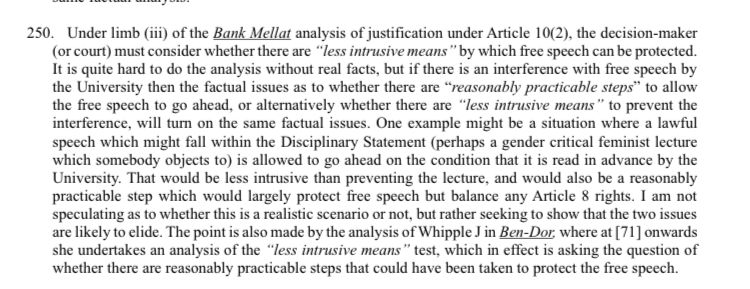
There is much that is troubling in Mrs Justice Lieven's judgment in favour of the University of Sussex, but this stands out.
The judge suggests that if someone objects to a 'gender critical feminist lecture' it might be reasonable for the university to demand that the lecture should be read in advance by 'the university'.
So lecturers who believe that sex is real should have their lectures vetted by administrators if someone complains in advance of the lecture.
This type of incentive is exactly what activists thrive on. And it suggests a regime which strips academics of all autonomy and acadmic freedom.
https://t.co/kSSMqwTBQ6
Japan Airlines will trial humanoid robots for baggage handling and aircraft cleaning at Tokyo's Haneda Airport starting in May, citing workforce shortages and rising tourist numbers
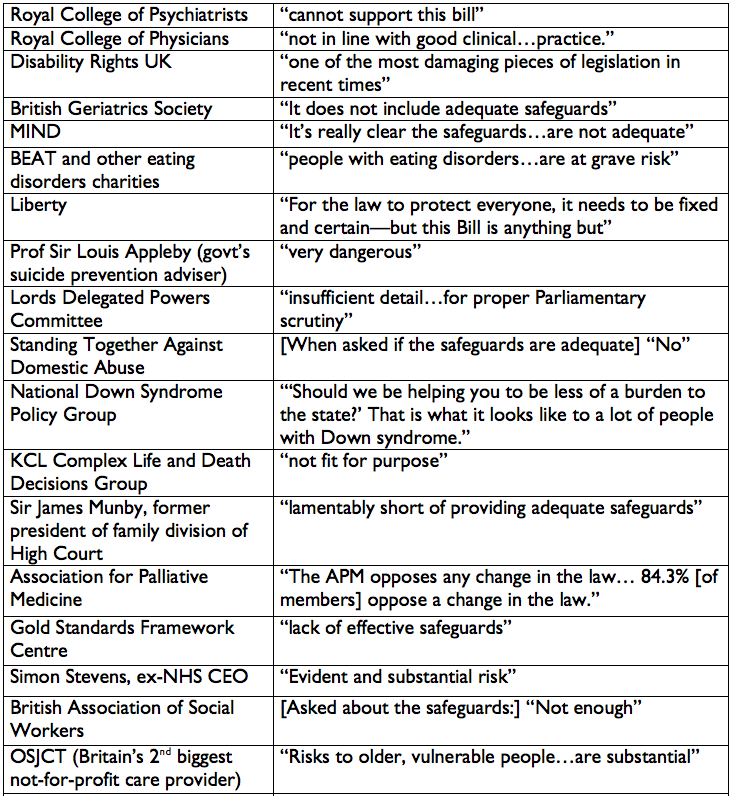
Parliament has been prorogued; the Terminally Ill Adults (End of Life) Bill ― the Leadbeater Bill ― has fallen.
Regardless of their positions on the principle, a swathe of experts and organisations expressed serious concerns about this bill.
📊 53% of the public either don't want the bill to come back at all, or say it must go through all stages in both Houses and not be forced through using mechanisms like the Parliament Acts.
📊 ⅔ say #assistedsuicide legislation must not precede universal #palliativecare access ― 1 in 3 people don’t get the end of life care and support they need.
https://t.co/MfGqG8Oiz2
https://t.co/cEZfzKqiPy
https://t.co/VL6YYTGymp
(Graphic @ddhitchens)
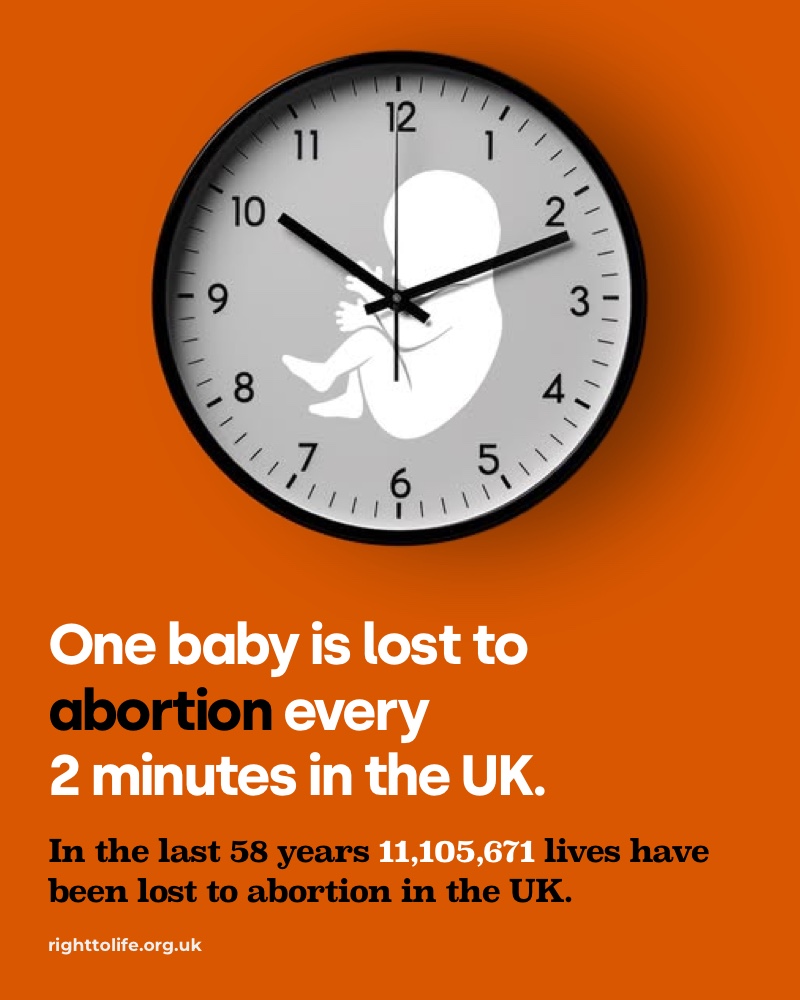
58 years ago the Abortion Act came into effect, 6 months after receiving Royal Assent.
Since then, a staggering 11,105,671 unborn babies have lost their lives to abortion across the UK – one baby is lost to abortion every two minutes. 🙅😢