"My father came to Canada as a one-year-old immigrant in 1907, and grew up in the French-speaking Montreal neighbourhood of Papineau..."
In our @policy_mag Series 'On Being Canadian'
https://t.co/mENMBjDUml
@TheRWCHR Chair @IrwinCotler with
"On Being Canadian Under the Law"
https://t.co/fSLXRR5UMJ
#cdnpoli #Canadian
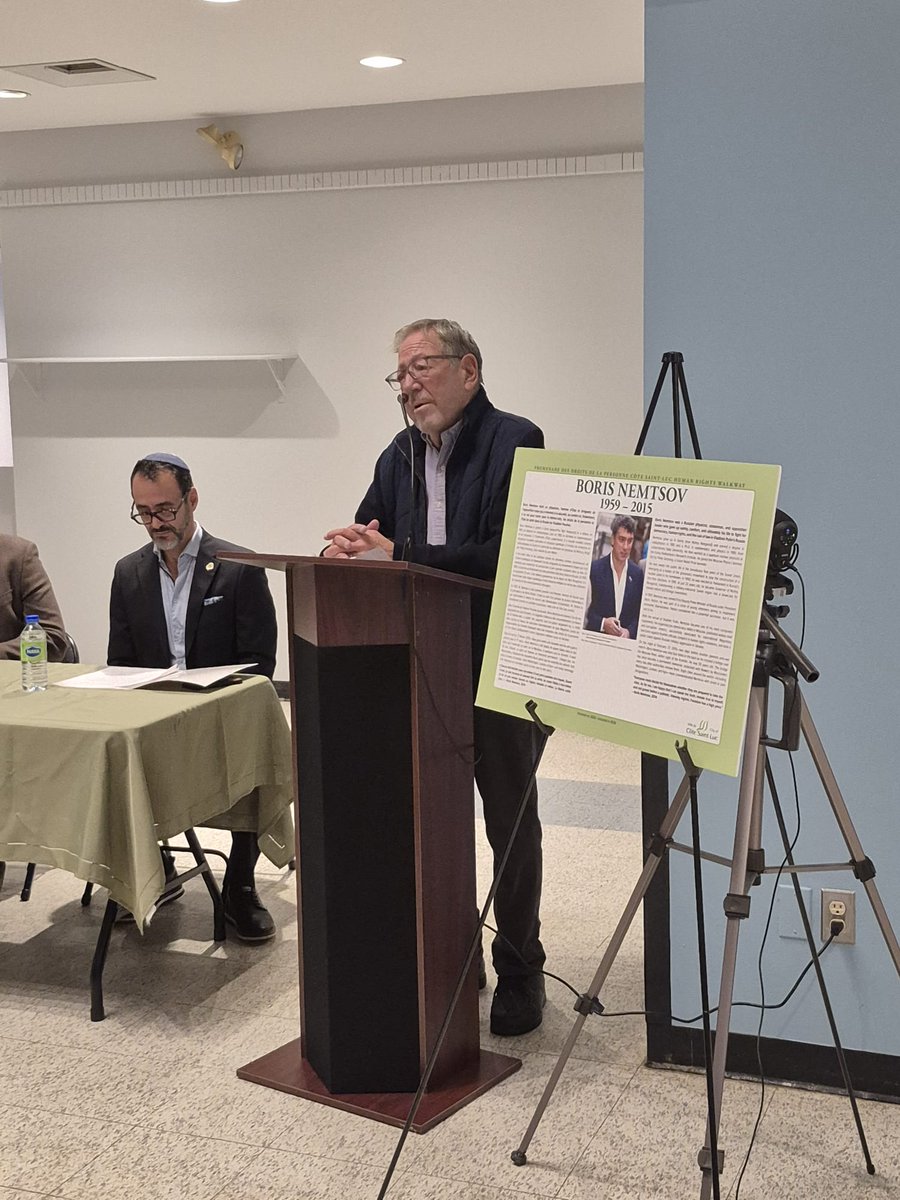
Honoured to have joined @CoteSaintLuc and @rcda_adcr for today's unveiling of a plaque commemorating #BorisNemtsov, assassinated near the Kremlin in 2015 for his courageous fight for democracy and justice.
RWCHR International Chair @IrwinCotler, Russian opposition politician @vkaramurza, Canadian MP @AHousefather, CSL Mayor @dtordjmancsl, and RCDA Co-Founder Yuriy Novodvoskiy reflected on Boris Nemtsov's life and legacy, the ongoing struggle for democracy and human rights in Russia, and the political prisoners who remain behind bars.
We also heard moving remarks by @ZhannaNemtsova, Boris Nemtsov’s daughter and Co-Founder of the Boris Nemtsov Foundation for Freedom.
Bu məktəbdə inkluzivlik, hamının seçiminə hörmət (halbuki uşaqların öz seçimi olmadığını yaxşı bilirik) bağıranlar uşaqlarına kuir müəllimin dərs keçməsinə okaydir görəsən? Yoxsa şüvənlik salıb müəllimin üstünə düşəcəklər ki, sənin məktəbdə yerin yoxdur?
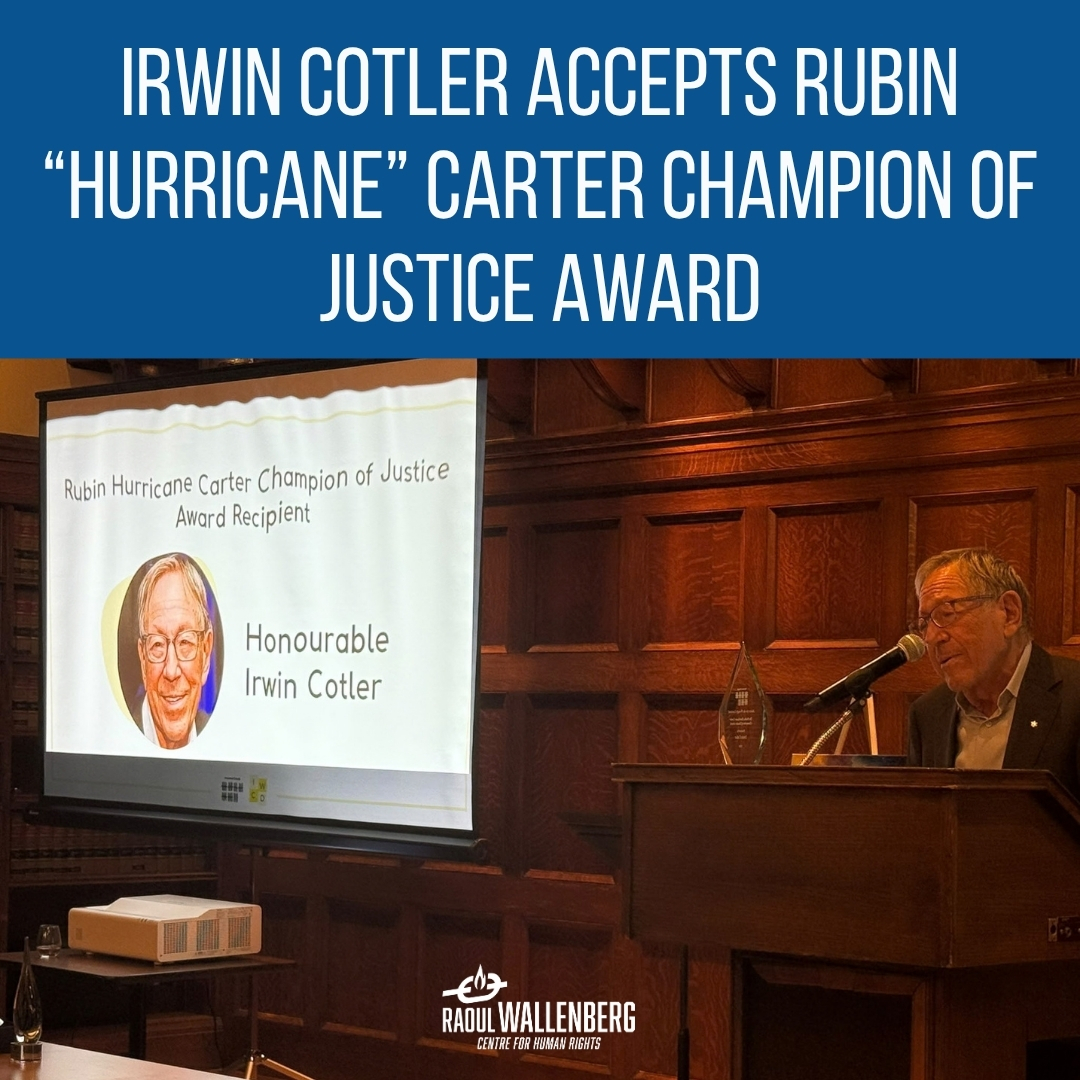
Congratulations to RWCHR Founder and International Chair @IrwinCotler on receiving the Rubin “Hurricane” Carter Champion of Justice Award in Toronto!
The award, presented yesterday by Innocence Canada and the International Wrongful Conviction Day Committee, honours Irwin’s’s lifelong commitment to justice, including his work overturning wrongful convictions and advocating for the innocent.
As Canada’s Minister Justice, Irwin quashed more wrongful convictions in a single year than any previous Minister, helping to restore freedom, dignity, and faith in the administration of justice.
Read more: https://t.co/5sGKtWRCDM
@_wcday@InnocenceCanada
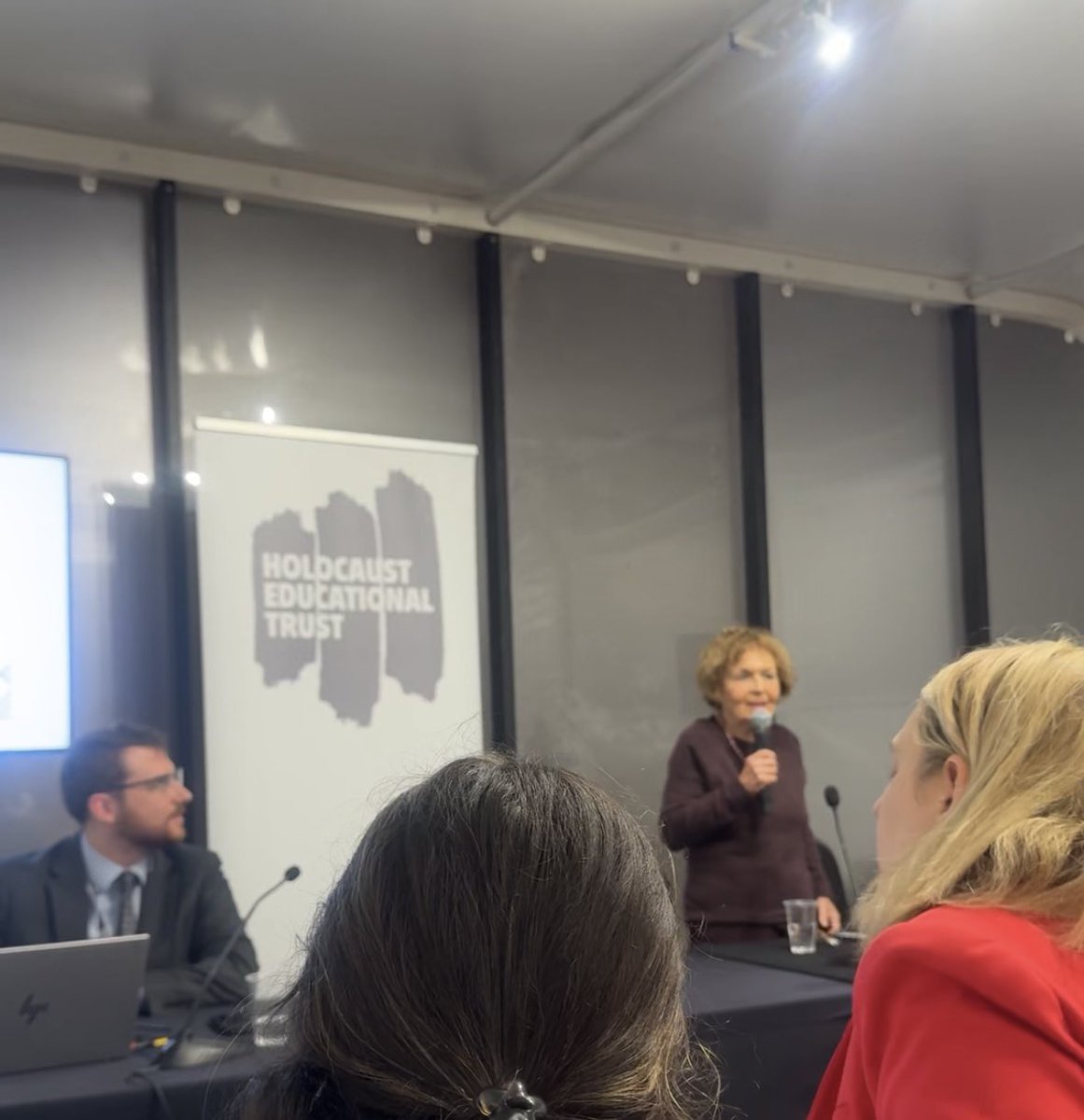
The world should know Janine Webber BEM.
Today, at 94, Janine spoke at a Labour Party Conference event organised by the @HolocaustUK . It is one thing to read a survivor’s story. It is another to sit in a room and listen to a woman who was nine years old when the raids began, who stayed silent for fifty years, and who still chooses to speak so that the next generation cannot say they never heard.
Janine Webber was born in 1932 in Lwów, Poland today Lviv, Ukraine into a Jewish family. Her parents were Alfred and Lipka. She had a younger brother, Tunio. Her original name was Niunia. She was a child when the world around her was destroyed.
In 1939 the city fell under Soviet occupation. In June 1941 the Nazis arrived. Persecution began at once. Jewish men were rounded up. Neighbours disappeared. Fear became daily life.
Her parents dug a hiding place under a wardrobe. It was just large enough for Janine, her little brother, and their mother. There was no room for her father or her grandmother. During a raid her father was shot. Her grandmother was taken away. Janine never saw her again.
The family was forced into the Lwów ghetto. Conditions were lethal. Her mother contracted typhus and died at 29. Relatives died of disease or were deported to the Bełżec extermination camp. Her brother was later killed. He was seven years old.
An uncle found a Polish farmer willing to hide Janine and her aunt Rouja. Later she worked as a shepherdess. When her Jewish identity was discovered, she was sent away again. Her aunt had given her one name for emergencies: Edek, a Polish caretaker at a convent.
Edek hid her and others, including her aunt in an attic and under the floorboards of a stable. They lived in cramped, airless conditions for nearly a year, taking turns to lie down. A Polish rescuer risked his life so a child might live.
False papers were arranged. Janine became, on paper, a Catholic Polish girl. She was sent to a convent in Kraków, then lived with a priest, then worked as a maid for an elderly couple until the city was liberated in early 1945. She was still a child.
Six months after the war, her aunt Rouja found her. They left Poland for Paris because antisemitism had not ended with the fighting. In 1956 Janine came to Britain to improve her English. She met an Englishman, stayed, married, later married again, and built a family. She has two sons and two grandsons. She made her life in London. She lectured in French studies.
For fifty years she barely spoke of what she had lived through. The first time she told the whole story on film, she could not stop crying. Her son had said the story ought to be known.
Since the late 1990s she has given more than a thousand talks to schoolchildren, universities, businesses, diplomats, and communities with the Holocaust Educational Trust.
She was never in a death camp. Her survival was a chain of hiding places, false papers, a farmer, a caretaker named Edek, a convent, a priest, an elderly couple, and an aunt who came back for her. It was also luck, and the courage of people who refused to look away.
Janine’s message is simple and uncompromising:
Remember the six million. Stand up to hatred and prejudice. We are all human beings. Despite our differences, it is our humanity that should bind us together. We must not hate. All people come from the same family.
Hearing her today was a reminder that testimony is not an archive. It is a living obligation. If you can listen to a survivor, listen. If you can teach a child this history, teach it. If you can refuse indifference, refuse it.
The world should know Janine Webber BEM a Londoner, a mother and grandmother, a teacher, and a witness who rebuilt a life in England and then gave decades of that life so others would remember. She chose, after half a century of silence, to make sure we do not forget, and that we treat one another as members of the same family.
Thank you to Janine.
While police have been careful not yet to ascribe a motive to the shooter, this latest incident fits within a pattern of rising antisemitism in Canada.
The promise of human rights is universal, but that promise is kept by protecting particular people from the specific threats they face. Standing with Jewish Canadians does not diminish our concern for — or our obligations toward — any other community. Rather, combating antisemitism belongs within the wider social justice struggle against racism and religious hatred.
Read our full statement here:
https://t.co/fcikkuJwUD
This kitten with cerebral palsy relied entirely on his owner for food and survival. One day, while eating, he couldn't help but cry... As if expressing gratitude for all the love and care he had received over the years.
Aytaj Tapdig answered questions after delivering her statement before the court during the latest hearing in the “Meydan TV case” at the Baku Court on Grave Crimes.
“They took the money from my home that they had paid as compensation following the European Court’s judgment”
She said she would not answer any questions from the state prosecutor.
The first questions to the journalist were asked by her lawyer, Javad Javadov. The lawyer asked, “Was any money found during the search of your home?”
Aytaj Tapdig replied that only 300 EUR in foreign currency had been found.
“They took that with them and did not return it. The authorities take money from one place and put it in another. This 300 EUR was the last money left from the compensation the authorities paid me following a judgment by the European Court.”
In response to her lawyer’s question, “Have you engaged in smuggling?”, the journalist said, “It is quite clear here who the smuggler is”.
“We have only engaged in journalistic activities. During the interrogations, the investigators only asked us questions about Meydan TV’s activities. This clearly shows that the essence of the case is not smuggling, but Meydan TV.”
In response to her lawyer’s question, “What was the European Court’s compensation judgment about?”, Aytaj Tapdig said it concerned her being prosecuted in a criminal case related to Meydan TV in 2015 and being banned from leaving the country.
The lawyer’s next question was, “During which years were you banned from leaving the country?” The judge ruled that the question be removed.
“One of the leaders of the organised group is identified as Ulvi Tahirov. Have you had any contact with him, have you ever been to his office, or have you received any instructions from him?” asked Ulvi Tahirov’s lawyer, Bahruz Bayramov.
“First of all, let me say that I do not act on anyone’s instructions. In 2015, I attended a course at the Baku School of Journalism. I encountered Ulvi Tahirov there several times. After that, we did not have any particular relationship. I did not see him in the following years”, Aytaj Tapdig replied.
Bahruz Bayramov’s next question was, “Have you ever spoken with Ulvi Tahirov by phone?”
“There was no situation that required us to speak by phone. In fact, I did not even have his phone number. He has no connection whatsoever with Meydan TV”, the journalist said.
“The Azerbaijani authorities accuse the journalists they have arrest of smuggling. If the authorities are convinced that the journalists are smugglers, why do they have videos made against them on their own TV channels and publish private photographs and confidential investigation materials?” asked Ulviyya Ali.
The judge ruled that Ulviyya Ali’s question be removed.
“Even if it is removed, let me answer. The answer is hidden in the question itself”, Aytaj Tapdig said.
“I said, let’s not prolong it – Kurdakhani”
“There is a photo in the investigation materials taken from your phone. Shamshad Agha is in it together with you and Meydan TV employees. The investigation has considered only this as evidence. Somehow, they decided that because he appears in this photo, Shamshad Agha should be included in this criminal case. What can you say about the meeting shown in the photo? Did you discuss dividing any money there?” asked lawyer Shahla Humbatova.
“No, no, there was no such discussion”, the journalist replied.
Nurlan Libre asked, “Were you subjected to ill-treatment when you were detained?”
“When they detained me, they quickly entered my home and raised my hand to take the phone. For some time, they did not allow me to lower my hand. Then they asked me for my phone password. I said, let’s not prolong it – Kurdakhani [the Baku Pre-trial Detention Facility, where political prisoners in Azerbaijan are often held]”, Aytaj Tapdig replied.