Our latest preprint is now online! We compare visuomotor sequence learning with or without music over 4-weeks.
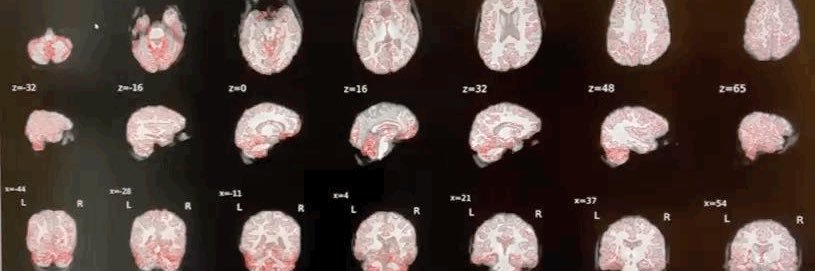
Despite both groups improving overtime, the music group showed increased surface area of A1 contralateral to the trained hand.
A 🧵 will follow upon publication 🤞
@mabdelhack Ah glad to see a familiar face, and to finally meet in person. I’ll be there for the opening ceremony, I’ll dm you and hope to meet you there
🚨Come join my lab at @mcgillu
I have multiple PhD opening on balance in elderly, back Exo and NMS model and AI @MyoSuite
You can apply via the Neuroscience 🧠 Dept. (IPN https://t.co/vJLRddTKb4 Deadline Aug. 1) or Mech. Eng. 🤖 Dept. (https://t.co/CknZB5BwqL deadline July 15)
8/ We also looked at musical background and music enjoyment. Both played a role, especially under cognitive load.
People with musical training had better timing consistency; those who enjoyed music tapped harder.
11/ Rhythmic sounds can support movement and attention — but only when aligned with a person’s cognitive and motor profile. That’s a big step toward more personalized, effective interventions.
7/ We found that:
- Better gross motor skills predicted more forceful tapping.
- Better fine motor skills predicted less force.
- Poor cognitive inhibition (think stop-and-go control) also led to more forceful tapping.
4/ We tested 50 healthy adults (ages 18–39). They tapped their fingers in time with a beat: once to a simple metronome, once to rhythmically complex music.
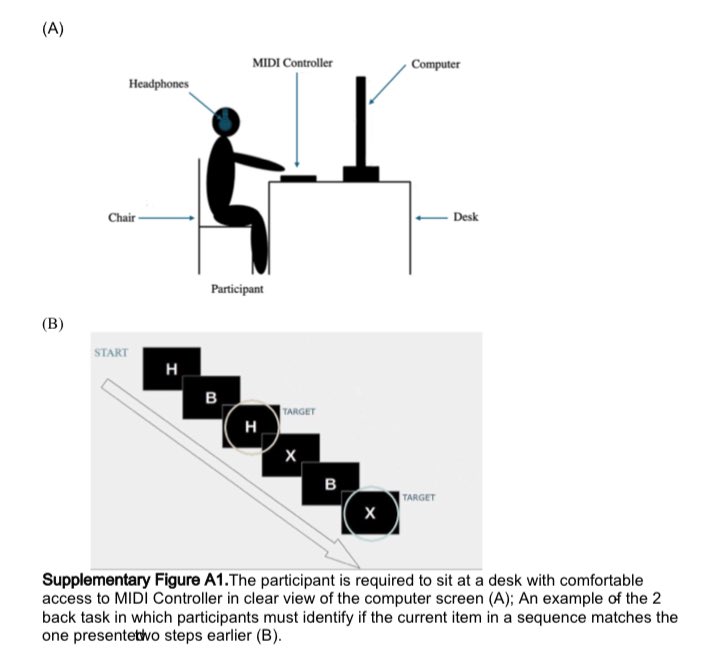
Then they repeated both while doing a working memory task (e.g., recalling numbers backward).
6/ We found that individual traits predicted how well people synchronized with the beat, regardless of whether they were tapping alone or dual-tasking. That’s crucial because real-world tasks often require multitasking.
5/ We also assessed each person’s cognitive and motor abilities using standardized tests. This let us link their tapping performance with their attention, memory, cognitive inhibition, and motor abilities as well as musical training and enjoyment from music
3/ This matters because rhythmic auditory stimulation (RAS) is used in therapies for stroke, Parkinson’s, dementia, ADHD and more. But results vary. We wanted to understand what role individual abilities play.
1/12 Our new study “Cognitive and motor abilities predict auditory-cued finger tapping in a dual task” is out now:
https://t.co/5u1qp55qpK
With Rebecca Schaefer, Renske Krijt, Marjolein Fokkema, @MaritRuitenberg, Allyah Hassell & Tanya Murphy 🧵
2/ We asked: Why do rhythmic sounds (like music or a metronome) help some people move better, but not others?
Do people perform worse when moving to sounds while also doing a cognitive task? Think of playing an instrument with a band or driving & talking while listening to music
Our article "Cognitive and motor abilities predict auditory-cued finger tapping in a dual task" has been accepted for publication @FrontNeurosci (making the 2nd chapter of my PhD).
I will write a thread telling you all about it upon its publication!
https://t.co/SWjwsbFoDW