#fuckpharma
“When inventor Frederick Banting discovered insulin in 1923, he refused to put his name on the patent. He felt it was unethical for a doctor to profit from a discovery that would save lives.”
BREAKING: Pharma is suing to block Minnesota's new insulin access law.
The Alec Smith Insulin Affordability Act was passed in honor of a 26-year-old who died rationing insulin.
The law would've taken effect today. Pharma's fighting it during a pandemic.
Beyond unconscionable.
aW = erh/100. If we shoot for a shelf stable water content of 0.58-0.64 well know we hit that target when the jar/bag rh% stops climbing at 58-64% without needing to burping further.
@simbasinner@WCVB It’s anecdotal, but pickle ballers typically don’t repurpose abandoned courts, but literally painting over tennis courts that are being used and have nets up. If yall wanna paint lines on courts with no nets up be my guest.
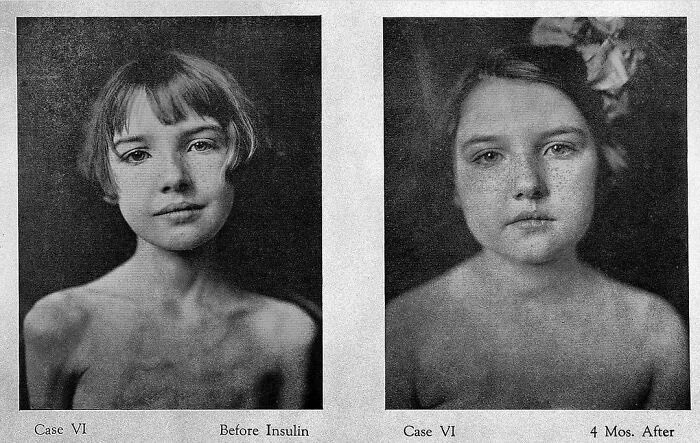
In 1922, a team of scientists visited Toronto General Hospital, where wards housed numerous diabetic children.
Many of these children were in a comatose state and on the brink of death due to diabetic ketoacidosis.
As a result of the amount of deaths, scientists moved swiftly and proceeded to inject the children with a new purified extract of insulin.
As they commenced injecting the final comatose child, the first one to receive the injection started to regain consciousness.
Subsequently, one by one, all the children emerged from their diabetic comas.
During the early 1920s, Frederick Banting, Charles Best and John Macleod discovered insulin.
Both Banting and Macleod were awarded Nobel Prizes in 1923.
James Collip played a crucial role in refining insulin, which was instrumental in enabling its effective application in diabetes treatment.
Banting declined to have his name included on the patent and opted to sell it to the University of Toronto for a mere $1.
He believed it unethical to seek profit from a discovery destined to save countless lives.
“Insulin belongs to the world, not to me," he said.
In 2019, the average cost was $58 per insulin fill, typically for a 30-day supply.